
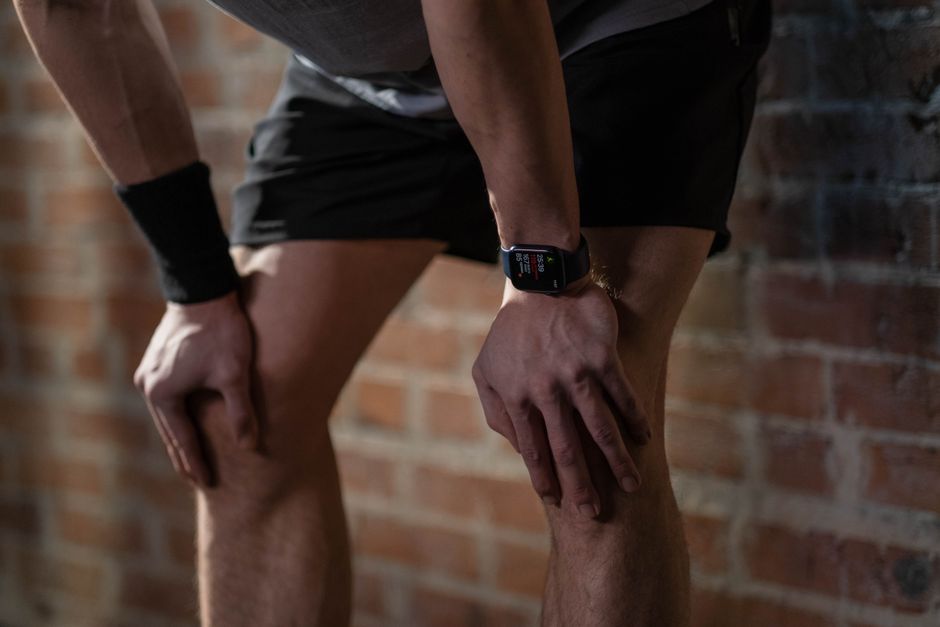
If you’re comparing WHOOP vs Oura vs Garmin for men over 50, the real question isn’t which device collects the most numbers. It’s which one tells you something useful before your 7 a.m. workout, your long travel day, or the annual stretch where sleep falls apart and everything feels just a little more expensive, including recovery.
Men over 50 usually don’t need another dashboard. They need a filter. A wearable that turns noise into a decision is worth wearing. A wearable that turns breakfast into a data review meeting is just another small tax on attention.
That’s the split here. WHOOP is built to answer one question fast: how hard should you push today? Oura is strongest when sleep quality and early illness signals matter most. Garmin does the most overall, but it also asks the most from the wearer. More features are nice. More interpretation isn’t always nice. Those are different things, even if the wearable industry keeps pretending they’re the same.
The Data Trap: When More Numbers Mean Less Clarity
The wearable market loves metric confetti. Resting heart rate. HRV. readiness. sleep score. strain. body battery. stress. respiration. skin temperature. Enough charts to make a hedge fund intern feel seen.
The problem is that more numbers don’t automatically produce better judgment. A 2025 analysis from TrainRight argued that the proprietary recovery scores used by major wearables still lack independent clinical validation as predictors of overtraining or injury, which means a polished composite score can feel precise without being shown to be decisive (TrainRight, 2025). That’s not a small caveat. That’s the whole game.
For a time-poor reader, the better test is simple: does this metric change what happens tomorrow morning? If a wearable tells you that your HRV dipped, your skin temperature nudged up, your sleep latency was messy, and your stress graph looks like modern life, but leaves you to assemble the verdict yourself, you still have homework.
That’s why one reliable trend can beat six interesting ones. The man wearing three devices isn’t automatically better informed than the man using one metric he actually trusts. Sometimes he’s just paying the dashboard tax in triplicate.
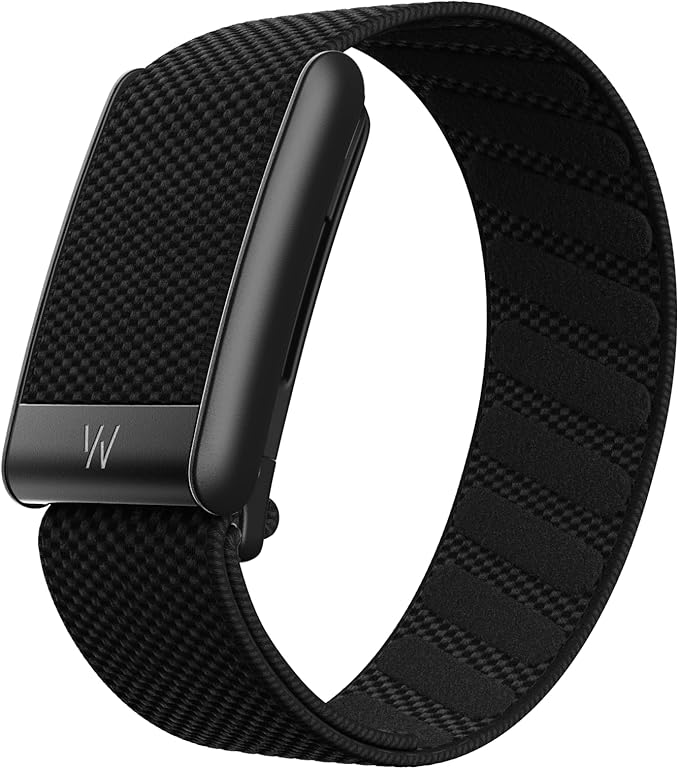
WHOOP MG Health Monitor
$239.00
This article contains affiliate links. We may earn a commission at no extra cost to you.
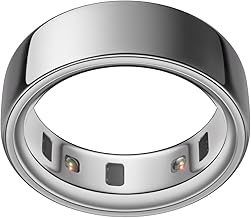
Oura Ring 4 — Silver
$349.99
This article contains affiliate links. We may earn a commission at no extra cost to you.
Garmin
This article contains affiliate links. We may earn a commission at no extra cost to you.
WHOOP: Recovery-First Design That Forces a Decision
WHOOP‘s advantage isn’t subtlety. It’s that the product is opinionated. The strap exists to push you toward a decision, not to flatter you with endless diagnostics.
WHOOP cited an Australian Institute of Sport-funded comparison showing WHOOP 3.0 at 99.7% accuracy for heart rate and 99% accuracy for HRV among the tested devices, a group that included the Oura Ring Generation 2 and Garmin Forerunner 245 Music (WHOOP, 2022). That doesn’t make the whole system clinically settled. It does suggest the underlying signals are good enough to build a daily readiness model on.
The more interesting design choice is how WHOOP measures HRV. It captures HRV during deep sleep rather than sprinkling readings across the day, then uses that controlled overnight baseline to produce a Recovery Score from 0% to 100%. The payoff isn’t the number itself. The payoff is the translation. Green means go train. Yellow means be selective. Red means back off. No little seminar required.
For men over 50, that matters because recovery is often the constraint, not motivation. The limiting factor isn’t whether you’ll show up. It’s whether today’s hard session is productive or just ego with nicer typography.
WHOOP is best for the reader who wants the wearable to act like a traffic light. It isn’t for the reader who hates subscriptions, wants on-wrist maps, or expects to use a screen during workouts. WHOOP has no screen, costs about $30 a month, and makes that trade on purpose. If you want one device to coach training readiness and nothing else with any real charm, WHOOP has the cleanest case.
Oura Ring: Sleep Context That Makes Your Readiness Score Interpretable
Oura‘s strength is context. It’s less forceful than WHOOP and more explanatory. That’s either helpful or annoying depending on how much interpretation bandwidth you have left by bedtime.
A 2024 study published in Sensors by researchers at Brigham and Women’s Hospital found the Oura Ring delivered 79% agreement with polysomnography for four-stage sleep classification, the strongest result among the tested consumer devices, and it did not significantly overestimate or underestimate any sleep stage in that comparison (Sensors, 2024). That’s a meaningful edge if sleep quality is the main thing you’re trying to fix.
Oura also samples HRV throughout the night instead of at one controlled point, which gives a broader look at how your autonomic system behaved across the full sleep window. Add skin temperature tracking, which can sometimes show signs of illness a day or two before symptoms become obvious, and Oura becomes less of a training governor and more of a physiology context machine (Sensors, 2024).
That context can be useful after 50 because bad nights are rarely caused by one thing. Travel, alcohol, late meals, stress, and an overcooked workout schedule can all hit the same morning. Oura gives you more clues about which lever likely mattered.
The trade-off is obvious. Richer context means more reader engagement. Oura’s Readiness Score is informative, but it still asks you to weigh sleep quality, HRV balance, resting heart rate, recent activity, and temperature deviation together. If you enjoy that process, fine. If you want a hard yes-or-no training signal before coffee, WHOOP is cleaner.
Oura is also not for someone who wants a sports watch replacement. No wrist display, no serious GPS training experience, no maps. It’s the best fit for the reader whose first question is, “Why do I feel flat today?” rather than, “How should I structure today’s workout?”
Garmin: The Sports Watch That Crams Everything In
Garmin‘s pitch is straightforward: keep the recovery features, add full sports-watch capability, then keep adding things until the spec sheet needs its own carry-on.
That breadth is real. OutdoorTechLab’s 2025 testing found Garmin’s multi-band GPS watches, including the Fenix line, delivering roughly 2 to 4 meter accuracy in challenging conditions, which is excellent for the reader who actually trains outdoors and cares about routes, pacing, maps, and battery life (OutdoorTechLab, 2025). Garmin also gives you music, navigation, workout execution, and a watch screen you can use without pulling out a phone.
The weak spot is sleep precision. A 2025 comparison study summarized by RepReturn, citing work by Schyvens et al., found Garmin devices overestimated total sleep time by about 38 minutes compared with polysomnography and posted the weakest sleep-stage agreement among six wrist-worn devices, with kappa around 0.21 (RepReturn, 2025). That’s not useless. It just means Garmin’s sleep data should be treated as trend direction, not courtroom evidence.
The same caution applies to Body Battery and Training Readiness. They can be helpful over time, especially when your travel schedule, training load, and stress patterns repeat in ways the watch can learn. But because Garmin pulls from so many inputs, the output often feels slower and fuzzier than WHOOP’s recovery model or Oura’s sleep-focused context.
Garmin is best for the reader who wants one device to do almost everything and is willing to accept some blur in the recovery layer. It isn’t for someone whose top priority is the cleanest sleep interpretation or the simplest daily recommendation. It’s for the man who wants a real training watch first and a decent recovery dashboard attached to it.
WHOOP vs Oura vs Garmin for Men Over 50: The Actionability Test
This is where the comparison gets useful. Not better in theory. Better at breakfast.
Athlete Data Health framed the distinction well: WHOOP Recovery, Oura Readiness, and Garmin Training Readiness all score from 0 to 100, but they are built for different decision styles rather than the same job (Athlete Data Health, 2025).
WHOOP’s Recovery Score is the most direct. The system turns overnight physiology into a green, yellow, or red signal, then pairs that with a strain target. That makes WHOOP the strongest choice for a reader who wants the wearable to remove interpretation. The appeal isn’t sophistication. The appeal is fewer decision branches.
Oura’s Readiness Score is broader. It blends HRV balance, resting heart rate trends, sleep quality, body temperature, and recent activity into a more contextual picture. That makes Oura stronger for the reader who wants to know why recovery looks off, not just whether it looks off. The trade is that it asks more from the user.
Garmin’s Training Readiness is broader still, using sleep, recovery time, HRV status, stress history, and recent training load. That can be useful if you already live inside Garmin’s training ecosystem. It’s the slowest-reacting of the three for day-to-day decisions because the system is averaging and integrating more moving parts.
So the actionability ranking is fairly clean. WHOOP is best if you want a fast training verdict. Oura is best if sleep and recovery context are the main event. Garmin is best if recovery is one module inside a larger sports-watch setup. The wrong choice is usually the one that gives you more explanation than your life has room to use.
Form Factor, Battery, and the Subscription Question
People love to talk about metrics and then buy based on what they will actually tolerate wearing. Sensible. No wearable survives long if it annoys you every day.
WHOOP is a fabric band with no screen and a membership that runs around $30 a month. Oura Ring Gen4 costs $299 to $549 depending on finish, with a roughly $5.99 monthly membership layered on top for the full platform. Garmin sits at the opposite end: higher upfront cost, no recurring subscription, and a full watch form factor with GPS, maps, music, and batteries that can stretch from roughly a week to nearly a month depending on model and usage.
That means the practical buying logic is often simpler than the metric debate. If you hate subscriptions on principle, WHOOP is out and Oura is probably out too. If you hate sleeping in a watch, Garmin loses points immediately. If rings bother you during lifting, Oura’s elegant form factor stops being elegant.
For men over 50, daily friction matters more than spec-sheet romance. The best device is the one you will still be wearing in month six, after the novelty evaporates and the charger cable has joined the other small lies in your desk drawer.
WHOOP wins on training simplicity. Oura wins on sleep comfort and overnight context. Garmin wins on all-purpose athletic utility and total ownership cost if you will truly use the watch features. If not, paying for maps you never open is just a more expensive version of buying dumbbells that become towel racks.
Related: deeper look at how WHOOP Strain and Oura Readiness compare on the same night of sleep
Related: guide to setting realistic resting heart rate and HRV baselines after 50
Related: how wearable heart rate zone accuracy changes for athletes over 50
Related: our full Performance Tracking and Wearables pillar
Frequently Asked Questions
Can I wear an Oura Ring and a WHOOP together, or will the data conflict?
You can wear both. The data won’t “conflict” in a technical sense because each device is measuring its own signals, but the interpretations may diverge because the scoring models are different. That usually creates more comparison noise than practical value unless you are deliberately testing which system matches your lived experience better.
Does Garmin’s sleep tracking get better the longer you wear it, or is the accuracy ceiling hardware-limited?
Longer wear can improve trend usefulness because Garmin learns your patterns, but it doesn’t erase the hardware-and-algorithm ceiling shown in validation work. If nightly sleep-stage precision is the priority, Garmin still lags Oura based on the published comparisons summarized in 2025.
Which wearable is best for tracking blood oxygen overnight after 50?
None of these should be treated as a medical-grade overnight oxygen monitor. If overnight oxygen is the real concern, especially with snoring or suspected sleep apnea, the better move is formal evaluation through a clinician rather than relying on wearable SpO2 trends alone.
If I stop paying the WHOOP membership, does the band still track anything at all?
WHOOP’s model is membership-first, so the product loses most of its value if you stop paying. That’s the cleanest reason not to buy it if recurring cost will annoy you six months from now.
How much does each wearable’s data actually help a doctor during an annual physical?
Trend data can help frame a conversation, especially around resting heart rate, sleep consistency, or recovery changes over time. It usually works best as context rather than proof. A physician is far more likely to care about a repeated pattern with symptoms than a single dramatic-looking chart.
WHOOP is designed around one question that matters more to a time-pressed man over 50 than any raw metric: how recovered am I today? Its green-yellow-red Recovery Score eliminates the interpretation step — you know immediately whether to push or rest — and its HRV measurement during deep sleep gives you a consistent baseline you can actually act on. Check current pricing on WHOOP.
If you want the cleanest answer to “How hard should I train today?”, WHOOP has the strongest case. If sleep quality and early recovery context matter most, Oura is better. If you want one device to cover training, GPS, maps, and decent recovery trends in the same package, Garmin is the practical pick. The best wearable is the one whose main metric actually changes tomorrow’s decision instead of turning it into homework.
This article contains affiliate links. We may earn a commission if you sign up through these links, at no additional cost to you.
This article is for informational purposes only and is not financial advice. Consult a qualified professional for personalized guidance.
Leave a Reply