
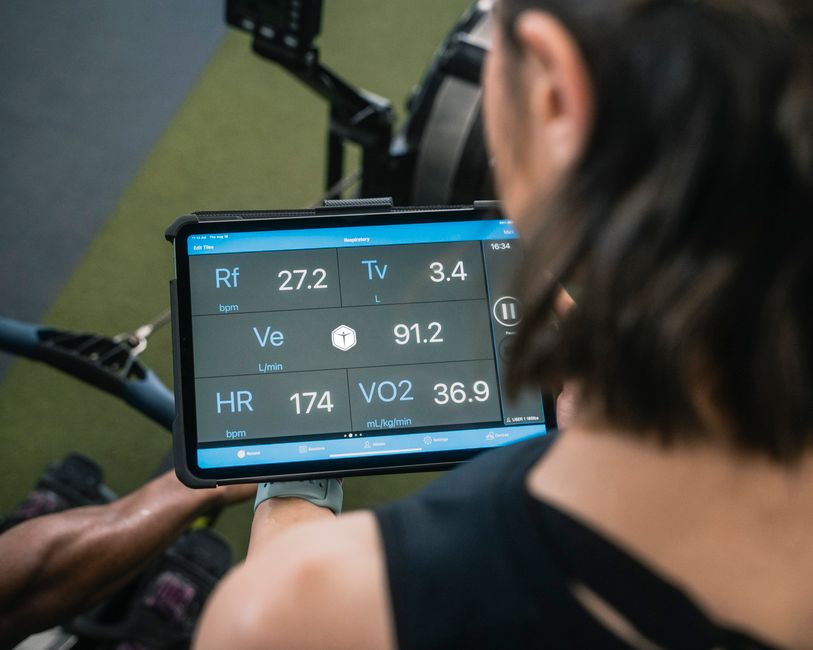
You wake up, check your watch, and see two numbers that seem to have their own mood swings. Resting heart rate is up a few beats. HRV is down. Yesterday’s workout felt fine. Sleep was decent. So now what?
For most men over 50, the useful question isn’t whether one morning’s score looks good. It’s whether your resting heart rate HRV men over 50 baseline is stable, drifting, or quietly getting worse over time. That’s the difference between using wearable data like an adult and letting it run your morning like a needy middle manager.
The evidence points in a pretty clear direction. After 50, lower HRV is expected, slightly higher resting heart rate than your younger years is common, and single-day fluctuations are mostly noise. What matters is building a personal baseline under consistent conditions, then watching the trendlines. That’s what turns two noisy metrics into something you can actually train with.
What Resting Heart Rate Actually Tells You After 50
Resting heart rate is the simplest recovery metric most people track, and it still earns its keep. Cleveland Clinic lists a normal adult resting heart rate at 60 to 100 beats per minute. For most men in their 50s, the useful comparison isn’t the population ceiling. It’s where their own number sits inside that broad range and whether it is moving.
What does the number actually represent? Mostly baseline cardiovascular load. If resting heart rate is creeping up, it can reflect accumulated fatigue, poorer sleep, higher life stress, illness, dehydration, or a training block that is costing more than it is paying back. It doesn’t tell you which one. It tells you something is asking more of the system.
This matters more in midlife because the signal stops being abstract. A few extra beats in your 20s might mean you had a late night. A few extra beats in your 50s, especially if the rise keeps showing up for months or years, deserves more respect. In the Copenhagen Male Study published in Heart (BMJ), men with a resting heart rate above 75 bpm in midlife had roughly double the risk of earlier death compared with men at lower levels. American Heart Association News reported in November 2024 that people whose resting heart rate rose over more than two decades were 69% more likely to die from any cause than people whose rate stayed stable or declined.
That doesn’t mean every reading above 75 is a crisis. It means a rising baseline isn’t something to shrug off. The grown-up use of resting heart rate isn’t drama. It’s surveillance.
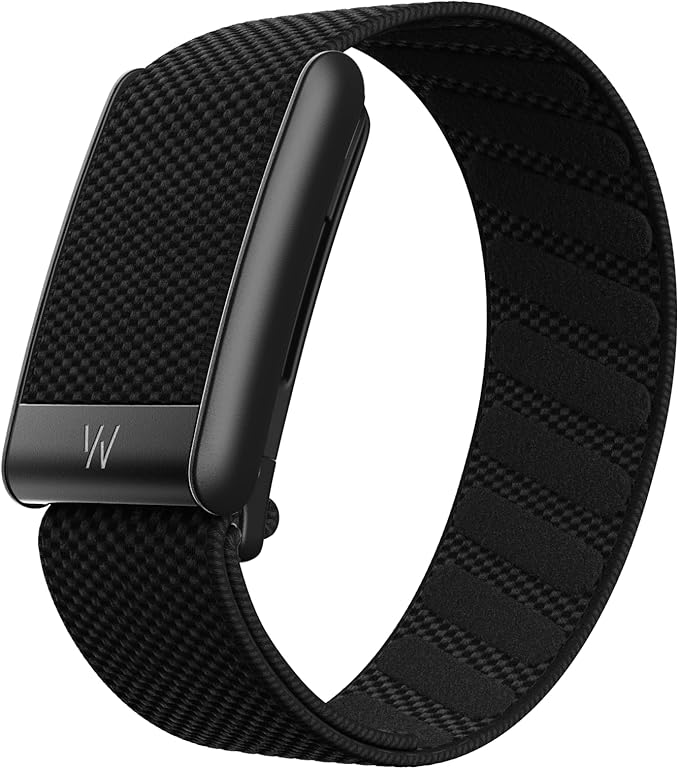
WHOOP MG Health Monitor
$239.00
This article contains affiliate links. We may earn a commission at no extra cost to you.
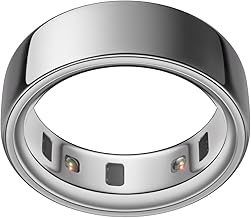
Oura Ring 4 — Silver
$349.99
This article contains affiliate links. We may earn a commission at no extra cost to you.
HRV After 50: What “Normal” Really Means
HRV gets oversold and misunderstood in equal measure. It isn’t a grade on your discipline. It isn’t proof that yesterday’s training plan was wise. It’s a read on how much beat-to-beat variation exists in the time between heartbeats, which gives you a window into parasympathetic recovery capacity.
The problem is that people love comparing their score to somebody else’s. That’s almost always useless. WHOOP‘s population data shows the middle 50% of 45-year-old male members fall between 35 and 60 milliseconds, while 25-year-olds cluster much higher at 50 to 100 ms. Oura reports an average male HRV of 40.3 ms across members. The Whitehall II cohort, published in the Journal of the American Heart Association, found that HRV decline from middle age into older age reflects normal aging rather than automatically signaling disease.
So yes, HRV usually drops as you get older. That’s normal. The mistake is treating “lower than when I was 32” as evidence that something is wrong. For a 55-year-old executive, lower HRV than a 25-year-old hybrid athlete with no mortgage, no travel schedule, and fewer orthopedic souvenirs isn’t exactly shocking.
What matters is whether your number is normal for you. Some men over 50 sit happily in the 30s. Some sit in the 50s. The wearable industry likes league tables because they keep people opening the app. Your nervous system doesn’t care about the leaderboard. It cares about consistency, recovery, and whether today’s reading fits the pattern your own body has been showing.
Resting Heart Rate HRV Men Over 50 Baseline: Why the Two Metrics Work Better Together
If you only track resting heart rate, you miss nuance. If you only track HRV, you miss context. Together, they give you a cleaner read on what the autonomic nervous system is doing.
Resting heart rate is the blunt instrument. It tells you how much background load the body is carrying. HRV is the finer tool. It tells you more about recovery capacity and parasympathetic tone. That difference matters because the two metrics can move in different ways for different reasons.
Elite HRV makes this point well. A single low HRV reading isn’t always bad. It can show up after a productive hard session because the body is in the middle of adapting. A single high HRV reading isn’t always good either. It can reflect what Elite HRV describes as a kind of hyper-recovery signal from accumulated stress, where the body is backing off because the load has been too high. WHOOP‘s general framework points in the same direction: one number rarely tells the whole story.
That’s why the paired pattern matters more than the isolated reading. If HRV dips for a day after a hard lift but resting heart rate stays close to baseline, that often looks like ordinary training stress. If HRV stays suppressed for several days while resting heart rate also climbs, the system is waving a larger flag. If resting heart rate is flat and HRV rebounds quickly, you are probably recovering better than the app’s dramatic color scheme suggests.
This is also where a lot of wearable confusion starts. Companies sell readiness scores because they are tidy. Physiology isn’t tidy. Two raw metrics, looked at together over time, usually tell a more honest story than one glossy score trying to pretend the answer is binary.
How to Set a Reliable Baseline After 50
Baseline first. Interpretation second. That order saves a lot of nonsense.
Elite HRV recommends measuring resting heart rate and HRV in the morning, at rest, under consistent conditions, for at least 7 to 14 days before deciding what is normal for you. Oura data scientist Marco Altini has made the same broader point: HRV is highly individual, so personal averages matter more than population comparisons.
In practical terms, that means measuring before coffee, before training, and ideally before the day starts negotiating with you. Same time. Same posture if possible. Same device. If you measure one day in bed, another after a hot shower, and another while already mentally inside your inbox, the numbers will still be real. They just won’t be comparable.
This is where a lot of men sabotage the process without realizing it. They take a reading after an evening out, after a brutal travel day, or after sleeping five hours in a hotel room, then treat it like a referendum on their fitness. It’s just contaminated data. Not morally contaminated, just practically useless.
Seven days is enough to start seeing the shape of things. Fourteen is better if your schedule is erratic, your training load changes a lot, or your sleep is inconsistent. The goal isn’t finding a perfect number carved in stone. The goal is building a trustworthy range that reflects your actual life.
Using Trendlines, Not Single Readings, for Training Decisions
The whole point of a baseline is to stop overreacting to noise. Wearables tempt people into daily interpretation because daily interpretation keeps the app sticky. Training decisions usually improve when you do the opposite.
American Heart Association News reported in 2024 that 88% of adults maintain a stable resting heart rate trajectory over 25 years. The outliers mattered: rising or unstable long-term trajectories were associated with 65% higher heart failure risk and 69% higher all-cause mortality. That’s a trendline story, not a single-morning story.
HRV behaves the same way. Elite HRV notes that a one-day drop of 15% to 20% can be completely normal after hard training. A sustained downward pattern over 5 to 7 days is different. WHOOP recommends watching rolling weekly averages rather than obsessing over daily scores for the same reason. The daily reading tells you what happened. The weekly average tells you whether it is becoming a pattern.
That shift in perspective changes how you train. One ugly morning after a hard block doesn’t automatically mean you should cancel everything and walk around muttering about cortisol. Three to five mornings of higher resting heart rate, flatter HRV, and worse sleep quality are more actionable. That isn’t fear-based decision-making. It’s just refusing to pretend motivation can overrule physiology.
For men over 50, this matters because recovery bandwidth is usually narrower than it was at 30. You can still train hard. You just pay more for pretending you don’t have limits. Trendlines help you catch that bill earlier.
Practical Decision Rules for Training Load
If you want these metrics to shape actual decisions, the rules need to be simple enough to use when you are tired.
Start with HRV. If it is more than 15% to 20% below your 14-day rolling average for three or more days, that is a good case for a recovery day, lighter aerobic work, or at least dialing intensity down. Elite HRV’s guidance supports that threshold as a sign that the body may not be absorbing the current load well.
Now add resting heart rate. If it is 5 or more beats above your baseline for three consecutive mornings, reduce training intensity. Swap intervals for zone 2. Cut volume. Skip the heroic session. There is no medal for correctly identifying overreach after the fact.
If both metrics move the wrong way at the same time, make the decision easy: rest or train very lightly regardless of how motivated you feel. That combination is usually the cleanest sign that recovery isn’t keeping up. On the other hand, a temporary HRV dip during a productive block, followed by normalization as recovery catches up, isn’t failure. Strategic suppression followed by rebound is how adaptation works.
The simplest framework looks like this. One off reading: note it and move on. Three bad mornings: adjust load. A full week of drift in the wrong direction: recover more aggressively and look at sleep, alcohol, travel, illness, or cumulative work stress. Men over 50 don’t need more motivational slogans. They need decision rules that remove negotiation.
Frequently Asked Questions
What is a healthy resting heart rate for a 55-year-old man?
Cleveland Clinic’s general adult range is 60 to 100 bpm. A lower number isn’t automatically better in every context. What matters most is where your own baseline sits and whether it is rising over time.
Is low HRV dangerous or just part of getting older?
Usually it is part of getting older. The Whitehall II findings in the Journal of the American Heart Association support the idea that HRV declines from middle to older age as a normal aging pattern. A low score becomes more concerning when it drops away from your own baseline and stays there.
How long should I track before I trust my baseline?
At least 7 to 14 days under consistent morning conditions. Elite HRV recommends that window because it is long enough to smooth out daily noise and short enough to be practical. If your schedule is chaotic, lean closer to 14 days.
Can exercise improve HRV after 50, or is the decline inevitable?
The age-related decline is normal, but that doesn’t mean training stops mattering. The more practical aim isn’t beating a younger man’s score. It’s keeping your own trendline stable, improving recovery capacity where possible, and avoiding the patterns that drag both HRV and resting heart rate in the wrong direction.
Should I trust my wearable’s recovery score or look at the raw numbers?
Use the recovery score as a summary, not a verdict. Raw resting heart rate and HRV trendlines usually tell you more, especially when the app’s score changes sharply for reasons that aren’t obvious. If the summary and the raw numbers disagree, trust the pattern in the raw numbers first.
Resting heart rate and HRV are useful after 50, but only if you stop asking them for certainty they can’t provide. Build a clean baseline, watch the weekly direction, and make training decisions from patterns instead of mood. That’s less exciting than chasing perfect scores, but it is a much better way to stay durable.
This article is for informational purposes only and is not financial advice. Consult a qualified professional for personalized guidance.
Leave a Reply