
If you’re looking at NAC supplement evidence as a man over 45, the appeal is obvious. Recovery is slower. Bloodwork starts getting more interesting than it used to be. And the supplement aisle keeps promising that one bottle will fix the whole aging problem, which is convenient for the bottle company and less convenient for everyone else.
N-acetylcysteine, usually shortened to NAC, at least has a legitimate medical history behind it. It’s the active ingredient in Acetadote, the FDA-approved intravenous treatment for acetaminophen overdose, and it’s on the World Health Organization Model List of Essential Medicines. That matters because NAC isn’t some brand-new longevity toy. The reason it keeps showing up in liver, cognition, and recovery conversations is simpler: it helps supply cysteine, which the body uses to make glutathione, one of the key intracellular antioxidants.
The straight take is that NAC has real evidence in a few narrow lanes and thinner evidence everywhere else. The best human data for men over 45 points to support for glutathione status, exercise recovery, and some metabolic markers. The case for direct cognitive protection is more preliminary, and the strongest trials there involve GlyNAC or broader metabolic formulas rather than NAC by itself. So this isn’t a miracle product. It’s a targeted tool with a plausible mechanism and mixed, but interesting, human data.
What Is NAC and Why Does It Matter for Men Over 45?
NAC matters because it sits upstream of glutathione production. Examine’s clinical overview describes it as a rate-limiting precursor to glutathione, which is why researchers keep using it in settings where oxidative stress, inflammation, or toxin load matter. Oral study doses commonly land between 600 and 1,800 mg per day, usually split across two or three servings.
For men over 45, that mechanism is more than chemistry trivia. Aging is associated with lower glutathione availability, more oxidative stress, and a slower ability to bounce back from training, poor sleep, illness, or plain old physiological mileage. That doesn’t mean every older man is glutathione deficient. It does mean the pathway NAC targets is relevant to exactly the complaints that tend to show up in midlife: slower recovery, rising metabolic friction, and the feeling that the margin for error keeps shrinking.
Its clinical history also helps separate NAC from the supplement-lottery problem. A compound that has been used in formal medical settings, and is important enough to land on the WHO essential medicines list, deserves a different level of attention than a capsule whose main evidence base is a shirtless guy on a podcast. That still doesn’t make it automatically effective for every goal. It just means the starting point is better than usual.
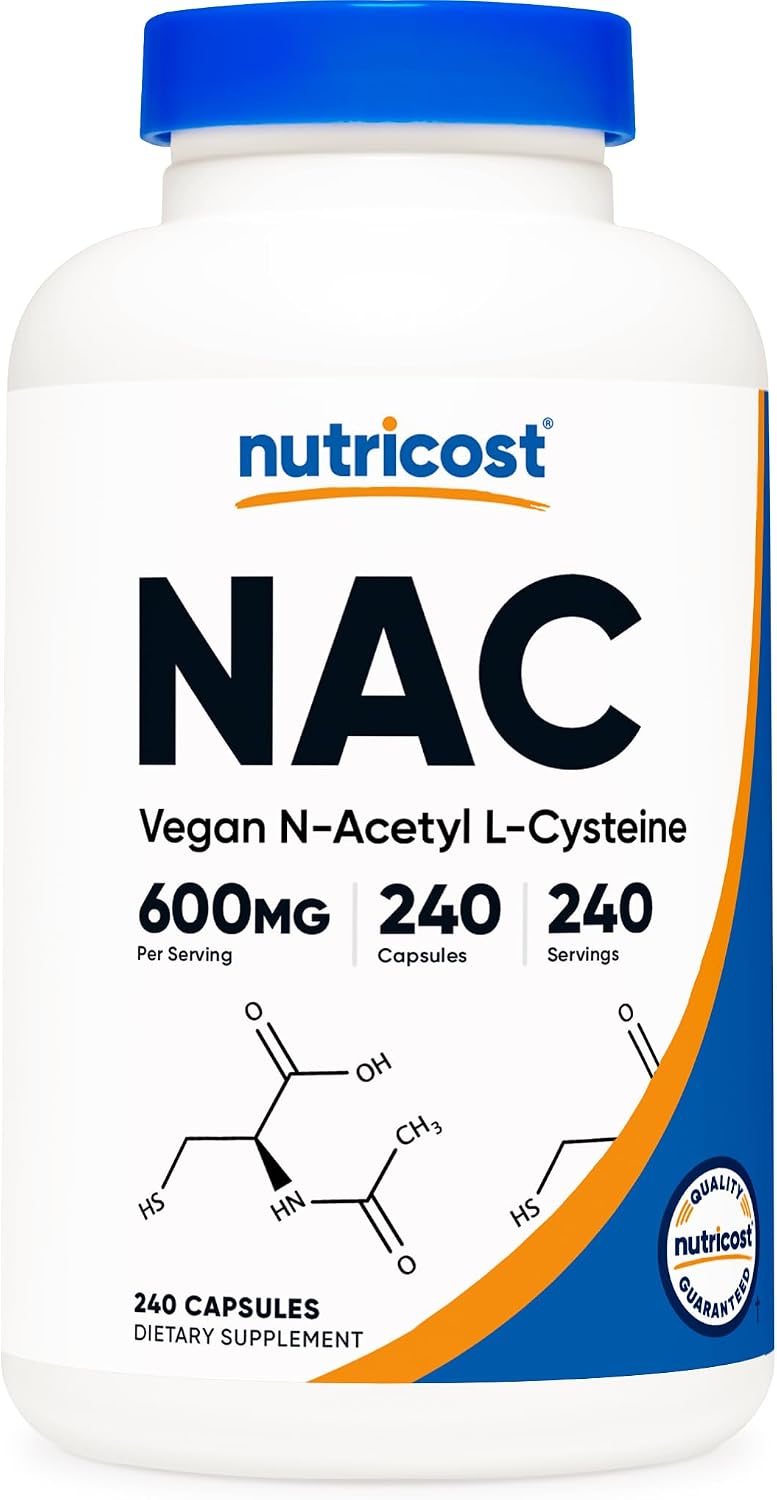
Nutricost N-Acetyl L-Cysteine (NAC) 600mg
$21.95
This article contains affiliate links. We may earn a commission at no extra cost to you.

Thorne
This article contains affiliate links. We may earn a commission at no extra cost to you.
NAC and Liver Health: What the Clinical Evidence Actually Shows
This is where a lot of supplement marketing gets sloppy. A mechanistic story about glutathione becomes “supports liver detox,” then turns into vague promises about repairing damage. The human trial evidence is more restrained than that.
The most relevant liver trial here is the 2026 double-blind randomized controlled trial in Addiction & Health involving 69 patients with metabolic dysfunction-associated steatotic liver disease. Participants took 600 mg of NAC three times daily for eight weeks. The result wasn’t a dramatic turnaround in conventional liver markers: alanine aminotransferase did not improve significantly, aspartate aminotransferase did not improve significantly, and hepatic steatosis itself did not show a significant shift either.
What did improve was still worth noticing. The NAC group showed significant gains in fasting glucose, insulin, HOMA-IR, C-reactive protein, and total glutathione. That’s a useful distinction. NAC did not behave like a magic liver enzyme eraser. It did appear to improve oxidative and metabolic terrain around fatty liver disease.
For a reader over 45, the practical read is this: NAC may be worth considering if the goal is broader metabolic support in the context of liver stress, but the evidence doesn’t justify treating it like a stand-alone fix for elevated enzymes or steatosis. If your expectation is “take this and normalize the panel,” the evidence isn’t there yet. If the expectation is “support glutathione and possibly improve some metabolic markers while handling the boring basics elsewhere,” that is much closer to what the trial actually showed.
Cognitive Protection: Can NAC Help Preserve Your Mental Edge?
Cognition is the part that gets attention fastest because it hits identity, not just comfort. Men in this age band are usually less worried about abstract longevity than about losing sharpness in meetings, decision-making, and memory. Fair concern. The evidence here is promising, but it needs a tighter read than most supplement pages give it.
The strongest signal in the cited evidence comes from the 24-week GlyNAC pilot trial in older adults published in Clinical and Translational Medicine in 2021. This wasn’t NAC alone. It was NAC plus glycine. The study found improvements in cognition, strength, gait speed, oxidative stress, inflammation, mitochondrial dysfunction, insulin resistance, and endothelial dysfunction. Just as important, several benefits reversed after a 12-week withdrawal period. That suggests the effect was linked to continued supplementation rather than a one-time reset.
There is also the 2023 phase II trial in Translational Neurodegeneration looking at combined metabolic activators that included NAC. In patients with Alzheimer’s disease, cognitive function improved by 29% in the treatment group versus 14% in placebo over 84 days. Again, that is encouraging, but it isn’t a clean NAC-alone trial. It’s a multi-ingredient formula in a specific clinical population.
So what can be said honestly? The evidence suggests NAC may be part of a useful cognitive-support stack when the aim is improving glutathione status and metabolic resilience, but the clearest human wins come from combinations like GlyNAC, not NAC as a solo hero. That distinction matters. If a supplement brand implies NAC alone has already proven it preserves executive function in healthy men over 45, it is borrowing confidence from studies that were more complicated than that.
NAC for Post-Workout Recovery and Physical Performance
Recovery is where NAC looks most practical. Not glamorous. Practical. And for a lot of men over 45, that is the real job description. You don’t need a supplement that makes you feel like a cartoon superhero. You need one that might help you train again on Thursday without feeling like you were hit by a rental truck on Wednesday.
The 2024 meta-analysis in the Journal of Cellular and Molecular Medicine pooled 20 studies and found NAC supplementation significantly reduced muscle soreness, lactate concentrations, interleukin-6, and TBARS while increasing glutathione levels after exercise. That’s a pretty coherent pattern: lower markers of oxidative stress and inflammation, plus less soreness and better biochemical recovery.
The 2023 Nutrients systematic review of 16 controlled trials in adult males reached a similar conclusion. NAC improved exercise performance, antioxidant capacity, and glutathione homeostasis, with no serious adverse events reported across the included studies. That’s not proof that every 52-year-old doing strength work or interval training will feel dramatically different in week one. It’s, however, a much sturdier evidence base than the average recovery supplement can claim.
The practical edge here is that recovery usually becomes a programming bottleneck before it becomes a motivation problem. You can still want to train hard and find that connective tissue, sleep debt, and accumulated stress start sending invoices. NAC looks most credible when it is framed as support for that recovery equation, not as a substitute for sleep, calories, protein, or sane training volume. If you are already using the science-backed creatine guide for men over 45 as your baseline recovery supplement reference, NAC belongs in the “maybe additive, not foundational” tier.
Glutathione Depletion and the Aging Cascade: Where NAC Intervenes
This is the section where NAC makes the most conceptual sense. Aging is associated with a gradual decline in intracellular glutathione, and that decline connects to oxidative stress, inflammation, mitochondrial dysfunction, insulin resistance, and slower recovery. In plain English: the systems that help you absorb stress stop handling it quite as cleanly.
The 2021 Clinical and Translational Medicine GlyNAC trial is useful here because it did more than report one feel-better outcome. Over 24 weeks, supplementation corrected glutathione deficiency and improved oxidative stress, inflammation, mitochondrial function, insulin resistance, strength, gait speed, body fat, waist circumference, and cognition in older adults. That’s why NAC keeps showing up in longevity conversations. The mechanism isn’t marketing fluff. There is a measurable aging-related deficit, and NAC is part of one strategy that appears to address it.
But this is also where people overreach. A plausible mechanism isn’t the same thing as a guaranteed clinical outcome in every domain. Glutathione support helps explain why NAC is interesting. It doesn’t automatically mean more is better or that every symptom of aging is really a hidden NAC deficiency wearing a fake mustache. The better way to think about it is that NAC targets one real pathway in the aging cascade, and some of the downstream benefits look credible enough to justify attention.
That’s also why it makes sense to compare it with other “healthy aging” supplements on evidence quality instead of vibes. If you’re sorting through mitochondrial or resilience-oriented options, our evidence-based NMN, NR, and Urolithin A comparison is a better benchmark than any marketing page that confuses a pathway diagram with a result.
Dosage, Safety, and What to Look for in a NAC Supplement: Evidence for Men Over 45
Across the cited studies, clinical dosing is fairly consistent: 600 to 1,800 mg per day, split into two or three doses. That’s the range used across the major human studies cited here and it is the only range that deserves to be called evidence-based in this review. Anything far outside it may still have a rationale, but not from the sources cited here.
On safety, the picture is reasonably clean. The cited sources describe NAC as generally well-tolerated, with mild gastrointestinal upset as the most common side effect. The recovery review in Nutrients also reported no serious adverse events across the included trials. That doesn’t mean “safe for everyone, no questions asked.” It means the available human evidence described here doesn’t show a major safety problem at standard oral doses.
For quality, the bigger concern is usually manufacturing rather than molecule theory. Third-party testing matters because supplement quality can vary a lot. NSF, Informed Sport, and USP are the useful signals to look for. If a brand is vague about sourcing, batch testing, or contamination controls, move on. That’s one reason our Momentous vs. Thorne brand comparison is more useful than a generic top-10 list. The real question isn’t whether the label says NAC. The question is whether the product was made like anyone expected to be checked.
Who is this not for? It isn’t for someone expecting one supplement to clean up an obviously broken routine. It’s also not for someone who treats every new capsule like a hobby and none like a decision. If you are already on multiple prescriptions, using TRT, or managing a liver condition, the honest move is to run NAC past your clinician before adding it. The cited trials focus on outcomes like metabolic markers, cognition, and exercise recovery, not detailed interaction management.
Frequently Asked Questions
Is NAC safe to take every day for men over 45?
Based on the cited studies, daily use in the 600 to 1,800 mg range appears generally well-tolerated, with mild gastrointestinal upset the most common side effect. The key qualifier is that “generally well-tolerated” isn’t the same thing as universally appropriate, especially if you already use prescription medications.
How does NAC compare to milk thistle or TUDCA for liver support?
The cited sources don’t include direct comparison trials against milk thistle or TUDCA, so there is no clean head-to-head verdict here. What the evidence does show is that NAC has meaningful support for improving glutathione and some metabolic markers, while not reliably lowering ALT, AST, or steatosis on its own in the 2026 MASLD trial.
Should I take NAC alone or with glycine for cognitive benefits?
The stronger cognitive data in the cited studies comes from GlyNAC, not NAC alone. If the goal is cognitive support specifically, the current evidence leans toward the combination as the more interesting evidence-backed option, while staying honest that the data is still preliminary.
Does NAC interact with testosterone replacement therapy or other common medications?
The cited trials weren’t designed as detailed interaction studies, so they don’t answer that question cleanly. If you are on TRT or other prescription medications, the prudent move is to review NAC with your prescribing clinician rather than guessing from general supplement marketing.
How long does it take to notice effects from NAC supplementation?
The cited trials ran from eight weeks to 24 weeks, with measurable changes showing up inside those windows. That suggests NAC isn’t the kind of supplement where one good week tells you much. It’s better judged over a structured trial period with a specific goal, whether that is recovery, biomarker follow-up, or broader resilience support.
The Bottom Line
NAC is one of the more credible supplements in the midlife performance category because the mechanism is real and the human data isn’t imaginary. The evidence is strongest for glutathione support, exercise recovery, and some metabolic improvements, while the cognitive story is promising but still driven mostly by combination formulas rather than NAC alone. For men over 45, that makes NAC worth considering as a targeted tool, not a cure-all and definitely not a substitute for fixing the obvious.
Continue reading: Read the pillar — Supplements & Nutrition
This article is for informational purposes only and is not financial advice. Consult a qualified professional for personalized guidance.
Leave a Reply