
Most probiotic advice is still written as if the reader is 27, has endless patience, and enjoys wandering the supplement aisle like it’s a hobby. That falls apart fast at 52, when recovery takes longer, antibiotics hit harder, and the usual “contains 40 billion CFU” label tells you almost nothing useful.
If you’re looking for the best probiotics for men over 45 evidence matters more than capsule count, flavor, or whatever glowing promise is printed on the bottle. The aging gut tends to lose some of its Bifidobacterium and Lactobacillus depth, and that matters because the downstream effects aren’t abstract: weaker barrier function, more low-grade inflammation, and less resilient immune signaling, according to a 2023 review in Nutrients.
The filter is simple. Start with strains that have data, then look for brands that can prove what’s in the bottle through third-party testing. Everything else is packaging. Sometimes pricey packaging.
Why Men Over 45 Need More Than a Generic Probiotic
After 45, “just take a probiotic” isn’t a strategy. It’s category shopping. What changes with age isn’t only digestive comfort but the broader gut environment around it.
The 2023 Nutrients review on age-related changes in gut microbiota describes a pattern older readers will recognize even if they’ve never looked at a stool test: lower levels of beneficial Bifidobacterium and Lactobacillus species, increased intestinal permeability, weaker immune surveillance, and a rise in inflammatory signaling. In plain English, the gut gets less robust and more reactive.
That helps explain why the generic products often disappoint. Many probiotic formulas still hide behind species names without telling you the strain, dose, or the actual outcome studied in humans. “Contains Lactobacillus” is about as useful as saying a car “has wheels.” Technically true. Not enough to make a decision.
For men over 45, the better question isn’t whether a probiotic is “high potency.” It’s whether the strain has evidence for the goal you actually care about. Is the target digestive regularity after a round of antibiotics? Visceral fat? Immune resilience during heavy travel? Lower intestinal inflammation? Different job, different strain.
This is also where the supplement industry gets slippery. A label can advertise 20 or 50 billion CFU and still tell you little about whether the formula is relevant to an aging gut. Quantity is easy to print. Strain-specific evidence is harder, which is why the serious brands lead with it and the weak ones lead with adjectives.
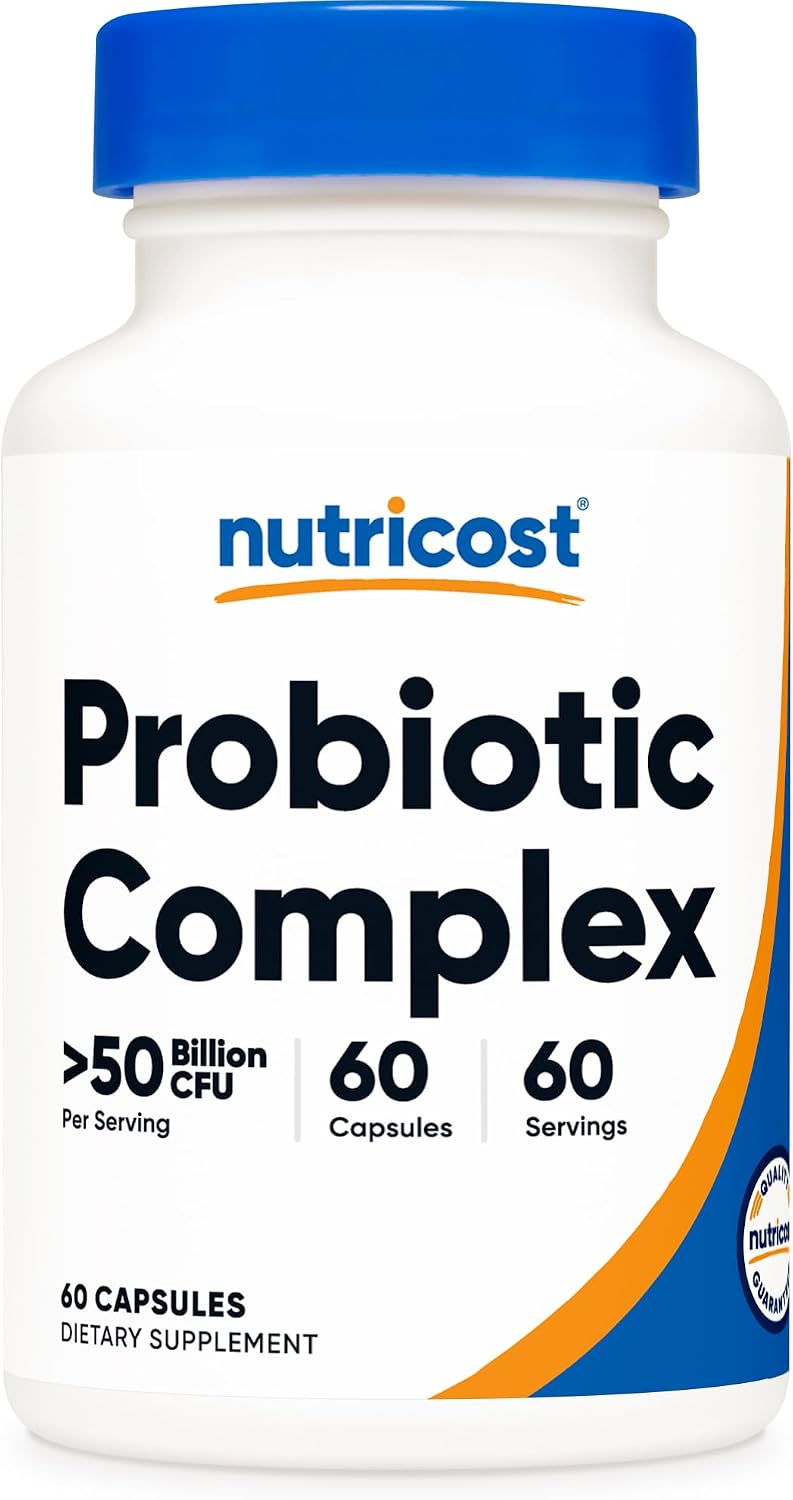
Nutricost Probiotic Complex
$19.95
This article contains affiliate links. We may earn a commission at no extra cost to you.

Thorne
This article contains affiliate links. We may earn a commission at no extra cost to you.
Best Probiotics for Men Over 45 Evidence: Six Strains Worth Knowing
If one H2 in this piece needs to be explicit, this is the one. These are the strains with actual human evidence behind them, and each earns attention for a different reason.
Lactobacillus rhamnosus GG is the old professional in the room. Culturelle notes that LGG has been studied in more than 1,000 scientific publications and more than 300 human clinical trials. That doesn’t automatically make every LGG product right for you, but it does make the strain hard to ignore if your main goal is broad digestive resilience.
Bifidobacterium longum BB536 has a more targeted case for immune aging. In a 12-week double-blind trial published in Bioscience, Biotechnology, and Biochemistry, elderly patients with a mean age of 81.7 who received BB536 avoided the decline in natural killer cell activity seen in the placebo group. That’s not a promise of superhero immunity. It’s useful evidence that the strain may help support immune function in older adults.
Lactobacillus gasseri SBT2055 is the one to know if your concern is waistline creep that showed up despite keeping the same training habits. In European Journal of Clinical Nutrition, a 12-week placebo-controlled trial found reductions in visceral fat area and waist circumference, including a 4.6% drop in visceral fat area. That’s one of the cleaner strain-specific outcomes in the probiotic world.
Bifidobacterium lactis HN019 matters for regularity and immune markers. The aging-gut review in Nutrients highlights HN019 for improved gut transit time and immune-related outcomes in older adults. If the problem is slower digestion rather than dramatic GI distress, this is a more relevant target than a generic multi-strain shotgun approach.
Saccharomyces boulardii is technically a beneficial yeast, not a bacterial probiotic, but that distinction only matters if you’re writing exam questions. In practice, it has some of the best controlled-trial support for preventing antibiotic-associated diarrhea. That’s a real use case for time-poor adults who travel, get occasional antibiotic prescriptions, and don’t want their gut wrecked for two weeks afterward.
Lactobacillus plantarum strains are interesting because the signal runs beyond digestion. The Nutrients review points to evidence that certain L. plantarum strains can reduce inflammatory markers such as TNF-alpha and IL-6 in older adults. The mechanism is plausible, the early human data is encouraging, and the responsible phrase here is emerging evidence, not miracle cure.
The useful reframe is this: don’t shop for “a probiotic.” Shop for a strain with a job.
What Third-Party Testing Certifications Actually Tell You
Once you’ve narrowed the strain, the next problem is trust. Supplement labels are easy to print. Manufacturing discipline is harder.
NSF Certified for Sport is the most practical signal for anyone who cares about contamination, label accuracy, and repeat manufacturing oversight. NSF says the program screens for more than 290 banned substances, verifies that what’s on the label is actually in the product, and audits manufacturing facilities annually. Even if you’re not a tested athlete, that’s a meaningful level of scrutiny. It’s especially relevant if you already spend money on training, labs, or recovery and would prefer not to sabotage that with a contaminated supplement.
USP Verified is different, not weaker. The United States Pharmacopeia verification mark means the product contains the declared ingredients in the declared amounts, disintegrates properly for absorption, and is screened for specified contaminants such as heavy metals and pesticides. For the average buyer, USP is often the clearest sign that a mainstream supplement company bothered to submit to an outside standard.
Informed Sport pushes the banned-substance piece even harder. The program says every production batch is tested for substances banned by the World Anti-Doping Agency. That batch-by-batch standard is stricter than the lighter-touch language many brands use when they say they’re “tested.” Tested by whom, how often, and for what is usually where the marketing fog rolls in.
One important limit: these seals verify product quality, not clinical relevance. A beautifully manufactured probiotic with the wrong strain for your goal is still the wrong product. Third-party testing tells you the bottle is more trustworthy. It doesn’t tell you the formula is evidence-backed. You need both filters.
Five Third-Party Tested Probiotic Brands That Use Evidence-Backed Strains
Here is the short list that closes the gap between strain evidence and actual products you can buy.
Culturelle Digestive Daily Probiotic is the cleanest entry point for many readers because it uses Lactobacillus rhamnosus GG at 10 billion CFU per serving and carries USP verification. If your goal is everyday digestive resilience and you want the most researched strain in the category, this is an easy case to make. Who this isn’t for: someone specifically targeting visceral fat reduction, or someone who wants a sport-certification standard rather than USP.
Thorne FloraSport 20B takes a different angle. Thorne positions it as an NSF Certified for Sport product and includes four clinically studied strains, including Bacillus subtilis DE111. That matters if you’re training hard, traveling often, or simply want the contamination controls of a sport-certification program. Who this isn’t for: someone who only wants the best-studied classic strains like LGG or BB536 and doesn’t need the athlete-focused certification tier.
Garden of Life Dr. Formulated Probiotics Sport+ also carries NSF Certified for Sport and delivers 50 billion CFU across 14 strains in the Lactobacillus and Bifidobacterium families. The upside is breadth. The downside is that broader formulas can make it harder to know which ingredient is doing the work for you. Who this isn’t for: a reader who wants a simple, strain-specific experiment with one clear reason for buying it.
Seed DS-01 Daily Synbiotic gets attention because a randomized controlled trial reported by NutraIngredients in January 2026 found significant reductions in bloating and abdominal discomfort in 350 adults. That’s meaningful. It also comes with the usual Seed caveat: the branding is polished, the price isn’t low, and some readers will find the lifestyle framing a little eager. Who this isn’t for: someone who wants a third-party sport or USP seal clearly displayed on the product, or someone trying to keep costs grounded.
Nature Made SuperGreens with Probiotics is less glamorous but worth mentioning because Nature Made has a long track record with USP verification across parts of its product line, including this formula. For some readers, that’s the entire point. They want a mainstream brand that actually submits products for outside verification. Who this isn’t for: someone who wants a highly specific, strain-led probiotic protocol rather than a broader greens-plus-probiotics product.
The pattern here is straightforward. Culturelle is the clearest single-strain evidence play. Thorne and Garden of Life lean into NSF-certified manufacturing confidence. Seed offers newer clinical data with a premium wrapper. Nature Made is the pragmatic mainstream option. Different buyers, different filters.
How to Match a Probiotic to Your Specific Health Goal at 45+
This is where the buying decision gets easier.
If the main goal is immune support, start with Bifidobacterium longum BB536 or Bifidobacterium lactis HN019. BB536 has the cleaner aging-immune trial signal, while HN019 has a useful case for both transit time and immune markers in older adults. That combination makes sense for someone who travels often, gets run down after poor sleep, or notices that every cold now behaves like a hostile takeover.
If the real problem is metabolic health or visceral fat, Lactobacillus gasseri SBT2055 is the strain worth paying attention to. The 2010 trial in European Journal of Clinical Nutrition used daily intake for 12 weeks and found measurable reductions in visceral fat area and waist circumference. That’s not a replacement for fixing diet, lifting, or sleep. It’s one of the few cases where a probiotic strain showed a very specific body-composition outcome.
If you’re solving for digestive regularity, HN019 and Saccharomyces boulardii are the more practical targets. HN019 fits the slower-transit, aging-gut problem. S. boulardii is the sensible choice around antibiotic exposure or travel-related disruption. Those are different scenarios, which is why treating all probiotics like interchangeable gut confetti is a bad way to spend money.
If your interest is the broader gut-prostate axis, the honest answer is that the most interesting data is still early. Phase 2 evidence presented at ASCO Genitourinary Cancers in 2025 involved Lactobacillus rhamnosus in men on active surveillance for low-risk prostate cancer, with improved PSA-related outcomes. That’s worth watching, not over-reading.
And if you’re curious about inflammation and mood, a 2025 pilot trial involving Lactobacillus plantarum OL3246 in elderly adults reported reduced intestinal inflammation and improved mood. Again: emerging evidence. Plausible. Interesting. Not a blank check to assume every L. plantarum bottle on the internet does the same thing.
The shortest useful framework is this:
- Immune support: BB536 or HN019
- Visceral fat: SBT2055
- Digestive regularity or antibiotic recovery: HN019 or S. boulardii
- Emerging prostate or inflammation angles: selected L. rhamnosus and L. plantarum strains, with expectations kept on a leash
Related: our full guide to supplement verification programs
Related: the Supplements and Nutrition pillar for men over 45
Frequently Asked Questions
Do I need a probiotic if I already eat yogurt or fermented foods?
Maybe not. Fermented foods are useful, but they usually don’t deliver the same defined strain, dose, or consistency as a supplement used in a clinical trial. If you’re eating yogurt daily and have no GI complaints, you may not need one. If you’re trying to target a specific issue like transit time, antibiotic recovery, or visceral fat, a named strain is a more precise tool.
How long does it take for a probiotic to start working at my age?
For digestive comfort, some people notice a change within one to three weeks. For outcomes tied to body composition or immune markers, the relevant studies often run 12 weeks. If nothing is changing after a fair trial, that is information. More time doesn’t automatically rescue the wrong strain.
Can probiotics interfere with prescription medications or TRT?
Most common probiotic products are well tolerated, but “safe” isn’t the same thing as universally appropriate. Men who are immunocompromised, seriously ill, or dealing with complicated GI disease should check with their clinician first, especially with yeast-based products like S. boulardii. There is no obvious blanket conflict with TRT, but the sensible move is still to review new supplements alongside the rest of your regimen.
Are expensive probiotics worth it, or is a drugstore brand fine?
Price matters less than strain relevance and manufacturing quality. A cheaper product with LGG plus USP verification can be a better buy than a premium bottle full of impressive adjectives. Expensive is only worth it when it buys you either better evidence, stronger third-party testing, or a formula that matches your actual goal.
Should I cycle probiotics or take them continuously?
There is no universal rule. Some readers do better with a defined 8- to 12-week experiment tied to one goal, then reassess. Others use a probiotic during travel, heavy training, or after antibiotics. The mistake isn’t failing to cycle. The mistake is taking a product forever without knowing what success was supposed to look like.
The Bottom Line
The best probiotics for men over 45 aren’t the ones with the loudest labels. They’re the ones with a named strain, human data that matches your goal, and a third-party testing mark that says the bottle deserves trust. Start there, and the supplement aisle gets a lot less stupid.
Sources
- Nutrients (2023), “Age-Related Changes in Gut Microbiota and Immune Function”
- Bioscience, Biotechnology, and Biochemistry (2013), “Clinical effects of probiotic Bifidobacterium longum BB536 on immune function in the elderly”
- European Journal of Clinical Nutrition (2010), “Effects of Lactobacillus gasseri SBT2055 on visceral fat in adults”
- NSF International, Certified for Sport program overview
- United States Pharmacopeia, Dietary Supplement Verification Program
- Informed Sport, certification process overview
- Thorne, FloraSport 20B product information
- Garden of Life, Dr. Formulated Probiotics Sport+ product information
- Culturelle, LGG brand information
- NutraIngredients (2026-01-15), Seed DS-01 RCT coverage
- ASCO Genitourinary Cancers (2025), Phase 2 probiotic trial in active surveillance
Continue reading: Read the pillar — Supplements & Nutrition
This article is for informational purposes only and is not financial advice. Consult a qualified professional for personalized guidance.
Leave a Reply