
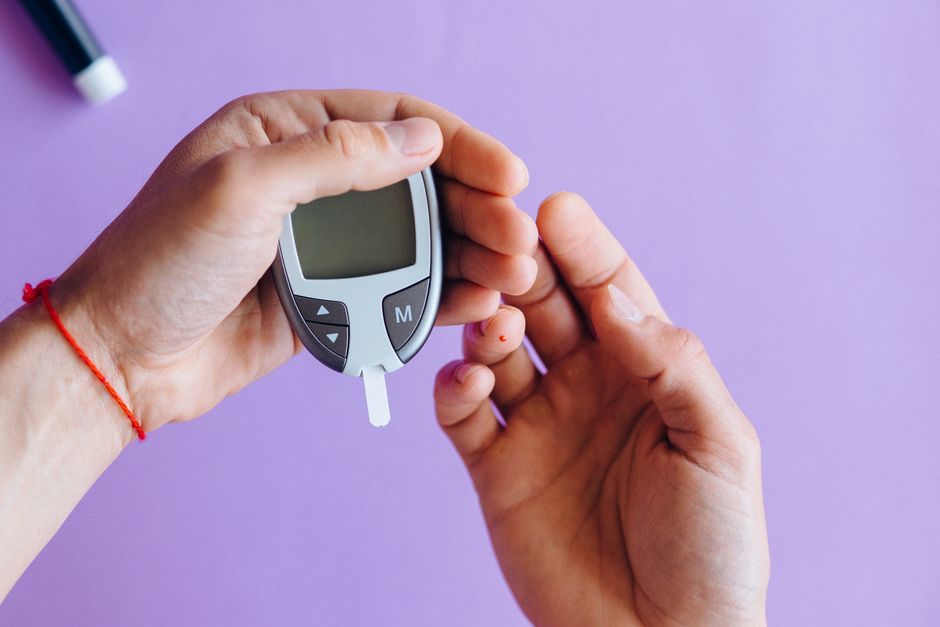
If your fasting glucose comes back “normal,” your HbA1c looks fine, and you still feel like your energy falls off a cliff after lunch, that isn’t nothing. It’s the snapshot problem. Standard labs give you a still photo. A CGM gives you the movie.
That matters for CGM non-diabetic metabolic health men over 50 because this is the age when small metabolic slips stop being theoretical. Recovery gets slower. Sleep gets touchier. One heavy dinner can make the next morning feel like someone stuffed cotton behind your eyes. Meanwhile, a doctor can glance at a routine panel and say everything looks normal for your age, which is one of medicine’s least useful sentences.
A continuous glucose monitor won’t diagnose your entire life. But it can show whether your metabolism is handling meals cleanly, whether your post-meal spikes are lingering too long, and whether the habits you thought were healthy are actually working for you. For a time-poor 55-year-old with a WHOOP on his wrist and no patience for wellness theater, that is useful data.
Why Your Standard Blood Work Might Be Missing Half the Picture for CGM Non-Diabetic Metabolic Health Men Over 50
Routine blood work is good at catching obvious problems. It isn’t good at showing day-to-day glucose volatility.
That distinction showed up clearly in Hall et al. in PLOS Biology in 2018. The researchers followed people who were considered normoglycemic by standard measures such as fasting glucose and HbA1c. Even in that supposedly normal group, participants spent about 15% of monitored time in the prediabetic range and about 2% in the diabetic range. In plain English: people who looked fine on a lab report were still having real glucose excursions that standard screening never saw.
That’s the practical case for a CGM in a non-diabetic adult. Fasting glucose tells you where you were at one moment. HbA1c tells you your rough average over a few months. Neither tells you what happened after last night’s pasta, after three bad nights of sleep, or after the “healthy” smoothie that hits your bloodstream like dessert wearing a fake mustache.
For men over 50, that blind spot matters more. Metabolic flexibility usually gets worse with age. You can stay technically normal on paper while your real-world response to meals gets sloppier. A CGM doesn’t replace labs. It fills in the half of the picture the labs don’t show.

Stelo Continuous Glucose Monitor
$59.99
This article contains affiliate links. We may earn a commission at no extra cost to you.
CGM Reveals Your Personal “Glucotype” – Why Generic Diet Advice Often Fails Men Over 50
The most useful thing a CGM gives you isn’t moral instruction. It gives you pattern recognition.
The same PLOS Biology study found that roughly 24% of participants who were still classified as normoglycemic had what the researchers called a severe glucotype, meaning larger and more frequent glucose swings. The bigger point was even more interesting: people responded differently to the same foods. One person’s harmless bowl of oatmeal is another person’s 155 mg/dL spike followed by a 3 p.m. fog.
That helps explain why generic advice often lands with a thud. “Eat less sugar” isn’t wrong. It’s just too blunt to be very useful. Two men can eat the same breakfast, get the same lecture about blood sugar, and have very different glucose curves. One settles back to baseline quickly. The other stays elevated for hours. Same food. Different metabolism.
For a reader in his 50s, this is where CGM becomes practical rather than performative. It lets you stop arguing with nutrition content on the internet and start watching your own data. Maybe rice is fine if you train that day. Maybe your real problem is poor sleep plus late-night snacking. Maybe fruit is harmless and your “healthy” granola is the actual saboteur. The point isn’t to build a religion around glucose. The point is to see your own glucotype and act on that instead of swallowing one-size-fits-all advice that was written for nobody in particular.
The Scale of the Problem: Metabolic Health Risks Men Over 50 Can’t Afford to Ignore
Metabolic decline isn’t some niche concern for gadget-loving health obsessives. It’s common, and it gets more common with age.
The National Institute of Diabetes and Digestive and Kidney Diseases reported in 2021 that 41% of U.S. men have prediabetes. Diabetes prevalence also climbs sharply with age, rising from 17.7% in men ages 40 to 59 to 27.3% in men 60 and older. Those aren’t fringe numbers. That’s a large chunk of the room.
The global trend is moving the same way. A 2025 analysis covered by News-Medical.net reported that metabolic syndrome prevalence more than doubled worldwide from 11.9% in 2000 to 28.4% in 2023. For men specifically, the prevalence rose from 9.0% to 25.7%. However you slice it, the direction is bad.
This is why “I’ll deal with it if a doctor tells me I have a problem” isn’t a serious strategy. By the time standard criteria say you definitely have a problem, the trend may have been developing for years. A CGM isn’t magic. It’s early visibility. For men over 50, that can mean the difference between making a few targeted adjustments now and trying to reverse a bigger mess later.
The expensive part isn’t the sensor. The expensive part is drifting for five years while telling yourself your annual physical covered it.
What Real CGM Data Looks Like After 50
The first mistake people make with CGM data is assuming every bump is a crisis. It isn’t. Glucose is supposed to rise after you eat.
Shah et al. in the Journal of Clinical Endocrinology & Metabolism looked at continuous glucose monitoring in non-diabetic adults and found average peak post-meal glucose around 130 mg/dL. The same work also found that adults over 60 spent significantly more time above 140 mg/dL than younger adults. Age changes the curve, even before anyone is formally diabetic.
So what should you look for?
First, look at the height of the spike. A brief rise is normal. Repeated sharp spikes after ordinary meals are worth noticing.
Second, look at recovery time. Peter Attia notes that a healthy response generally returns toward baseline within about two to three hours after eating. If your glucose climbs and then stays elevated well beyond that window, the issue is less the headline spike and more the poor recovery. That suggests reduced metabolic flexibility.
Third, look for repeatability. One bad night’s sleep or one restaurant meal doesn’t define your metabolism. A pattern does. If the same breakfast produces the same ugly curve three times in a week, that is signal.
And fourth, look at context. The same meal can behave differently after a workout, after short sleep, or after a stressful day. That’s the real value of CGM in a non-diabetic adult. You aren’t just measuring food. You are measuring your interaction with food, sleep, stress, and activity in real life.
Three Practical Changes Men Over 50 Can Make From CGM Feedback
Good CGM use should end in behavior change, not just screenshot collecting.
The first move is the easiest: take a short walk after meals. Peter Attia cites research showing that nearly half of healthy CGM users said seeing a high reading made them more likely to walk. That instinct is a good one. A 10- to 20-minute walk after a carb-heavy meal can blunt the glucose response without turning your life into a training camp.
The second move is to treat sleep as a metabolic input, not a separate department. Poor sleep is associated with bigger glucose spikes the next morning, even when the breakfast stays the same. If your CGM data looks worse after short or broken sleep, that isn’t random. It’s a clue. For a lot of men over 50, the metabolic fix isn’t another supplement. It’s getting serious about sleep timing, alcohol intake, and the basic sleep hygiene advice everyone ignores because it sounds boring.
The third move is meal sequencing. Pair carbohydrates with protein or fat, or eat the carbs later in the meal. Attia’s review points to evidence that this can reduce the size of the glucose excursion. That means your rice or potatoes may not need to disappear. They may just need better company and better timing.
These aren’t dramatic interventions. That’s the point. A CGM is most valuable when it turns vague health advice into a personal feedback loop. Walk after this meal. Fix sleep before that breakfast. Move the bread to the end instead of the beginning. Small changes are easier to repeat, and repeated changes are what move the curve.
How to Try a CGM Without a Prescription – and What to Do With the Data
The barrier to trying a CGM is lower than it used to be.
In March 2024, the U.S. Food and Drug Administration cleared Dexcom Stelo as the first over-the-counter continuous glucose monitor for adults who aren’t using insulin. In June 2024, Abbott launched Lingo for general wellness use. You no longer need to persuade a doctor that your curiosity counts as a medical emergency.
The market has noticed. GM Insights estimated the over-the-counter CGM market for non-diabetic users at about $197 million in 2025 and projected 17.5% compound annual growth through 2035. That doesn’t prove every buyer is using the device well. It does show that metabolic self-monitoring is moving into the mainstream.
If you decide to try one, keep the process simple.
Wear it long enough to see patterns, not just a novelty spike. A couple of weeks is usually more useful than a couple of days because it lets you compare workdays, weekends, better sleep, worse sleep, training days, restaurant meals, and your usual breakfast.
Pick a few questions before you start. Which meals hit hardest? Does walking help? Does poor sleep change the next morning’s response? Are there “healthy” foods you tolerate badly? Without questions, people just stare at graphs and become amateur weather forecasters of their own pancreas.
Then use the data conservatively. A CGM is a decision tool, not a personality test. If you see repeated high spikes, long recovery times, or more time above 140 mg/dL than you expected, that is a reason to tighten habits and, if needed, bring the data to a physician. If the data looks steady, that is useful too. It may tell you your basics are working and your effort belongs elsewhere.
Frequently Asked Questions
Can my regular doctor help me interpret CGM data, or do I need a specialist?
A regular primary care physician can help if they are comfortable with metabolic markers and open to reviewing trend data, but the quality varies. If you bring organized patterns instead of 200 random screenshots, the conversation goes better. Endocrinologists or sports-medicine physicians may be more useful if the data looks persistently abnormal.
How long should I wear a CGM to get useful metabolic insights?
Usually at least 10 to 14 days. That’s enough time to see your normal meals, sleep swings, work stress, travel, and exercise patterns. A shorter run can still show obvious spikes, but it is easier to mistake noise for signal.
Is a CGM covered by insurance if I don’t have diabetes?
Usually no, or not reliably. Insurance coverage tends to be stronger for diagnosed diabetes or specific clinical indications. For a non-diabetic user buying an over-the-counter device like Stelo or Lingo, it is more often an out-of-pocket experiment.
Can CGM data predict whether I’ll develop type 2 diabetes?
Not by itself. It can reveal patterns of dysregulation that deserve attention, especially when routine labs still look normal, but it isn’t a crystal ball. Think of it as an early-warning layer that can support a broader discussion with labs, medical history, body composition, and lifestyle.
What’s the practical difference between Dexcom Stelo and Abbott Lingo for a non-diabetic user?
The practical difference is positioning. Stelo was cleared first by the FDA for adults not using insulin, while Lingo entered the market as a general wellness product. For most buyers, the smarter comparison isn’t branding. It’s cost, app experience, wear comfort, and whether the data presentation actually helps you act on what you see.
For men over 50, a CGM can show whether “normal” labs are hiding messy day-to-day glucose control, which foods actually work for your metabolism, and whether basic habits like walking, sleep, and meal sequencing are moving the needle. That’s useful because metabolic decline rarely announces itself with a brass band. It usually starts as a pattern you can feel before it becomes a diagnosis you can’t ignore.
Sources:
- Hall H et al. “Glucotypes reveal new patterns of glucose dysregulation.” PLOS Biology (2018). https://doi.org/10.1371/journal.pbio.2005143
- National Institute of Diabetes and Digestive and Kidney Diseases. “Diabetes Statistics.” (2021). https://www.niddk.nih.gov/health-information/health-statistics/diabetes-statistics
- Shah VN et al. “Continuous glucose monitoring in non-diabetic individuals.” Journal of Clinical Endocrinology & Metabolism (2019). https://doi.org/10.1210/jc.2018-02763
- Peter Attia MD. “Continuous glucose monitoring to improve health in non-diabetics.” (2023). https://peterattiamd.com/cgm-in-non-diabetics/
- U.S. Food and Drug Administration. “FDA clears first over-the-counter continuous glucose monitor.” (2024). https://www.fda.gov/news-events/press-announcements/fda-clears-first-over-counter-continuous-glucose-monitor
- GM Insights. “OTC Continuous Glucose Monitoring Market.” (2025). https://www.gminsights.com/industry-analysis/otc-continuous-glucose-monitoring-market
- News-Medical.net. “Metabolic syndrome doubles worldwide over two decades.” (2025). https://www.news-medical.net/news/20260415/Metabolic-syndrome-doubles-worldwide-over-two-decades.aspx
Continue reading: Read the pillar — Biomarkers & Lab Testing
This article is for informational purposes only and is not financial advice. Consult a qualified professional for personalized guidance.
Leave a Reply