
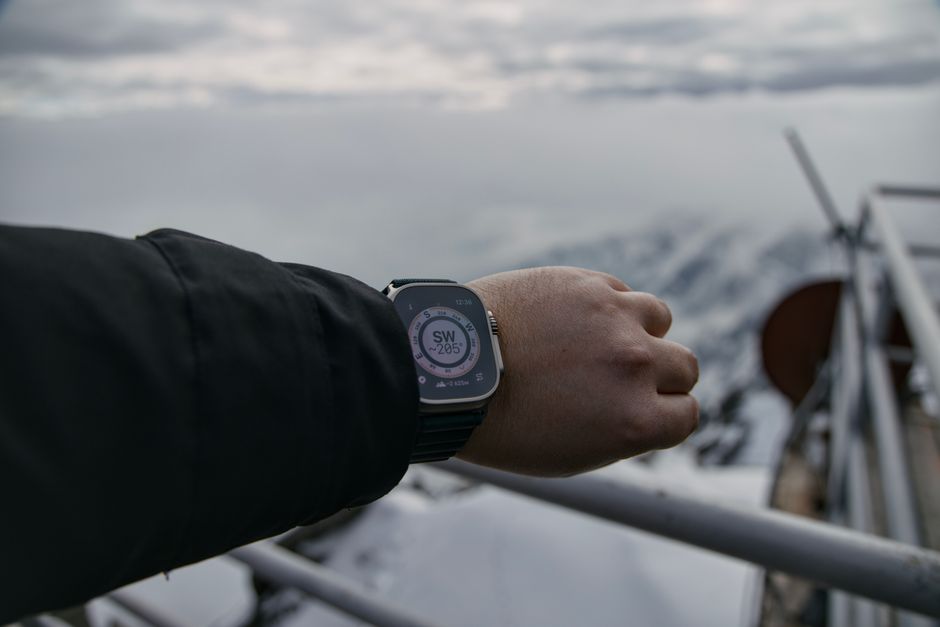
Apple Watch Ultra vs Garmin Epix vs WHOOP isn’t really one comparison. It’s three different ideas about what should live on your wrist when you’re trying to train hard, sleep better, and still show up sharp for a board meeting at 8 a.m. One acts like a premium smartwatch with serious fitness chops. One is a sports watch built for people who think charging cables are a design flaw. One is basically a physiological spy that refuses to show you the time.
That distinction matters more than the marketing copy suggests. A time-poor executive doesn’t need another gadget that creates a second job. The right wearable is the one you will actually wear through meetings, workouts, travel, and sleep, because compliance drives data quality and data quality drives whether the thing helps or ends up in the same drawer as the massage gun you swore would change your life.
The short version: Apple Watch Ultra 2 is the best fit for iPhone users who want one device to handle messages, calls, payments, workouts, and health metrics. Garmin Epix Pro Gen 2 is the better tool for serious endurance training, long battery life, and accurate mapping. WHOOP 4.0 is the specialist choice for recovery, strain, and sleep, especially if you want less screen time, not more.
Apple Watch Ultra vs Garmin Epix vs WHOOP: Three Different Philosophies
These three products compete at the premium end of the market, but they aren’t trying to solve the same problem. Apple Watch Ultra 2 is a rugged smartwatch first. PCMag puts its price around $699 to $799, and that tracks with Apple’s premium-device logic: broad utility, tight iPhone integration, and enough training features to satisfy most people who aren’t training for an ultra in the Alps.
Garmin Epix Pro Gen 2 comes from the opposite direction. Depending on size and current discounts, it ranges from about $500 to $1,000, according to PhoneArena and Garmin‘s own product listings. It’s built for endurance athletes, outdoor use, mapping, and data fields that can look less like a watch face and more like a cockpit display. That’s either reassuring or deeply annoying, depending on your personality.
WHOOP 4.0 strips the category down even further. There is no screen, no smartwatch layer, and no pretense that you are buying wrist-based convenience. WHOOP‘s own pricing page puts membership at roughly $25 to $40 per month, and Wareable describes the product the right way: a recovery band built around strain, sleep, and readiness signals. Pure physiological signal is the pitch.
So the decision starts with philosophy, not features. If you want one premium device that can replace several small daily tasks, Apple makes sense. If you want a training instrument that happens to live on your wrist, Garmin makes sense. If you want to reduce friction and obsess over recovery trends instead of notifications, WHOOP makes sense.
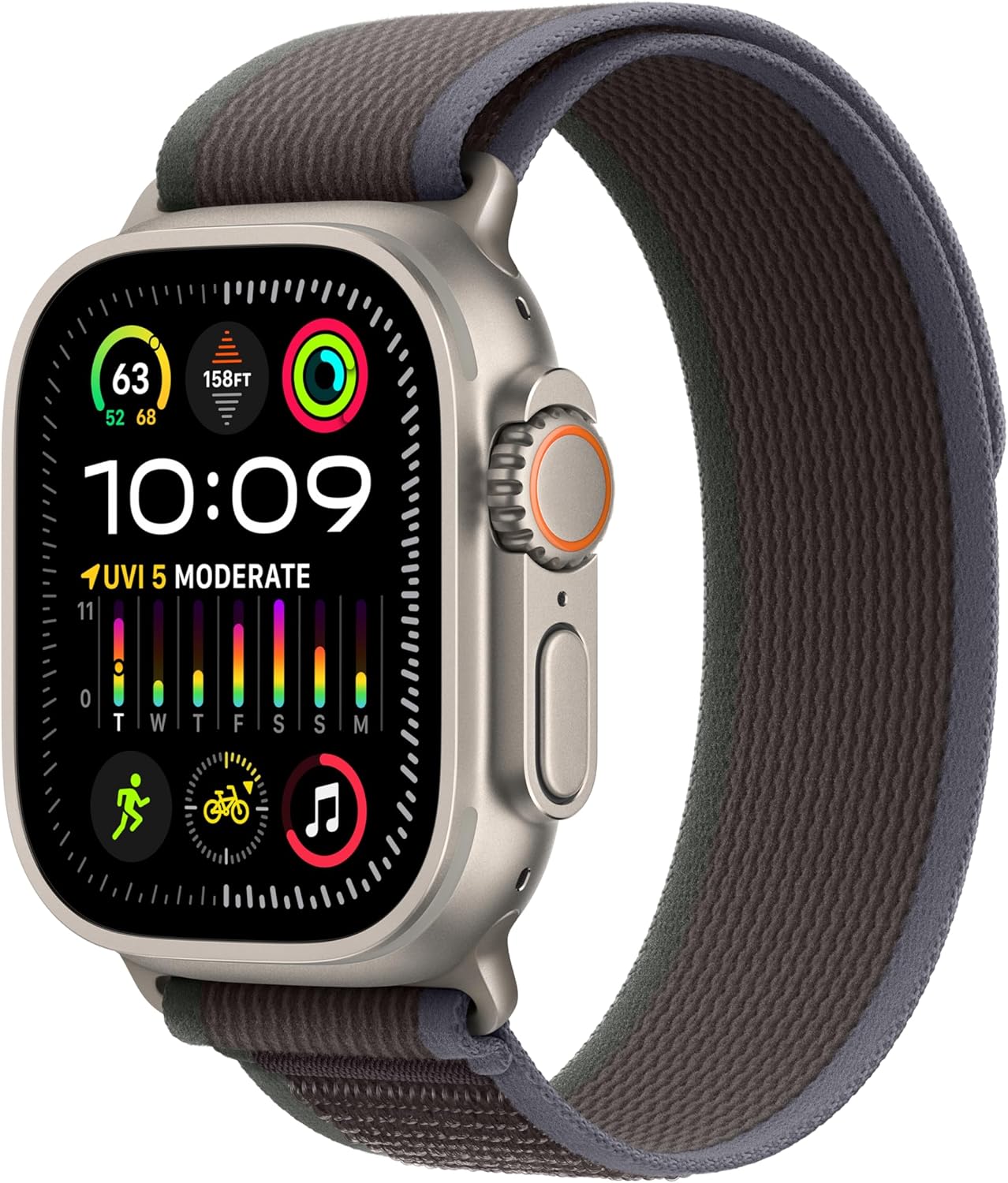
Apple Watch Ultra 2
$778.64
This article contains affiliate links. We may earn a commission at no extra cost to you.
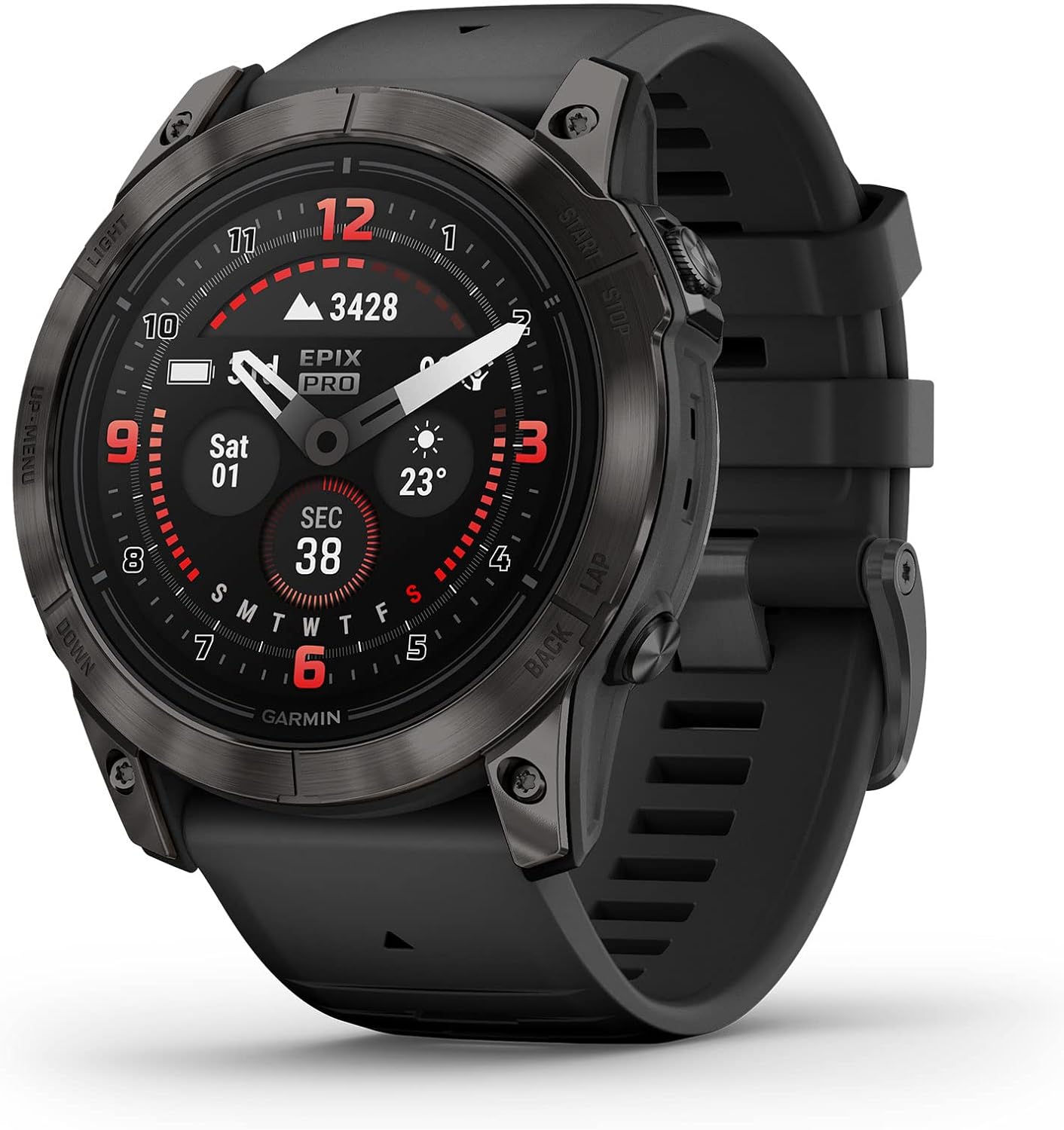
Garmin Epix
This article contains affiliate links. We may earn a commission at no extra cost to you.
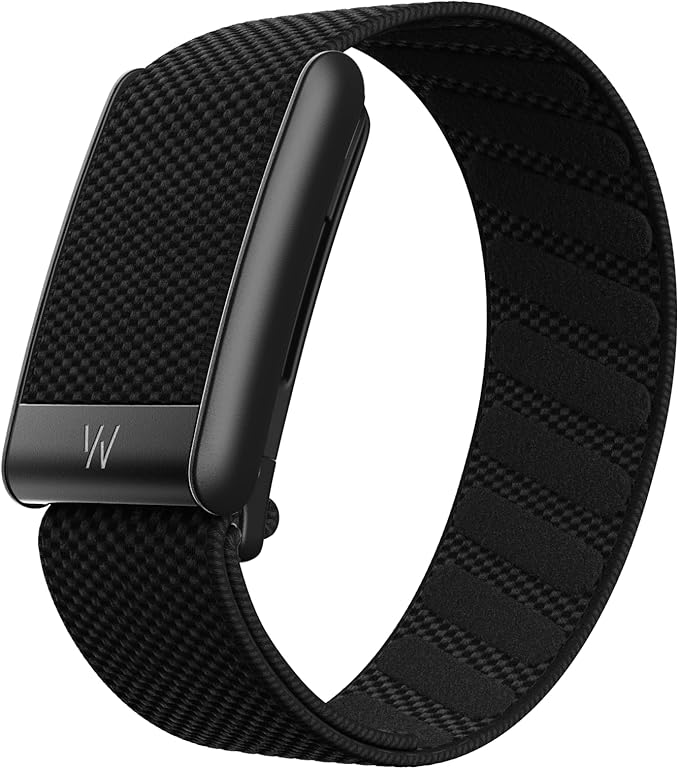
WHOOP MG Health Monitor
$239.00
This article contains affiliate links. We may earn a commission at no extra cost to you.
Battery Life: The Biggest Gap in the Comparison
Battery life is where the polite marketing comparison turns into real life. PCMag found the Apple Watch Ultra 2 gets about 36 hours in standard use, with real-world testing around 55 hours using always-on display at maximum brightness, and Apple says low-power mode can stretch that to 72 hours. That’s respectable for a feature-heavy smartwatch. It’s still a charging routine.
Garmin is playing a different game. Garmin lists the 47mm Epix Pro Gen 2 at up to 16 days in smartwatch mode and roughly 30 hours in GPS mode, or 24 hours using all satellite systems. That means a weeklong trip, a full training block, or a long race weekend without hunting for a charger in a hotel room with exactly one outlet in the wrong place.
WHOOP 4.0 lands in the middle on paper and ahead in practice for a certain kind of user. Wareable reports about four to five days of battery life, which sounds ordinary until you factor in WHOOP’s battery pack that charges while the band stays on your wrist. That’s the clever part. No dead zone in your data because you took it off to recharge. The later WHOOP 5.0 model pushed battery life further, but even the 4.0 design already solved the compliance problem better than most wearables.
For an executive athlete, the practical question is brutally simple: do you reliably charge a device every day? If the answer is no, Apple Watch Ultra 2 may irritate you no matter how polished the software is. Garmin and WHOOP are more forgiving. And forgiveness matters when the rest of your life already runs on calendars, flights, and minor logistical nonsense.
Tracking Accuracy: What the Data Actually Says
Wearable marketing loves the word accurate right up until somebody asks, “Compared with what?” That’s where the useful comparison starts.
In Forbes, Dr. Jesse Pines highlighted one of Apple Watch’s strongest cases: atrial fibrillation detection. In the data he cited, Apple Watch delivered an 84% positive predictive value for atrial fibrillation detection on subsequent ECG. That doesn’t make it a diagnostic replacement for a physician, but it does make Apple especially compelling if cardiac screening is part of why you wear a device in the first place.
WHOOP’s strongest evidence sits around sleep detection and recovery trends. A 2024 paper in the National Institutes of Health’s PubMed Central archive found WHOOP 4.0 showed roughly 90% to 95% sensitivity for detecting sleep against polysomnography, the clinical gold standard, though it also tended to overestimate REM sleep by about 21 minutes. That’s a useful result, not a perfect one. It means WHOOP is solid at identifying when you were asleep and directionally useful on sleep architecture, but you shouldn’t pretend the app is a sleep lab.
Garmin’s strength is movement, location, and endurance context. In the same Forbes comparison, Garmin’s multi-band GNSS performance stayed within about 0.07 miles of true distance over a half-marathon. If you’re pacing outdoor runs, navigating unfamiliar routes, or trying to trust the distance on long sessions, that matters more than a nice readiness score.
So the cleanest way to read the accuracy data is this: Apple wins on broader health-monitoring credibility, especially for ECG-related use cases. Garmin wins when route accuracy and endurance metrics matter most. WHOOP wins on recovery-oriented signal, especially sleep and strain trends, but with the usual caution that recovery scores are guides, not commandments from the mountain.
Form Factor and Real-World Wearability
Specs only matter if the device stays on your body. Form factor isn’t cosmetic. It’s adherence.
PCMag lists Apple Watch Ultra 2 at 61.4 grams with a 49mm titanium case. That’s not outrageous, but it is noticeable, and anyone who spends part of the day in a dress shirt will feel the bulk under a cuff. The bigger issue isn’t comfort during a workout. It’s whether the watch feels slightly out of place in every context where you aren’t working out.
Garmin handles this better by giving you options. The Epix Pro line comes in 42mm, 47mm, and 51mm sizes, with starting weights around 58 grams depending on the model, according to Garmin. That size range matters. A smaller wrist can wear the 42mm without feeling like it strapped on a dinner plate. A larger athlete can pick the 51mm and get more battery without compromising fit.
WHOOP is the outlier. Wareable puts the band at roughly 20 grams, and the screenless design makes it easy to forget it is there. For sleep tracking, that matters a lot. For office wear, it may matter even more. A screenless band disappears under a dress shirt and doesn’t invite you to check another notification while pretending to listen in a budget review.
This is where a lot of premium-wearable buying decisions go wrong. People compare the devices on features, then ignore the fact that the least wearable product often becomes the least useful product. If a watch is too bulky for meetings, too annoying for sleep, or too needy about charging, you will wear it less. And once compliance slips, every pristine dashboard becomes expensive fiction.
Total Cost of Ownership: Subscription vs. One-Time Purchase
WHOOP’s pricing model annoys some people on principle and fits others perfectly. WHOOP says membership runs about $25 to $40 per month, which means roughly $300 to $480 per year and $900 to $1,440 over three years. There is no large hardware purchase to swallow up front, but there is a meter running in the background.
Apple Watch Ultra 2 is the inverse. Apple positions it as a one-time purchase in the $699 to $799 range, depending on configuration. Garmin Epix Pro Gen 2 sits in a broad one-time range too, from around $500 on heavy discount up to $1,000 near original pricing, according to PhoneArena and Garmin’s product pages. Over three years, that usually makes Apple and Garmin cheaper than WHOOP if you keep the device that long.
But executive buyers should think about cost the way they think about leased versus purchased software. The spreadsheet matters, but so does behavioral fit. A subscription can feel expensive because it is visible every month. A big hardware purchase can feel cheaper because the pain is front-loaded and then mentally buried. Neither feeling is math.
The cleaner way to think about this is ownership horizon. If you keep devices for years and dislike recurring fees, Garmin and Apple win the cost argument. If you want the lowest upfront friction and you value WHOOP’s recovery focus enough to use it daily, the subscription is easier to justify. The expensive wearable is the one you stop wearing after 90 days.
Which One Should the Executive Athlete Choose?
This is the part where most comparison pieces start pretending one device is objectively best. It isn’t. The right answer depends on what you are hiring the wearable to do.
Choose Apple Watch Ultra 2 if you’re an iPhone user who wants one premium device to cover smartwatch convenience, training metrics, communication, and health monitoring. It’s the most balanced option for someone who wants fewer devices and broader functionality. It isn’t ideal for someone who hates frequent charging or wants a quiet wrist.
Choose Garmin Epix Pro Gen 2 if your training is serious enough that battery life, multi-band GPS, route accuracy, and outdoor durability aren’t nice extras but the main point. It’s the best tool here for endurance athletes and people who want a watch that behaves like equipment. It isn’t the best choice if your main goal is recovery coaching or seamless smartphone convenience.
Choose WHOOP 4.0 if sleep quality, recovery readiness, and strain management are your main priorities and you genuinely want less interaction, not more. WHOOP is also the easiest to wear 24/7, which improves consistency. It isn’t for people who want smartwatch features, on-device workout guidance, or freedom from recurring fees.
One practical note: this doesn’t have to be a one-device religion. Plenty of people wear WHOOP with an Apple Watch or Garmin because the products do different jobs. That can be overkill if you are mostly looking for motivation. It can make sense if you want smartwatch convenience plus recovery signal without merging those use cases into one compromise device.
Frequently Asked Questions
Can I wear WHOOP 4.0 and an Apple Watch at the same time without data conflicts?
Yes. They collect their own sensor data and don’t cancel each other out. The bigger issue is whether you want two dashboards telling you how your morning run felt. For many users, Apple handles daily utility while WHOOP handles recovery trends.
Does the Garmin Epix Pro Gen 2 have ECG like the Apple Watch Ultra?
Not in the way Apple centers ECG in its health story. Apple has the clearer heart-screening use case here, especially given the atrial fibrillation data highlighted by Forbes. Garmin’s core edge is GPS, battery, and endurance context.
Which device tracks sleep most accurately for an executive who travels across time zones?
WHOOP has the strongest sleep-specific evidence in the sources provided here, especially for detecting sleep itself versus wake time. That doesn’t mean it perfectly stages every sleep phase, but it is the best fit in this group if sleep and recovery are your main lens.
Is WHOOP worth the monthly subscription vs. a one-time purchase device?
It can be, if you actually use the recovery and strain data to make decisions about training, alcohol, sleep, and workload. If you mainly want notifications, music control, and a few workout metrics, the subscription is harder to defend.
Can I use WHOOP without giving up my Apple Watch or Garmin?
Yes, and that is probably the most rational setup for some users. WHOOP handles recovery. Apple or Garmin handles smartwatch features or sport-specific tracking. The downside is cost, not technical conflict.
We use and recommend WHOOP for recovery-focused athletes who prioritize sleep and strain data over smartwatch features. Its continuous HRV and recovery tracking gives you actionable readiness data every morning — no screen, no notifications, just signal. Check current pricing on Amazon.
The Bottom Line
Apple Watch Ultra 2 is the smartest all-around pick for the executive athlete who wants one polished device and already lives inside the iPhone ecosystem. Garmin Epix Pro Gen 2 is the better tool for serious endurance work and long battery life. WHOOP 4.0 remains the specialist option for recovery-first users who want less screen, more signal, and are willing to pay a subscription for that focus.
This article contains affiliate links. We may earn a commission if you sign up through these links, at no additional cost to you.
Sources
- PCMag, “Apple Watch Ultra 2 Review” (2025): https://www.pcmag.com/reviews/apple-watch-ultra-2
- Garmin, “Epix Pro (Gen 2) Specs” (2023): https://www.garmin.com/en-US/p/884088/
- Forbes, Dr. Jesse Pines, “Which Fitness Tracker Is Most Accurate? Here’s Data on 9 Top Brands” (2026-03-11): https://www.forbes.com/sites/jessepines/2026/03/11/which-fitness-tracker-is-most-accurate-heres-data-on-9-top-brands/
- WHOOP, “Membership Pricing” (2025): https://support.whoop.com/s/article/Membership-Pricing
- National Institutes of Health, “Wearable Sleep Tracking: Comparison of Consumer Devices Against Polysomnography” (2024): https://pmc.ncbi.nlm.nih.gov/articles/PMC11004611/
- Wareable, “WHOOP 4.0 Review: The Smartest Strap You Can Wear” (2025): https://www.wareable.com/wearable-tech/whoop-4-review-8654
- Apple Newsroom, “Apple Unveils Apple Watch Ultra 2” (2023-09): https://www.apple.com/newsroom/2023/09/apple-unveils-apple-watch-ultra-2/
- PhoneArena, “Garmin Epix Pro Gen 2 Deal at 50 Percent Off” (2026-07): https://www.phonearena.com/news/garmin-epix-pro-gen-2-amazon-deal-50-percent-off_id181988
This article is for informational purposes only and is not financial advice. Consult a qualified professional for personalized guidance.
Leave a Reply