

Protein intake for men over 50 stops being a background nutrition detail and starts acting more like maintenance on expensive equipment. Same body. Different response. What worked at 35 often turns into a polite shrug at 55, especially if breakfast is coffee, lunch is whatever happened between meetings, and dinner is doing all the heavy lifting.
That matters because muscle preservation after 50 isn’t just about looking less soft in a polo shirt. It’s tied to strength, recovery, metabolic health, and how quickly small injuries start turning into larger problems. Harvard Health Publishing notes that adults begin losing muscle mass after 30, typically around 3% to 5% per decade, with losses accelerating later. That isn’t dramatic internet fear copy. That’s normal aging doing what it does when nobody interrupts it.
The useful takeaway is straightforward: older muscle usually needs more protein, spread more intelligently across the day, with better source selection than most men are using by default. The evidence suggests quantity matters, timing matters, and leucine-rich sources matter more than supplement marketing would like to admit.
Why Muscle Maintenance Gets Harder After 50: Anabolic Resistance and the Protein Gap
The first problem is biological, not motivational. Aging muscle becomes less responsive to a small protein dose, a phenomenon researchers call anabolic resistance. In plain English, the same 15-gram protein snack that might have nudged muscle protein synthesis years ago now does a lot less. Older tissue needs a larger signal.
Harvard Health Publishing points to the broader context: muscle mass starts declining after 30 and can drop roughly 3% to 5% per decade, with the pace increasing after 60. That helps explain why many men notice a familiar pattern in their 50s. Training still happens. Body weight may not change much. But recovery slows, strength plateaus sooner, and the margin for sloppy eating gets thinner.
The second problem is behavioral. Harvard Health Publishing also cited research in the Journal of Nutrition, Health & Aging showing that about 46% of adults age 51 and older did not meet daily protein recommendations. Nearly half. So the average older adult is dealing with muscle tissue that needs a stronger protein signal while also failing to hit even the basic daily target. That’s a bad combination, though an extremely common one.
This is where the internet usually gives terrible advice. Either it acts as if aging changes nothing, or it turns protein into a kind of masculinity costume. Neither is useful. The data suggests something more ordinary: if muscle preservation matters, protein needs to be treated like a real input instead of an accidental byproduct of dinner.
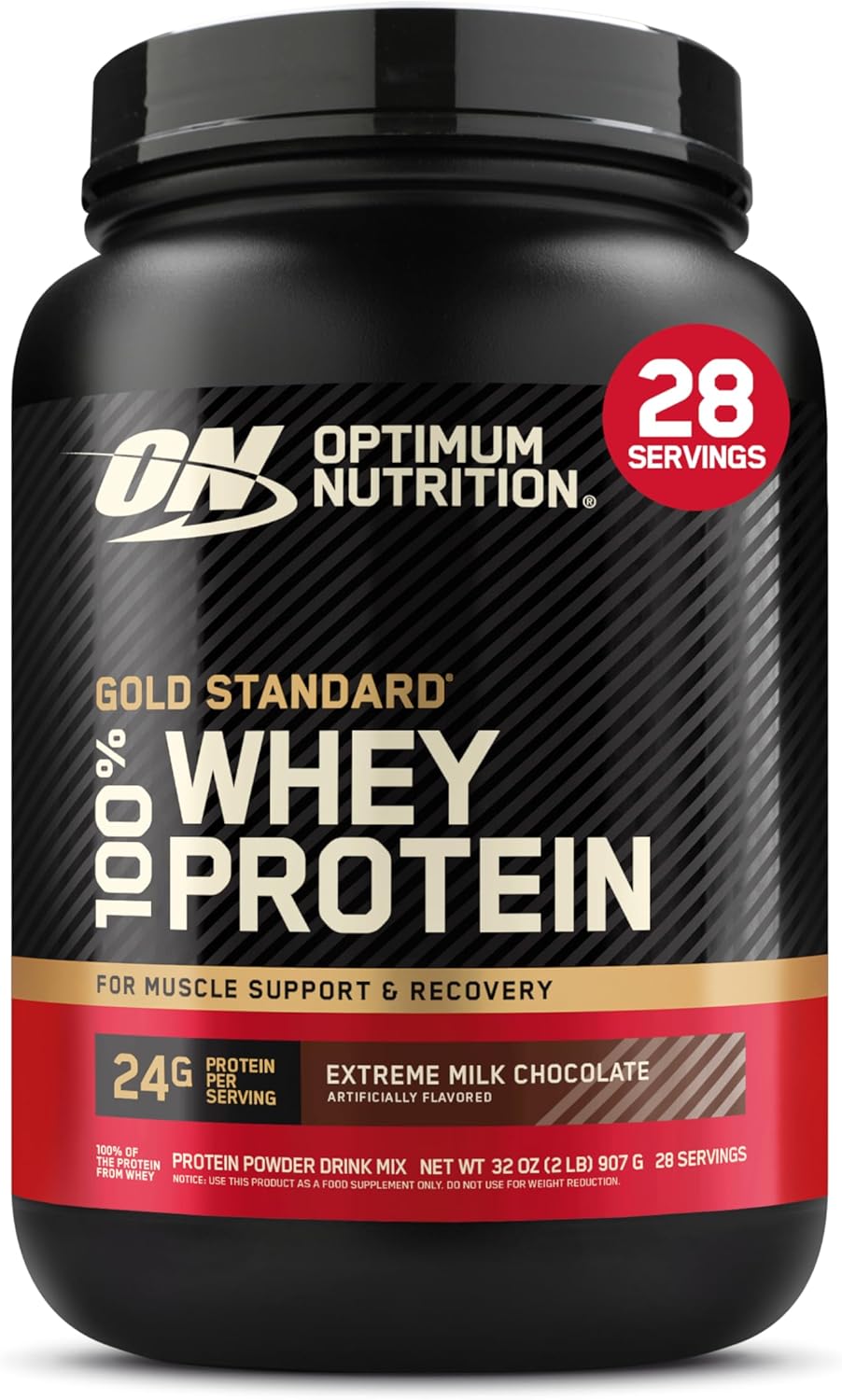
Optimum Nutrition Gold Standard 100% Whey
This article contains affiliate links. We may earn a commission at no extra cost to you.
How Much Protein Men Over 50 Actually Need: RDA vs. Optimal Intake
The federal Recommended Dietary Allowance is 0.8 grams of protein per kilogram of body weight per day. That number is still quoted constantly, and it is still too low for the question most men over 50 are actually asking. The RDA was designed to prevent deficiency in younger adults, not to optimize muscle preservation in aging bodies.
Stanford Lifestyle Medicine recommends 1.2 to 1.6 grams per kilogram per day for adults over 50. For a 175-pound man, about 79.5 kilograms, that works out to roughly 95 to 127 grams per day. The National Council on Aging makes a similar case, arguing that older adults generally need more protein than the bare federal minimum if the goal is to maintain strength and lean mass rather than merely avoid deficiency.
That range also fits the practical reality of aging well. It isn’t bodybuilder intake. It isn’t a cartoon pile of chicken breasts. It’s enough to give older muscle repeated chances to turn dietary protein into useful repair and retention. For active older adults doing resistance training, the floor may push higher. The National Council on Aging cites a 2024 review placing 1.0 to 1.3 grams per kilogram per day as a minimum for active older adults, which again makes the plain old 0.8 target look more like a survival number than a performance number.
The cleaner way to think about it is this: the RDA answers, “How little can someone get away with?” Muscle preservation asks a better question, which is, “How much protein gives aging muscle a fair chance?” Those aren’t the same question, and pretending they are is how men end up under-eating protein for a decade while wondering why the engine feels smaller.
Protein Intake Men Over 50 Muscle Preservation Works Better When Each Meal Clears the Threshold
Total daily intake matters, but meal distribution is where most men quietly lose the game. A dinner-heavy pattern feels responsible because the day ends with a substantial plate, yet older muscle responds better when protein arrives in meaningful doses across the day rather than all at once after sunset.
Research published in Current Opinion in Clinical Nutrition and Metabolic Care found that about 25 to 30 grams of high-quality protein per meal can maximally stimulate muscle protein synthesis in older adults. International guidance cited in the same body of evidence recommends roughly 25 to 30 grams of protein plus about 3 grams of leucine at each of the three main meals to help counter sarcopenia.
That’s exactly where typical eating patterns fall apart. The protein-distribution research discussed in Current Opinion in Clinical Nutrition and Metabolic Care notes that many older adults average only about 11 grams at breakfast and 18 grams at lunch. Those meals aren’t doing much for muscle maintenance. They are more like administrative tasks completed so the day can continue.
Leucine is part of the reason. Nutrients rich in leucine help flip the switch for muscle protein synthesis, which is one reason eggs, dairy, fish, and lean meat tend to outperform lower-density options gram for gram. The point isn’t that breakfast needs to become a supplement ritual. The point is that older muscle tends to respond better when breakfast and lunch stop being afterthoughts.
This is also why “I hit my number by dinner” is weaker than it sounds. Even distribution appears to outperform a skewed pattern for 24-hour muscle protein synthesis. Three solid protein feedings usually beat one heroic steak and two protein cameos.
Strategic Windows: Post-Workout Protein and Pre-Sleep Casein
Timing doesn’t override total intake, but there are two windows worth paying attention to because the evidence is practical and fairly specific. One is after resistance training. The other is before sleep.
Stanford Lifestyle Medicine recommends 30 to 35 grams of protein within two hours of resistance training to support muscle protein synthesis. That doesn’t require a shaker bottle obsession. It just means the meal or shake that follows training should be real enough to count. If a man trains at 7 a.m. and then slides into a coffee-only morning, he shouldn’t be surprised when the workout underperforms its potential.
The second window is less intuitive and more interesting. A randomized controlled trial published in The Journal of Nutrition in 2017 found that 40 grams of casein taken before sleep increased overnight muscle protein synthesis by about 22% in healthy older men. That’s a meaningful bump, especially for people who struggle to meet daytime targets.
Pre-sleep protein isn’t mandatory. It’s useful when the rest of the day came up short, or when a man is training hard enough that an extra overnight feeding window makes sense. Casein works well here because it digests slowly. It’s the long-burning log, not the newspaper.
The usual concern is whether eating protein before bed hurts sleep or blunts appetite the next morning. Stanford Lifestyle Medicine notes that pre-sleep protein doesn’t appear to meaningfully worsen either issue. For a time-poor reader, that makes pre-sleep casein less of a hack and more of a simple gap-filler when the numbers on the rest of the day don’t quite add up.
Animal Protein, Plant Protein, and Supplements: What the Evidence Says About Sources
Not all protein sources do the same job with the same efficiency, and this is where polite nutrition advice can get evasive. Older adults don’t just need protein in the abstract. They need enough essential amino acids, especially leucine, in a form the body can use efficiently.
Animal proteins still have the structural advantage. Eggs, Greek yogurt, cottage cheese, fish, poultry, and lean meat generally deliver more leucine and a stronger amino acid profile per gram than most plant sources. That doesn’t make plant protein useless. It makes plant-only strategies more demanding.
The difference shows up in actual trial data. A 2023 randomized controlled trial published in Nutrients found that 25 grams per day of whey protein reduced exercise-induced muscle damage in older adults after prolonged walking, while an equal dose of pea protein did not differ from placebo. The likely explanation was whey’s higher leucine content and faster digestion. Same headline number on the label. Different physiological effect.
For plant-based eaters, the evidence suggests the plan can still work, but usually at a higher total intake, closer to 1.6 to 2.0 grams per kilogram per day, with deliberate variety across legumes, soy, grains, and other complementary sources. In other words, it is possible. It’s just less forgiving.
Whey and casein supplements earn their place mostly on convenience. They are useful if whole-food intake keeps missing the mark, if breakfast is habitually weak, or if post-workout and pre-sleep feeding windows need a simpler option. They aren’t obligatory, and they aren’t automatically better than food.
Who is this not for? Men with kidney disease, significant digestive issues, or other medical conditions that complicate higher protein intake shouldn’t turn a general muscle-preservation strategy into a personal protocol without checking with their clinician. The article is about evidence-based direction, not freelancing around medical context.
Your Daily Protein Blueprint: Putting the Numbers Into Practice
The abstract version of protein strategy is easy to admire and easy to ignore. The practical version is better. For a 175-pound man targeting roughly 100 to 120 grams per day, the day can be built without becoming weird about it.
Breakfast could be 3 eggs plus 1 cup of Greek yogurt, which lands around 35 grams of protein. That alone fixes the most common weak spot in older-adult eating patterns. Instead of starting the day with toast, fruit, and optimism, breakfast becomes a real muscle-preservation meal.
Lunch could be 6 ounces of grilled chicken with a half cup of quinoa for about 45 grams. Dinner could be 5 ounces of salmon plus 1 cup of lentils for roughly 40 grams. That already puts the day near or above the target range before any supplement enters the picture. If training volume is high or daytime intake came up short, a pre-sleep scoop of casein can add another 30 grams without much friction.
The larger point is that meal planning matters more than supplement shopping. Harvard Health Publishing notes that roughly one in three adults over 50 falls short on protein recommendations. That isn’t because they lack access to exotic powders. It’s because the day keeps getting filled by work, convenience, and habits built for a younger metabolism.
This is the boring truth, which is usually the useful one. Muscle preservation after 50 is rarely won by finding the perfect product. It’s usually won by making breakfast less flimsy, lunch less random, dinner less overloaded, and the total daily number more intentional.
Frequently Asked Questions
Can I get enough protein from plant sources alone after 50, or do I need animal protein to maintain muscle?
It’s possible to maintain muscle on plant sources alone, but the plan usually needs more total protein and more deliberate variety. Animal proteins tend to deliver leucine and essential amino acids more efficiently per gram. Plant-only strategies can work, but they are less forgiving if intake is casual.
Is it possible to eat too much protein, and what are the risks for kidney health?
For healthy adults, the intake ranges discussed here are generally considered reasonable in the evidence cited by Stanford Lifestyle Medicine and the National Council on Aging. Men with kidney disease or other medical conditions are a different case. For them, higher protein intake should be reviewed with a clinician instead of borrowed from a general article.
Do whey and casein powders count the same as whole-food protein for muscle preservation?
They count as useful protein, especially for post-workout and pre-sleep windows, and whey in particular has strong leucine density. Whole foods still bring more satiety and usually fit better into a durable eating pattern. Powders are best treated as convenient support, not nutritional personality.
How does the standard RDA of 0.8 grams per kilogram compare with what experts now recommend for men over 50?
The RDA is a deficiency-prevention floor, not an optimal target for aging muscle. Stanford Lifestyle Medicine recommends 1.2 to 1.6 grams per kilogram per day for adults over 50, which is substantially higher and more aligned with muscle preservation goals.
Does protein timing still matter if I don’t do resistance training?
Yes, though it matters a bit differently. Even without lifting, older adults appear to benefit from evenly distributed meals that clear the per-meal threshold for muscle protein synthesis. Timing becomes even more useful when activity and resistance training are part of the picture.
Muscle preservation after 50 is less about eating dramatically more protein and more about eating enough protein in the right pattern. The evidence suggests men over 50 do best when daily intake rises above the old RDA, meals clear the 30-gram neighborhood, and source quality is treated as part of the plan rather than a footnote. That isn’t glamorous advice. It’s just the kind that tends to keep working.
Sources
- Harvard Health Publishing: Preserve your muscle mass
- Harvard Health Publishing: Muscle loss and protein needs in older adults
- Stanford Lifestyle Medicine: Protein Needs for Adults 50+
- National Council on Aging: How Much Protein Older Adults Need Per Day
- Current Opinion in Clinical Nutrition and Metabolic Care: Dietary protein recommendations and the prevention of sarcopenia
- Nutrients (MDPI): Where to Find Leucine in Food and How to Feed Elderly With Sarcopenia
- Nutrients (MDPI): Supplementation with Whey Protein, but Not Pea Protein, Reduces Muscle Damage Following Long-Distance Walking in Older Adults
- The Journal of Nutrition: Protein Ingestion before Sleep Increases Overnight Muscle Protein Synthesis
Continue reading: Read the pillar — Supplements & Nutrition
This article is for informational purposes only and is not financial advice. Consult a qualified professional for personalized guidance.
Leave a Reply