
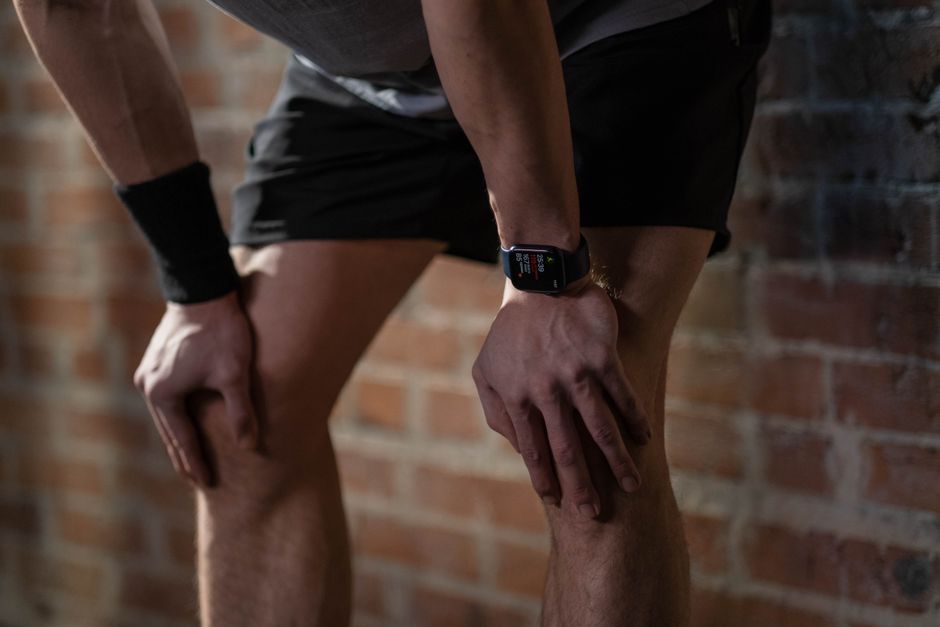
If your wearable keeps telling you your recovery is down, but your calendar still expects you to act like nothing happened, welcome to modern executive health. The body is sending a memo. Outlook is ignoring it.
That’s where an HRV stress management wearable approach becomes useful instead of gimmicky. Heart rate variability gives you a running read on how hard your nervous system is working to keep up. Used well, it can tell you when work stress, poor sleep, alcohol, travel, or training are starting to pile up faster than you are recovering.
The trick is using the number correctly. HRV isn’t a character grade. It isn’t a contest. And it definitely isn’t a reason to spiral because your ring gave you a yellow score after a steak dinner and four hours of sleep. It’s a trend signal. For a man in his 50s with a demanding job, that signal can be worth more than most of the colorful dashboard clutter wearables love to throw around.
HRV Stress Management Wearable Data: What It Actually Tells You About Your Stress Load
HRV measures the variation in time between one heartbeat and the next. The plain-English version is simpler: it shows how flexible your autonomic nervous system is. Higher HRV usually reflects stronger parasympathetic activity, which is the recovery side of the system. Lower HRV usually means sympathetic activity is more dominant, which is the fight-or-flight side.
That matters because stress isn’t just a feeling. It’s physiology. When your system is constantly braced for the next problem, recovery gets crowded out. Sleep can look long enough on paper while the body still acts like it is on deadline.
The encouraging part is that modern wearables are good enough to track this signal, especially overnight. In a 2025 validation study published in Physiological Reports, Dial and colleagues compared several consumer devices against ECG reference data and found that nocturnal HRV from the Oura Ring Gen 4 reached 99% concordance, with a mean absolute percentage error of about 5.96%. That isn’t “close enough for a gadget.” That’s strong enough to take seriously when the readings are collected under stable conditions during sleep.
The key phrase there is under stable conditions. Overnight HRV is usually more useful than random daytime checks because movement, caffeine, meetings, and ordinary life create more noise. Think of sleep as the clean laboratory window inside a messy day. If your device is measuring then, the signal is much more trustworthy.
So what is HRV actually telling you each morning? Not whether you are tough. Not whether you “pushed through.” It’s telling you how expensive yesterday was.
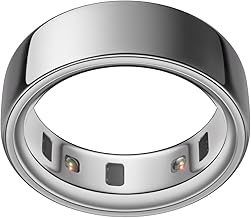
Oura Ring 4 — Silver
$349.99
This article contains affiliate links. We may earn a commission at no extra cost to you.
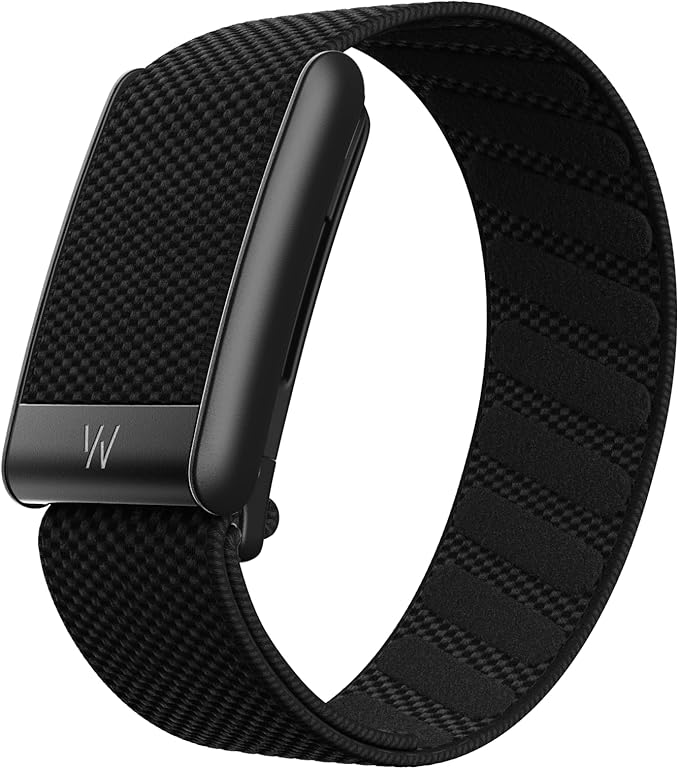
WHOOP MG Health Monitor
$239.00
This article contains affiliate links. We may earn a commission at no extra cost to you.
Garmin Venu 3 GPS Smartwatch
$289
This article contains affiliate links. We may earn a commission at no extra cost to you.
High-Stress Work Suppresses HRV, and the Evidence Is Not Subtle
Plenty of executives already suspect this. The interesting part is that the data backs it up.
In a 2024 longitudinal study published in Frontiers in Public Health, researchers followed 122 employees after acute coronary syndrome and found that high effort-reward imbalance, a standard model for chronic work stress, was significantly associated with slower recovery across multiple frequency-domain HRV measures over a full year. Even after adjusting for anxiety, depression, and burnout, the work-stress signal was still there.
That’s the useful takeaway: persistent occupational stress doesn’t just make you feel fried. It leaves a measurable recovery deficit in the autonomic system.
For this audience, that matters more than one heroic week at the gym. A lot of men in demanding roles still think of stress as mental overhead they can simply outwork. That story holds up right until sleep starts getting lighter, patience gets shorter, training stops working, and the wearable starts reporting numbers that look like the body has quietly declared a budget crisis.
HRV gives you a way to catch that earlier. If your 7-day average keeps slipping during a brutal quarter, a messy travel month, or a stretch of late-night calls, the signal is telling you something concrete: the workload isn’t fully clearing the system. That doesn’t automatically mean you need a wellness retreat and a sound bath. It usually means the basics aren’t matching the load.
That’s why recovery should be managed like capacity, not mood. Mood lies. Capacity is harder to fake.
HRV Reference Ranges for Men 45-65: Baseline Beats Comparison Every Time
Most people make the same mistake with HRV. They go looking for a normal number, find a forum full of outliers, and decide they are either doomed or superior. Both conclusions are nonsense.
WHOOP‘s member data suggests men aged 45 to 55 often fall in a nocturnal RMSSD range of roughly 35 to 60 milliseconds, while men aged 55 to 65 often land closer to 25 to 50 milliseconds. Across all male members, the most common HRV value is around 40 milliseconds. That gives you a rough map, not a verdict.
The better rule is baseline over comparison. Genetics, training history, body size, alcohol use, sleep quality, medication, and plain old life all push HRV around. Two men the same age can have very different healthy baselines. One may sit at 32 ms and function well. Another may sit at 58 and unravel when he drops to 44 for a week.
This is where many wearable dashboards become accidentally unhelpful. They tempt people to compare themselves against a generic population chart when the real question is much narrower: where is your current 7-day average relative to your own 30-day average?
That’s the number worth watching.
If you want a deeper look at what age-adjusted tracking means in practice, this guide to HRV tracking for men over 45 is the more useful rabbit hole. The short version is that trends tell the story. One isolated low morning mostly tells you that you are alive and subject to normal life.
Which Wearable Gives You the Most Actionable HRV Data?
The honest answer is that not all wearables are equally good at HRV, and the differences aren’t just marketing noise.
The same 2025 Physiological Reports validation study compared five consumer devices across 536 nights against a Polar H10 ECG chest strap. Oura Ring Gen 4 led the pack with 99% concordance and about 5.96% mean absolute percentage error. Oura Gen 3 followed at 97% concordance. WHOOP 4.0 came next at 94% concordance with roughly 8.17% error. Garmin Fenix 6 landed lower at 87% concordance and about 10.52% error.
The broader pattern was just as useful as the rankings: finger-based photoplethysmography outperformed wrist-based sensors during sleep. In other words, rings tended to get cleaner nocturnal HRV signal quality than wrist devices.
That doesn’t mean Garmin or WHOOP are useless. It means the job matters. If your top priority is the cleanest overnight HRV data, Oura has the strongest validation case right now. If you want HRV integrated into a broader recovery-and-strain system, WHOOP still has a strong argument, even if its raw HRV accuracy trails Oura slightly. Garmin makes more sense when you want an all-purpose training watch and are willing to accept somewhat weaker HRV precision.
Form factor matters too. The best device is the one you will actually wear consistently. A technically superior ring that lives on the charger is worse than a slightly less accurate band that collects six months of steady data.
That’s also why the endless Oura-versus-WHOOP arguments are a little silly. They are usually fighting over the last 5% of accuracy while ignoring adherence, comfort, and whether the dashboard actually changes behavior. For a busy professional, actionable beats perfect.
If you are choosing between the two most recovery-focused options, the WHOOP vs Oura Ring comparison for executives helps sort out the tradeoff.
Three Evidence-Based Recovery Protocols You Can Run on Your Wearable Data
This is where HRV becomes useful instead of decorative. A wearable should help you test interventions, not just admire graphs.
The first protocol is resonant-frequency breathing. In a 2024 workplace trial published in Applied Psychophysiology and Biofeedback, Vagedes and colleagues studied 73 employees using four weeks of mobile HRV biofeedback training with breathing around 4.5 to 6.5 breaths per minute. Burnout symptoms fell with medium-to-large effect sizes, and sleep quality improved modestly. Digital instruction performed at least as well as in-person coaching, which is good news for anyone who doesn’t need one more appointment.
The practical version is simple: spend five minutes once or twice a day breathing slowly enough that the exhale isn’t rushed. Then watch what happens to your weekly HRV trend over the next two to four weeks. If the number stabilizes and sleep improves, keep it. If nothing moves, adjust something else.
The second protocol is sleep anchoring. Go to bed and wake up at roughly the same time for two weeks, even if the total sleep increase is modest. This sounds insultingly basic. It also works because the nervous system likes predictability more than it likes your excuse about one more email. If HRV trends up when sleep timing tightens, the experiment paid off.
The third protocol is boring on purpose: zone 2 cardio three times per week for eight to twelve weeks, plus less alcohol close to bedtime. The literature around HRV repeatedly shows that aerobic conditioning and reduced evening alcohol improve recovery trends over time. No fireworks here. Just physiology behaving predictably when you stop making it clean up after preventable nonsense.
This is the management loop: pick one intervention, hold it steady long enough to matter, and use your wearable to judge trend direction. Don’t change six things at once. Don’t panic over one ugly morning. And don’t confuse data collection with action. A beautiful dashboard with no behavior change is just quantified procrastination.
Related: most important wearable biomarker for men over 50
Related: what your nightly recovery score actually means
Frequently Asked Questions
Can you improve HRV if yours is naturally low to begin with?
Usually, yes. You may not turn a naturally low baseline into someone else’s number, but sleep consistency, better aerobic conditioning, less evening alcohol, and stress-reduction work can still improve your own trend meaningfully. Baseline matters more than leaderboard fantasy.
Should I check HRV first thing in the morning or throughout the day?
Overnight data is usually more reliable because conditions are more stable and motion is lower. Daytime spot checks can be interesting, but they are noisier. For stress management, the cleanest signal usually comes from nocturnal measurements and weekly averages.
Does alcohol really affect HRV that much, and how long does it take to recover?
Often, yes. Alcohol close to bedtime commonly drags HRV down and raises resting heart rate the same night. Recovery time varies with dose, sleep quality, and your baseline, but many people see the effect for one to three nights.
Do wrist-based wearables track HRV accurately enough for stress management, or do I need a ring?
Wrist devices can be useful, especially if you wear them consistently. But current validation data suggests finger-based rings produce cleaner nocturnal HRV signal quality during sleep. If HRV accuracy is the main job, a ring has the stronger case.
How long after starting a new recovery protocol will I see HRV changes?
Acute effects can show up within a night or two, especially after alcohol reduction or improved sleep timing. More durable shifts from aerobic training or breathing practice usually take a few weeks. That’s why weekly and monthly trends matter more than any single morning score.
HRV is one of the few wearable metrics that can actually help a high-pressure professional manage recovery instead of merely track activity. Use it as a trend signal, judge it against your own baseline, and let it tell you when work stress is getting more expensive than your body can quietly absorb.
That’s the real value of wearable data. Not performance theater. Better decisions, made a little earlier.
Sources
- Dial et al. “Validation of nocturnal resting heart rate and heart rate variability in consumer wearables.” Physiological Reports (2025). https://pmc.ncbi.nlm.nih.gov/articles/PMC12367097/
- “Effort-reward imbalance and heart rate variability recovery after acute coronary syndrome.” Frontiers in Public Health (2024). https://www.frontiersin.org/journals/public-health/articles/10.3389/fpubh.2024.1336065/full
- WHOOP. “Normal HRV Range by Age and Gender.” (2024). https://www.whoop.com/us/en/thelocker/normal-hrv-range-age-gender/
- Vagedes et al. “Mobile HRV Biofeedback Resilience Training for Employees.” Applied Psychophysiology and Biofeedback (2024). https://link.springer.com/article/10.1007/s10484-024-09671-0
This article is for informational purposes only and is not financial advice. Consult a qualified professional for personalized guidance.
Leave a Reply