
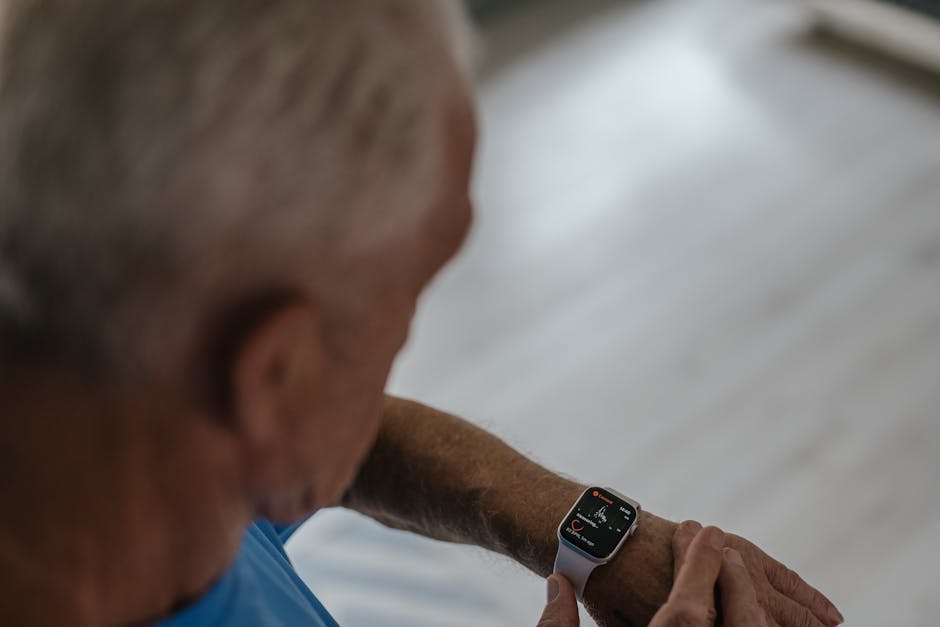
HRV tracking men over 45 can sound like one more health metric the internet would like you to obsess over before breakfast. Fair enough. There is no shortage of dashboards, rings, straps, scores, and apps promising deep wisdom about your body while mostly adding another thing to charge.
But heart rate variability, or HRV, is more useful than most of the health-tech clutter. It offers a practical read on how well the body is adapting to stress, recovering from exercise, and handling the wear and tear that tends to get louder after 45. That matters if the goal is not just to stay active, but to stay functional, sharp, and out of the avoidable-trouble category.
The catch is that HRV only helps when it is understood in context. Most people do not need more numbers. They need a way to tell the difference between a rough day and a rough pattern.
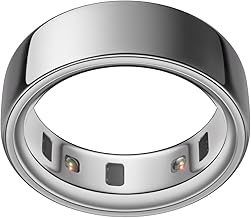
Oura Ring 4 — Silver
$349.99
This article contains affiliate links. We may earn a commission at no extra cost to you.
What is Heart Rate Variability (HRV)?
HRV measures the variation in time between one heartbeat and the next. Those small changes in interbeat intervals, often called IBIs, reflect what the autonomic nervous system is doing behind the scenes.
A heart that varies slightly from beat to beat is not acting erratically. It is usually doing the opposite. HRV reflects the balance between the sympathetic nervous system, which handles fight-or-flight demands, and the parasympathetic nervous system, which supports rest, digestion, and recovery. Higher HRV generally points to better adaptability and recovery. Lower HRV tends to show up when stress, fatigue, poor sleep, illness, or overreaching is pushing the system in the wrong direction.
Plain English version: HRV is not about how fast the heart beats. It is about how flexible the system is. A metronome is steady. A healthy nervous system is adaptive. That is a much more useful distinction.
This is why HRV has become a valuable signal for recovery and resilience. It is not a diagnosis, and it is not magic. It is a pattern-detection tool. Used well, it can help spot strain before strain becomes a problem with a co-pay attached.
Why HRV Matters for Men Over 45
After 45, recovery is still very possible. It just stops being automatic.
Sleep debt lingers longer. Stress compounds faster. Hard workouts can still help, but they also punish bad planning more quickly than they did at 29. The body gets less interested in negotiating with denial.
That is where HRV becomes useful. For men ages 45 to 55, average HRV often falls in roughly the 45 to 65 millisecond range. More important than the average, though, is what lower HRV tends to correlate with: higher cardiovascular risk, chronic stress, and signs of overtraining. Those are not fringe concerns. They are the ordinary pileup of adult life: work pressure, uneven sleep, inconsistent exercise, dehydration, and the occasional belief that caffeine counts as emotional regulation.
HRV gives men in this age range feedback that is hard to fake. A downward trend can suggest the system is under strain even when motivation is high. An improving trend can show that better sleep, more consistent exercise, or lower stress is doing something real instead of just sounding virtuous on paper.
There is also a mindset benefit here. Men over 45 are often used to pushing through things. That can be admirable. It can also be stupid. HRV is a useful reminder that toughness and recovery are not the same skill. Sometimes the smarter move is backing off for a day instead of insisting the body is wrong and the spreadsheet is right.
Interpreting Your HRV Scores: Baselines and Trends
This is where a lot of people go sideways. They see a number, search for a chart, and decide they are either thriving or quietly falling apart. That is a fast way to turn a useful metric into expensive anxiety.
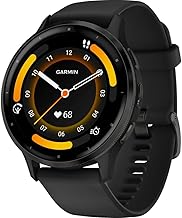
Garmin Venu 3 GPS Smartwatch
$289
This article contains affiliate links. We may earn a commission at no extra cost to you.
HRV is highly individual. The number matters far less in isolation than it does over time. The practical move is to establish a personal baseline over at least two weeks, then watch the longer trend. Daily fluctuations happen. Long-term direction is where the real information lives.
That matters because the same raw HRV score can mean very different things for different people. Age matters. Fitness matters. Sleep matters. Stress load matters. Hydration matters. Training habits matter. One person’s normal is another person’s warning sign.
This is why population averages are helpful only in moderation. They give context, but they do not tell you how your own system behaves when work gets chaotic, sleep slips, alcohol creeps in, or training gets too ambitious. Your baseline does.
A better approach is simple. Measure under similar conditions. Keep collecting data. Then ask pattern questions instead of ego questions. Does HRV drop after a few bad nights of sleep? Does it improve when exercise is steady instead of random? Does a stressful week at work show up in the data before it shows up in mood, patience, or recovery?
That is the real value of HRV tracking men over 45. It gives lifestyle choices a paper trail.
It also explains why accuracy matters more than novelty. The point is not to admire today’s number. The point is to build comparable readings over time. If the device is inconsistent, the trend gets muddy. Muddy data is not insight. It is decoration.
Practical Strategies to Improve HRV
Improving HRV is not mysterious. It is mostly a matter of doing ordinary things consistently enough for the nervous system to notice.
The first lever is sleep. Seven to nine hours of quality sleep is one of the clearest ways to support better HRV. This is not glamorous, which is probably why half the wellness industry keeps trying to sell around it. But poor sleep hits recovery, stress tolerance, and autonomic balance quickly. HRV often catches that before the rest of the body stops muttering about it.
The second lever is regular aerobic exercise. Not punishment disguised as discipline. Regular exercise. The body responds better to consistent training than to the familiar cycle of doing too much on Saturday and pretending soreness is a personality trait until Tuesday. Better recovery usually shows up when training volume is sustainable.
Third, use real stress-management techniques. Meditation, slow breathing, and other calming practices can help shift the autonomic nervous system toward recovery. The benefit here is not spiritual branding. It is nervous-system management. Even short, repeatable practices can make a difference when they are done often enough to count.
Fourth, stay hydrated. It is not the most exciting part of the stack, but neither is replacing a roof. Basic maintenance is still maintenance.
There is a broader lesson in all of this. HRV tends to improve when life becomes less chaotic and more recoverable. The metric rewards boring competence. That is good news, because boring competence is usually cheaper, saner, and more sustainable than a biohacking phase that ends in unopened supplements and buyer’s remorse.
Choosing the Best HRV Tracking Device for Your Needs
The best HRV device depends on what matters most to you: pure accuracy, everyday convenience, or a broader wearable that folds HRV into a larger health picture.
If accuracy is the main priority, ECG chest straps remain the strongest option. Devices like the Polar H10 are widely treated as the consumer gold standard for HRV accuracy, with precision around plus or minus 1 millisecond. If the goal is to get the cleanest possible measurement for training recovery or deliberate morning readings, chest-strap ECG is hard to beat.
The tradeoff is obvious. A chest strap is a tool, not a lifestyle accessory. It works well when you are willing to use it intentionally. It works less well if you want passive tracking without thinking about it.
That is where ring-based and wrist-based devices come in. PPG wearables such as Whoop and the Oura Ring offer convenient 24/7 tracking with accuracy that is good enough for recovery insights and trend monitoring. They may not match ECG chest straps for precision, but they are far easier to live with. And that matters.
A device you will wear consistently usually beats a device with superior specifications that ends up in a drawer beside the resistance bands and the expensive optimism.
Broader wearable platforms also have a place here. Garmin watches and Apple Watch models can make sense for people who want HRV as one part of a larger training or health ecosystem. If you already use a watch for exercise, sleep, or general health tracking, there is real value in keeping everything in one place.
A practical way to choose looks like this:
- Pick an ECG chest strap such as the Polar H10 if precision matters most.
- Pick a ring or wrist wearable if consistency and comfort matter more than laboratory-level accuracy.
- Pick a broader watch ecosystem if you want HRV alongside training, sleep, and general health tracking in one device.
The real mistake is the gadget confidence trap: buying the most impressive device and assuming ownership will create discipline. It will not. The best HRV tracker is the one that gives you reliable data often enough to help you make better decisions.
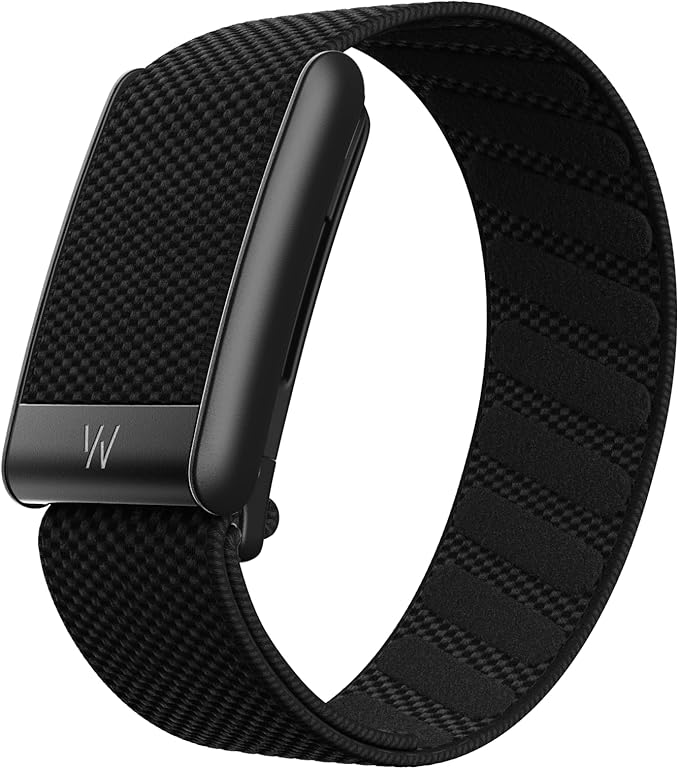
WHOOP MG Health Monitor
$239.00
This article contains affiliate links. We may earn a commission at no extra cost to you.
Frequently Asked Questions
What is a “good” HRV score for someone my age?
For men ages 45 to 55, a rough average range is about 45 to 65 milliseconds. But a good HRV score is better understood relative to your own baseline than against a generic chart. Trends over time tell you more than comparison does.
Can poor sleep drastically affect my HRV?
Yes. Poor sleep can push the nervous system toward stress and away from recovery, which often shows up in lower HRV readings or a weaker trend over time. That is one reason sleep is one of the biggest levers for improving HRV.
How often should I check my HRV for meaningful data?
Often enough to build a baseline over at least two weeks, then continue measuring consistently so you can track trends. Random one-off checks are much less useful than steady measurements taken under similar conditions.
Are wrist-based trackers accurate enough for HRV?
They are often accurate enough for useful trend tracking and recovery insight, especially if convenience helps you stay consistent. ECG chest straps still lead on precision, so the right choice depends on whether you value maximum accuracy or easier daily use.
Does alcohol or caffeine impact HRV readings?
They can. If alcohol or caffeine disrupts sleep, hydration, or overall stress load, HRV may reflect it. That is another reason long-term trends matter more than a single reading on a random morning.
HRV is useful because it turns recovery, stress, and adaptation into something you can track instead of guess at. For men over 45, the win is not chasing a perfect number or trying to out-tech the aging process. It is building a baseline, spotting the trend, and using a device accurate enough to tell the difference between normal fluctuation and a system that needs a better plan.
Sources:
– Harvard Health Publishing. “Heart rate variability: A new way to track wellbeing.” https://www.health.harvard.edu/blog/heart-rate-variability-new-way-track-wellbeing-2017112212789
-PMC. “Heart Rate Variability: A New Tool for Health and Peak Performance.” https://pmc.ncbi.nlm.nih.gov/articles/PMC5624990/
– WebMD. “What Is Heart Rate Variability (HRV)?” https://www.webmd.com/heart/what-is-heart-rate-variability
– Cleveland Clinic. “Heart Rate Variability (HRV): What It Is & Interpretation.” https://my.clevelandclinic.org/health/symptoms/21773-heart-rate-variability
-hrv – Kubios. “What is a normal range for Heart Rate Variability (HRV)?” https://www.kubios.com/blog/heart-rate-variability-normal-range
– Grady Health. “Heart Rate Variability (HRV) and How it Affects Your Health.” https://www.gradyhealth.org/blog/heart-rate-variability-hrv-what-it-says-about-health
– Cardiomood. “What Is A Good HRV? Chart Of HRV By Age, Athletes & More.” https://cardiomood.com/2023/06/17/what-is-a-good-hrv-by-age – Sona Health. “Best HRV Tracking Devices Compared 2026 Guide.” https://sona.help/blogs/news/best-hrv-tracking-devices-compared-2026-guide
Continue reading: Read the pillar — Performance Tracking & Wearables
This article is for informational purposes only and is not financial advice. Consult a qualified professional for personalized guidance.
Leave a Reply