
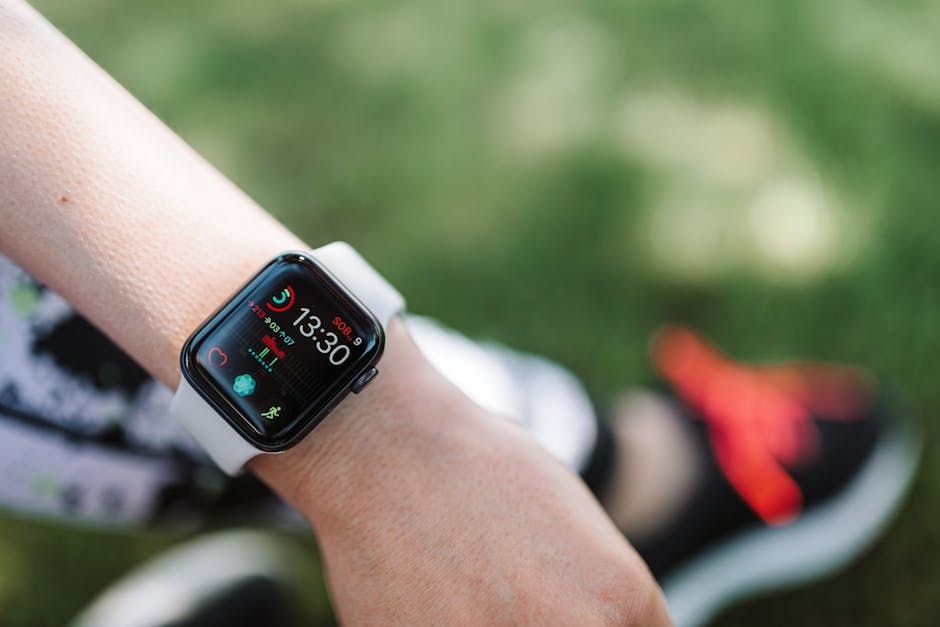
If you’re wearing a WHOOP, Oura, Garmin, or Apple Watch, the dashboard is probably throwing twenty different numbers at you before coffee. Sleep score. Steps. Calories. Recovery. Readiness. Stress. Respiratory rate. It all looks precise. A lot of it is decorative.
For men over 50, the most important wearable metric is heart rate variability, or HRV. Not because it’s trendy, and not because it gives you one more score to obsess over. It’s the best single signal most wearables can give you about how well your nervous system is handling age, training load, stress, sleep debt, alcohol, illness, and recovery. That’s a much bigger deal than whether you hit 10,000 steps on a Tuesday.
A 55-year-old executive usually isn’t trying to win a cycling stage. He’s trying to keep his edge, recover from hard training without feeling wrecked for two days, and spot the kind of decline that sneaks up slowly enough to look normal. HRV is useful because it catches that drift earlier than the usual vanity metrics.
Why Most Wearable Metrics Miss the Point for Men Over 50
Most wearable interfaces were built around the same basic fantasy: that the user wants more output. More movement. More strain. More streaks. More green rings. That works if you’re 28 and training for a half marathon. It’s less useful if you’re 53, sleep six hours because work ran late, and want to know whether your body is adapting well or just white-knuckling it.
WHOOP reported in 2026 that nearly 47% of its members cite overall health improvement as their primary goal, not athletic performance. That matters because the customer base is shifting faster than the dashboard logic. Wearable users over 50 are one of the fastest-growing segments, but many devices still present data as if the main question is how hard you can push today.
That’s backward for this audience.
For a man in his 50s, the first question is usually recovery capacity. Is the system resilient enough to absorb work, training, travel, bad sleep, and the occasional bad dinner without falling apart? If the answer is no, the flashy metrics stop mattering. Steps can look fine while recovery is poor. Calories burned are mostly estimation theater. Even sleep score can be too coarse to explain why you feel flat.
The job of a good wearable isn’t to flatter you with activity badges. It’s to show whether your physiology is holding up.
The Most Important Wearable Metric for Men Over 50 Is HRV
HRV measures the variation in time between heartbeats. That sounds technical, but the plain-English version is simple: it gives you a window into how flexible your autonomic nervous system is. More flexibility generally means better recovery capacity and better resilience to stress. Less flexibility usually means the system is under strain.
Why does that matter so much? Because HRV is one of the few wearable-accessible metrics that connects to real outcomes instead of just device engagement. A 2023 systematic review and meta-analysis published in the National Library of Medicine’s PMC database found that reduced HRV was independently associated with a 32% to 45% higher risk of all-cause mortality in older adults, even after adjusting for standard risk factors such as blood pressure and cholesterol.
That doesn’t mean your ring becomes a cardiologist. It means HRV deserves more respect than it usually gets. When a metric reflects how the nervous system is balancing stress and recovery, and lower values are associated with worse long-term outcomes, that’s not fluff. That’s a useful signal.
It also ties multiple domains together. Poor sleep can depress HRV. Heavy alcohol intake can depress HRV. Overreaching in training can depress HRV. Illness often depresses HRV before you feel fully sick. Chronic work stress can keep it pinned lower than it should be. Instead of watching five disconnected metrics, HRV often tells the integrated story.
That’s why it’s the first number worth tracking.
How Much HRV Declines With Age and What It Means for Executives Over 50
This is the part many wearable marketing pages glide past: HRV declines with age. Cleveland Clinic notes that normal adult HRV often falls within a broad range of roughly 20 to 74 milliseconds using RMSSD, but the number trends downward over time. Longitudinal data from cohorts such as Framingham suggest HRV drops by roughly 3% to 5% per decade after age 30, with a steeper decline after 50.
So if your HRV is lower than it was at 38, that is not automatically a red flag. It’s usually biology doing what biology does.
But that does not make the metric useless. It makes trend tracking more important. Men over 50 do not need to compare their HRV to a 29-year-old hybrid athlete on the internet who somehow has time for sauna, breathwork, meal prep, and a personality built around tart cherry juice. They need to compare current readings to their own baseline.
That’s the practical value. A wearable gives you repeated measurements under roughly similar conditions. Over time, you can see whether your baseline is stable, improving, or sliding. If your weekly HRV trend falls after more alcohol, less sleep, harder travel, or a heavier training block, the wearable is doing its job. If the baseline improves after better sleep timing, more zone 2 work, or fewer late-night meals, that matters too.
A standard annual physical rarely captures any of that. You can have acceptable office vitals and still feel like recovery has quietly left the building. HRV gives you a way to spot that drift earlier.
Resting Heart Rate Is the Second-Best Signal That Complements HRV
If HRV is the best single wearable metric, resting heart rate is the best backup metric. It’s easier to understand, available on nearly every device, and backed by solid outcome data.
A 2022 PubMed-indexed study found that men aged 50 to 65 with a resting heart rate above 75 beats per minute had roughly 2.1 times the risk of cardiovascular mortality compared with lower-rate peers, while a resting heart rate below 60 bpm tracked with the lowest risk. WHOOP‘s own user data places typical resting heart rate for conditioned men aged 50 to 59 around 55 to 65 bpm.
RHR and HRV often move together, but not always. That’s why pairing them is useful. If HRV drops and RHR rises, the body is usually telling a consistent story: more strain, less recovery, worse adaptation. If HRV is stable but RHR drifts up for several mornings, that may point to brewing illness, dehydration, poor sleep, or accumulated fatigue. If RHR improves while HRV also trends up, you’re usually moving in the right direction.
Resting heart rate is not as sensitive as HRV, and it does not reflect autonomic flexibility in the same way. But it’s a clean cross-check. Think of HRV as the higher-resolution signal and resting heart rate as the simpler dashboard light that confirms whether the system is trending well.
Which Wearable Actually Measures HRV Best?
This is where the answer gets annoyingly practical. There is no universal best wearable for everyone. There is only the device you will actually wear consistently and whose HRV method fits your routine.
Oura and WHOOP both use photoplethysmography during sleep and report nighttime HRV averages, typically using RMSSD. According to Oura and WHOOP‘s published explanations of their HRV systems, those nighttime readings correlate strongly with ECG-based measures, with correlations above 0.85 in validation work cited by the companies. That’s good enough for trend tracking in normal use.
Garmin measures HRV differently. It leans more heavily on overnight status and readiness framing, and some devices emphasize morning interpretation rather than presenting the raw signal as clearly as Oura or WHOOP. That does not make Garmin bad. It just means the user experience is less centered on HRV itself.
For a busy executive, the best setup usually comes down to friction.
If you want the cleanest sleep-and-recovery-first experience, Oura is strong. It is low-friction, easy to wear, and good at making nighttime trend data visible.
If you want HRV embedded inside a daily training-and-recovery framework, WHOOP is strong. Its Strain and Recovery model is built around the idea that HRV should change what you do next.
If you already live inside Garmin because you train seriously and want GPS, training load, and wearable health data in one place, Garmin can still work. You just may need a bit more discipline about focusing on trendlines instead of getting lost in menu soup.
Apple Watch deserves a brief mention too. It is excellent as a general-purpose smartwatch and can capture a lot of health data, but for many users over 50 it still requires more manual interpretation if HRV is the main objective. If your actual goal is longevity-oriented tracking rather than notifications, messages, and app convenience, a device built around recovery will usually serve you better.
The useful rule is simple: pick the device whose HRV measurement you will capture consistently for months, not the one with the prettiest launch video.
How to Improve HRV at 50 Without Turning Into a Biohacker Cliche
The good news is that HRV responds to boring things. That’s actually a feature.
Harvard Health Publishing notes that HRV can improve with lifestyle changes such as regular aerobic exercise, consistent sleep, and stress-reduction practices. In older adults, structured interventions including moderate exercise, improved sleep timing, alcohol reduction, and slow breathing protocols have produced measurable HRV improvements within a few weeks. Across the research summarized here, improvements in the 15% to 25% range are plausible in previously sedentary adults over 50 when the basics get more consistent.
That means the fix is not usually another gadget. It’s usually a tighter routine.
The highest-yield levers are not glamorous:
- Sleep at a more consistent time, even if total sleep improves only modestly.
- Build at least 150 minutes per week of moderate aerobic work, especially zone 2.
- Reduce alcohol, particularly on weeknights when it quietly wrecks recovery.
- Use five minutes of slow breathing at roughly six breaths per minute if stress is running high.
- Watch the weekly trend instead of reacting to one ugly morning after a steak dinner and two glasses of wine.
There is also a discipline piece here. The reader who gets the most value from HRV is usually not the most obsessive one. It is the one who can notice a two-week decline, connect it to obvious inputs, and make one sensible adjustment at a time. Better bedtime. Lighter training week. Less alcohol on business trips. More aerobic base work. That’s how the number becomes a management tool instead of a stress hobby.
This is also where the metric becomes honest. HRV does not care about your self-story. It does not care that the quarter was stressful, or that travel was unavoidable, or that you still got the workout done anyway. It reflects what the system absorbed.
That makes it useful.
What to Track Besides HRV
HRV is the first metric to track, not the only one.
Once HRV is in place, the supporting cast is pretty clear. Resting heart rate comes next because it adds context and is easy to interpret. Sleep duration matters because even the best recovery metric gets less useful when sleep quantity is chronically bad. Respiratory rate is a useful early-warning signal when it shifts meaningfully from baseline, especially around illness. Composite recovery scores can be helpful, but only after you understand the ingredients underneath them.
That’s the trap with many wearables. They sell the score before teaching the physiology. A 78 readiness score looks authoritative until you realize it’s just a black box summary of metrics you could understand yourself in five minutes.
For men over 50, the smarter move is to track the signal closest to the underlying system. That’s HRV first, resting heart rate second, and everything else after that.
Frequently Asked Questions
What is a normal HRV range for a 50-year-old man?
There is no single normal number that applies to every 50-year-old man. Cleveland Clinic describes adult HRV as a wide range, and age pushes the average down over time. The more useful benchmark is your personal baseline and whether the weekly trend is steady, improving, or deteriorating.
Is HRV more important than VO2 max for longevity?
For wearable tracking, usually yes. VO2 max matters, but most consumer-device VO2 max estimates are indirect and can be noisy. HRV is more sensitive to day-to-day recovery, stress, sleep, and autonomic strain, which makes it more actionable for a busy executive.
Can I measure HRV without a wearable device?
Yes. Chest straps, ECG devices, and some smartphone-based tools can measure HRV. But most people get more value from a wearable because it captures repeated readings under consistent conditions, especially overnight.
How long does it take to improve HRV after changing habits?
Often two to six weeks, assuming the changes are meaningful and consistent. Sleep timing, alcohol reduction, moderate aerobic training, and stress-management practices can move the number faster than people expect.
Should I trust the daily HRV number or the weekly trend more?
The weekly trend. Single-day readings bounce around. The trend tells you whether your baseline is adapting well or slowly drifting in the wrong direction.
A good wearable should help you see the trend, not bait you into reacting to every blip.
For men over 50, the most important wearable metric is HRV because it says more about resilience, recovery, and long-term physiological strain than the usual dashboard clutter. Track that first, use resting heart rate as the cross-check, and treat the rest of the metrics as supporting characters.
That approach also fits the way busy professionals actually live. You do not need another score to babysit. You need one signal that tells you whether your system is adapting well, falling behind, or asking for a course correction.
That’s how a wearable stops being a toy and starts being useful.
Sources
- WHOOP. “How Healthspan on WHOOP Helps You Optimize Longevity.” 2026. https://www.whoop.com/us/en/thelocker/how-healthspan-on-whoop-helps-you-optimize-longevity/
- National Library of Medicine / PMC. “Heart rate variability and all-cause mortality in older adults: a systematic review and meta-analysis.” 2023. https://pmc.ncbi.nlm.nih.gov/articles/PMC10506486/
- Cleveland Clinic. “Heart Rate Variability (HRV).” Reviewed 2024. https://my.clevelandclinic.org/health/articles/21773-heart-rate-variability-hrv
- PubMed. “Resting Heart Rate and Mortality in Middle-Aged Men.” 2022. https://pubmed.ncbi.nlm.nih.gov/35441449/
- Oura. “Heart Rate Variability (HRV).” 2025. https://www.ouraring.com/blog/hrv/
- WHOOP. “What Is HRV?” 2025. https://www.whoop.com/us/en/thelocker/what-is-hrv/
- Harvard Health Publishing. “Heart rate variability: A new way to track well-being.” Reviewed 2024. https://www.health.harvard.edu/heart-health/heart-rate-variability-a-new-way-to-track-well-being
- Medical News Today. “What is heart rate variability?” 2023. https://www.medicalnewstoday.com/articles/322293
This article is for informational purposes only and is not financial advice. Consult a qualified professional for personalized guidance.
Leave a Reply