
Protein aisles are full of labels that sound reassuring and mean almost nothing. “Clean.” “Premium.” “Science-backed.” Fine. None of that tells you whether the tub actually contains what it says, whether the heavy metals are under control, or whether an athlete could fail a drug test after using it. That’s why third-party tested protein powder certifications matter.
For a time-poor guy trying to buy one decent protein powder and move on with his life, the real question isn’t whether a brand sounds trustworthy. It’s whether an independent program has audited the manufacturing, tested the product, and kept watching after the first marketing splash faded. In supplements, that is the difference between signal and decoration.
The short version is simple. NSF Certified for Sport is the strongest fit for most tested athletes in the US. Informed Sport is the stricter choice if every-batch testing and global WADA-code competition matter most. USP Verified is the best general-consumer mark for label accuracy, potency, and contaminant control, but it isn’t a banned-substance program. Everything else is detail. Useful detail, but still detail.
Why Third-Party Testing Matters for Protein Powder
The supplement market has a labeling problem and a contamination problem. A 2024 systematic review in PubMed Central that looked across 174 studies found that about 36.6 percent of dietary supplements were adulterated and 57.5 percent were misbranded. That isn’t a rounding error. That’s a market where “probably fine” stops being a serious quality standard.
This happens because supplements don’t go through pre-market approval the way prescription drugs do. The FDA can act after a problem shows up, but it doesn’t pre-clear every protein powder before it lands on a shelf. So the burden shifts to the buyer, which is an annoying design choice for anyone who thought “food-like powder in a tub” would be a low-drama purchase.
Third-party certification is the closest thing this market has to an external lie detector. A credible program does three things that matter. It checks whether the label matches the contents. It tests for contaminants or banned substances. It audits the facility making the product, because a clean batch from a sloppy plant isn’t exactly comforting.
That doesn’t mean every uncertified protein powder is junk. It means uncertified brands are asking you to trust their internal process instead of an external one. If you are a tested athlete, that is a bad bet. If you are a general consumer who just wants the label to mean something, it is still a weaker bet than it needs to be.
The practical point is this: certification isn’t a nice extra. In protein powder, it is the main quality signal a buyer can verify without owning a laboratory.
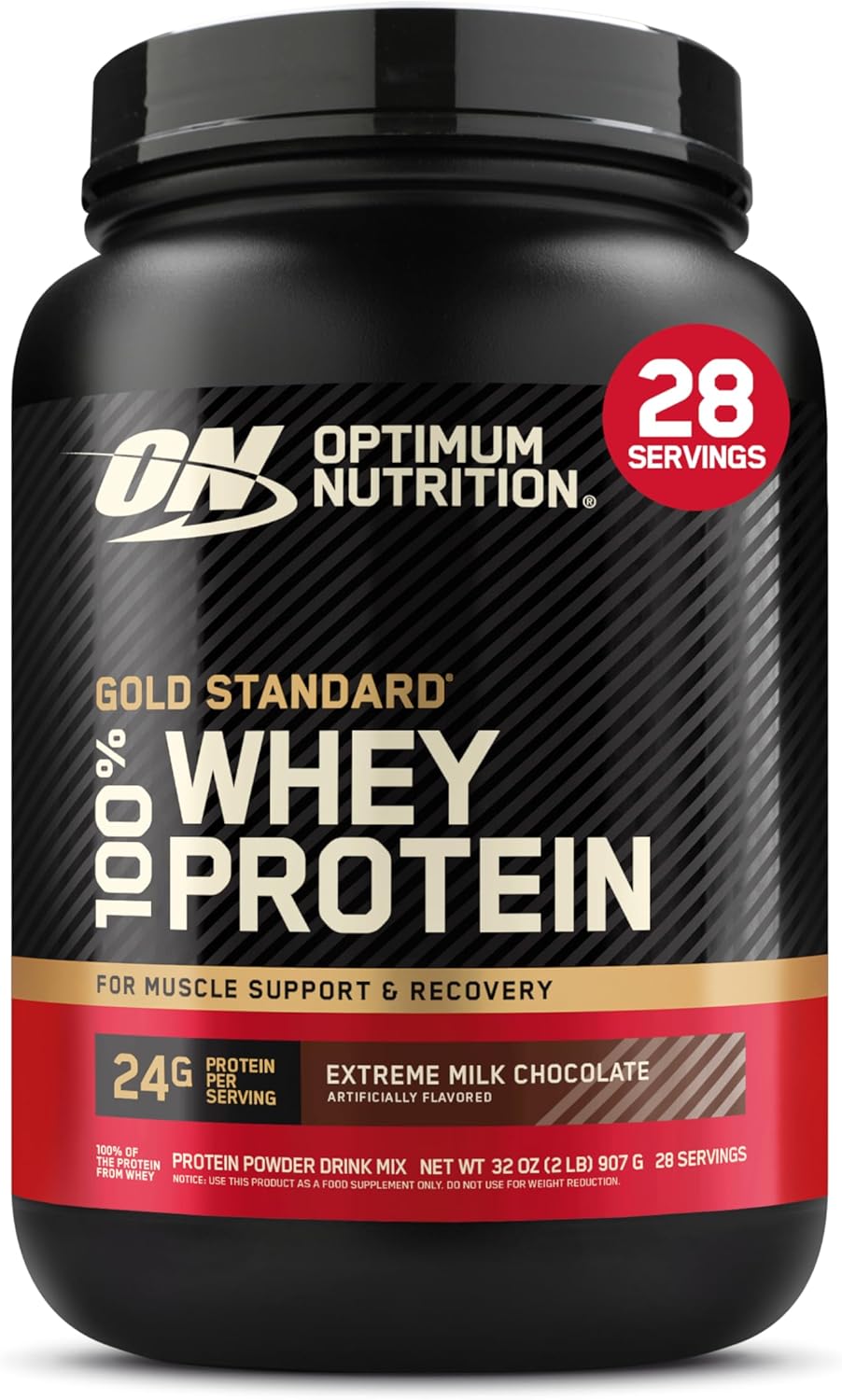
Optimum Nutrition Gold Standard 100% Whey
This article contains affiliate links. We may earn a commission at no extra cost to you.
Thorne
This article contains affiliate links. We may earn a commission at no extra cost to you.
NSF Certified for Sport: Banned Substance Screening with Professional League Recognition
NSF Certified for Sport is the North American heavyweight because it covers three risks at once: banned substances, contaminants, and manufacturing quality. According to NSF International, the program screens for about 290 substances banned by major athletic organizations, including the full World Anti-Doping Agency prohibited list. It also verifies label claims and tests for unsafe levels of contaminants such as heavy metals, pesticides, and microbial agents.
That scope matters. Some programs are good at basic quality control. Others are good at anti-doping protection. NSF Certified for Sport is strong because it does both while also requiring GMP-certified facilities and conducting audits twice a year. In other words, it isn’t just testing the powder. It’s testing the system that keeps producing the powder.
Recognition is another reason this seal carries weight. NSF says its Certified for Sport program is the only independent third-party certification recognized by USADA, MLB, NHL, and the CFL, and it is recommended by the NFL, NBA, PGA, LPGA, and Ironman. For a buyer, that answers a useful question: who is trusting this standard when the downside isn’t theoretical?
If you play college or professional sports in the US, or compete in a setting where anti-doping rules are a real part of life, NSF is the cleanest default. It gives you a broad screen, league recognition, and a manufacturing-audit framework that goes beyond one lucky lab result.
It’s also a sensible choice for non-elite consumers who want an aggressive standard without turning supplement shopping into a part-time job. You may not care about the WADA list personally, but the same program that catches banned substances is also looking at contaminants and label integrity. More scrutiny is generally better than less.
Informed Sport: Every-Batch Testing for Elite Athletes Worldwide
Informed Sport wins on testing frequency. According to Informed Sport and LGC, every single batch of a certified product, including all flavor variants, is tested for more than 285 prohibited substances on the WADA list before release to market. That’s the feature that separates it from nearly every other seal in this conversation.
If you compete under WADA-code rules, every-batch testing isn’t a trivial detail. It means the specific lot you buy had to clear testing before sale, not just the product family in some broad, historical sense. Informed Sport also uses ISO 17025 accredited testing at LGC laboratories, reviews raw material suppliers, performs a paper-based manufacturing facility assessment, and runs ongoing blind testing of retail-purchased products one to four times per year.
That last part matters more than it sounds. Blind retail testing is a reality check. It asks whether the product on the shelf still behaves like the product in the certification file. Supplement quality has a habit of drifting when nobody is looking.
Informed Protein adds another layer that is especially relevant for protein powders. The program includes tests for total protein, total carbon, free amino acids, and nitrogen-rich adulterants such as melamine. That gets closer to the old protein-spiking problem, where a label can look impressive while the underlying protein quality is doing something sneakier.
So when is Informed Sport the better choice than NSF? Usually when global competition is the issue and batch-level certainty matters most. European football clubs, Olympic pathways, and other WADA-code environments tend to treat Informed Sport as a strong fit because the every-batch promise is unusually tight. If your risk tolerance is basically zero, that feature is hard to beat.
For everyone else, the choice is more nuanced. Informed Sport is excellent, but its edge is specific: frequency and anti-doping rigor. If you aren’t subject to that kind of testing, the question becomes whether you value every-batch screening more than NSF’s broader North American recognition profile.
USP Verified: The Reference Standard for Label Accuracy and Contaminant Control
USP Verified is different from both NSF Certified for Sport and Informed Sport because it isn’t built around athlete drug-testing risk. It’s built around a general-consumer question: does this product contain what the label says, at the stated amount, with contaminant levels kept below defined thresholds?
According to the United States Pharmacopeia, its Dietary Supplement Verification Program checks identity, potency, purity, and proper disintegration or dissolution. The purity piece includes thresholds for heavy metals, pesticides, microbial contaminants, PCBs, and dioxins. USP also conducts annual GMP facility audits and ongoing off-the-shelf surveillance testing.
That’s a serious standard, and for many everyday buyers it may be the most relevant one. If your main concern is label accuracy and contaminant control, USP is one of the clearest marks in the market. It’s less concerned with banned-substance exposure for competitive athletes and more concerned with whether the product reliably matches the bottle.
There is a catch, and it is an important one: USP doesn’t specifically screen for the WADA banned-substance list. So if you are an athlete who could be tested, USP Verified isn’t a substitute for NSF Certified for Sport or Informed Sport. It solves a different problem.
USP’s scarcity also tells you something. USP says roughly 40 products are listed in its Verified database at any given time, and Nutrola estimates the program can cost brands about $30,000 to more than $100,000 per product annually. That doesn’t automatically make every USP product better than every NSF or Informed Sport product, but it does explain why the mark isn’t slapped on every tub like a holiday sticker.
For a general consumer with no anti-doping exposure, USP can be the cleanest signal of old-fashioned product integrity: identity, potency, purity, and facility oversight. Just don’t confuse that with athlete-safe certification. They overlap a little. They aren’t the same job.
NSF vs. Informed Sport vs. USP: How Third-Party Tested Protein Powder Certifications Compare at a Glance
This is where the three seals separate into distinct use cases rather than a fake winner-take-all ranking.
NSF Certified for Sport has the broadest combined scope. It screens roughly 290 banned substances, checks contaminants, verifies label claims, and requires GMP-certified facilities with audits twice a year. It also has the strongest North American league recognition profile through USADA and several professional leagues.
Informed Sport has the highest testing frequency. It screens 285-plus WADA-listed substances and tests every batch before sale, while also reviewing facilities, suppliers, and retail samples through blind testing. If batch-level anti-doping confidence is the priority, it has the strongest argument.
USP Verified has the strictest general-consumer framing around identity, potency, purity, and contaminant control. It’s the one most focused on whether the label is correct and the product clears defined quality thresholds. What it doesn’t do is give tested athletes direct WADA-list protection.
So the right comparison isn’t “Which seal is best?” It’s “Best for what?” NSF is the best all-around athlete-friendly mark for most US buyers. Informed Sport is the best fit when every-batch screening and global competition rules drive the decision. USP is the best quality-verification mark for everyday consumers who care most about label accuracy and contaminant control.
There is also a more boring, more useful way to frame this. NSF is breadth. Informed Sport is frequency. USP is precision around label integrity. That’s the entire decision in one line.
How to Verify a Protein Powder’s Certification Status
This part shouldn’t be mysterious, but brands do sometimes rely on vague language and tiny badge graphics that are doing a lot of emotional work. Use the databases.
For NSF Certified for Sport, search the public certified products database at `https://www.nsfsport.com/certified-products/search-results.php`. For Informed Sport, use the searchable database at `https://sport.wetestyoutrust.com`, which can also list individual batch numbers. For USP Verified, use the public product listings and FAQ pages at `https://www.quality-supplements.org/faqs`.
The batch-level detail is especially useful with Informed Sport because it lets an athlete verify the specific lot he bought. That’s a stronger form of reassurance than a label photo copied onto a product page three redesigns ago.
Public certification references and the comparison sources cited here point to brands such as Momentous, Thorne, Transparent Labs, Optimum Nutrition Gold Standard Whey, BioSteel, Klean Athlete, and 1st Phorm carrying NSF or Informed Sport certification on select protein powder SKUs. The important phrase there is “select SKUs.” Certification often applies to specific products, flavors, or lots, not a brand’s entire catalog.
That’s why a public database check beats brand-level trust. If you are comparing options, it also helps to read adjacent breakdowns such as Protein Powder for Men Over 45: Whey, Plant, and Collagen Compared by Research and Momentous vs. Thorne: Which Premium Supplement Brand Has Better Third-Party Testing?. Both are useful once you understand what the certification seals actually mean.
One more thing: a logo on a retailer page isn’t proof. A searchable listing is proof. In supplements, that distinction saves a lot of expensive optimism.
Which Certification Should You Look For?
Start with your risk, not with the marketing copy.
If you are a US-based athlete subject to USADA or a North American professional league, look first for NSF Certified for Sport. It’s recognized in the ecosystems most likely to matter to you, and it covers banned substances, contaminants, and manufacturing quality in one program.
If you compete globally under WADA-code testing, Informed Sport usually makes more sense because the every-batch standard is unusually strict. When your sport or league treats batch-level anti-doping control as a central risk, Informed Sport is built for exactly that problem.
If you are a general consumer who wants to know the label is accurate and the product has been screened for contaminants, USP Verified is an excellent mark. It’s just not an athlete-protection seal. That distinction sounds obvious until somebody assumes “quality verified” must also mean “safe for drug-tested competition.” It doesn’t.
For many men over 45, the safest practical default is a protein powder carrying either NSF Certified for Sport or Informed Sport, because both include banned-substance screening on top of broader quality controls. That doesn’t mean everyone needs athlete-grade certification. It means those programs reduce the number of things you have to trust blindly.
If you want to widen the comparison beyond protein powder, Third-Party Tested Omega-3 Supplements: Ranking the Brands That Verify Their Labels and Creatine for Men Over 45: Science-Backed Dosage, Benefits, and Top Brands show the same underlying pattern: the best supplement is usually the one with the least room for wishful thinking.
That’s the larger point. Certification isn’t about chasing perfection. It’s about reducing avoidable uncertainty in a category that has earned some skepticism.
Frequently Asked Questions
Can a protein powder carry more than one third-party certification?
Yes. A brand can choose to certify the same product through more than one program if it wants to absorb the cost and administrative burden. In practice, most products don’t stack multiple high-rigor seals because each program has its own testing, audit, and maintenance requirements.
Does USP Verified mean a protein powder is safe for athletes subject to drug testing?
No. USP Verified is strong on identity, potency, purity, and contaminant control, but USP doesn’t specifically screen against the WADA banned-substance list. For tested athletes, NSF Certified for Sport or Informed Sport is the more relevant protection.
How often do certified products get retested after the initial approval?
It depends on the program. Informed Sport’s main differentiator is every-batch testing before release, plus ongoing blind retail testing. NSF Certified for Sport requires ongoing audits and testing tied to its program standards. USP also uses annual facility GMP audits and off-the-shelf surveillance testing.
What happens if a certified product fails a blind or surveillance test?
The programs keep public standards and databases because certification is supposed to be maintained, not granted once and forgotten. A failed test can trigger investigation, corrective action, suspension, or removal from certification status depending on the program and the nature of the failure.
Is ConsumerLab the same thing as NSF Certified for Sport or Informed Sport?
No. Comparison sources such as Nutrola treat ConsumerLab as testing and review, not the same type of ongoing athlete-facing certification program as NSF Certified for Sport or Informed Sport. That makes it useful background, but not a direct substitute for a recognized certification seal on a protein powder.
The Bottom Line
The best certification depends on what you are trying to protect against. If the risk is a failed drug test, start with NSF Certified for Sport or Informed Sport. If the risk is paying premium prices for a label that may not match the tub, USP Verified is a strong general-consumer signal. In a supplement market where misbranding is common, third-party verification isn’t overkill. It’s basic adult supervision.
Sources
- PubMed Central (PMC), “Compromising Health: A Systematic Review of Misbranded and Adulterated US Dietary Supplements” — https://pmc.ncbi.nlm.nih.gov/articles/PMC10570429/
- NSF International, “NSF Certified for Sport — What Our Mark Means” — https://www.nsfsport.com/our-mark.php
- Informed Sport / LGC, “Informed Sport Certification Process” — https://sport.wetestyoutrust.com/about/certification-process
- United States Pharmacopeia (USP), “USP Dietary Supplement Verification Program” — https://www.usp.org/verification-services/dietary-supplements-verification-program
- Nutrola, “USP, NSF, Informed Sport, ConsumerLab: Supplement Certifications Compared (2026)” — https://nutrola.app/en/blog/usp-nsf-informed-sport-consumerlab-certifications-compared-2026
- BSCG, “Independent Supplement Testing: What It Is and Who Does It” — https://www.bscg.org/blogs/single/independent-supplement-testing-what-it-is-and-who-does-it
- United States Anti-Doping Agency (USADA), “Supplement Connect: Reduce Your Risk of Testing Positive” — https://www.usada.org/substances/supplement-connect/reduce-risk-testing-positive-experiencing-adverse-health-effects/
- NSF International, “Certified Products Search” — https://www.nsfsport.com/certified-products/search-results.php
- USP, “USP Verified Products FAQ” — https://www.quality-supplements.org/faqs
Continue reading: Read the pillar — Supplements & Nutrition
This article is for informational purposes only and is not financial advice. Consult a qualified professional for personalized guidance.
Leave a Reply