
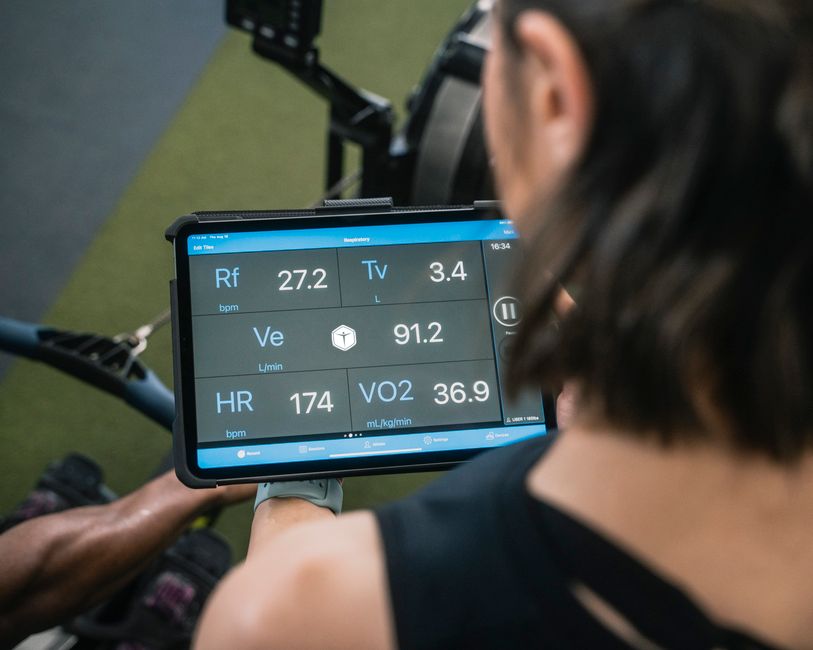
Most men don’t need more wearable features after 50. They need a way to use wearable data to adjust training after 50 without turning every morning into a referendum on whether the watch approves of leg day.
That’s the real problem. The data gets better, the dashboards get louder, and recovery gets less forgiving. You sleep a little worse than you did at 35. A hard session hangs around longer. One drink hits your numbers like it has a personal grudge. None of that means you’re falling apart. It means the training math changed.
The useful move isn’t to stare harder at readiness scores. It’s to track three metrics, build a baseline, and make small decisions from the trend instead of from whatever your wrist gadget says at 6:12 a.m. The American College of Sports Medicine ranked wearable technology as the No. 1 worldwide fitness trend for 2026 and fitness programs for older adults No. 2 for a reason: older athletes and executives want data, but they also want fewer dumb mistakes.
Your Recovery Metrics Shift After 50 — Here’s What Changes
If recovery feels slower than it used to, the data says you’re not imagining it.
WHOOP‘s 2024 age-group data shows heart rate variability tends to slide with age, from around 80 milliseconds in the teenage years to roughly 25 milliseconds by age 75, with a 55-year-old averaging about 44 milliseconds. That doesn’t mean a 44 HRV is bad. It means comparing your numbers to a 28-year-old triathlete on the internet is useless.
Sleep gets hit even harder. In a JAMA study of 149 healthy men ages 16 to 83, researchers found deep slow-wave sleep dropped from 18.9% of total sleep time in men 16 to 25 to just 3.4% by ages 36 to 50. That’s an enormous decline in the most restorative phase of sleep. No wonder a late workout, two glasses of wine, or a bad hotel mattress can leave a 56-year-old feeling like he trained through wet cement the next morning.
Then there’s recovery between hard sessions. TrainingPeaks notes that masters athletes often need 48 to 72 hours between high-intensity sessions for the same muscle groups, where younger athletes may bounce back in 24 to 48. That gap matters because plenty of men over 50 still train with a 35-year-old’s schedule and then act surprised when the wheels feel loose by Thursday.
This is the first useful reframe: lower HRV, lighter deep sleep, and slower recovery aren’t signs that training stopped working. They are the terrain. Your job isn’t to beat the terrain. Your job is to stop pretending it hasn’t changed.
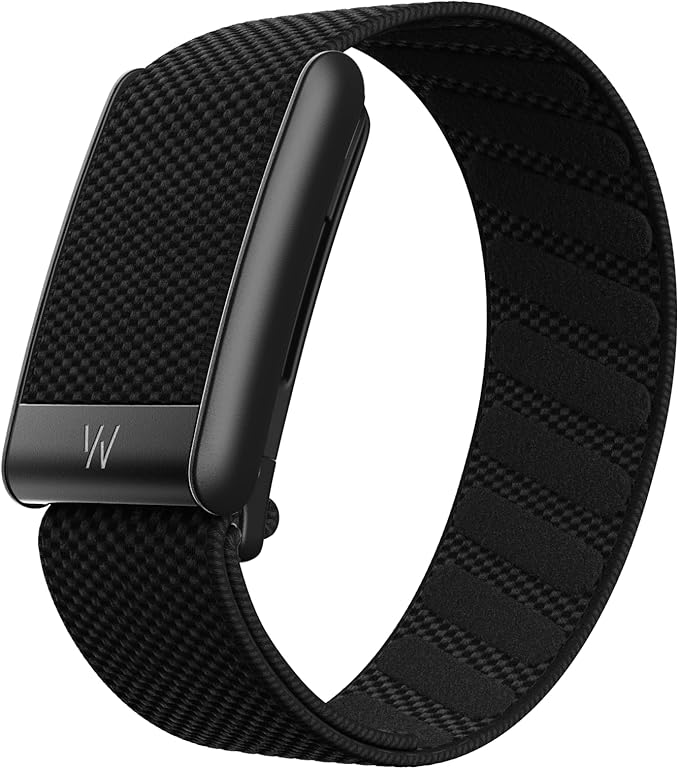
WHOOP MG Health Monitor
$239.00
This article contains affiliate links. We may earn a commission at no extra cost to you.
Oura Ring 4 — Silver
$349.99
This article contains affiliate links. We may earn a commission at no extra cost to you.
The Three Metrics Worth Tracking Daily
Most wearable dashboards are cluttered with what can only be called readiness theater. Helpful-looking charts. Dubious decision value.
Three daily metrics matter more than the rest: HRV, resting heart rate, and sleep efficiency. HRV is the most sensitive signal of readiness because it tends to move first when stress, fatigue, alcohol, illness, or poor recovery stack up. Resting heart rate is slower to react, but it’s a reliable confirmation signal when fatigue is accumulating. Sleep efficiency, which measures time asleep versus time in bed, is more actionable than obsessing over deep sleep percentages once you’re older, because the age-related loss of deep sleep is largely baked in.
The ACSM’s 2026 fitness trends report backs the broader point here. Wearables are now mainstream, and older-adult fitness programming is right behind them. The need is obvious: more men over 50 have the data, but not many have a clean filter for what deserves daily attention.
For trained men over 50, resting heart rate often sits in the 40 to 60 beats-per-minute range. That doesn’t make a 61 an emergency and a 58 a triumph. It means your own range matters more than the abstract ideal. The same goes for sleep. If deep sleep in men over 60 frequently drops below 10% of total sleep time, according to the older sleep research and the way current wearable platforms interpret it, then sleep efficiency gives you a more practical read on whether bedtime actually produced recovery.
This is the point where a lot of people get lost. They collect respiratory rate, skin temperature, recovery score, strain score, body battery, and half a dozen other labels that sound scientific enough to survive a board meeting. But if HRV, resting heart rate, and sleep efficiency are all stable, the rest is usually commentary.
Step 1: Build Your Personal Baseline Over 14 Days
AARP’s 2025 technology survey found that 38% of adults age 50 and older own a wearable, and the share who say technology helps them live a healthy life rose from 39% in 2024 to 46% in 2025. That’s the good news. The bad news is that ownership isn’t the same thing as interpretation.
The biggest mistake is comparing today’s number to a population average instead of to your own recent trend. A 47 HRV might be excellent for one man and a warning sign for another. A resting heart rate of 54 might mean business as usual for one runner and accumulated fatigue for another lifter.
So the first step is boring, which is usually a clue that it works. Spend 14 consecutive days collecting morning data under the same conditions: first reading after waking, before caffeine, before emails, before wandering around the kitchen pretending to look for the espresso tamper. TrainingPeaks recommends a consistent morning routine because HRV needs enough stable readings to create a useful seven-day rolling average. Resting heart rate tends to settle faster, often within 7 to 10 days, but HRV is the governor on the overall baseline period.
During those two weeks, don’t make dramatic training changes based on one ugly number. The point is to learn what normal looks like for you when life is mostly ordinary. If you travel across time zones, get sick, go on a weekend drinking tear, or have three rotten nights of sleep, note it. The number by itself isn’t the story. The number plus context is the story.
At the end of 14 days, you’ll have something far more useful than a premium subscription graph. You’ll have a personal operating range.
Step 2: Use Wearable Data to Adjust Training After 50 With the Daily Readiness Decision Tree
This is where the wearable becomes useful instead of decorative.
A 2024 narrative review in the Journal of Functional Morphology and Kinesiology found that HRV-guided programming can outperform fixed programming for recovery monitoring and training adaptation in athletic populations. That’s not magic. It just means training decisions improve when the body gets a vote.
The practical version is a three-branch decision tree.
If this morning’s HRV is at or above your seven-day rolling average and sleep efficiency is above 85%, run the planned session. That’s your green light for moderate to high intensity work.
If HRV lands 5% to 10% below baseline, downgrade the session. Do zone 2 work, mobility, technique practice, or an easy lift with less total volume. You’re not skipping. You’re reallocating stress.
If HRV is more than 10% below baseline or resting heart rate is more than 5 beats above your normal average, take a rest day or keep it to an easy walk. That’s the body’s version of saying, “Not today.” Wise to listen.
TrainingPeaks gives a concrete example through a 56-year-old cyclist who posted a Training Stress Score of 220 after a huge day, far above his usual 120. The next morning, his HRV dropped from 78 to 69 and resting heart rate ticked up. That’s exactly the sort of pattern you want to catch early. The watch did not save him. The decision did.
This framework also solves a common middle-aged training problem: the urge to prove you’re still the guy who can bury fatigue with effort. That guy usually becomes the guy with cranky tendons two weeks later.
Step 3: Read the Weekly Trend, Not the Daily Number
Single-day readings are noisy. Weekly direction is signal.
Research cited by TrainingPeaks on masters athletes shows something encouraging here. Men over 50 who maintain long-term training can show post-exercise HRV responses that look surprisingly similar to younger athletes. A 2019 study of masters sprint and endurance athletes in Brazil found they had higher HRV than age-matched controls and comparable HRV to sedentary adults about 20 years younger. That’s not a promise of immortality. It just means consistent training still buys real physiological resilience.
The trap is misreading that resilience as permission to overreact to every blip. One low-HRV morning after a hard interval session is normal. One slightly elevated resting heart rate after a bad night in a hotel is normal. One middling readiness score after a steak dinner, two drinks, and five hours of sleep isn’t an existential message from the universe. It’s Wednesday.
The better rule is to watch the seven-day rolling average. If you get three mornings in a row below baseline without an obvious reason, that means something. It could be illness coming on. It could be accumulated work stress. It could be that training volume has quietly drifted past what your current recovery setup can support.
That’s why the trend matters more than the daily badge color. Trends let you make adult decisions. Daily scores mostly tempt you into dashboard fog.
When the Data and Your Body Disagree
Wearables are useful, but they aren’t a tie-breaker over lived experience.
The 2024 JFMK review makes that plain. Reduced HRV can indicate overreaching, but it isn’t always a sensitive marker in aerobically trained athletes. In other words, a well-conditioned 55-year-old can accumulate fatigue without the wearable waving a giant red flag. Stable numbers don’t always mean fresh legs.
The reverse is true too. Alcohol can lower HRV by roughly 15 to 25 milliseconds the next morning. Acute illness can suppress it by 20 to 30. Poor sleep hygiene, especially late screens or a room that’s too warm, can drag the overnight reading around even if the previous day’s training was fine. The device can be technically correct and practically unhelpful at the same time.
So when the data and your body disagree, use context and perceived exertion as the final judge. Heavy legs, flat mood, unusual soreness, and poor motivation after the warm-up count as data. So does the opposite: if the watch says recovery is mediocre but your body feels springy, your warm-up is crisp, and the session is meant to be moderate, you probably don’t need to cancel your life.
This is the deeper point. A wearable should narrow decision error, not replace judgment. The men who use these tools well don’t obey them. They interrogate them.
Related: Wearable Metrics That Matter After 50
Related: How to Track and Improve VO2 Max After 50
Related: Oura Ring Gen 5 vs. WHOOP 5.0 for Men Over 50
Frequently Asked Questions
Should I get a dedicated recovery wearable like WHOOP or Oura, or will my Apple Watch or Garmin give me enough data to use this framework?
You don’t need a dedicated recovery device if your current watch gives you consistent HRV, resting heart rate, and sleep data. The framework depends more on trend consistency than on brand prestige. A specialized device may make the recovery signal easier to read, but it won’t rescue bad interpretation.
How do I know if a low HRV morning means I need rest versus just a bad night of sleep?
Look at the combination, not the headline number. If HRV is down after one rough night but resting heart rate is normal and the seven-day trend is stable, that usually points to a temporary recovery hit rather than systemic fatigue. If low HRV stacks for several days or comes with elevated resting heart rate, then it is probably worth backing off.
Can I improve my HRV after 50, or is the decline inevitable no matter what I do?
Age pushes the average down, but training status still matters. The masters-athlete data cited by TrainingPeaks suggests well-trained older men can maintain better HRV than their sedentary peers and sometimes approach younger comparison groups. The realistic goal isn’t to beat age on paper. It’s to improve your own baseline or preserve it longer.
What should I do when my wearable says I’m fully recovered but my legs feel heavy, or the opposite?
Trust the full picture. If the wearable says green but your body says no, downgrade the session and see how the warm-up feels. If the wearable says yellow but you feel good, you can often proceed with a moderate session while staying alert for signs that the output isn’t there. The device is an input, not a foreman.
Wearable data works best after 50 when it sharpens judgment instead of replacing it. Track fewer metrics, build a real baseline, and make decisions from the trend. That’s how you train like an experienced adult instead of a man arguing with his watch.
This article is for informational purposes only and is not financial advice. Consult a qualified professional for personalized guidance.
Leave a Reply