
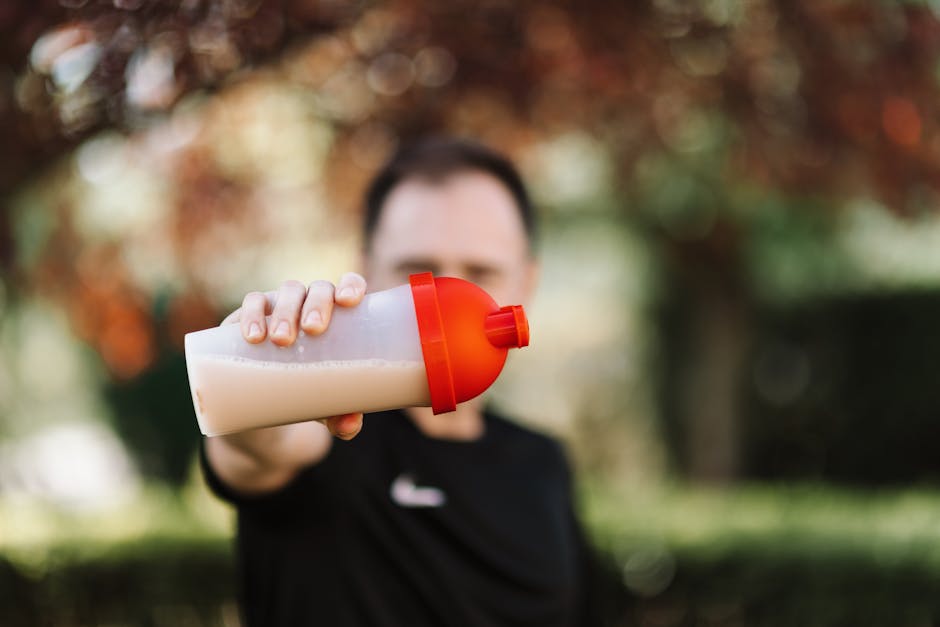
Finding the best protein powder men over 45 should use isn’t really about flavor, branding, or which tub looks most aggressive on a shelf. It’s about getting enough high-quality protein to slow age-related muscle loss without wasting money on products that solve the wrong problem.
After age 30, muscle mass declines roughly 3% to 5% per decade, and that pace can accelerate after 50, according to Cleveland Clinic’s overview of sarcopenia. The PROT-AGE Study Group, published in the Journal of the American Medical Directors Association, also argues that older adults often need 1.2 to 1.6 grams of protein per kilogram of body weight per day, well above the basic RDA of 0.8 g/kg. That’s the real backdrop here.
So the straight answer is this: whey isolate is still the best default option for most men over 45 who want muscle support, plant blends can work if dairy is a problem or preference, and collagen belongs in the joint-support bucket, not the muscle-building bucket.
Why Protein Needs Change After 45
The older-you-get problem isn’t subtle. Recovery gets slower, muscle hangs around less willingly, and the same training plan that worked at 35 starts producing a lot more soreness and a lot less payoff at 52.
That isn’t just vibes. Cleveland Clinic describes sarcopenia as the age-related loss of muscle mass and strength, and pegs the long-run decline at roughly 3% to 5% per decade after age 30. By the time men reach their 50s, they aren’t dealing with a tiny rounding error. They are working against a moving baseline.
Protein becomes more important because aging muscle doesn’t respond as efficiently to smaller doses. The PROT-AGE recommendations, published in 2013 in the Journal of the American Medical Directors Association, suggest 1.2 to 1.6 g/kg/day for older adults to help preserve muscle mass and function. For a 190-pound man, that works out to roughly 104 to 138 grams of protein per day.
That’s why protein powder matters. Not because food stopped existing, but because hitting those numbers consistently through whole food alone can get tedious fast. Chicken breast for every meal gets old. Greek yogurt helps, but it only stretches so far. A powder is useful because it makes the math easier.
The real question is what kind of powder actually earns a place in the routine.
Whey Protein: The Gold Standard for Muscle Protein Synthesis
If the goal is preserving or rebuilding muscle, whey still leads. Harvard T.H. Chan School of Public Health describes whey as a complete protein containing all nine essential amino acids. The practical advantage is leucine, the amino acid most associated with triggering muscle protein synthesis.
The 2024 Healthline review comparing plant and whey protein notes that whey contains about 11% leucine by weight, which is higher than typical plant options. In plain English, that means a 25- to 30-gram serving of whey isolate can usually hit the leucine threshold older muscle seems to need without requiring a giant serving size.
That matters for men over 45 because convenience counts. The best plan isn’t the theoretically perfect one. It’s the one that survives a travel week, a late meeting, and the general nonsense of adult life.
Whey isolate also tends to work well because it is filtered to reduce lactose, carbohydrate, and fat. A typical scoop delivers about 25 to 27 grams of protein with minimal extra baggage. For someone who tolerates dairy reasonably well, it is the cleanest path to more protein per serving.
This is also where quality control matters. Protein powder is one of those categories where the label can sound impressive while the sourcing is a little more mysterious than it should be. Informed Sport and NSF Certified for Sport are worth looking for because those programs verify products for banned substances and test what is actually in the tub. If a brand makes big claims and skips third-party testing, that’s not a personality quirk. It’s a warning label dressed as marketing.
Whey isn’t for everyone. Men with significant dairy intolerance, milk-protein allergy, or consistent GI issues from whey concentrates are usually better served elsewhere. But for pure muscle-support value, whey isolate remains the benchmark.
Best Protein Powder Men Over 45: When Plant Protein Makes Sense
Plant protein is the sensible second choice, not a fake health-food consolation prize. For men who avoid dairy, prefer a vegan option, or simply digest whey poorly, a good plant blend can absolutely do the job.
The catch is leucine density. The 2024 Healthline comparison reports that pea protein contains roughly 8% leucine, compared with whey’s roughly 11%. That difference sounds small until it shows up in the scoop size. To match the muscle-protein-synthesis signal you might get from 25 grams of whey, a plant blend often needs more like 35 to 40 grams.
That’s why single-source plant proteins can come up short, while blended formulas make more sense. Pea plus rice is the usual fix because together they provide a more complete amino acid profile. You can think of plant protein as a product that often needs better formulation and slightly larger dosing to reach the same destination.
For a time-poor reader, the practical takeaway is simple:
- If you want the most efficient muscle-support option, whey wins.
- If you need dairy-free protein, choose a pea-and-rice blend and accept that the serving size may need to be larger.
- If a plant formula gives you 20 grams of protein but no meaningful leucine disclosure, the label is telling you less than it should.
Plant protein is also often easier on digestion for some men, especially those who feel bloated by whey concentrates. That matters. A powder you actually tolerate is better than a theoretically superior one you stop using after eight days.
Who this isn’t for: men expecting plant powder to behave exactly like whey at the same scoop size. It usually won’t. The workaround isn’t complicated, but pretending there is no tradeoff is supplement-aisle fiction.
Collagen Protein: What It Does and Doesn’t Do
Collagen gets lumped into the protein category because it is a protein. That doesn’t mean it behaves like a muscle-support protein.
Harvard’s protein overview explains the importance of complete proteins for supplying essential amino acids. Collagen falls short there. The Healthline 2026 review notes that collagen isn’t a complete protein and lacks tryptophan, while also being low in other essential amino acids that matter for muscle protein synthesis.
So if a man over 45 is buying collagen instead of whey or a well-built plant blend because he thinks it is covering his muscle needs, that is the wrong product for the job.
Where collagen may earn its keep is joint and connective tissue support. A 2023 meta-analysis in Nutrients found improvements in joint pain and function in active adults using collagen peptides. That’s a reasonable use case, especially for men whose lifting history is starting to produce very loud opinions from their knees, shoulders, or tendons.
But collagen should be treated as an add-on, not a replacement. It belongs next to a real protein source, not in place of one.
Who this isn’t for: men trying to maintain lean mass, improve recovery from strength training, or use one powder to cover all bases. Collagen is the specialist here. Useful in the right role, overpraised in the wrong one.
How to Choose: Third-Party Testing and Practical Recommendations
If the goal is to choose once and stop overthinking it, the decision tree is fairly clean.
Start with tolerance.
If you tolerate dairy and want the strongest muscle-support option, choose whey isolate. If you don’t tolerate dairy or prefer plant-based protein, choose a pea-and-rice blend with a larger serving size. If your main concern is joints or connective tissue, collagen can be added on top of one of those, but it shouldn’t replace them.
Then verify testing. Informed Sport and NSF Certified for Sport are the two seals most worth caring about because they speak to product verification rather than branding theater. Informed Sport explains its certification program at informed-sport.com, and NSF does the same at nsfsport.com. Those certifications aren’t magic, but they are better than taking a label’s word for it.
Brands such as Thorne, Momentous, and Legion Athletics are examples in this category that carry these kinds of certifications. That doesn’t mean every product from every brand is automatically the right buy. It means they are at least playing in the adult section of the room.
Cost matters too. Based on the ranges in the article spec, whey isolate usually lands around $0.80 to $1.50 per serving, plant blends around $1.00 to $2.00, and collagen around $0.50 to $1.00. The smarter comparison is cost per useful serving, not cost per scoop. A cheap plant powder that requires two scoops to reach a meaningful leucine dose isn’t actually cheap.
This is also where related supplement decisions start to connect. If muscle retention is the goal, protein isn’t the only lever. Creatine is one of the few supplements with overwhelming evidence for strength and muscle mass, and our full supplement stack guide for men over 45 lays out where protein fits relative to creatine, fish oil, magnesium, and the rest.
The simplest recommendation looks like this:
- Best default for most men over 45: whey isolate with third-party testing.
- Best dairy-free option: pea-and-rice plant blend, ideally with transparent amino acid information.
- Best joint-support add-on: collagen peptides, used alongside rather than instead of a complete protein.
That isn’t flashy. It’s just what the evidence supports.
Frequently Asked Questions
Is whey or plant protein better for building muscle after 50?
Whey is usually better gram for gram because it delivers more leucine and is a complete protein. The 2024 Healthline comparison puts whey at roughly 11% leucine by weight versus about 8% for pea protein. Plant blends can still work, but they often need larger servings.
Can I take collagen powder instead of whey for muscle maintenance?
Not if muscle maintenance is the main goal. Collagen isn’t a complete protein and lacks tryptophan, which makes it a poor substitute for whey or a complete plant blend. It makes more sense as a joint-support add-on.
How much protein powder per day should a man over 45 take?
That depends on total daily protein intake, not on a magical scoop count. The PROT-AGE recommendations suggest 1.2 to 1.6 g/kg/day for older adults. Use powder to help close the gap between what you eat and that daily target.
Does protein powder put strain on your kidneys as you age?
For healthy adults, moderate protein intake is generally considered safe, but men with known kidney disease shouldn’t freelance this decision. This is a good place to involve a clinician who knows your labs rather than a podcast host who knows a microphone.
What third-party certifications should I look for on a protein powder label?
Start with Informed Sport and NSF Certified for Sport. Those programs verify products and help reduce the risk of contamination, label inaccuracy, or banned substances.
The best protein powder men over 45 can buy is usually the one that matches the actual goal. For muscle support, whey isolate still holds the strongest case. For dairy-free use, a well-built plant blend is the practical alternative. For joints, collagen can help, but it is solving a different problem.
That’s the whole game here: match the powder to the job instead of letting marketing pretend they are all interchangeable.
Sources
- Cleveland Clinic. “Sarcopenia (Muscle Loss): Symptoms & Causes.” 2024. https://my.clevelandclinic.org/health/diseases/23167-sarcopenia
- Harvard T.H. Chan School of Public Health. “Protein — The Nutrition Source.” 2025. https://nutritionsource.hsph.harvard.edu/protein/
- Healthline. “Plant-Based Protein vs. Whey Protein: Which Is Better?” 2024. https://www.healthline.com/nutrition/whey-vs-plant-protein
- Healthline. “Top 8 Benefits of Collagen.” 2026. https://www.healthline.com/nutrition/collagen-benefits
- Bauer J, et al. “Evidence-based recommendations for optimal dietary protein intake in older people (PROT-AGE Study Group).” Journal of the American Medical Directors Association. 2013. https://pubmed.ncbi.nlm.nih.gov/23867520/
- Informed Sport. “Supplement Certification.” 2025. https://www.informed-sport.com
- NSF International. “NSF Certified for Sport.” 2025. https://www.nsfsport.com
Continue reading: Read the pillar — Supplements & Nutrition
This article is for informational purposes only and is not financial advice. Consult a qualified professional for personalized guidance.
Leave a Reply