
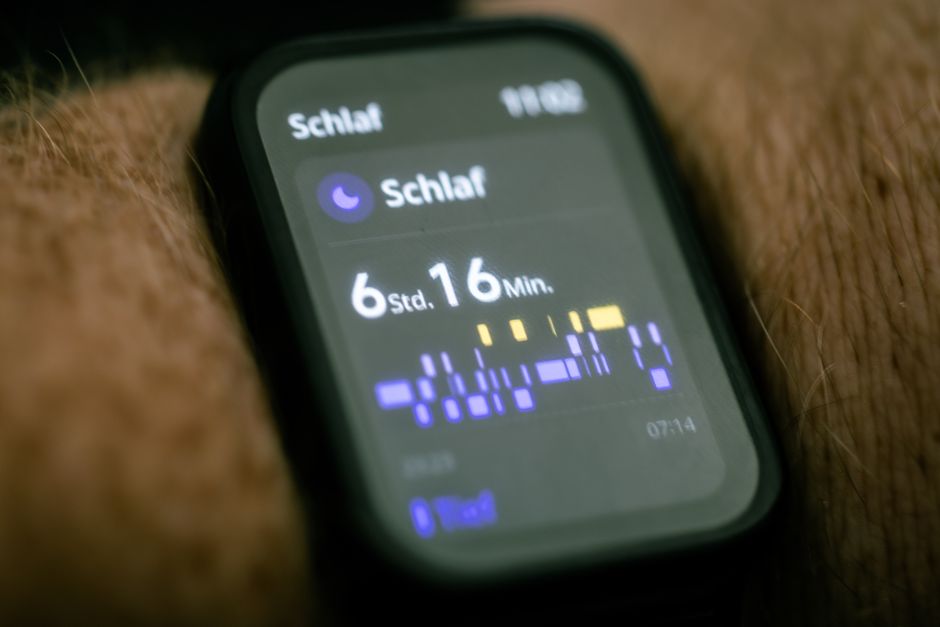
The watch buzzes. The ring updates. The dashboard adds three new colors and a warning you did not ask for. Meanwhile, you’re still the same guy with a 7 a.m. meeting, a stiff lower back, and a workout window that has to fit between real obligations. That’s the right starting point for figuring out how to use wearable data effectively after 50. The job isn’t to become your own full-time lab technician. The job is to get a cleaner signal about training, sleep, and recovery without letting the device turn into another anxious little middle manager on your wrist.
That matters because the numbers are changing for reasons that are normal, not because you suddenly forgot how to take care of yourself. Aerobic capacity declines with age if you do nothing about it. Sleep gets less predictable. Recovery gets less forgiving. But the useful response isn’t to watch every metric harder. It’s to use a smaller set of signals, look at trends instead of daily drama, and know when the device is giving you a nudge versus trying to cosplay as a doctor.
The practical workflow is simple. Track a few numbers that actually change decisions. Review them once a week instead of ten times a day. Treat sleep and recovery scores as rough directions, not moral verdicts. And when your wearable keeps surfacing a pattern that doesn’t match how you feel, or suggests a rhythm issue, take that to your physician instead of arguing with your watch over breakfast.
Why Wearable Data Is Different After 50
Plenty of men over 50 are using these devices now, which is useful mostly because it means you aren’t the only person trying to translate a glowing wrist computer into a sane decision. AARP’s 2026 Tech Trends report found that 36% of U.S. adults age 50 and older own a wearable device. AARP also reported that adults 80 and older increasingly see technology as an enabler of healthy aging, rising from 39% in 2024 to 46% in 2025. The point isn’t that everyone suddenly needs a smartwatch. The point is that more older adults are using technology as a support tool, not a toy.
The bigger reason the data feels different after 50 is physiology. VO2 max, a core marker of aerobic fitness, tends to decline about 8% to 10% per decade after age 30 in sedentary adults, according to Peak VO2 Trainer’s review of age-based fitness data. Consistent training can cut that rate roughly in half. So when your recovery is slower than it was at 37, or your hard workout takes more out of you than it once did, the wearable is often describing a normal age-related shift rather than exposing some personal failure.
That distinction matters because older high-performers can turn any metric into a referendum on discipline. Bad idea. Your device is most useful when it helps you compare you against you. The relevant question isn’t whether your overnight HRV looks like a 28-year-old triathlete’s. It’s whether your baseline is moving in a better direction over the next eight to twelve weeks because you are sleeping longer, drinking less, training smarter, or finally taking recovery as seriously as training.
This is also where age-appropriate ranges matter. A lower HRV or slightly higher resting heart rate than you remember from ten years ago may be normal for your age and training load. The device still has value. You just stop treating it like a scoreboard against younger bodies and start treating it like a dashboard for your own trend lines. That shift alone cuts a lot of pointless stress.
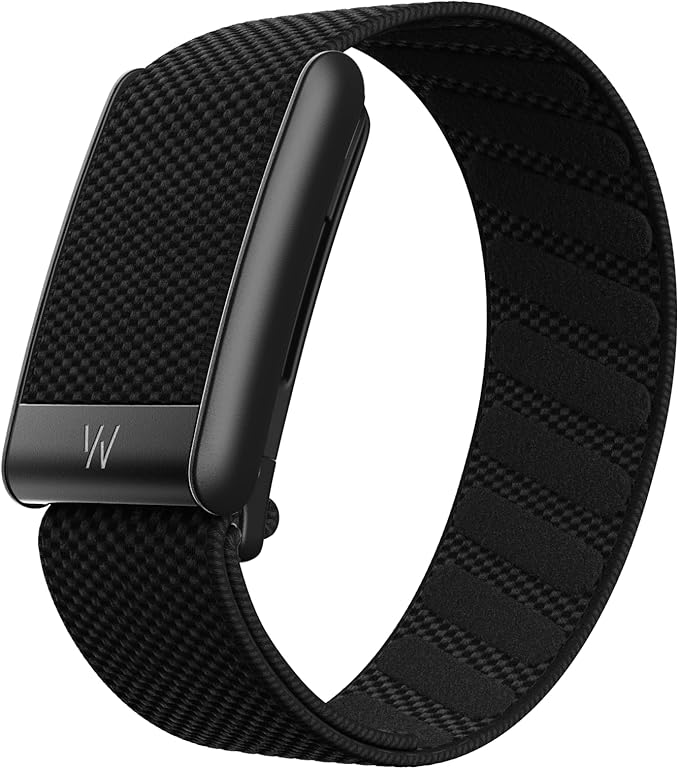
WHOOP MG Health Monitor
$239.00
This article contains affiliate links. We may earn a commission at no extra cost to you.
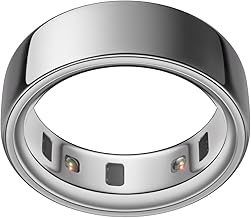
Oura Ring 4 — Silver
$349.99
This article contains affiliate links. We may earn a commission at no extra cost to you.
How to Use Wearable Data Effectively: The Three Metrics Worth Tracking (and the Rest You Can Ignore)
Most wearable dashboards are crowded because crowded dashboards sell subscriptions. If the app can persuade you that thirteen variables need your constant attention, it gets to feel indispensable. That doesn’t mean those variables deserve your attention. For most men over 50, three metrics do most of the useful work: resting heart rate, sleep duration trend, and weekly activity volume.
Start with resting heart rate. It isn’t flashy, which is another point in its favor. Resting heart rate gives you a clean read on overall recovery, accumulated fatigue, illness, and the broad direction of cardiovascular fitness. If your baseline has been 58 for a month and suddenly runs 64 to 66 for several mornings, that is worth noticing. It doesn’t tell you why with surgical precision, but it does tell you something is off. Maybe you pushed too hard. Maybe you drank two glasses more wine than your body wanted. Maybe a cold is coming. That’s actionable.
Next is sleep duration trend, not the sleep score circus. The American Academy of Sleep Medicine’s 2025 survey, reported by Sleep Foundation, found that 55% of adults change their behavior based on sleep-tracker insights. Fair enough. But the number that most often deserves attention isn’t whether the app gave you an 82 instead of an 86. It’s whether you have averaged 7 hours and 10 minutes of sleep for the last two weeks or 5 hours and 55 minutes. The body notices that difference even if your app tries to dress it up with motivational confetti.
Third is weekly activity volume. That can mean total steps, total zone-2 minutes, total training minutes, or a combination that fits your sport. The reason it matters is simple: it reflects whether you are doing enough consistently to preserve fitness and metabolic health. A 2023 study in the International Journal of Environmental Research and Public Health, using HINTS data, found that frequent wearable use was associated with longer and more frequent physical activity, especially among adults with hypertension. Not endless checking. Frequent use. There is a difference.
Everything else is optional until it proves it changes a decision. Skin temperature can be interesting. Readiness scores can be useful in context. Estimated VO2 max can be directionally helpful. But if a metric doesn’t alter how you train, recover, or when you seek medical advice, it belongs in the “nice to know” bucket. The University of Copenhagen researchers who published in the Journal of Medical Internet Research found that many users begin to treat wearable data as if it were medical advice. That’s where useful tracking slides into data theater.
The test is blunt. If a metric makes you smarter, keep it. If it mostly makes you twitchy, demote it.
Using Sleep Data Without Falling Into the Orthosomnia Trap
Sleep tracking gets weird fast because the thing meant to help you rest can become the thing you worry about at 2 a.m. Researchers at the University of Utah coined the term “orthosomnia” in 2017 after seeing patients who became preoccupied with achieving perfect sleep scores based on consumer tracker data. That phrase stuck because it names a familiar modern absurdity: trying so hard to sleep correctly that you stop sleeping well.
The problem isn’t imaginary. A 2025 American Academy of Sleep Medicine survey, cited by TIME and Sleep Foundation coverage of orthosomnia, found that 76% of adults report losing sleep because they worry about sleep problems. Consumer trackers can feed that loop because they estimate sleep stages through movement and heart rate. They don’t read brain waves the way a clinical EEG does. In other words, they are approximations dressed in very confident user-interface design.
That’s why the right use of sleep data is directional, not devotional. If your tracker shows shorter sleep across a stressful travel week, that is useful. If it shows repeated wake-ups after late alcohol, also useful. If it gives you a bad score after a night when you woke up clear-headed and functional, the number doesn’t get the final word. Your subjective experience still counts. In fact, it should count a lot.
A better framework is to ask three questions. Did I spend enough time in bed to give myself a real chance at seven-plus hours? Did I wake up feeling more restored or less restored than usual? Has the trend over the past week improved, held flat, or deteriorated? That’s enough to make sensible changes. You don’t need to conduct nightly litigation over whether the app mislabeled 47 minutes as light sleep.
This is where a bit of skepticism helps. Your tracker is a useful witness. It isn’t the judge, jury, and sleep deity. Keep the witness. Fire the deity.
How to Use HRV and Recovery Data in Your Training Decisions
HRV is the metric most likely to attract mystical nonsense, which is impressive for a number measured in milliseconds. Heart rate variability reflects the variation in time between heartbeats and is often used as a proxy for nervous-system recovery. It can be helpful. It can also become one more way to overreact before coffee.
The first rule is to stop chasing a heroic number. HRV generally declines with age, so a perfectly respectable value for a man in his late 50s won’t look like a perfectly respectable value for a 29-year-old cyclist. WHOOP‘s age-based data puts average sleeping HRV for men age 56 to 65 around 25 to 45 milliseconds. InsightCLA reports a broader source-dependent range of roughly 42 to 62 milliseconds. Different devices, populations, and methods produce different numbers, which is exactly why you should care more about direction than bragging rights.
Here is the simple framework. If your 7-day HRV trend is stable or rising and your resting heart rate is stable, you are probably fine to train as planned. If HRV trends down for several days while resting heart rate climbs and you feel flat, cut volume or intensity for a day or two. If HRV is low but you slept well, feel good, and your other markers look normal, don’t let one red box bully you into skipping a useful session. Wearables are good at spotting patterns. They are less good at understanding context.
That direction-over-daily-variance approach fits the research. The 2023 HINTS analysis in IJERPH found that more frequent wearable use was associated with better physical activity behavior, especially for adults managing hypertension. The study doesn’t say HRV is magic. It suggests that structured use of feedback can support better habits. That’s the sweet spot.
A practical rule for men over 50 is to pair the device with one subjective readiness score of your own: good, decent, or off. That’s it. No poetry required. If the wearable says recover, and you also feel off, back off. If the wearable says recover but you feel good and your recent trend is fine, proceed with some caution instead of declaring a national emergency. This isn’t algorithm worship. It’s informed judgment.
A Weekly 15-Minute Data Review Protocol
Checking your wearable all day feels productive in the same way reorganizing your desk can feel productive. Something happened, but not necessarily the thing that matters. National Geographic reported on research and clinical observations showing that wearables can amplify anxiety when people check them compulsively. Anxiety specialist Joanna Hardis recommends scheduled review intervals precisely because constant checking trains the brain to keep looking for a problem.
The fix is almost boring, which is another point in its favor. Run one 15-minute review every Sunday.
Minute 1 to 5: look at your 7-day resting heart rate trend. Is it stable, drifting down, or drifting up? Stable or lower is generally good. A meaningful upward drift suggests accumulated fatigue, stress, illness, poor sleep, or some combination of all four because life enjoys a bundle sale.
Minute 6 to 10: review your average sleep duration for the week. Not one night. The week. If your average slipped below your useful baseline, treat that as a recovery issue before you turn it into a supplement-shopping issue.
Minute 11 to 15: check your 7-day HRV trend and your weekly activity volume. Ask whether the week held enough movement to maintain momentum and whether your recovery trend supports pushing, maintaining, or easing off. Then make one adjustment for the next week. One. More walking meetings. One earlier bedtime. One lighter lifting day after travel. Small corrections compound better than dashboard panic.
That routine lines up with the evidence better than compulsive monitoring does. A 2025 JMIR systematic review found that frequent and consistent wearable use, not constant use, had the strongest association with increased physical activity in older adults. The device works best as a recurring feedback tool. It works worst as a slot machine for reassurance.
If you want the phrase for this, call it scheduled signal extraction. It sounds slightly ridiculous, which is fine, but it is also accurate. You are extracting a usable signal once a week instead of marinating in raw data all day.
When to Trust Your Wearable and When to Call a Doctor
Your wearable is trustworthy for trends, useful for flags, and limited for diagnosis. That’s the cleanest way to think about it. If your resting heart rate has climbed for two weeks, your sleep has cratered, and your HRV has fallen, the pattern is probably real even if the exact numbers are imperfect. If the device shows an occasional weird sleep-stage reading or one odd recovery score after a red-eye flight, that doesn’t automatically deserve a medical subplot.
Where people get into trouble is assuming a consumer device can settle a clinical question. It can’t. Research in the Journal of the American Heart Association has found that using fitness trackers to monitor heart conditions such as atrial fibrillation can increase anxiety. Some wearables are FDA-cleared for certain rhythm notifications, which is useful. But a notification isn’t a diagnosis, and no app on your wrist replaces an actual workup.
So use a simple triage rule. Trust the wearable when it points to a repeatable pattern that matches either your habits or how you feel. Be cautious when the signal is isolated, dramatic, or disconnected from reality. Call your doctor when the device repeatedly flags rhythm issues, your resting heart rate changes sharply without an obvious reason, you have symptoms like dizziness or unusual shortness of breath, or the numbers keep trending the wrong way despite cleaning up sleep, training load, and recovery. That’s the moment to consult your physician, bring the data, and let the wearable play supporting actor instead of lead diagnostician.
This applies outside of cardiology too. A wearable can help you notice that recovery is deteriorating, that sleep is shortening, or that your training load is outpacing your resilience. It can’t tell you whether that is overtraining, illness, sleep apnea, medication effects, or stress from a work quarter that has gone fully feral. The device earns its keep when it helps you start the right conversation, not when it pretends to end it.
Frequently Asked Questions
Is my wearable’s HRV accurate enough to make training decisions from?
Usually, yes, if you use it for trends rather than single-day calls. Device accuracy varies, and different platforms calculate HRV differently, but a 7-day direction of change is often good enough to help you decide whether to push, maintain, or back off.
Which wearable is best for a man over 50 who wants data without a steep learning curve?
The best one is usually the device you will actually wear consistently and review calmly. For most men over 50, a simple smartwatch, ring, or fitness band that tracks resting heart rate, sleep duration, and activity volume is enough. More dashboards don’t automatically mean more value.
How do I know if my sleep score is misleadingly low because of device error?
Look for mismatch. If the score is poor but you slept close to your normal duration, woke up rested, and the week-long trend looks stable, don’t overreact. Consumer sleep trackers estimate sleep stages rather than measure them clinically, so one odd score shouldn’t outrank your own experience.
Can my smartwatch actually detect atrial fibrillation or other heart issues?
Some devices can flag rhythm patterns that deserve follow-up, and some features are FDA-cleared for notification use. But they don’t diagnose atrial fibrillation or replace clinical testing. Repeated flags or symptoms mean it is time to consult your physician.
How quickly should I expect to see my resting heart rate or HRV improve with better habits?
Often within a few weeks, not a few days. Better sleep consistency, reduced alcohol, smarter training load, and more aerobic work can move the trend in the right direction over two to eight weeks. The more useful question is whether the baseline is gradually improving, not whether Tuesday was magical.
The Bottom Line
The smart way to use a wearable after 50 is narrower and calmer than the marketing suggests. Track a few metrics that change decisions, review them once a week, and treat the device as a trend detector rather than a diagnosis machine. When the pattern looks real and the stakes are medical, bring the data to your physician and let actual clinical judgment take it from there.
Sources
- AARP: 2026 Tech Trends and the 50+
- Peak VO2 Trainer: What Is a Good VO2 Max by Age?
- Sleep Foundation: Orthosomnia
- TIME: Your Quest for Perfect Sleep Is Keeping You Awake
- Journal of Medical Internet Research: Consumer Perceptions of Wearable Device Data
- International Journal of Environmental Research and Public Health: Wearable Devices and Physical Activity
- WHOOP: Normal HRV Range by Age and Gender
- InsightCLA: Average Sleeping HRV by Age
- National Geographic: How Wearable Tech Can Trigger Anxiety and How to Manage It
- JMIR: Frequent Use of Wearable Activity Trackers May Increase Physical Activity in Older Adults
- Journal of the American Heart Association: Digital Devices and Atrial Fibrillation Anxiety
This article is for informational purposes only and is not financial advice. Consult a qualified professional for personalized guidance.
Leave a Reply