
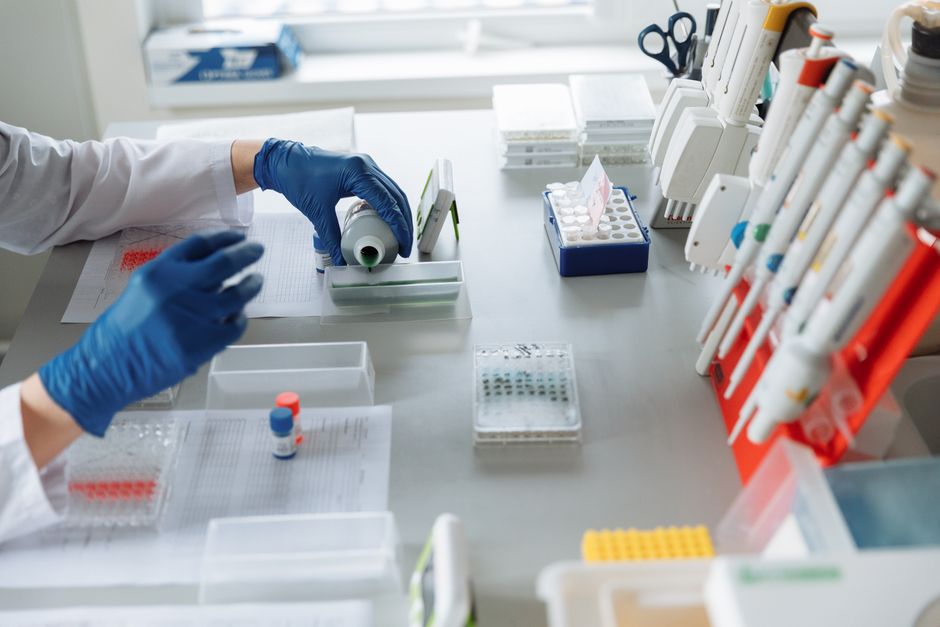
If you’re dragging through the afternoon, waking up cold, or feeling like your recovery speed quietly left the building, a single “normal” TSH result doesn’t settle much. An advanced thyroid panel for men over 45 tells a fuller story because TSH is a signal from the pituitary, not a direct read on how much usable thyroid hormone is reaching tissue.
That distinction matters more with age. Many men in their late 40s, 50s, and 60s are already watching testosterone, ApoB, glucose, and sleep data because the cheap answer is often the wrong answer. Thyroid testing deserves the same attitude. The standard screen is useful, but it can miss problems in hormone conversion, autoimmune activity, or borderline dysfunction that still shows up as fatigue, brain fog, slower recovery, constipation, dry skin, or a resting metabolism that suddenly feels stuck.
The practical move is simple: use TSH as the entry point, not the entire assessment. For men over 45, that usually means looking at free T4, free T3, reverse T3, and thyroid antibodies alongside TSH, then interpreting the whole pattern instead of worshipping one lab value because it landed inside a reference range.
Why TSH Alone Isn’t Enough for Men Over 45
TSH is still the standard first-line thyroid test, and the National Institute of Diabetes and Digestive and Kidney Diseases says that makes sense as a screening step. But the same NIDDK guidance is clear on the next part: when TSH isn’t normal, clinicians often need additional tests such as T4, T3, or antibody testing to identify the cause. That’s the key point. TSH is the gate. It is not the whole building.
For men over 45, the gap between screening and real assessment matters because the downside isn’t abstract. If thyroid output or conversion starts drifting, you may feel it in energy, concentration, workout recovery, mood, bowel regularity, and body composition before anyone does anything useful about it. The usual brush-off is familiar: your TSH is normal, so your thyroid must be fine. That conclusion is neat, fast, and sometimes wrong.
The American Thyroid Association highlighted a 2023 Thyroid Studies Collaboration meta-analysis covering 134,346 participants and found that men over 70 with free T4 above the 75th percentile of the normal range had an absolute risk increase above 5% for cardiovascular death and all-cause mortality. That does not mean every slightly high-normal free T4 result is a disaster. It does mean standard range-based screening can miss clinically relevant differences in older adults.
This is where older men get tripped up. A lab can be “normal” and still incomplete. A reference range can be technically correct and still not tell you why you feel worse than you did five years ago. If TSH is the only number on the page, you are looking at the dashboard warning light, not what is happening under the hood.
Advanced Thyroid Panel Men Over 45: The Five Biomarkers That Matter
An advanced thyroid panel men over 45 should request includes five core biomarkers beyond TSH: free T4, free T3, reverse T3, thyroid peroxidase antibodies, and thyroglobulin antibodies. Each one answers a different question.
Free T4 is the storage and transport hormone. NIDDK notes that free T4 is generally more informative than total T4 because it is not distorted by changes in binding proteins. If you want to know how much thyroid hormone is available to be converted and used, free T4 is the cleaner number.
Free T3 is the active hormone. This is the form that does the metabolic work in tissues. When men say they feel flat, cold, or oddly sluggish despite a not-terrible TSH, free T3 is one of the first places to look. It helps answer whether the body is actually producing enough active hormone rather than just keeping the pituitary satisfied.
Reverse T3 is the inactive metabolite. According to Rupa Health’s biomarker explainer, it can be useful when conversion problems are suspected because it reflects how much T4 is being diverted away from active T3 production. This number is not part of most standard panels, which is exactly why men who chase symptoms with only TSH often end up going in circles.
Then come the antibody markers. Thyroid peroxidase antibodies, or TPOAb, can indicate autoimmune thyroid disease, most commonly Hashimoto’s. Thyroglobulin antibodies, or TgAb, add a second autoimmune screen that can catch cases one antibody marker alone might miss. Cleveland Clinic lists normal TPOAb below 5.6 IU/mL and normal TgAb below 4.0 IU/mL.
Put together, these five markers turn a crude screen into a functional map. Free T4 shows supply. Free T3 shows active output. Reverse T3 shows whether conversion may be getting diverted. TPOAb and TgAb show whether the immune system is involved. That is a much better starting point than shrugging at one TSH line and pretending the job is done.
The Free T3-to-Reverse T3 Ratio: A Clinically Underused Metric
Most standard thyroid workups never mention the free T3-to-reverse T3 ratio, which is a shame because it can help explain why a man with a decent-looking TSH still feels like he’s operating on low battery. The idea is straightforward: compare the amount of active thyroid hormone with the amount of inactive hormone that reflects less efficient conversion.
Rupa Health describes the free T3 to reverse T3 ratio as a marker of how effectively the body converts T4 into active T3. In that framework, a ratio above 20 is considered more favorable for cellular thyroid function, while a ratio below 15 may suggest reduced receptor availability and hypothyroid-like symptoms such as fatigue, brain fog, and cold intolerance.
This is not a mainstream guideline metric on the level of TSH, and it should not be treated like a magic number. The evidence base is thinner, and interpretation depends on context. Still, the ratio is useful precisely because it can identify a pattern standard screening misses: enough apparent hormone in circulation, but not enough effective active hormone where it counts.
That matters in the real world. Men over 45 often arrive at lab interpretation with overlapping issues such as poor sleep, caloric restriction, high training load, chronic stress, or medication changes. Those pressures can muddy the picture. The ratio does not replace clinical judgment, but it can keep a workup from stopping too early.
The better way to think about it is as a second-pass tool. If symptoms fit, TSH alone is not convincing, and free T4 and free T3 do not fully explain the gap, asking how much hormone is being pushed toward reverse T3 is reasonable. It will not answer everything. It may stop you from settling for a shallow answer.
Thyroid Antibodies: The Autoimmune Screen Most Men Never Get
Men are under-screened for autoimmune thyroid disease partly because thyroid issues still carry a “women’s health problem” reputation. Biology did not get that memo. Autoimmune thyroid disease absolutely shows up in men, and missing it matters because the plan changes when the immune system is driving the dysfunction.
Cleveland Clinic notes that positive TPO antibodies can indicate autoimmune thyroid disease, especially Hashimoto’s. That matters even when the rest of the panel has not completely fallen apart yet. Antibodies can appear before a full-blown hormone abnormality, which means they can explain symptoms and justify closer follow-up instead of another year of wait-and-see medicine.
The prevalence data backs up the need to screen. The International Journal of Clinical Practice review reports subclinical hypothyroidism in older individuals ranging from 2.7% to 16.9%, with rates increasing with age in males. The Framingham Heart Study also found that roughly 6% of men over 60 have subclinical hypothyroidism. That is not a rounding error.
This is one of the most useful mindset shifts for time-poor men: not every thyroid problem announces itself with a dramatic TSH collapse. Some cases start as immune activity, mild dysfunction, or borderline changes that still feel bad even if they don’t look theatrical on a basic panel. If antibody testing is missing, the workup may be incomplete before it even starts.
The practical upside is clarity. If antibodies are positive, the question changes from “Is this all in my head?” to “How do I track progression, symptoms, and treatment options intelligently?” That is a far better conversation to have with a physician than another vague complaint about low energy.
How to Access Advanced Thyroid Testing: Platforms, Costs, and Next Steps
Access is easier than most men assume. You can still ask a physician to order a fuller panel, and that is often the best route if symptoms are significant or other endocrine issues are in play. But if the standard annual physical keeps producing a single TSH and a pat on the head, direct ordering can be the faster move.
Quest Health offers standalone thyroid testing in roughly the $80 to $150 range depending on the panel. That can be a practical option if you want a cleaner baseline without committing to a subscription platform. It is not glamorous, which is usually a good sign in lab testing.
For broader biomarker coverage, platforms such as InsideTracker and Function Health are worth considering. Innerbody Research’s 2025 review describes InsideTracker’s Ultimate plan at about $500 with 54 biomarkers and testing through Quest Diagnostics or mobile phlebotomy, while Function Health uses a membership model with a much broader panel. The upside is convenience and context. The downside is cost and the temptation to buy a giant dashboard when a targeted thyroid workup would answer the question.
The smart move is to match the panel to the problem. If the main issue is unresolved thyroid symptoms after a normal TSH, get the complete thyroid markers first. If you are also trying to sort out testosterone, insulin resistance, lipids, inflammation, and recovery, then a broader platform may earn its price.
Either way, bring the results to a physician who can interpret them in context. Thyroid numbers do not live in isolation. Medications, body weight changes, acute illness, calorie restriction, sleep loss, and other hormone issues can all skew the picture. The goal is not to play internet endocrinologist. The goal is to show up with better data and force a more serious conversation.
FAQ
Can I test my thyroid function at home, or do I need a doctor’s order for an advanced panel?
In many cases, men over 45 can order thyroid testing directly through consumer lab platforms or services such as Quest Health. If your symptoms are significant, a physician is still useful because interpretation matters as much as access.
How often should men over 45 re-test their full thyroid panel?
That depends on symptoms, prior results, and whether antibodies are positive. A stable baseline may only need periodic follow-up, while new symptoms or abnormal markers justify earlier re-testing with a clinician guiding the timing.
What’s the difference between a “normal” TSH range and an “optimal” range for men my age?
Normal means your result falls inside a lab reference range. Optimal is a clinical judgment about whether that result fits your symptoms, age, and the rest of the panel. Those are not always the same thing.
Can thyroid dysfunction mimic low testosterone in men over 45, and should I test both?
Yes. Fatigue, slower recovery, brain fog, low drive, and body-composition changes can overlap. If symptoms are broad or persistent, testing both thyroid and testosterone markers is often more efficient than guessing.
Do I need an advanced thyroid panel if my TSH was “normal” at my last physical?
If you feel well and have no thyroid-related symptoms, maybe not. If you have persistent symptoms or a family history that raises suspicion, a normal TSH alone is not strong evidence that the thyroid question is closed.
Thyroid testing for men over 45 should be more than a box-checking exercise. If symptoms are real, a fuller panel gives you a better shot at separating normal aging, endocrine drift, and an autoimmune issue that basic screening missed.
A simple rule works here: start with TSH, but don’t stop there when the story and the lab sheet clearly don’t match.
Sources
- National Institute of Diabetes and Digestive and Kidney Diseases. “Thyroid Tests.” 2024. https://www.niddk.nih.gov/health-information/diagnostic-tests/thyroid
- American Thyroid Association. “The optimal healthy ranges of thyroid function defined by the risk of cardiovascular disease and mortality.” 2024. https://www.thyroid.org/patient-thyroid-information/ct-for-patients/february-2024/vol-17-issue-2-p-5-6/
- Cleveland Clinic. “Thyroid Antibodies: What They Are, Types, Levels & Tests.” 2024. https://my.clevelandclinic.org/health/diagnostics/thyroid-antibodies
- Biondi et al. “Subclinical hypothyroidism: a historical view and shifting prevalence.” International Journal of Clinical Practice. 2019. https://pmc.ncbi.nlm.nih.gov/articles/PMC6680332/
- Rupa Health. “Free T3 to Reverse T3 Ratio.” 2024. https://www.rupahealth.com/biomarkers/free-t3-reverse-t3-ratio
- Innerbody Research. “InsideTracker Review: Evaluating its health tests and insights.” 2025. https://www.innerbody.com/insidetracker-review
Continue reading: Read the pillar — Biomarkers & Lab Testing
This article is for informational purposes only and is not financial advice. Consult a qualified professional for personalized guidance.
Leave a Reply