

Most annual bloodwork is built to catch disease after it has started causing trouble. That’s useful, but it leaves a gap. If you’re the kind of person who already tracks ApoB, HbA1c, or hsCRP, you probably want markers that say something about direction, not just damage control. That’s where the omega-3 index test biomarker earns its keep.
The omega-3 index measures the percentage of EPA and DHA in red blood cell membranes, which means it reflects what your tissues have been seeing over the last few months, not what you happened to eat the night before. That alone makes it more useful than the usual diet questionnaire theater. More important, the evidence has moved well past “fish oil might be healthy.” A low omega-3 index is now tied to cardiovascular risk, all-cause mortality, and possibly cognitive decline in ways that deserve attention.
This isn’t a magic number, and it doesn’t replace the rest of your labs. But if your goal is to perform longer and live sharper, it is one of the cleaner examples of a biomarker that is both actionable and grounded in real outcomes.
What Is the Omega-3 Index Test Biomarker and Why Should You Care?
The omega-3 index tells you what percentage of your red blood cell membrane fats are made up of EPA and DHA, the two long-chain omega-3s most closely linked to cardiovascular and brain health. Because red blood cells turn over in roughly 120 days, the test gives you a long-view snapshot of intake and tissue exposure. It isn’t fooled by one salmon dinner, one missed supplement week, or the usual “I eat pretty healthy” self-reporting that people offer with great confidence and limited evidence.
OmegaQuant, the lab that helped popularize the metric, uses 8% to 12% as the target zone and flags anything below 4% as high risk. That would be less interesting if most people were already landing in the safe zone. They aren’t. A 2025 NHANES analysis covering 2021 to 2023 found the mean omega-3 index in the US population age 6 and up was 4.12%, and 54% of participants came in below 4%. In plain English: the average American is hovering around the line you would rather not cross.
That matters because this is one of those biomarkers where the mechanism makes intuitive sense and the population data backs it up. EPA and DHA are built into cell membranes. They influence membrane fluidity, inflammation signaling, and platelet behavior. You don’t need to become the person who corners strangers at dinner to talk about fatty acid composition. You do want to know whether your actual status is closer to optimal or to the national average, which isn’t exactly a bragging point.
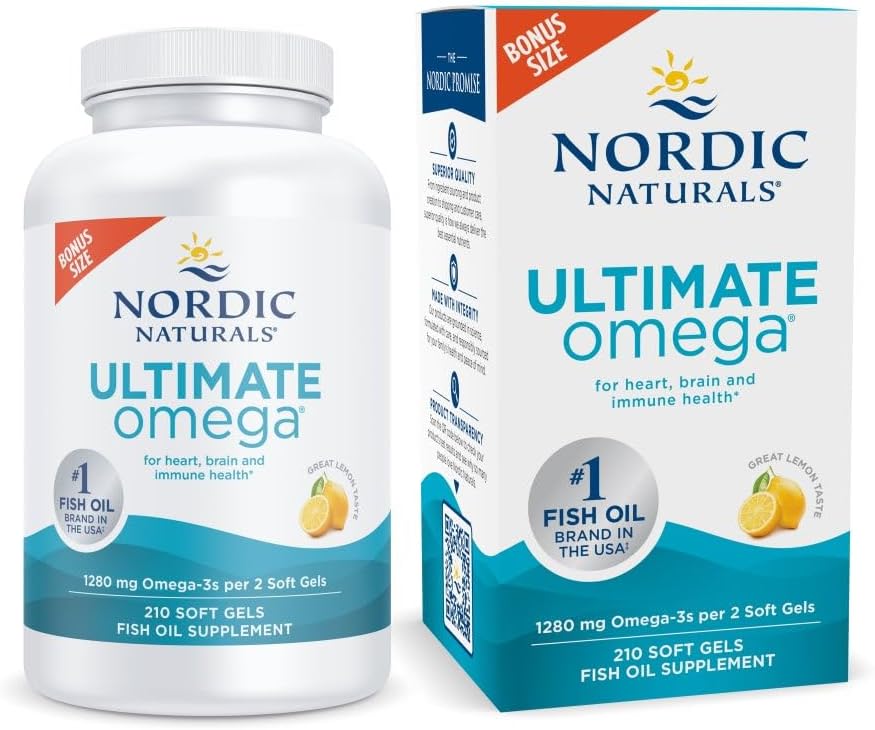
Nordic Naturals Ultimate Omega
This article contains affiliate links. We may earn a commission at no extra cost to you.
The Evidence: A Biomarker That Rivals Smoking and Cholesterol as a CVD Risk Predictor
Plenty of lab markers get marketed as “important” when what they really offer is a decent-looking dashboard widget. The omega-3 index has a stronger case than that. A March 2025 paper in the Journal of Clinical Lipidology followed 2,550 participants from the Framingham Offspring Cohort over 10 years and found that a low omega-3 index was an independent cardiovascular disease risk factor with predictive strength on par with smoking, diabetes, and cholesterol.
That’s the part worth slowing down for. Smoking, diabetes, and cholesterol aren’t fringe comparison points. They are the usual adult table stakes of cardiovascular risk management. When a biomarker starts showing up in that company, it stops being a nice-to-know curiosity and becomes something you can reasonably argue belongs on a serious annual panel.
The likely reason is that omega-3 status appears to capture a set of biological effects that aren’t fully redundant with LDL, blood pressure, or glucose control. In other words, you can’t assume that a good lipid panel means this area is covered. That’s the trap with modern health tracking: one clean number starts acting like a hall pass for the whole category. The body, annoyingly, doesn’t honor that paperwork.
This doesn’t mean the omega-3 index should outrank ApoB or replace established risk factors. It means it adds a different signal. For a time-poor executive or former athlete trying to reduce blind spots rather than collect vanity metrics, that’s exactly the kind of biomarker worth considering.
What Your Omega-3 Index Score Actually Tells You About Mortality Risk
The strongest argument for testing isn’t that a low score looks bad on paper. It’s that outcome data tied to omega-3 status points in a direction you would rather not ignore. In a 2018 Journal of Clinical Lipidology analysis of about 2,500 Framingham Offspring participants who were free of cardiovascular disease at baseline, Harris and colleagues found that people in the highest omega-3 index quintile, above 6.8%, had a 34% lower risk of death from any cause than those in the lowest quintile, below 4.2%.
That gap isn’t tiny. It isn’t “statistically significant but probably meaningless in real life.” It’s the kind of spread that gets attention because it maps to something people actually care about: staying alive longer while remaining functional. The same research group later estimated that individuals with higher omega-3 index levels lived an average of 4.7 years longer than those with lower levels, a difference they described as comparable to the mortality impact of smoking.
That comparison shouldn’t be overplayed. This is observational research, not a commandment carved into stone tablets by cod liver oil. But it is still a serious signal. A low omega-3 index isn’t just telling you that your diet could use more salmon. It may be telling you that one of the more modifiable parts of your risk profile is sitting in the wrong neighborhood.
The practical read is simple. A result below 4% deserves attention. A result in the 8% range or above appears to line up with meaningfully better outcomes. That doesn’t guarantee protection, but it gives you a target that is more concrete than “eat healthier” and far less useless than vague supplement optimism.
Beyond the Heart: Omega-3 Index and Cognitive Health at 50+
Cardiovascular risk is enough reason to care, but it isn’t the only reason. For the Resilience reader, cognitive decline is usually the fear sitting quietly in the nicer chair. Energy matters. Recovery matters. But losing mental sharpness is the one that gets personal fast.
A November 2025 study in The Journal of Nutrition found that higher red blood cell DHA levels were associated with slower cognitive decline over three years in middle-aged adults at high risk of Alzheimer’s disease. DHA is a major structural fat in brain cell membranes, so this isn’t a random association pulled from the air. The biology is plausible, and the red blood cell measurement used in that work is the same basic medium that underlies the omega-3 index conversation.
That doesn’t mean an omega-3 index test can predict whether you will get dementia, and it definitely doesn’t mean fish oil is a substitute for blood pressure control, sleep, exercise, or hearing protection. The internet loves a single-switch theory. The evidence rarely does. What it does suggest is that omega-3 status belongs in the broader brain-health discussion, especially for men in their 50s and 60s who are already noticing that sleep debt, stress, and recovery don’t bounce off the system the way they used to.
This is also a good place to be honest about uncertainty. The cognitive evidence is promising, not conclusive. If your main reason for testing is cardiovascular risk, the case is already solid. If your main reason is protecting cognitive performance, the omega-3 index is worth viewing as one useful proxy among several, not a crystal ball with a lab invoice attached.
How to Get Your Omega-3 Index Tested: Three Routes for Men Over 45
The good news is that this isn’t a complicated test to access. The bad news is that it still isn’t part of standard annual bloodwork in most clinics, which says more about medical inertia than about the biomarker itself.
Route one is the most direct: order an at-home kit from OmegaQuant or a reseller such as Life Extension or Carlson Labs. Pricing generally starts around $55. The process is simple, doesn’t require fasting, and uses a small blood sample, usually via finger prick. This is the cleanest option if you want an answer without negotiating with a primary care office that still thinks “normal for your age” is a reassuring phrase.
Route two is to check whether your membership-based lab platform already includes it. Function Health has included the test in the past, though availability can change. If you already pay for a platform that bundles advanced markers, this is the least annoying path because the logistics are already built in. It isn’t the right route if your membership doesn’t actually include the marker and you end up paying twice for the privilege of extra admin.
Route three is to ask your doctor to order EPA plus DHA red blood cell testing directly, using CPT code 82542. This path makes the most sense if you are already getting blood drawn for a broader panel and want everything handled through the same clinician workflow. It’s less useful if your physician has never heard of the test and reacts like you just requested moon dust analysis.
Who is this not for? If you aren’t willing to change anything based on the result, skip it. Biomarkers are decision tools, not collectibles. But if you want one annual add-on that is low-friction, non-fasting, and tied to real outcome data, this is a pretty reasonable candidate.
How to Improve a Low Omega-3 Index: Evidence-Based Targets
A low score is only helpful if there is a credible path to moving it. Fortunately, there is. The American Heart Association recommends at least two servings of fatty fish per week or about 1 gram per day of combined EPA and DHA for cardiovascular risk reduction. That’s a sensible baseline, but it is often not enough to move someone from a low omega-3 index into the more protective range.
According to the Framingham-linked mortality data summarized by Harris and colleagues, moving from roughly 4.2% in the bottom quintile to about 8.3% in the top quintile was associated with about a 30% lower risk of fatal coronary heart disease. That doesn’t mean every person needs the same dose, but it does give a useful target: getting above 8% appears materially different from hovering around 4%.
OmegaQuant’s practical guidance is that reaching that level often requires 2 to 3 grams per day of combined EPA and DHA for 12 to 24 weeks. That’s higher than what many standard fish oil capsules provide. The common consumer habit is to buy one bottle, take one capsule, and assume the category has been handled. Usually it hasn’t. Many products contain about 1 gram of fish oil total, not 1 gram of EPA plus DHA, which is a very different thing once you read the label instead of the front-panel fairy tale.
If you go the supplement route, look for a product with clear EPA and DHA amounts and third-party testing. And this is where the “not for everyone” rule matters. Higher-dose omega-3 supplementation is worth discussing with your clinician if you take anticoagulants, have a bleeding disorder, or have upcoming surgery. The point isn’t to scare you off. It’s to avoid the two bad defaults that dominate this category: casual megadosing on one side and vague “just eat better” non-advice on the other.
Retesting after 12 to 24 weeks is the sensible move. The omega-3 index is one of the rare supplement-adjacent metrics where you can actually check whether the intervention moved the needle instead of relying on vibes and a nicer-looking pill organizer.
Frequently Asked Questions
How often should I retest my omega-3 index after I start supplementing?
Because the test reflects red blood cell turnover over roughly 120 days, retesting after 12 to 24 weeks makes sense. That gives enough time for a real change to show up instead of just measuring noise from a new routine you barely started.
Why isn’t the omega-3 index included on standard lab panels from a typical annual physical?
Mostly because standard panels are conservative and slow to add newer markers, even when those markers are useful. Most primary care workflows are built around diagnosing disease, not optimizing risk prediction for someone who wants a more detailed picture.
Can I use my HSA or FSA to pay for an at-home omega-3 index test?
Sometimes, but it depends on the vendor and your plan rules. Some diagnostic and lab purchases qualify, others don’t, and administrators aren’t exactly famous for elegant consistency. Check the seller’s documentation and your plan terms before assuming reimbursement.
How long does it take to raise a low omega-3 index after adjusting my diet or starting supplements?
Usually a few months, not a few days. Since the marker reflects red blood cell membranes over time, meaningful movement generally takes 12 to 24 weeks, especially if you are trying to move from the sub-4% range toward 8%.
Is the omega-3 index test the same as the omega-3 measurement on a standard fatty acid panel?
Not always. The omega-3 index is a specific red blood cell membrane measure of EPA plus DHA expressed as a percentage. A broader fatty acid panel may include overlapping information, but it isn’t automatically the same test or the same reference range.
The Bottom Line
The omega-3 index deserves more attention than it gets because it is measurable, actionable, and tied to outcomes that matter. If your annual panel is supposed to help you spot risk before it becomes a problem, this is one of the cleaner biomarker upgrades you can make.
Related: the complete men over 50 bloodwork panel
Related: optimal biomarker ranges for men over 50
Related: how to measure your EPA and DHA status
Continue reading: Read the pillar — Biomarkers & Lab Testing
This article is for informational purposes only and is not financial advice. Consult a qualified professional for personalized guidance.
Leave a Reply