
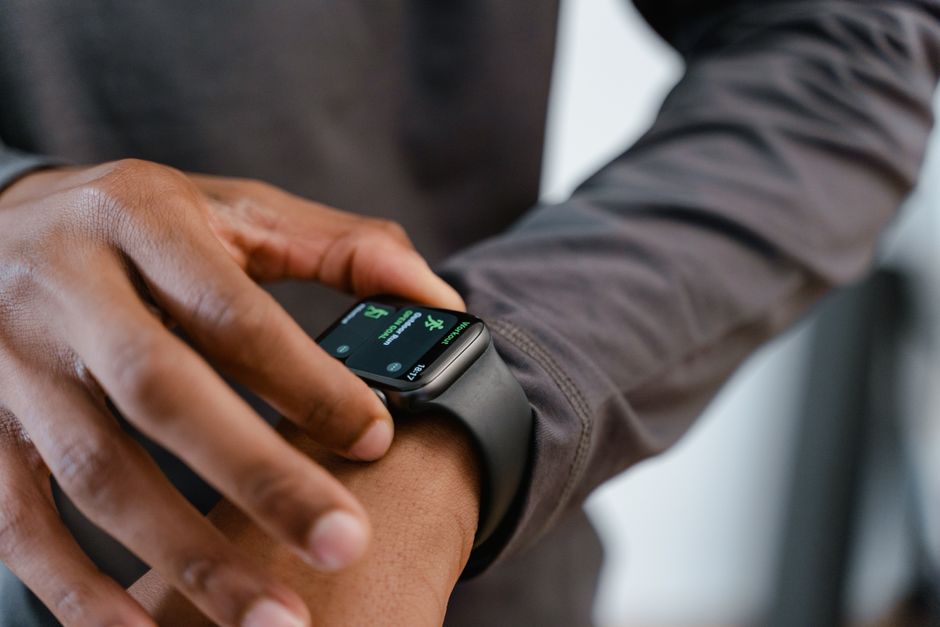
Most men don’t quit wearables because the data is bad. Smartwatch vs fitness band vs smart ring health tracking only works if the device survives normal life. They quit because the device gets annoying. The watch feels bulky in bed. The band starts looking like a probation bracelet at dinner. The ring is comfortable until you start lifting and remember metal and barbells aren’t close friends.
That’s why the smartwatch vs fitness band vs smart ring health tracking debate matters more after 50 than it does at 28. The answer comes down to what you’ll wear long enough to trust. AARP found in its 2025 technology survey that 38% of adults 50 and older already own a wearable. The category is no longer early-adopter territory. The real question is which form factor keeps showing up on your body long enough to produce trendlines you can trust.
The right answer depends on what you’re actually trying to measure. If you care about live workout data, a smartwatch still earns its keep. If you want the cheapest path to daily steps, heart rate, and decent sleep tracking, fitness bands are hard to argue with. If your priority is passive overnight recovery data with as little friction as possible, smart rings are making a serious case. Convenience sounds trivial until it becomes the whole game.
Smartwatch vs Fitness Band vs Smart Ring Health Tracking: Why Form Factor Matters More After 50
Health tracking over 50 is less about collecting impressive screenshots and more about building a boring, reliable baseline. Resting heart rate, heart rate variability, sleep timing, and recovery trends only start telling the truth when the data arrives consistently. One heroic week of tracking followed by two weeks of charger neglect is just gadget cosplay.
AARP’s 2025 survey found that 38% of adults 50 and older already own a wearable device, which is a useful signal on its own. This audience isn’t allergic to technology. It’s allergic to technology that creates more friction than value. Market.us reported that smart ring shipments were projected to double to 1.8 million units in 2024 and rise to 4 million by 2025, largely because rings are easier to wear overnight than wrist devices. That sounds like a product detail. It’s really a compliance detail.
And compliance is the whole thing. A form factor that disappears into your routine produces cleaner trendlines than a more advanced device that spends half the week on your nightstand. That’s especially true for sleep and recovery metrics, where overnight wear matters. If you want a deeper breakdown of what these devices are actually scoring, Sleep Score Decoded: What Oura, WHOOP, and Garmin Actually Measure is worth reading next.
There’s also a second-order issue here: tolerance. A 55-year-old executive who already wears a mechanical watch may not want another screen on the wrist. Someone who trains regularly may hate lifting with a ring. None of that is superficial. It determines whether you get a real signal or a pile of half-finished data.
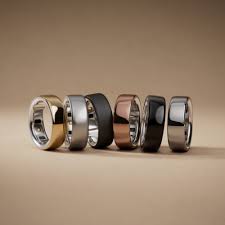
Oura Smart Rings
This article contains affiliate links. We may earn a commission at no extra cost to you.

Garmin
This article contains affiliate links. We may earn a commission at no extra cost to you.
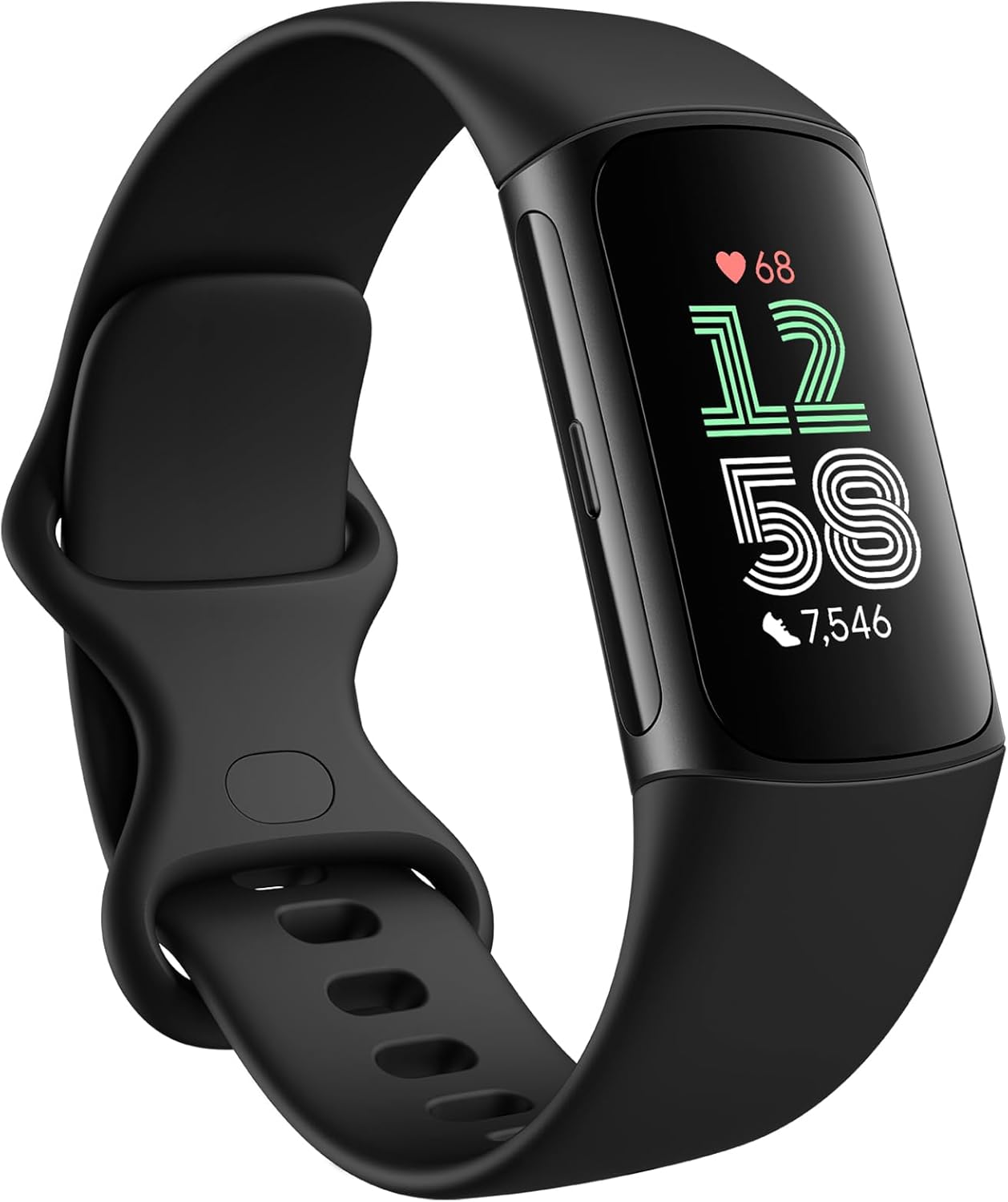
Fitbit Charge 6
This article contains affiliate links. We may earn a commission at no extra cost to you.

Whoop
This article contains affiliate links. We may earn a commission at no extra cost to you.
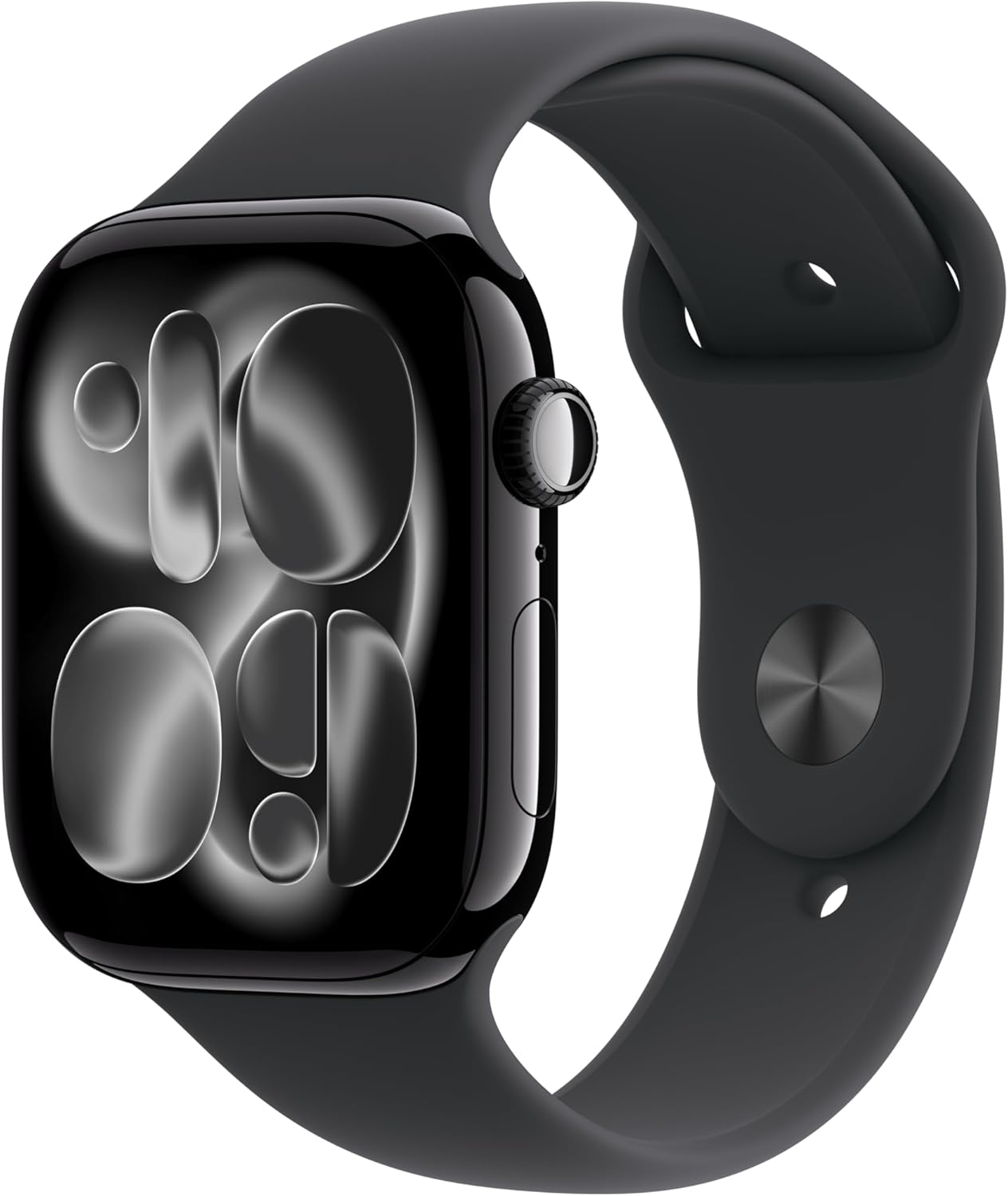
Apple Watch Series 11
This article contains affiliate links. We may earn a commission at no extra cost to you.
Smartwatch: The All-in-One Dashboard for the Active Executive
Smartwatches are still the most capable all-around devices if you want real-time visibility. They handle workout heart rate, GPS, pace, notifications, timers, and in some models ECG-style features in one place.
But capability and accuracy aren’t always the same thing, and capability and wearability definitely aren’t. In a 2025 validation study published in Physiological Reports, Oura Gen 4 posted a mean absolute percentage error of 1.94% for nocturnal resting heart rate and a concordance correlation coefficient of 0.99 for HRV against ECG. By contrast, wrist-worn devices in the same study showed more variation, with Garmin Fenix 6 posting lower concordance on HRV. A separate 2022 validation study in Sensors found that the Garmin Forerunner 245 achieved 89% agreement for two-state sleep-wake detection against polysomnography, which is respectable, but not the same as saying a smartwatch wins every sleep metric.
That gets to the actual smartwatch case. If you’re an active user who wants live metrics during a run, ride, or gym session, a smartwatch is still the cleanest answer. You can see pace changes, heart-rate zones, and GPS routes without checking a phone.
The tradeoff is that wrist devices are often worse at getting out of their own way. They are bulkier in bed, more likely to come off for charging, and more tempting to interact with when the goal is passive monitoring.
If your main interest is understanding readiness and recovery rather than seeing live metrics mid-workout, the smartwatch advantage shrinks. Recovery Score Decoded: How Oura, WHOOP, and Garmin Calculate Readiness covers that distinction well. The short version: smartwatches are excellent dashboards, but not always the least-friction sensors.
Fitness Band: The Lightweight Companion for Daily Health Monitoring
Fitness bands live in the middle ground, and middle ground isn’t an insult here. For a lot of men over 50, a band is the most sensible deal in the category. You get the core metrics people actually use, fewer distractions than a smartwatch, and better battery life than most full-screen wearables.
Market.us reported that more than 68 million U.S. adults used fitness trackers in 2024. Devices like the Fitbit Charge 6 have added integrated GPS, SpO2 sensing, and sleep staging while keeping roughly 5 to 7 days of battery life and coming in at about half the cost of a flagship smartwatch.
The band case is strongest for someone who wants daily trend tracking without buying a tiny wrist computer. Steps, resting heart rate, workout sessions, and sleep trends are all available in a simpler package. You lose some depth, but you gain something that matters more in practice: lower hassle.
Bands also make a solid starting point for readers who are curious about wearables but skeptical of spending several hundred dollars on first contact. If your goal is to learn whether you will actually check overnight recovery, daily movement, and heart-rate trends for six months straight, a band is a reasonably cheap test. A lower-cost device that gets worn every day beats a premium device that becomes expensive drawer decor.
Where bands fall short is at the high end of both form and function. They usually don’t offer the passive comfort of a ring overnight or the real-time display experience of a smartwatch during training. They are the sensible sedan of the category. Nobody writes poetry about a sensible sedan. Plenty of people still get where they need to go.
Smart Ring: The 24/7 Passive Health Monitor That Stays Out of the Way
Smart rings are winning attention for a simple reason: they are built for the part of health tracking most people are worst at maintaining, which is passive, overnight, long-term wear. If you care most about sleep, resting heart rate, HRV, and recovery trends, the ring form factor has structural advantages.
The finger gives optical sensors a cleaner shot than the wrist in many scenarios because finger arteries produce stronger photoplethysmography signals. That doesn’t mean every ring is automatically accurate. It does help explain why rings have done so well in sleep and nocturnal recovery validation work. In a 2024 Sleep Medicine study from the University of Tokyo, the Oura Ring Gen 3 achieved sleep staging accuracy between 79% and 90% against polysomnography, including 75.5% for light sleep and 90.6% for REM, with sensitivity above 94%. In the 2025 Physiological Reports study, Oura Gen 4 reached a CCC of 0.99 for HRV with a 5.96% MAPE, the strongest HRV result among the tested wearables.
That’s the appeal in plain English: better odds of comfortable overnight wear plus very strong performance on the exact metrics many men over 50 increasingly care about. If you’re using wearables to understand recovery after hard training, alcohol, travel, stress, or lousy sleep, a ring can feel less like a gadget and more like a quiet sensor that minds its business.
The downsides are real. Rings are bad companions for barbell work, can be awkward if your finger size changes, and usually don’t provide the same live feedback during exercise as a watch.
For readers focused on recovery and stress trends, HRV and Stress: How to Use Your Wearable Data to Manage Recovery and How Accurate Is Wearable Sleep Tracking? Oura, WHOOP, and Garmin Put to the Test are useful companion reads. The ring category isn’t magic. It’s simply very well matched to passive physiological tracking.
Accuracy Face-Off: How the Three Form Factors Compare on Key Health Metrics
No wearable gets everything right. You need the right metrics to be directionally strong enough, often enough, to inform better decisions.
For nocturnal recovery metrics, the ring form factor currently has the strongest evidence in this brief. In the 2025 study covering 536 nights across 13 participants, Oura Gen 4 led HRV accuracy with CCC of 0.99 and MAPE of 5.96%. WHOOP 4.0 posted moderate agreement at CCC 0.94 and MAPE 8.17%, while Garmin Fenix 6 came in lower at CCC 0.87 and MAPE 10.52%. That doesn’t make Garmin useless. It means the wrist still appears less consistent for this specific overnight metric.
Sleep staging tells a similar story, with caveats. The 2022 Sensors study found Oura at 61% multi-state accuracy against polysomnography, WHOOP at 60%, and Garmin at 50%, with kappa values of 0.43, 0.44, and 0.25 respectively. Those aren’t lab-grade numbers. They are good enough to spot trends, not good enough to pretend your wearable is a sleep clinic in a nicer colorway.
During exercise, the picture shifts. Smartwatches are stronger because they give you live access to heart rate, pace, distance, and route data in the moment. Fitness bands can cover the basics, but usually with less depth. Rings are the worst fit for real-time training feedback because they aren’t designed to be glanced at mid-session.
That distinction matters because people often shop for wearables as if there is a universal champion. There isn’t. There is only fit-for-purpose accuracy. If your main concern is whether your sleep, resting heart rate, and HRV are drifting in the wrong direction, you want the device most likely to be worn overnight and validated for those metrics. If your concern is pace control on a long run or live heart-rate zones during a bike session, you want a wrist device with a screen.
If you want a ranking of which numbers deserve your attention first, Wearable Metrics That Matter After 50: HRV, RHR, Sleep, and Respiratory Rate is a good next stop. The metric matters at least as much as the hardware.
Your Choice Depends on Your Data Priorities: A Decision Framework for Men Over 50
Here’s the cleanest way to choose. Start with the question you actually need answered.
If the question is, “How am I recovering overnight, and how is stress affecting me week to week?” the smart ring has the best argument. Market research cited in this brief suggests smart rings achieve overnight wear rates above 90% because they are comfortable and easy to forget about. That matters more than any marketing claim about optimization. The best recovery device is the one still on your body at 2:17 a.m.
If the question is, “What is my heart rate doing right now, and how is this workout unfolding?” get a smartwatch. The live dashboard matters. So does GPS. So does the ability to see the number without opening an app or waiting until later. Wrist devices own that use case.
If the question is, “Can I track the basics well without spending flagship-watch money?” the fitness band is the practical answer. It usually offers the best cost-to-core-metric ratio in the category. That doesn’t sound sexy. It sounds like good judgment.
There’s also nothing wrong with choosing based on what you will tolerate. A ring is a poor choice if you hate lifting in one. A smartwatch is a poor choice if you already resent charging one more device. The winning form factor is the one that matches both your metrics and your habits.
The whole point of health tracking over 50 is to establish a baseline early enough that changes mean something later. This isn’t about chasing perfect numbers. It’s about noticing when your own numbers stop looking like you.
Frequently Asked Questions
Can I wear a smart ring and a smartwatch at the same time, or will the data conflict?
Yes, you can wear both. The data won’t “conflict” in any meaningful technical sense, but it may become redundant. A ring-plus-watch setup makes sense if you want passive overnight recovery data from the ring and live workout metrics from the watch.
Do fitness bands have FDA-cleared health features like ECG and AFib detection?
Some do, but far fewer than premium smartwatches. Fitness bands are usually strongest on steps, heart rate, sleep, and general activity trends. If ECG-style features are a deciding factor, check the exact model rather than assuming the category includes them by default.
Which form factor gives the most accurate HRV reading for tracking recovery after workouts?
Based on the studies cited in this brief, smart rings currently have the strongest validation results for overnight HRV, with Oura Gen 4 leading the 2025 comparison study. That’s a strong argument for rings if recovery tracking is your main goal.
How long do smart ring batteries last compared to fitness bands and smartwatches?
Fitness bands often land in the 5 to 7 day range, which is one reason they remain popular. Smartwatches usually need more frequent charging, especially if GPS and bright displays are used heavily. Smart ring battery life varies by model, but the bigger point is that the charging routine has to fit your life or the data stream breaks.
Are there any health tracking features available on a smart ring that aren’t on a smartwatch?
Usually the difference isn’t exclusive features so much as better compliance and better signal quality for specific overnight metrics. A smartwatch may offer more total features. A ring may produce more useful recovery data simply because it is easier to wear every night.
Smartwatch vs fitness band vs smart ring isn’t really a contest about which device looks most advanced. It’s a decision about which form factor gives you health tracking data you will actually collect, trust, and use after 50. Choose the device that matches the metric you care about most and the routine you’re realistically willing to maintain.
This article is for informational purposes only and is not financial advice. Consult a qualified professional for personalized guidance.
Leave a Reply