
You can feel the difference between a good recovery week and a bad one before any app tells you. Sleep gets thinner. Training feels oddly expensive. Two drinks hit like four. The problem is that most health metrics show up late, after the damage is already obvious. HRV longevity men over 50 is useful because it gives you a quieter signal earlier. Not a magic signal. Just an honest one.
Heart rate variability measures how much time changes between one heartbeat and the next. That sounds technical, but the practical meaning is simpler: it reflects how adaptable your nervous system is under stress. For men over 50, that matters more than another generic “wellness score.” A nervous system that can shift cleanly between effort and recovery is part of what longer healthspan actually looks like.
The useful move isn’t obsessing over one low morning reading. It’s learning your baseline, watching your trendline, and noticing which habits move it. That’s why articles like HRV: The Most Important Wearable Metric for Men Over 50 have the right instinct. HRV isn’t interesting because it is trendy. It’s interesting because it can reveal whether your current routine is helping you recover or quietly wearing you down.
What HRV Actually Measures and Why It Predicts Longevity
HRV isn’t your pulse. It’s the variation, measured in milliseconds, between normal heartbeats. That variation reflects the push-pull between your sympathetic nervous system, which handles stress and mobilization, and your parasympathetic nervous system, which handles recovery and restoration.
This is why a lower resting heart rate and a lower HRV aren’t the same thing. You can have a decent pulse and still show a nervous system that is pinned too hard toward fight-or-flight. Oura‘s 2024 overview quotes HRV researcher Marco Altini calling HRV “a window into your nervous system’s ability to adapt to stress.” That’s the right frame. Adaptability is the point.
For a 55-year-old executive, this matters because resilience is less about having one impressive workout and more about how quickly you come back from normal life: travel, hard meetings, poor sleep, late meals, heavy training blocks, or a couple of glasses of wine that seemed harmless at the time. HRV gives you a running read on that recovery capacity.
It also explains why HRV has become central to wearables. A good HRV trend suggests your system can absorb stress and return to baseline. A bad trend suggests the opposite. That doesn’t mean one low week predicts disaster. It means your body keeps better books than your ego does.
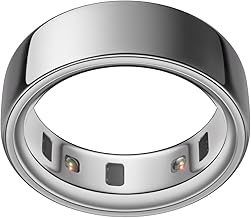
Oura Ring 4 — Silver
$349.99
This article contains affiliate links. We may earn a commission at no extra cost to you.
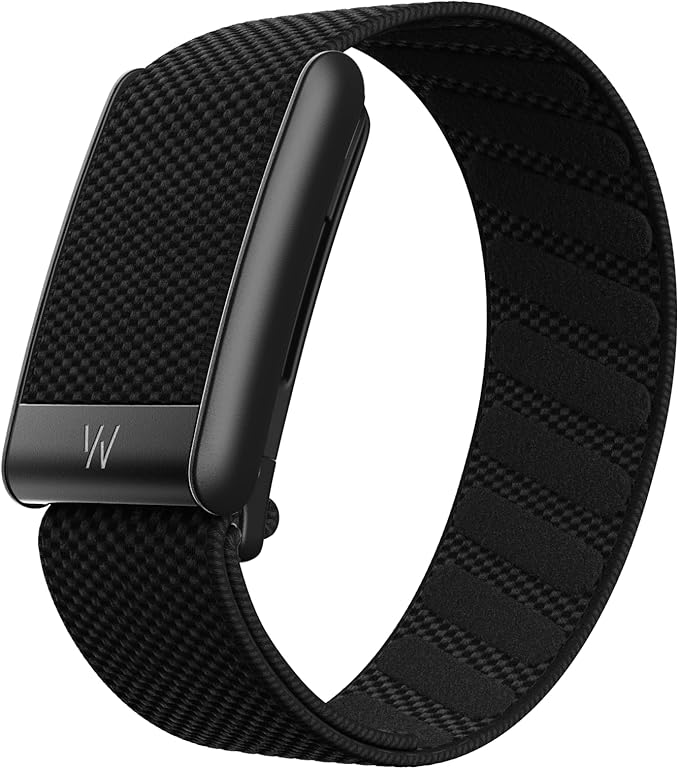
WHOOP MG Health Monitor
$239.00
This article contains affiliate links. We may earn a commission at no extra cost to you.
The Centenarian Study That Proves HRV Matters for Lifespan
Most wearable marketing runs on vibes with a lab coat draped over it. This is one of the rarer cases where the longevity angle has an actual study behind it.
In a 2020 paper in Frontiers in Physiology, researchers followed 17 centenarians with a mean age of 101.9 years and found that SDNN, one of the standard HRV measures, was the only HRV variable significantly correlated with survival prognosis. The correlation was meaningful, with rho = 0.536 and p = 0.048. More strikingly, centenarians whose SDNN fell below 19 milliseconds had a 5.72-times greater mortality risk and were likely to die within one year. The longest-lived subject in the group posted the highest SDNN at 110 milliseconds.
That doesn’t mean you can take a single SDNN reading at 56 and forecast your funeral date. Small studies don’t earn that kind of swagger. But it does mean HRV isn’t just a recovery toy for amateur cyclists. In this data, the autonomic system’s flexibility was tied to survival itself.
The important implication is practical. If HRV reflects whether the body can still adapt well under stress, then protecting that flexibility becomes a sensible healthspan goal. You aren’t chasing a vanity metric. You are watching a proxy for how much physiological slack remains in the system.
That’s also why HRV Stress Management: Using Wearable Data to Track Recovery belongs in the same conversation. Stress management sounds soft until you see it register in a biomarker connected to actual survival.
What a Normal HRV Looks Like for Men Over 50 Who Care About Longevity
This is the part where many people go wrong. They compare their HRV to a 28-year-old triathlete on Reddit, decide they are broken, and start shopping for answers. That’s a bad use of the metric.
According to WHOOP‘s 2024 age-range data, the median HRV for men aged 55 to 59 lands roughly between 22 and 44 milliseconds, with an average around 44 milliseconds at age 55. Oura‘s 2024 member data puts the average male HRV across all ages near 41 milliseconds and notes that HRV typically declines by about 8 to 15 milliseconds per decade after age 40. Garmin takes the saner consumer approach: it builds a personal baseline over time and labels your status as balanced only when your seven-day rolling average stays inside your own established range.
That last part matters more than the age-band tables. Population averages are useful for context, not judgment. If your personal baseline is 39 and you spend three weeks parked at 28, something changed. If your baseline is 24 and you gradually build it to 30 while sleeping better and training more consistently, that is useful progress even if it doesn’t impress the internet.
This is also why Resting Heart Rate and HRV for Men Over 50: Baseline Guide is a better starting point than random leaderboard thinking. Baselines beat bragging rights.
The mistake is treating HRV as a test you either pass or fail. It’s more like trend data on a business dashboard. One number in isolation is thin information. A pattern over weeks, tied to what changed in your behavior, is where the value shows up.
How Oura, WHOOP, and Garmin Track HRV and Why Trendlines Beat Single Readings
The devices aren’t identical, which matters if you are comparing numbers across platforms. WHOOP uses RMSSD and captures HRV during the deepest stage of sleep, then folds that result into its daily Recovery Score. Oura samples five-minute segments across the night and reports an average. Garmin asks for at least three weeks of overnight data before it will even tell you whether your HRV status is balanced, unbalanced, low, or poor.
That difference in method is one reason daily values bounce around. Timing, sleep stage, alcohol, illness, travel, and even a later-than-usual dinner can all shift a reading. Garmin‘s 2025 documentation is blunt about using a rolling baseline. WHOOP says much the same. Oura, too, steers users toward patterns rather than one-off numbers.
This is a relief, frankly. A single low reading shouldn’t hijack your morning. If your HRV dips on a Tuesday after a late flight, a bad hotel mattress, and two airport bourbons, the device isn’t delivering a philosophical truth. It’s just keeping score.
The weekly trend is the real signal. A seven-day average smooths out noise and tells you whether recovery is improving, holding steady, or sliding. That makes HRV more useful for decisions about training load, sleep discipline, and alcohol than for emotional self-diagnosis.
It also helps to know what the devices aren’t doing. They aren’t diagnosing cardiovascular disease. They aren’t reading your mind. They aren’t telling you that one rough night erased six months of steady training. What they can do, when worn consistently, is catch a mismatch between the stress you are carrying and the recovery you think you are getting. For a time-poor reader, that is enough to be useful.
If you are also tracking aerobic capacity, VO2 Max and Longevity: How to Track Cardiorespiratory Fitness After 50 pairs well with HRV. VO2 max tells you something about engine size. HRV tells you how well the system handles stress and recovers between efforts. Different metric. Different job.
Five Lifestyle Factors That Show Up in Your HRV Trend
The encouraging part of HRV is that it is modifiable. The annoying part is that it usually improves through the same boring disciplines people keep trying to outsmart.
First, alcohol shows up fast. WHOOP reported that even a single drink can raise resting heart rate by roughly 3 beats per minute, lower HRV by about 7 milliseconds, and push recovery down around 8 percent. For a lot of men over 50, this is the easiest experiment to run because the effect often appears the very next night. You don’t need a twelve-month protocol to learn that two glasses of wine on a Tuesday aren’t exactly neutral.
Second, aerobic training helps when it is consistent and sane. A 2024 meta-analysis in the National Library of Medicine’s PMC archive found that aerobic exercise training in older adults improved HRV, with changes around 8 milliseconds in RMSSD over structured interventions. This is a nice reminder that the body still adapts after 50 if you keep giving it a reason to.
Third, chronic stress matters more than many high performers want to admit. Baseline HRV can be reduced by 20 to 40 percent under prolonged stress loads. The body doesn’t care whether the pressure came from a difficult quarter, a sick parent, or overreaching in training. It only registers the total burden.
Fourth, sleep loss is usually visible before it becomes dramatic. A run of short nights tends to drag HRV down because recovery work is getting cut off. Fifth, late meals often do the same. Digesting a heavy dinner late in the evening isn’t always harmless, but it is also not free. Many wearables will show that cost overnight.
The good news is that this gives you room to act. HRV isn’t a moral grade. It’s feedback. If a habit consistently drags your trendline lower, the metric is doing its job by making the tradeoff visible.
This is where HRV becomes more valuable than vague “listen to your body” advice. Most high-performing men are willing to make changes if they can see the trade clearly. Skip alcohol for two weeks and watch the line. Move dinner from 9:30 p.m. to 7:00 p.m. and watch the line. Protect six nights of real sleep and watch the line. The data won’t solve every problem, but it can settle arguments your willpower keeps losing.
Building a HRV Protocol You’ll Actually Follow at 50+
The right protocol is the one a busy adult will still be running three months from now. That rules out anything too precious.
Start by wearing your device overnight for three straight weeks. Garmin uses about that long to establish a baseline, and the logic applies even if you use Oura or WHOOP. Before that baseline exists, your data is mostly a collection of interesting dots.
Next, identify the three factors most likely to be dragging your recovery. In most real lives, that list isn’t mysterious. It’s usually some mix of alcohol, poor sleep timing, inconsistent training, chronic stress, or meals pushed too late by work.
Then run one intervention at a time for two weeks. Not three changes at once. One. Skip alcohol for fourteen days. Move dinner earlier. Protect a consistent sleep window. Replace junk mileage with 150 minutes per week of steady Zone 2 work. The point isn’t to behave perfectly. The point is to produce readable data.
After that, audit the trend. A sustained RMSSD increase in the 3 to 8 millisecond range is meaningful enough to take seriously, especially if the rest of your routine stayed mostly stable. If the needle doesn’t move, either the intervention did not matter much or too many other variables stayed noisy.
Re-test quarterly under similar baseline conditions. The boring cadence is the advantage. You are building a system that can tell you whether your recovery capacity is improving, flat, or slipping.
There is also a useful mindset shift here. HRV isn’t mainly a performance toy for endurance athletes. For men in their 50s and 60s, it can function as an early-warning dashboard for total load. Training, work stress, travel, sleep, alcohol, illness, and recovery practices all leave fingerprints. HRV gives you one place to notice those fingerprints before they turn into a larger bill.
Another reason this protocol works is that it respects how adults actually live. You aren’t going to control every variable every week. There will be red-eye flights, late client dinners, family stress, a cold that wrecks sleep, and training weeks that go sideways. Fine. The goal isn’t a sterile lab environment. The goal is a repeatable way to notice which disruptions pass cleanly and which ones keep showing up in your baseline month after month.
That matters because a lot of men over 50 are already disciplined in fragments. They work hard. They train sometimes. They buy decent supplements. They get the occasional lab panel. What they often lack is a simple operating system that connects behavior to recovery in a way they can trust. HRV can fill that role if you stop treating it like a score to impress someone with and start treating it like operational feedback.
Frequently Asked Questions
Can a man over 50 actually increase his HRV, or is the age-related decline inevitable?
Yes, HRV usually declines with age, but that doesn’t make your personal trend fixed. WHOOP’s alcohol data, Garmin‘s baseline model, and the 2024 aerobic exercise meta-analysis all point in the same direction: behavior changes can move the metric. The realistic goal isn’t matching a younger athlete. It’s improving your own baseline or reducing the gap between your good weeks and your bad ones.
Which wearable gives the most accurate HRV measurement for men over 50?
There is no single universal winner because the devices measure in different ways and package the result differently. WHOOP is tightly built around recovery scoring. Oura is strong for overnight readiness and sleep context. Garmin is useful if you already wear a Garmin and want a longer baseline view. The better choice is usually the one you will wear consistently enough to generate clean trend data.
Should I check my HRV in the morning or rely on overnight tracking?
Overnight tracking is generally more useful because it captures a more stable recovery window and reduces some of the noise that comes with spot-checking after you wake up. Morning readings can still be informative, but they are easier to distort with caffeine, movement, timing, and inconsistent routine. For most men over 50, overnight data is the cleaner system.
How does HRV for longevity differ from HRV for athletic performance?
The number may be the same, but the interpretation changes. Athletes often use HRV to decide how hard to train tomorrow. A longevity-minded reader is using HRV to judge broader resilience: whether sleep, stress, alcohol, recovery, and aerobic fitness are moving in the right direction over months. One lens is tactical. The other is about protecting healthspan.
At what HRV level should I be concerned and talk to a doctor?
A single low reading is usually not the issue. A sustained drop from your normal baseline, especially if it comes with symptoms like palpitations, chest pain, shortness of breath, poor exercise tolerance, or unusual fatigue, is worth discussing with a physician. Wearables are useful for pattern detection, not diagnosis. The centenarian paper offers an interesting research threshold for SDNN, but it isn’t a substitute for clinical evaluation.
The Bottom Line
HRV is useful for longevity because it tracks something older men actually need more of, not less: adaptability. For men over 50, the smartest use of HRV isn’t chasing a perfect score. It’s using trend data to figure out which parts of your routine are supporting recovery, and which parts are quietly taxing the system year after year.
Sources
- Frontiers in Physiology. “Heart Rate Variability and Exceptional Longevity.” 2020. https://www.frontiersin.org/journals/physiology/articles/10.3389/fphys.2020.566399/full
- Oura. “What Is the Average HRV?” 2024. https://ouraring.com/blog/average-hrv/
- WHOOP. “Normal HRV Range by Age and Gender.” 2024. https://www.whoop.com/us/en/thelocker/normal-hrv-range-age-gender/
- Garmin. “HRV Status.” 2025. https://www.garmin.com/en-US/garmin-technology/health-science/hrv-status/
- Garmin. “Understanding HRV Status on Your Garmin Smartwatch.” 2025. https://www.garmin.com/en-US/blog/fitness/understanding-the-hrv-status-on-your-garmin-smartwatch/
- WHOOP. “What Happens When You Give Dry a Try: How Reducing Alcohol Consumption Affects Physiology.” 2024. https://www.whoop.com/us/en/thelocker/what-happens-when-you-give-dry-a-try-how-reducing-alcohol-consumption-affects-physiology/
- PMC / National Library of Medicine. “Heart Rate Variability Changes Following Aerobic Exercise Training in Older Adults: A Systematic Review and Meta-Analysis.” 2024. https://pmc.ncbi.nlm.nih.gov/articles/PMC11250637/
This article is for informational purposes only and is not financial advice. Consult a qualified professional for personalized guidance.
Leave a Reply