
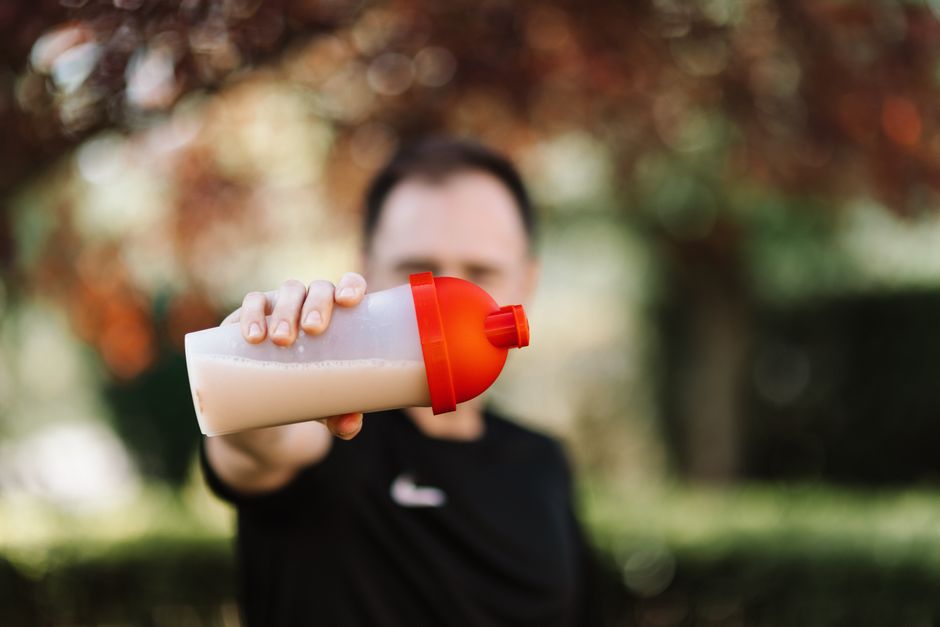
If you’re trying to figure out the best protein supplement for sarcopenia in men over 50, the short answer is whey unless you have a clear reason not to use it. Not because whey is trendy. Not because the supplement aisle said so. Because for older muscle, the boring things still win: high digestibility, enough leucine to trigger muscle protein synthesis, and a pile of actual clinical data behind it.
That matters because sarcopenia isn’t some abstract future problem. Harvard Health notes that adults can lose 4 to 6 pounds of muscle per decade after middle age if they aren’t strength training regularly, and prevalence rises sharply with age. The National Council on Aging adds a second problem: many older adults aren’t even hitting baseline protein intake, which means the body is trying to preserve muscle on a budget it never agreed to.
So the useful question isn’t “Which powder has the nicest label?” It’s which option gives a man over 50 the best shot at meeting a realistic protein target, hitting the leucine threshold that actually turns muscle-building machinery on, and doing it without turning breakfast into a chemistry project. For most readers, that answer will be whey. Collagen has a narrower job. Plant-based protein can work, but only if you understand the tradeoffs.
Why Sarcopenia Hits Harder After 50 and Why Protein Is Your First Line of Defense
After 50, muscle loss stops being a background process and starts billing you directly. It shows up as slower recovery, less strength from the same training, and the odd realization that carrying a suitcase up stairs is now a small negotiation. None of that is dramatic. It’s just expensive in the way aging often is: small losses, repeated often.
Harvard Health puts the muscle-loss rate at roughly 4 to 6 pounds per decade after middle age without regular strength training. The same source notes sarcopenia affects roughly 5% to 13% of people in their 60s and as many as half of adults over 80. Those numbers matter because they frame the problem correctly. The issue isn’t vanity. It’s preserving contractile tissue, balance, metabolic health, and the physical margin that lets you keep doing normal things without feeling like normal things became harder overnight.
Protein is the first line of defense because muscle tissue is expensive to maintain. If training gives the body a reason to keep muscle, protein gives it raw material. The trouble is that many older adults are under-consuming it. Harvard Health and the National Council on Aging both point out that a large share of adults over 50 fail to meet even standard recommendations. That’s the nutritional version of trying to renovate a house with half the lumber.
This is also where supplement use becomes practical rather than precious. Food should still do most of the work. But when appetite drops, schedules get messy, or a 7 a.m. lift has to compete with meetings and commuting, a protein powder is often the least stupid way to close the gap quickly.

Thorne
This article contains affiliate links. We may earn a commission at no extra cost to you.

Transparent Labs
This article contains affiliate links. We may earn a commission at no extra cost to you.
How Much Protein a Man Over 50 Actually Needs
The federal RDA of 0.8 grams per kilogram of body weight was designed to prevent deficiency, not to preserve muscle in an older, active adult. Those are different jobs. The first keeps the lights on. The second tries to keep the house from sagging.
The National Council on Aging and Stanford Lifestyle Medicine both put older-adult needs higher, generally around 1.0 to 1.2 grams per kilogram per day, and up to 1.2 to 1.6 grams per kilogram for physically active adults. For an 185-pound man, or about 84 kilograms, that works out to roughly 84 to 134 grams a day. That’s a wide range, but it is wide for a reason. A sedentary retiree and a 58-year-old still training three days a week aren’t the same case.
There is also a per-meal issue. Stanford Lifestyle Medicine notes that older adults often need around 25 to 30 grams of high-quality protein in one sitting to stimulate muscle protein synthesis effectively. That threshold matters because spreading tiny protein doses across the day can leave you technically compliant on paper while still underdosing the actual anabolic signal. Twelve grams at breakfast, fifteen at lunch, and a respectable dinner sounds fine until you realize your muscles never really got the memo.
This is why the right supplement is the one that closes your actual gap, not the one that wins a branding contest. If breakfast is coffee and a banana, and post-workout intake is inconsistent, a powder that reliably delivers 25 to 30 grams of complete protein becomes useful fast. If you already eat 130 grams a day from food, you may not need one at all.
Whey Protein: The Gold Standard for Muscle Protein Synthesis
If the goal is preserving or building muscle, whey remains the cleanest answer. A 2023 review in Nutrients reported that whey protein isolate has a DIAAS in the 110% to 130% range, which is a fancy way of saying it is highly digestible and exceptionally good at delivering usable amino acids. More importantly, a typical serving provides about 2.5 to 3 grams of leucine, the amino acid most associated with triggering muscle protein synthesis.
That leucine piece isn’t trivia. Older muscle becomes less responsive to weak protein signals, a problem often called anabolic resistance. Whey helps because it delivers enough of the right amino acids in a relatively small serving. You aren’t forcing down a blender full of compromise.
The evidence base is also better than it is for the alternatives. The same Nutrients review found that whey supplementation paired with resistance training improved muscle-related outcomes in older adults, including leg-strength gains in the mid-to-high teens in some trials. The research summarized there also linked regular whey use with lower frailty risk over two years. This is where the article stops pretending all proteins are interchangeable. They aren’t.
For product quality, third-party testing matters more than flavor notes or influencer sponsorships. Thorne Whey Protein Isolate is NSF Certified for Sport, which at least tells you someone besides the marketing team checked what is in the tub. Transparent Labs is also sold as an Informed Choice-certified option, which matters if contamination risk is on your radar.
Who this isn’t for: men with a true dairy allergy, men who consistently get bloated from whey even after trying an isolate, and men whose total daily intake is already high enough from food that adding a scoop just turns an adequate diet into an expensive habit.
Collagen Protein: The Connective Tissue Contender With Limits
Collagen is where supplement marketing gets slippery. It isn’t useless. It’s just often asked to do a job it wasn’t built for.
Collagen peptides are rich in glycine, proline, and hydroxyproline, which makes them relevant to connective tissue. But they are low in leucine and low in essential amino acids compared with whey. That means they aren’t a complete protein for the purpose that most men worried about sarcopenia actually care about: preserving or building contractile muscle tissue.
The strongest collagen evidence here comes from a 2015 randomized controlled trial in the British Journal of Nutrition by Zdzieblik, Oesser, and colleagues. In elderly sarcopenic men doing resistance training, 15 grams per day of collagen peptides for 12 weeks increased fat-free mass by 4.2 kilograms versus 2.9 kilograms in the placebo group, with better reductions in fat mass and stronger performance gains as well. That’s real and worth respecting.
But notice the setup. Collagen wasn’t replacing training. It was added to training. And the outcome was broader body composition improvement, not proof that collagen is the best standalone trigger for muscle protein synthesis. Those aren’t the same claim.
So where does collagen fit? It makes sense as an adjunct if joint comfort, tendon load, or connective-tissue support is part of the picture and you are already covering your complete protein needs elsewhere. It doesn’t make sense as your only protein powder if your main concern is sarcopenia prevention. That’s like bringing a very good wrench to a job that mostly requires a drill.
Who this isn’t for: men who are already struggling to hit daily protein targets and need the most efficient route to complete protein, men assuming collagen can replace whey scoop for scoop, and men buying it mainly because the label sounds cleaner. Biology doesn’t grade on aesthetics.
Plant-Based Protein: A Viable Alternative With a Few Caveats
Plant-based protein isn’t the consolation prize. It’s a workable option if you either avoid dairy or simply prefer not to use whey. The caveat is that plant protein usually asks a little more from the user in return.
The 2023 Nutrients review put soy isolate around a DIAAS of 90%, pea protein concentrate around 80% to 88%, and a pea-rice blend as high as 98%. That last number matters because blends can patch amino acid weak spots better than a single plant source. The review also noted that when total daily protein intake is high enough, often around 1.6 to 2.0 grams per kilogram, some studies show similar muscle-mass gains between plant and animal proteins in older adults.
The catch is dosage and formulation. Plant proteins are usually lower in leucine per serving than whey, which means many products need 30 to 40 grams per serving to compete with what a standard whey scoop does more easily. Some formulas also bury the protein under gums, sweeteners, and enough flavor engineering to make the ingredient panel read like a committee compromise.
If you go this route, a blended formula and third-party testing matter. Momentous 100% Plant Protein is NSF Certified for Sport. That’s the sort of detail worth caring about. Certification won’t make a mediocre amino acid profile brilliant, but it does reduce the chance that you are paying premium prices for a bucket of mystery powder.
Who this isn’t for: men who need the most compact, leucine-dense option and tolerate whey just fine, men unwilling to use a larger serving size, and men who assume “plant-based” automatically means cleaner or better for muscle. Sometimes it means you need two scoops and a more careful label read.
How to Choose the Best Protein Supplement for Sarcopenia in Men Over 50
If you want the decision framework without the seminar, start here.
First, ask which protein gives you the best muscle-building signal per serving. On that measure, whey wins. It has the highest digestibility, the strongest leucine profile, and the best clinical support for older adults. If you tolerate dairy and your main goal is sarcopenia prevention, this is the default.
Second, look at whether the product is third-party tested. NSF Certified for Sport, Informed Choice, Informed Sport, and USP aren’t perfect shields, but they are far better than trusting a supplement label because the matte-black tub looks serious. Thorne‘s whey and Momentous‘s plant protein both clear that basic credibility bar.
Third, match the supplement to the problem you actually have. If the problem is missed protein intake after training, a whey isolate is the most direct fix. If the problem is dairy intolerance, a pea-rice or soy-based formula is a better fit. If the problem is joint support while you are already hitting complete protein targets, collagen may deserve a supporting role rather than the lead.
Fourth, pay attention to digestive tolerance and cost per gram of protein. A powder that makes you bloated won’t become a habit. A powder that costs a fortune per serving may get used for two enthusiastic weeks and then sit in the pantry next to the other health experiments that lost the budget meeting.
Then there is use. Harvard Health and Thorne both emphasize that protein works best in the context of resistance training, not as a substitute for it. A practical target is 30 to 40 grams within two hours of lifting, then enough protein across the rest of the day to hit your total goal. On non-training days, the job is simpler: spread intake across meals so you still reach roughly 25 to 30 grams of high-quality protein per meal.
This is also the point where honesty matters. Protein without strength training won’t stop sarcopenia. It may help you meet intake goals. It may support recovery. But if the muscle never gets a reason to stay, the powder isn’t going to negotiate on your behalf.
For most men over 50, the ranking is straightforward. Whey is the best first choice for sarcopenia prevention. Plant-based protein is the best alternative when whey is off the table. Collagen is useful, but mainly as an add-on for connective tissue concerns, not as your primary anti-sarcopenia strategy.
Frequently Asked Questions
Can collagen protein completely replace whey for building muscle after 50?
No. Collagen can support body composition and connective tissue goals, and the 2015 British Journal of Nutrition trial in sarcopenic men is encouraging, but it is still low in leucine and essential amino acids compared with whey. If the main goal is muscle protein synthesis, collagen is a supporting player, not the lead.
Is plant-based protein as effective as whey for preventing sarcopenia?
It can be close if total daily protein intake is high enough and the formula is well built, especially with soy isolate or a pea-rice blend. But whey usually gets there more efficiently because the leucine content and digestibility are stronger per serving. Plant-based protein is viable. It’s just less forgiving.
What is the best time of day to take protein for sarcopenia prevention?
The most practical timing is within two hours after resistance training, then spreading protein through the day so meals regularly reach roughly 25 to 30 grams of high-quality protein. The exact minute matters less than consistently hitting total daily intake and the per-meal threshold.
Can I get enough protein from food alone without taking a supplement?
Yes, if your appetite, schedule, and meal structure make that realistic. Many men can hit 100-plus grams per day with eggs, Greek yogurt, poultry, fish, beef, tofu, and legumes. A supplement is useful when food intake falls short repeatedly, not because powder is morally superior to lunch.
How long does it take to see results from protein supplementation for muscle preservation?
Most studies measure changes over 8 to 12 weeks, especially when supplementation is paired with resistance training. The timeline depends on your starting point, total protein intake, training quality, sleep, and age. Protein helps. It doesn’t perform miracles while you miss workouts and live on conference-room muffins.
For sarcopenia prevention in men over 50, whey is still the best protein supplement because it combines strong digestibility, enough leucine to stimulate muscle protein synthesis, and the deepest evidence base. Plant-based protein is a reasonable second choice when formulation and dose are handled carefully. Collagen has a role, but mostly as an adjunct for connective tissue support, not as the main answer to preserving muscle.
Sources
- Harvard Health Publishing. “Muscle loss and protein needs in older adults.” https://www.health.harvard.edu/healthy-aging-and-longevity/muscle-loss-and-protein-needs-in-older-adults
- National Council on Aging. “How much protein do older adults need?” https://www.ncoa.org/article/how-much-protein-do-older-adults-need/
- Stanford Lifestyle Medicine. “Protein needs for adults 50+.” https://lifestylemedicine.stanford.edu/protein-needs-for-adults-50/
- Nutrients (2023). “Comparison of the effects of whey protein and plant-based protein on muscle health in older adults.” https://www.mdpi.com/2072-6643/15/15/3424
- Zdzieblik D, Oesser S, et al. (2015). “Collagen peptide supplementation in combination with resistance training improves body composition and increases muscle strength in elderly sarcopenic men.” British Journal of Nutrition. https://pubmed.ncbi.nlm.nih.gov/26353786/
- Thorne. “Whey Protein Isolate — NSF Certified for Sport.” https://www.thorne.com/products/dp/whey-protein-isolate-vanilla
- Momentous. “100% Plant Protein — NSF Certified for Sport.” https://www.livemomentous.com/products/100-plant-protein-powder
- Thorne. “A quick guide to choosing the perfect protein powder.” https://www.thorne.com/take-5-daily/article/a-quick-guide-to-choosing-the-perfect-protein-powder
- Roquette. “Roquette study confirms excellent nutritional quality of pea protein.” https://www.roquette.com/press-releases/roquette-study-excellent-nutritional-quality-pea-protein
Continue reading: Read the pillar — Supplements & Nutrition
This article is for informational purposes only and is not financial advice. Consult a qualified professional for personalized guidance.
Leave a Reply