

Most high-end multisport watches promise the same fantasy. Better training. Better recovery. Better data. Better life. Then you look closer and realize one watch is really a training computer, one is really a smartwatch with excellent sports features, one is built for people who disappear into the mountains for three days, and one is a recovery nerd’s favorite with a few oddly missing basics.
That’s the real buying problem for an executive athlete. The question isn’t which watch has the longest spec sheet. The question is which device still makes sense when you need it to survive a flight delay, a client dinner, a threshold workout, and a Saturday long ride without behaving like another needy gadget on your wrist.
The straight answer is this: battery life, GPS reliability, training depth, daily usability, and design matter more than novelty features. The rest is mostly brochure confetti.
The Premium Multisport Watch Market Is Growing Fast
The category isn’t niche anymore. MarketIntelo estimates the GPS sports watch market will reach $2.59 billion in 2025, with 6.83% compound annual growth through 2035. More interesting is where that growth sits. According to MarketIntelo, advanced GPS watches in the $500 to $700 range hold a 42.3% share, while multisport GPS watches make up a 35.1% segment and are growing at 9.8% annually, the fastest clip in the market.
That matters because high-end buyers are no longer just ultrarunners and gear obsessives. This is now a serious category for people who train hard, travel often, and want one device that can move from boardroom to trailhead without looking like a toy. The market is getting bigger because more buyers have the same conclusion: a cheap tracker is fine for counting steps, but it falls apart once training load, navigation, recovery, and battery life start to matter.
And yes, the market has also discovered that adults with disposable income enjoy buying expensive wrist computers that tell them they slept badly. This isn’t shocking. It’s capitalism with a VO2 max score.
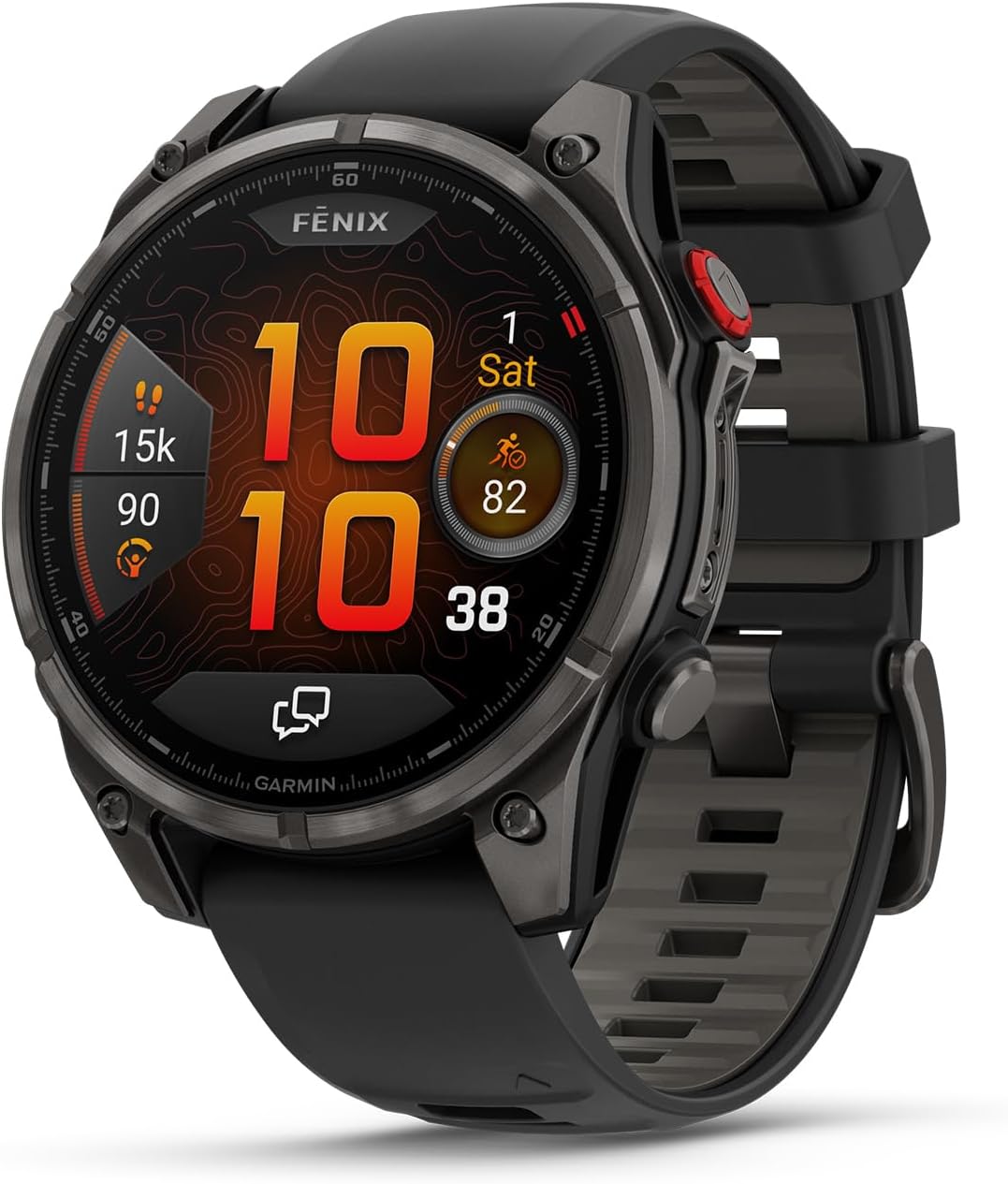
Garmin Fenix
- Multisport GPS smartwatch with built-in inReach technology for two-way satellite and LTE connectivity.
- Rugged design with a bright 1.4″ AMOLED touchscreen display, titanium bezel, scratch-resistant sapphire lens and other premium materials
This article contains affiliate links. We may earn a commission at no extra cost to you.
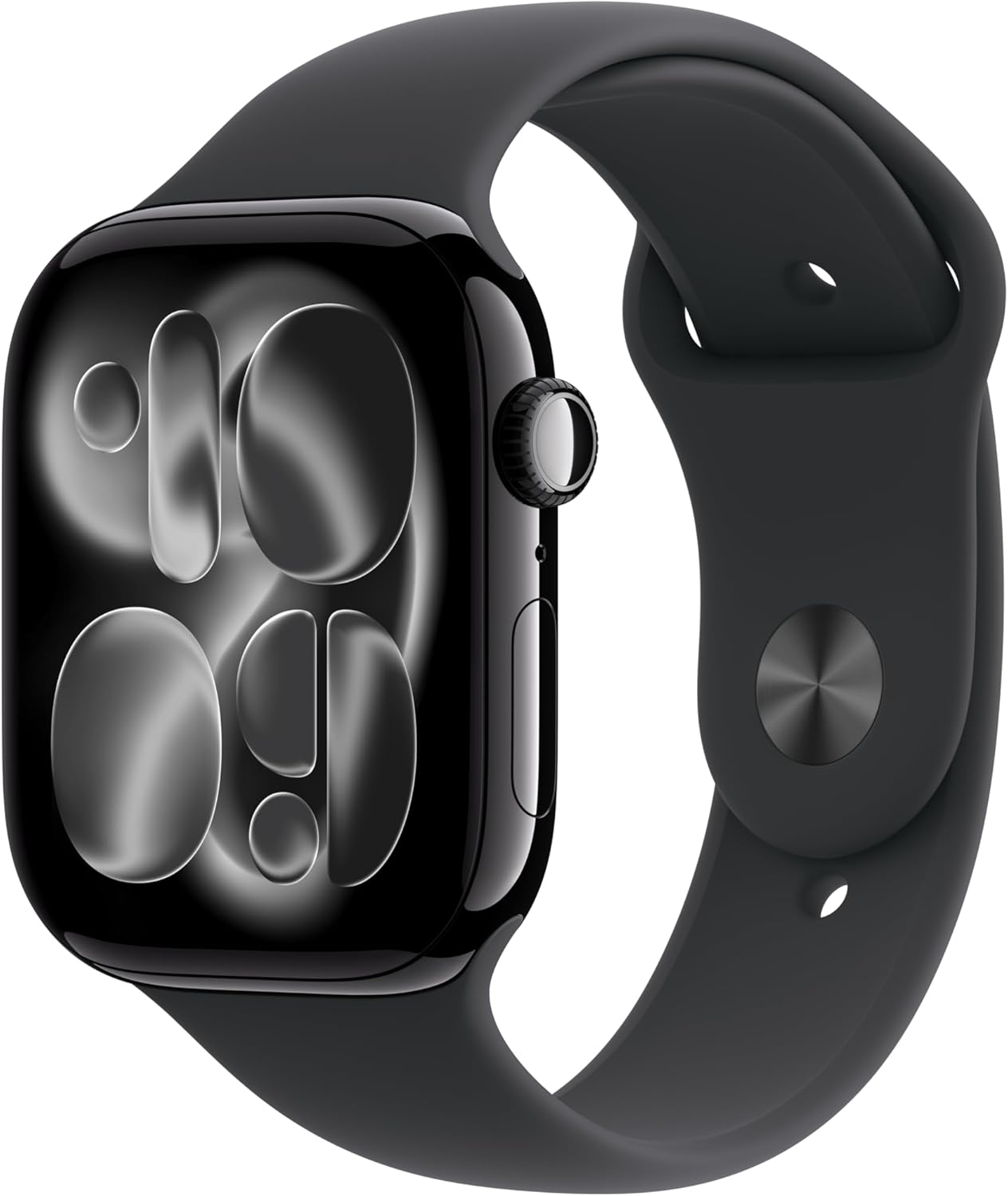
Apple Watch Series 11
This article contains affiliate links. We may earn a commission at no extra cost to you.

Coros Training Products
This article contains affiliate links. We may earn a commission at no extra cost to you.
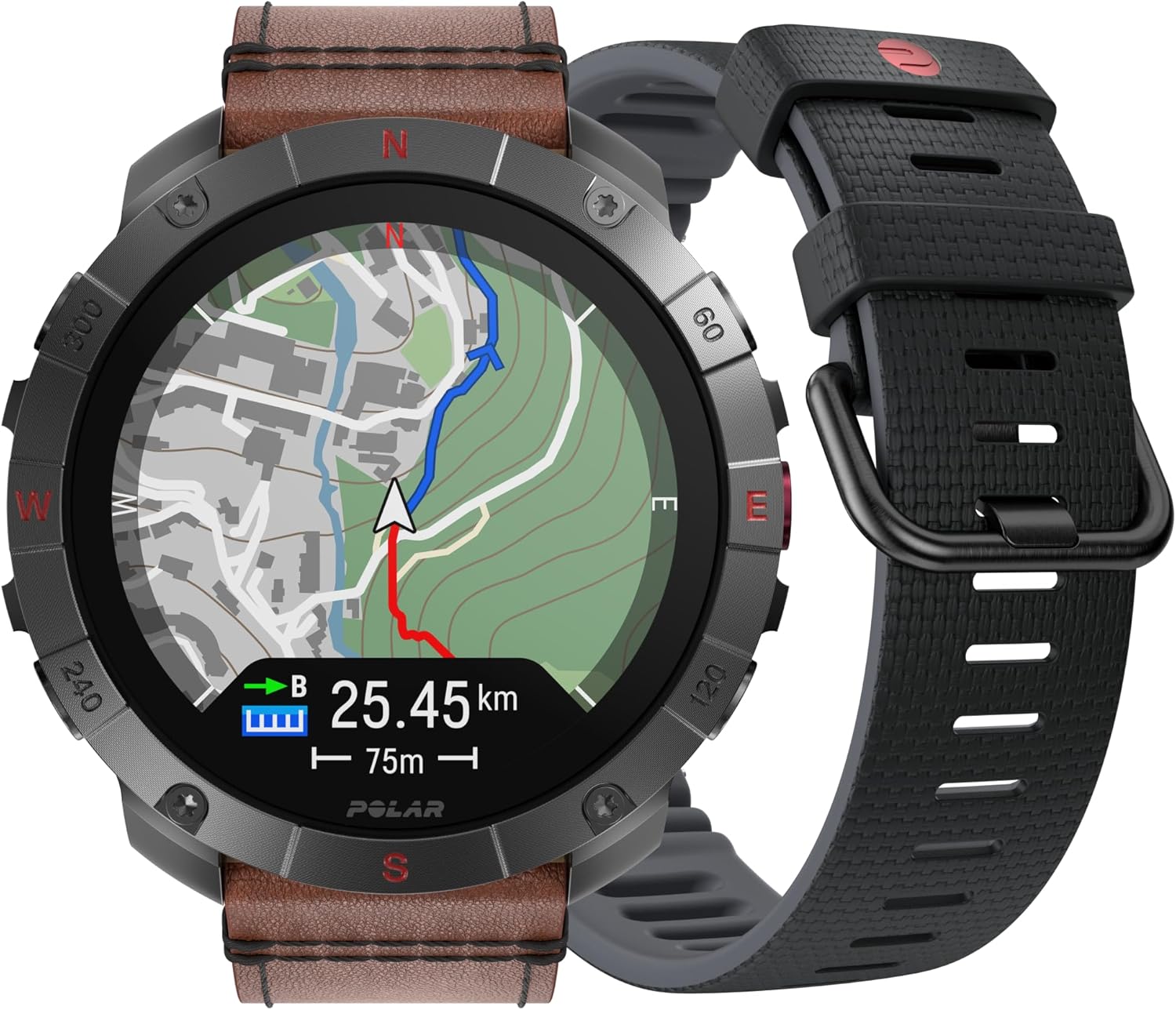
POLAR Grit X2 Pro Premium GPS Smart Watch
$769.93
This article contains affiliate links. We may earn a commission at no extra cost to you.
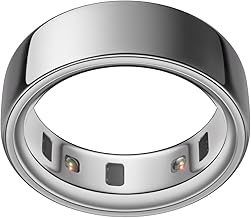
Oura Ring 4 — Silver
$349.99
This article contains affiliate links. We may earn a commission at no extra cost to you.
Garmin Fenix 8: The Multisport Benchmark
If the assignment is one watch that can do nearly everything well, the Garmin Fenix 8 is still the benchmark. Garmin launched the Fenix 8 in August 2024 starting at $999, and the big move was consolidating the old Fenix and Epix split. Garmin now offers both AMOLED and MIP solar options in the same flagship family, which is a practical decision rather than a marketing one. Some buyers want prettier screens. Others want battery life that borders on rude.
Garmin‘s own launch materials and DC Rainmaker’s in-depth review line up on the essentials: multi-band GNSS, the Elevate Gen 5 heart rate sensor, speaker and microphone support for voice commands, leakproof metal buttons, MIL-STD-810 durability, and battery life up to 29 days in smartwatch mode on the AMOLED version or as much as 149 hours in GPS-only mode on the MIP solar model.
That combination is why Garmin remains the default answer for serious multisport use. The platform supports more sport profiles, deeper navigation, and more training metrics than most people will ever fully use. For the executive athlete, that excess isn’t wasted. It means the watch can handle marathon prep, ski weekends, open-water swims, and business travel without making you choose between office convenience and training seriousness.
It also helps that Garmin‘s design language has finally stopped feeling like a hostage negotiation between an outdoor catalog and a submarine manual. The Fenix 8 still looks rugged, but it no longer feels trapped in 2018.
High-End Multisport Watches for Apple Users: The Smartwatch-First Tradeoff
If you’re deep in the Apple ecosystem, the Apple Watch Ultra 2 makes a different pitch. PCMag and Advnture both frame it the same way: this is the best Apple Watch for serious training, but it is still an Apple Watch first. At $799, the Ultra 2 gives you a 3,000-nit OLED display, titanium case, sapphire crystal lens, dual-frequency GPS, ECG, blood oxygen sensing, body temperature sensing, and cellular connectivity that lets you leave the phone behind for calls and messages.
The attraction is obvious. For office life, the Ultra 2 is smoother than Garmin. Notifications work better. Apps are better. Messaging is better. Cellular independence is better. If your day includes conference calls, airport sprints, and a post-work run, Apple built the cleaner bridge between normal life and training life.
The limitation is just as obvious. Battery life is roughly 36 hours in regular use, based on the PCMag and Advnture reviews cited above. That’s excellent by Apple standards and modest by Garmin standards. It’s fine for daily training. It isn’t fine if you want to forget your charger for a weekend, track long efforts back to back, or spend time in places where charging is annoying. Which is to say airports, hotels, and most of adulthood.
The iPhone-only lock-in also matters. If you don’t plan to stay inside Apple’s world, the decision is already made for you. But for the executive athlete who wants one premium watch that handles meetings, messages, and workouts with minimal friction, the Ultra 2 is the strongest smartwatch-first option in this group.
Coros Vertix 2S and Polar Grit X2 Pro: The Specialized Alternatives
Garmin and Apple get most of the oxygen, but the specialized alternatives are real. They just require a clearer idea of your priorities.
Believe in the Run reports that the Coros Vertix 2S costs $699, uses a 1.4-inch transflective MIP display, titanium bezel, sapphire glass, and dual-frequency GNSS across GPS, GLONASS, Galileo, QZSS, and Beidou. The headline number is battery life: up to 118 hours in full GPS mode. That’s expedition-level endurance, not “pretty good for a smartwatch” endurance. If your training regularly spills into long mountain days, ultras, or multi-day travel where charging is a nuisance, Coros has a real argument.
The tradeoff is lifestyle polish. Coros has improved a lot, but it still feels more training-tool-first than daily-companion-first. That isn’t a flaw if your priority is performance in harsh conditions. It’s a flaw if you want your watch to feel equally natural in a blazer and on a gravel climb.
Polar comes at the problem from the opposite angle. DC Rainmaker’s long-term review of the Grit X2 Pro highlights a 1.39-inch AMOLED display at 1,050 nits, 466×466 resolution, dual-band GNSS, wrist ECG, SpO2, skin temperature sensing, and MIL-STD-810H durability. In other words, Polar built a premium physiological tracking watch with real hardware credibility.
But even at its premium price, the Grit X2 Pro lacks onboard music storage and contactless payments. Those aren’t small misses for an executive buyer spending this much. A watch can be excellent at recovery insight and still lose on convenience. That’s the premium-watch tax nobody mentions enough: once the price clears a certain threshold, omissions feel louder than innovations.
What Features Actually Matter for the Executive Athlete
This is where most comparisons go soft. They list every feature, avoid making judgments, and leave you with a spreadsheet instead of an answer. The useful framework is narrower.
Start with sensor quality, but don’t worship it blindly. The 5k Runner highlighted a 2025 comparison in which the Oura Gen 4 posted a Lin’s Concordance Correlation Coefficient of 0.99 and mean absolute percentage error of 5.96% for nocturnal HRV, ahead of WHOOP at 0.94 and 8.17% and older Garmin hardware like the Fenix 6 at 0.87 and 10.52%. Labfront also reported that Garmin’s newer Enhanced BBI approach can get close to ECG-level HRV accuracy during low-motion conditions. The point isn’t that one wrist device has solved physiology forever. The point is that sensor quality changes meaningfully across generations, and older reputation lingers longer than the data.
Then move to the five dimensions that actually affect ownership:
Battery life comes first because it changes behavior. A watch with excellent metrics but constant charging friction becomes one more item on the mental to-do list. For a time-poor executive, that matters more than one extra readiness score.
GPS accuracy matters next, especially if you split time between dense urban routes and trails. Multi-band or dual-frequency support is no longer a vanity spec. It’s the difference between clean pacing data and a map that looks like you ran through a lake.
Training depth matters if you care about progression, not just activity logging. Garmin still leads here, and Garmin Venu vs. Forerunner for the executive athlete is a useful reminder that brand names alone don’t tell you how deep the training stack goes.
Smartwatch integration matters more than enthusiasts admit. Apple leads here. Garmin is good enough for many people. Coros and Polar are more selective. If you actually handle calls, texts, calendars, and travel logistics from your wrist, that difference isn’t cosmetic.
And design matters because these devices live on your body all day. The best watch in theory loses if it feels wrong in the office. That’s why Garmin Epix vs. Fenix comparison for executive athletes is really a question about tradeoffs between display style, battery behavior, and where the watch has to live when you’re not training.
Decision Framework: Match the Watch to Your Training Style
For most buyers in this category, the Garmin Fenix 8 is the safest premium choice because it has the fewest real weaknesses. It covers structured training, navigation, broad sport support, and strong battery life in one package. If you want one watch and you don’t want to think about the category again for three years, that is the cleanest answer.
The Apple Watch Ultra 2 is the right pick if you are an iPhone user who wants premium fitness tracking without giving up the best smartwatch experience. That isn’t a compromise if your training is serious but not expedition-level. It’s a deliberate choice to favor office-life integration, app quality, and cellular freedom over week-long battery life.
The Coros Vertix 2S is the specialist’s option. If your training calendar includes ultra-endurance events, all-day navigation, or repeated long sessions where charging becomes the enemy, Coros earns its place. It’s less compelling if your real life demands richer smartwatch features every day.
The Polar Grit X2 Pro fits the buyer who cares most about physiological insight and a polished display, and least about payments or music on the watch. That buyer exists. It’s just a narrower lane.
One more practical point: if recovery and sleep data are high on your list, the watch shouldn’t be your only comparison set. Oura Ring vs WHOOP vs Garmin sleep score comparison and the broader HRV tracking guide for men over 45 both make the same point. Training watches aren’t automatically the best recovery devices just because they cost more.
The useful reframe is this: you aren’t buying a watch. You are buying the kind of friction you are willing to live with. Garmin asks you to accept a denser interface in exchange for depth and battery. Apple asks you to accept frequent charging in exchange for everyday elegance. Coros asks you to give up lifestyle polish for endurance. Polar asks you to give up a few conveniences for recovery insight.
Pick the friction that bothers you least. That’s usually the right answer.
Frequently Asked Questions
What makes a watch “multisport” instead of just a fitness tracker?
A true multisport watch is built to handle multiple training modes, usually with sport-specific metrics, structured workouts, navigation, and transitions between activities like swimming, cycling, and running. A basic fitness tracker can log movement and heart rate. It usually doesn’t go much deeper than that.
Can the Apple Watch Ultra 2 replace a Garmin Fenix 8 for serious training?
For many people, yes. For everyone, no. If your training is mostly road running, gym work, cycling, and general endurance, the Ultra 2 is strong enough. If you want deeper training metrics, longer battery life, broader sport profiles, or heavy navigation use, the Fenix 8 still has the edge.
How much battery life should I realistically expect with daily GPS use?
Less than the headline numbers. Manufacturer claims assume specific settings and use cases. The practical takeaway from these four models is the ranking, not the exact hour count: Apple is shortest, Garmin is much longer, and Coros is the endurance leader.
Which watch handles the widest range of sports without needing another device?
Garmin is still the broadest all-around platform for sport coverage. That includes the usual running, cycling, strength, pool, and open-water modes, plus a long list of niche profiles and training metrics that matter once you move beyond casual logging.
Is the Coros Vertix 2S worth it if I am not doing ultra-endurance events?
Probably not. The Vertix 2S makes the strongest case when battery life and rugged long-session tracking are the priority. If your training fits inside ordinary weekly routines, Garmin or Apple will usually make more day-to-day sense.
High-end multisport watches only make sense when the watch matches the life around the training. For the executive athlete, that usually means choosing the device with the best balance of battery, data depth, and daily usability, not the one with the flashiest spec sheet.
Right now, that still points to Garmin for most people, Apple for iPhone-first buyers, Coros for endurance specialists, and Polar for recovery-focused data loyalists.
This article is for informational purposes only and is not financial advice. Consult a qualified professional for personalized guidance.
Leave a Reply