
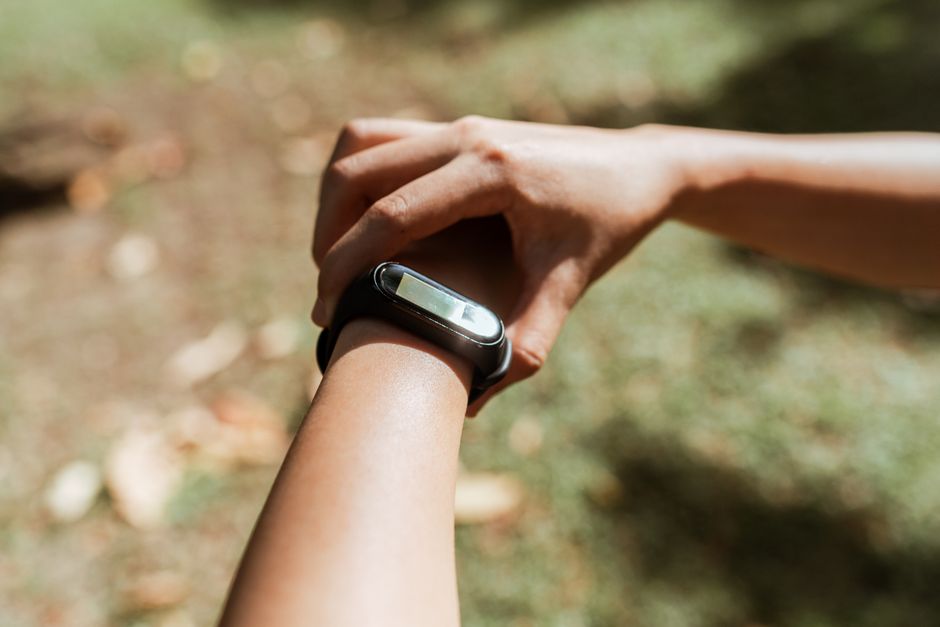
If you want to improve sleep quality with a wearable as a man over 50, the first thing to know is that your device is useful, but it isn’t a bedside oracle. It can show patterns. It can flag a bad week. It can help you see whether the change you made at 9 p.m. helped or hurt. What it can’t do is replace judgment, or tell you that one ugly sleep score means your body has suddenly quit on you.
That matters because a lot of men in this age bracket are already living the pattern. Sleep gets lighter. Recovery takes longer. One late dinner or two glasses of wine can wreck the night in a way it did not at 35. The National Council on Aging reports that older adults often sleep less than they think, and that deep sleep drops sharply with age. So if your ring or watch keeps telling you something feels off, it probably is. The annoying part is that the app usually buries the useful signal under a shiny score and some confetti-grade graphics.
The better use of a wearable is simpler than that. Treat it like an instrument panel, not a life coach. Focus on a few metrics that actually track recovery, look at trends instead of single nights, and use the data to test small changes you can repeat. That’s where the device earns its keep.
What Your Wearable Already Knows About Your Sleep That You Don’t
Most men don’t have a sleep problem because they lack data. They have a sleep problem because they have data without a framework.
The National Council on Aging says men over 50 average about 5.7 hours of sleep per night. That’s already short of the seven-hour threshold usually associated with healthier sleep duration. The deeper problem is quality. Slow-wave sleep, the deep stage tied to physical recovery and memory processing, falls from roughly 20% of total sleep in young adulthood to under 5% by the mid-30s, and by 45 many men have lost the ability to generate much of it at all. If your wearable keeps showing thin deep-sleep bars, that isn’t a personal failure. It’s aging, physiology, and modern life teaming up like a bad committee.
This is where wearables help. They make the decline visible. They can show that the night after travel was worse than the night after a normal training day. They can show that your “I slept fine” story often means “I was unconscious for six hours and restless for half of it.” That’s useful because memory is a liar, especially when the morning calendar starts barking at you before your coffee is finished.
What they shouldn’t do is convince you that the score itself is the goal. A sleep score is packaging. The underlying pattern is the thing that matters: how long you slept, how fragmented the night was, how much deep sleep you are still producing, and whether the direction is improving or sliding. Men over 50 often feel that something is changing before they can name it. Your wearable is often showing the same thing in numbers.
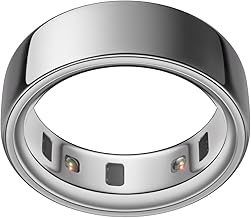
Oura Ring 4 — Silver
$349.99
This article contains affiliate links. We may earn a commission at no extra cost to you.
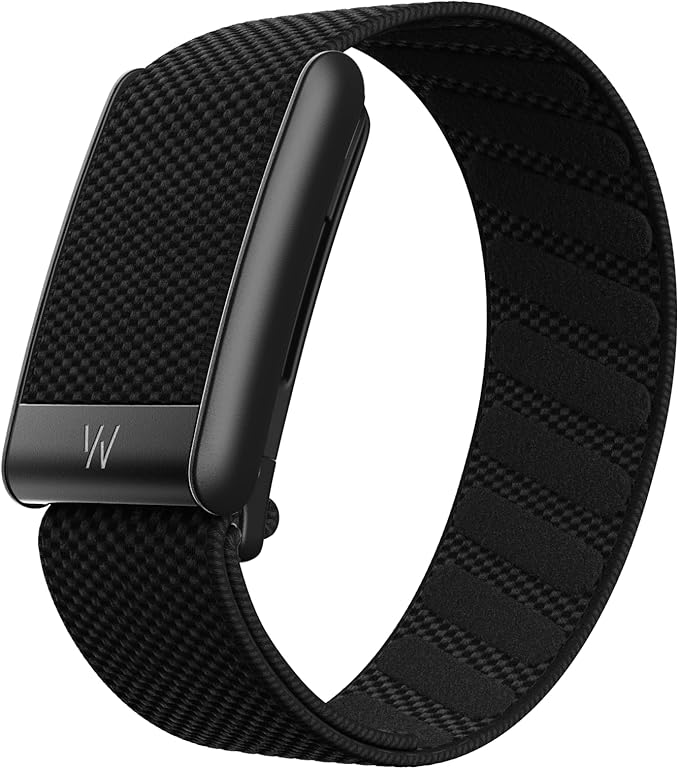
WHOOP MG Health Monitor
$239.00
This article contains affiliate links. We may earn a commission at no extra cost to you.
The Three Metrics That Actually Matter for Men Over 50
There is a lot of nonsense in wearable dashboards. Total steps are fine. Readiness badges are cute. None of that tells you much about whether last night restored anything.
For this group, three metrics matter more than the rest: heart rate variability, sleep-stage distribution, and sleep efficiency or recovery score. HRV is the big one because it reflects how adaptable your nervous system is under current stress. Sleep Doctor’s review of the evidence makes the basic point clearly: higher HRV generally tracks with better recovery, while chronically low HRV can signal accumulated stress, poor sleep, overreaching in training, or some ugly combination of all three. One low reading is noise. A week of low readings alongside short sleep is a pattern.
Sleep-stage distribution matters because it tells you whether the sleep you got was actually restorative. A man who spends seven hours in bed but produces very little deep sleep and wakes repeatedly isn’t getting the same outcome as someone with steadier architecture. No wearable measures stages as precisely as a sleep lab, but consumer devices aren’t toys anymore. In a 2024 Brigham and Women’s Hospital study reported by ZDNet, the Oura Ring reached 79% agreement with polysomnography for four-stage sleep classification. That isn’t perfection. It’s good enough to be useful.
The third metric is sleep efficiency, or the broader recovery score some platforms wrap around it. This matters because lying still isn’t the same thing as sleeping. If your device routinely shows that you spend a big chunk of the night awake after sleep onset, that gives you something concrete to work on. It also stops the classic executive move of claiming the problem is “just a busy season” while the body is clearly sending other memos.
The key is to keep the hierarchy straight. HRV tells you how recovered the system looks. Sleep stages tell you something about the quality mix. Sleep efficiency tells you how broken up the night was. Everything else is secondary.
How to Improve Sleep Quality With a Wearable for Men Over 50 Without Overthinking It
The CDC’s 2024 data brief found that 34.5% of adults ages 50 to 64 report short sleep duration, meaning fewer than seven hours per night. So yes, poor sleep is common. The trap is turning common into normal and then staring at every night’s graph like it is a stock chart that can ruin your weekend.
There is even a name for that habit: orthosomnia. The term describes anxiety-driven sleep disruption caused by obsessing over sleep-tracker data. It’s the wearable version of checking your brokerage account six times before breakfast and then pretending that is a calm, rational system.
The fix isn’t to ignore the data. It’s to narrow the questions you ask of it. Three are enough.
First: what does the seven-day trend say? A single bad night after a late flight, heavy meal, or tense meeting tells you almost nothing. A seven-day decline in HRV plus worse sleep efficiency tells you something changed.
Second: does the data match how you feel? If the score says 91 but you woke up foggy, sore, and irritable, trust the mismatch as a clue. Some devices are better at trend detection than at judging how a specific body feels on a specific morning.
Third: what did you actually do differently? Bedtime drift, alcohol, hard evening training, late work, room temperature, and screen exposure are all testable variables. If you can’t tie the data to behavior, you are just collecting trivia.
That’s the whole review process. Seven-day trend. Body check. Behavior link. Done. Five minutes, not a midnight dissertation. The point is to prevent the data from becoming another stressor. Men over 50 don’t need more quantified guilt. They need a way to spot patterns early enough to adjust before the week goes sideways.
From Data to Action: Building a Wearable-Guided Sleep Protocol
Once the data tells you where the problem is, the next job is to run a simple protocol rather than a nightly improvisation routine. Sleep advice gets weird fast because the internet loves rituals. Most of them are just ordinary good habits dressed up in ceremonial language.
Start with what actually has evidence behind it. The Sleep Foundation and Mass General Brigham both point to cognitive behavioral therapy for insomnia, or CBT-I, as the first-line non-drug treatment for chronic insomnia. It improves sleep in roughly 75% to 80% of patients. That matters because CBT-I isn’t “try lavender and hope for the best.” It’s a structured way to change the behaviors and thought patterns that keep sleep unstable.
You don’t need to turn this article into a homebrew clinic visit to borrow the useful part. Use your wearable as the feedback loop for a four-week protocol.
Week one: standardize the runway. Pick a consistent bedtime window and wake time, even on weekends. Cut the dramatic swings. If you are eating late, drinking late, or finishing work with your laptop glowing two feet from your face, start there. Watch sleep efficiency and wake-after-sleep-onset.
Week two: address the room and the schedule. Cooler room, darker environment, phone farther away, fewer random 11 p.m. decisions. This is boring. It’s also where a lot of improvement lives. Watch whether deep sleep and total sleep time start moving in the right direction.
Week three: adjust training and stimulation. If heavy evening workouts or caffeine after lunch coincide with lower HRV and more fragmented sleep, that isn’t a moral lesson. It’s a scheduling problem. Move the stress earlier if you can.
Week four: keep what works and drop what doesn’t. If a change improves trend lines for seven to ten days and you feel better in the morning, keep it. If it produces prettier graphs but you feel no difference, be skeptical. The goal is better sleep, not prettier graphs.
This is also the point where clinical boundaries matter. A wearable can help you track sleep onset, fragmentation, and recovery trends. It can’t diagnose every cause of poor sleep. If the pattern suggests chronic insomnia, suspected sleep apnea, or persistent daytime impairment, that is clinician territory. Useful device, limited jurisdiction.
Which Device Fits the Framework Best and Which Data to Ignore
Not all wearables are equally good at the same job. That doesn’t mean everyone should run out and buy a new one. It means you should know what your device is better at, and where its confidence should drop a notch.
If sleep-stage accuracy is your top concern, Oura currently looks strongest in the available comparison data. The 2024 Brigham and Women’s Hospital study reported by ZDNet found 79% agreement with polysomnography for four-stage sleep classification and 79.5% deep-sleep sensitivity. That’s a serious result for a consumer device.
If recovery tracking and HRV are your priority, WHOOP has a strong case. Forbes reported in March 2026 that WHOOP hit 99% HRV accuracy against ECG and 69.6% deep-sleep detection accuracy in independent testing. For men who already train and care about daily recovery decisions, that is a meaningful strength.
Garmin is often good at many things, but the same Forbes analysis found weaker sleep-stage identification, with agreement around 0.21 on a 0 to 1 scale against polysomnography. That doesn’t make it useless. It means you should be more careful about taking its stage labels as gospel.
There is also one broad limitation across devices: they tend to overestimate total sleep time by about 2% to 10% because quiet wakefulness is often scored as light sleep. So if your app says you got seven hours but you remember lying there awake for long stretches, that gap isn’t your imagination. It’s one of the known weaknesses of the category.
The practical takeaway is straightforward. Use the device you already have if it gives you stable HRV, sleep timing, and trend data. Upgrade only if you have a real use case for better stage accuracy or better recovery metrics. Ignore badges, arbitrary scores, and most comparative leaderboards. The body isn’t competing in a video game.
Frequently Asked Questions
Can my wearable detect sleep apnea, or is that still a clinical-device job?
Mostly the second one. Some wearables can flag breathing irregularities or show a pattern that raises suspicion, but they aren’t a substitute for proper evaluation when sleep apnea is on the table. If you snore heavily, wake unrefreshed, or have repeated breathing-related alerts, that is a reason to talk with a clinician, not a reason to trust the app harder.
What is orthosomnia, and how do I know if I have it?
Orthosomnia is when sleep tracking starts making sleep worse because you become anxious about the numbers. If you feel agitated by a single bad score, keep checking the app at night, or change your mood for the day before you even notice how you feel physically, you are drifting into that territory.
How many nights of data do I need before a trend means anything?
Usually at least seven nights for a useful short-term read. One night can be derailed by travel, stress, alcohol, a late meal, or random disruption. A week gives you enough repetition to tell the difference between noise and a real shift.
Is HRV during sleep more useful than waking HRV for recovery decisions?
Often yes, because sleep reduces some of the noise that shows up when you measure after waking under inconsistent conditions. What matters most is consistency. If your device measures HRV the same way each night, that makes trend tracking easier and usually more useful.
Should I trust my wearable’s sleep score more than how I actually feel in the morning?
No. The score is a tool, not a verdict. If the score and your lived experience disagree once, note it and move on. If they disagree repeatedly, that tells you something about your device, your physiology, or both.
Wearables can help men over 50 sleep better, but only if the device stays in its lane. Use it to spot recovery trends, validate changes, and catch patterns you would otherwise miss. Do that, and the data becomes useful instead of just one more glowing object asking for your attention.
Sources
- National Council on Aging, “Sleep Statistics for Older Adults in 2026: What the Research Shows” — https://www.ncoa.org/article/sleep-statistics-older-adults/
- Sleep Doctor, “How Sleep Affects Heart Rate Variability” — https://sleepdoctor.com/pages/health/hrv-and-sleep
- ZDNet, “Study: Oura surpasses Apple Watch and Fitbit in sleep tracking accuracy” — https://www.zdnet.com/article/study-oura-surpasses-apple-watch-and-fitbit-in-sleep-tracking-accuracy/
- National Center for Health Statistics, “Short Sleep Duration and Sleep Difficulties Among Adults: United States, 2024” — https://www.cdc.gov/nchs/products/databriefs/db559.htm
- Sleep Foundation, “Cognitive Behavioral Therapy for Insomnia (CBT-I)” — https://www.sleepfoundation.org/insomnia/treatment/cognitive-behavioral-therapy-insomnia
- Mass General Brigham, “CBT-I for Sleep” — https://www.massgeneral.org/news/article/cbt-i-for-sleep
- Forbes, “Which Fitness Tracker Is Most Accurate? Here’s Data on 9 Top Brands” — https://www.forbes.com/sites/jessepines/2026/03/11/which-fitness-tracker-is-most-accurate-heres-data-on-9-top-brands/
This article is for informational purposes only and is not financial advice. Consult a qualified professional for personalized guidance.
Leave a Reply