
Most recovery scores are selling the same fantasy: wake up, glance at one number, and know exactly how hard to train, how sharp you’ll feel, and whether your body is quietly filing a complaint. That’s tidy. Real physiology isn’t.
For a WHOOP vs Garmin vs Oura recovery algorithm comparison, the uncomfortable truth is that all three devices start from nearly the same biological signals, then wrap them in different math and different branding. Kygo.app reported in 2026 that roughly 86% of wearable recovery and readiness scores lean primarily on overnight heart rate variability, then add resting heart rate and sleep metrics on top. So the argument isn’t really about whether one company discovered a hidden biomarker while the others were busy polishing marketing copy.
The argument is about weighting, transparency, and use case. WHOOP is built to hand you one daily verdict. Garmin is strongest when training load is the main question. Oura is the most convincing sleep-and-recovery sensor package of the three. What none of them has, at least not yet, is a clean, independently validated composite score that can reliably predict how you’ll feel tomorrow better than your own pattern recognition.
The Common Foundation: Why Every Recovery Algorithm Starts with the Same Three Signals
Strip away the product language and the physiology is surprisingly boring in a good way. Recovery algorithms mostly rely on overnight HRV, resting heart rate, and sleep. Kygo.app’s 2026 comparison estimated that about 86% of recovery or readiness scores across the market use that trio as the backbone.
That makes sense. HRV is a rough proxy for autonomic balance. Resting heart rate often rises when stress, fatigue, alcohol, illness, or poor sleep pile up. Sleep metrics tell you whether the night’s repair work happened at all. None of that is exotic. It’s the same basic dashboard wearing three different outfits.
Why this matters: if two devices disagree on a given morning, it usually doesn’t mean one of them found a mystical truth hidden from the other. It usually means they weighted the same inputs differently, or one device is better at measuring them cleanly. That’s an important distinction, especially for someone deciding whether to trust a number enough to change a workout or a meeting-heavy day.
This is also where wearable marketing gets slippery. Companies often present the final score as if it were a direct readout of readiness. It isn’t. It’s a model. A useful model, sometimes. But still a model. That’s not a scandal. It’s just less glamorous than the ads.
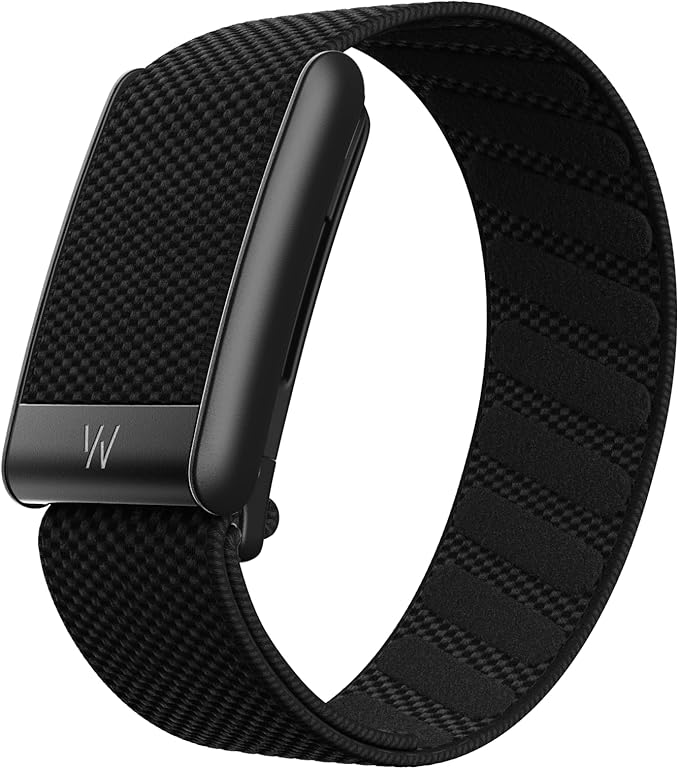
WHOOP MG Health Monitor
$239.00
This article contains affiliate links. We may earn a commission at no extra cost to you.
Garmin Venu 3 GPS Smartwatch
$289
This article contains affiliate links. We may earn a commission at no extra cost to you.
Oura Ring 4 — Silver
$349.99
This article contains affiliate links. We may earn a commission at no extra cost to you.
WHOOP Strain and Recovery: The Subscription-Backed Algorithm
WHOOP has the cleanest product story of the three. It exists to score strain and recovery, not to be a smartwatch that also dabbles in recovery when it has a free afternoon. Each morning, WHOOP gives a 0 to 100% Recovery score built from HRV as the primary input, along with resting heart rate, respiratory rate, sleep performance, and skin temperature. Its Strain score runs from 0 to 21 and uses a logarithmic formula based on time spent in heart-rate zones.
That last part matters. WHOOP’s big strength isn’t that it measures a different body than Garmin or Oura. It’s that the whole product is organized around translating those signals into one daily coaching layer. For a time-poor reader, that simplicity is attractive. No menu diving. No extra gadget theater. Just the morning verdict.
The problem is transparency. Carmichael Training Systems and TrainRight wrote in March 2025 that WHOOP’s Strain and Recovery scores are derived from black-box proprietary algorithms, and that independent validation of those composite scores against clinical recovery markers remains limited. That’s the right criticism. The sensor can be accurate while the summary score still overpromises.
Those aren’t the same thing. A 2025 peer-reviewed study cited by Kygo.app found WHOOP’s HRV measurements reached a concordance correlation coefficient of 0.94 and a mean absolute percentage error of 8.17% versus ECG across 536 nights. That’s strong underlying signal quality. WHOOP’s 2025 Healthspan White Paper also reported that, among 11,914 subscribers, higher wear frequency over 12 weeks was associated with lower resting heart rate, higher HRV, and healthier sleep patterns.
Useful, yes. Definitive, no. A good way to think about WHOOP is this: accurate ingredients, proprietary recipe. If you want the device that acts most like a recovery-first coach, that’s the appeal. If you want to inspect the math under the hood, you’re out of luck.
Garmin Training Load and Body Battery: The EPOC Engine
Garmin‘s real advantage is that it doesn’t pretend every readiness question is the same question. Training Load and Body Battery are related, but they come from slightly different logic. Training Load is built on Firstbeat Analytics’ EPOC method, which estimates excess post-exercise oxygen consumption from heart rate data to quantify how much physiological disturbance a workout created. Garmin then rolls that into a 7-day sum.
That’s more scientifically grounded than most wearable score names suggest. Firstbeat’s white paper ties the method to lab-style oxygen debt modeling, which gives Garmin a stronger foundation for training stress than generic “you seem tired today” numbers. If you’re already deep in the Garmin ecosystem and care most about whether your recent training dose is productive, this is the company’s best argument.
Body Battery is Garmin’s attempt to convert stress, sleep, and recovery into a 0 to 100 daily energy score. It’s useful, but it lives a little closer to the same black-box neighborhood as everybody else. Meanwhile, the signal quality is decent rather than class-leading. In the 2025 HRV accuracy study summarized by Kygo.app, the Garmin Fenix 6 posted a CCC of 0.87 with a MAPE of 10.52% against ECG. That’s respectable. It’s also clearly behind Oura and modestly behind WHOOP.
Sleep adds another wrinkle. Dublin City University reported in October 2025 that Garmin watches may overestimate sleep duration for endurance athletes compared with research-grade actigraphy. That doesn’t make Garmin useless. It just means the platform’s strongest science case is training load, not sleep precision.
If WHOOP is the morning verdict machine, Garmin is the workload accountant. Slightly less romantic. Probably more honest. And for many athletes, that’s the point.
Oura Readiness: The Sleep-First, Sensor-Accuracy Leader
Oura has the best case for measurement quality, especially if the question is what happened overnight. Its Readiness Score runs from 0 to 100 and combines seven contributors: sleep quality, 14-day sleep balance, previous-day activity, activity balance, resting heart rate, HRV balance, body temperature, and recovery index.
That last ingredient is where Oura starts to feel different. The ring isn’t trying to be a wrist-based training companion. It’s built to sit quietly in the background and detect overnight physiology with as little wrist-motion noise as possible. For sleep and early stress signals, that’s a smart trade.
The supporting data are strong. In the same 2025 study covered by Kygo.app, Oura Gen 4 led the pack with a CCC of 0.99 and a MAPE of 5.96% against ECG across 536 nights. Oura also points to a 2025 meta-analysis showing no statistically significant differences from polysomnography for total sleep time, sleep efficiency, or time spent in any sleep stage. And on the research front, the company says it has more than 130 peer-reviewed publications and more than 200 active research collaborations.
That doesn’t automatically make the Readiness Score itself a crystal ball. But it does mean Oura’s inputs, particularly HRV, sleep, and temperature, are on firmer ground than most consumer wearables. The 2025 launch of Cumulative Stress added a 31-day trend view using sleep continuity, heart stress-response, and temperature regulation, which is exactly the kind of thing these scores are better at anyway: trend detection, not courtroom-level certainty about one Tuesday morning.
For someone who cares more about sleep quality, illness hints, and overall recovery drift than about real-time training load, Oura is the most convincing package here. It’s the least flashy device in a category that often confuses dashboards with insight, which is refreshing.
Head-to-Head: WHOOP vs Garmin vs Oura Recovery Algorithm Comparison for Tomorrow’s Feeling
Here is the blunt answer: none of these companies has independently shown that its composite score can reliably predict how you’ll feel tomorrow. TrainRight and CTS said the quiet part out loud in 2025. Across wearable brands, strain and recovery scores are black-box proprietary algorithms, and only 2 out of 12 recovery scores in the broader market have any published validation at all.
That’s why two devices can agree closely on HRV and still hand you different morning verdicts. Kygo.app’s 2025 accuracy roundup showed that Oura, WHOOP, and Garmin all track HRV with reasonably strong agreement to ECG, though Oura leads, WHOOP follows, and Garmin trails. But once each company folds those inputs into its own weighting system, you are no longer comparing sensors. You are comparing editorial decisions made by algorithms.
So which one predicts tomorrow best? The evidence says that is the wrong question. The better question is which one helps you notice patterns you would otherwise miss. Oura is strongest at the overnight physiology itself. Garmin is strongest at contextualizing training stress. WHOOP is strongest at turning multiple signals into one decision-friendly interface.
That means the score isn’t the product. The pattern is the product. A single yellow or red morning can be noise. Ten mornings that all follow late dinners, travel, or hard interval blocks are useful. This is where a lot of wearable buyers get trapped in what might be called score laundering: a company converts messy biology into one polished number, and the polish gets mistaken for certainty.
It isn’t certainty. It’s organized approximation. Sometimes that’s enough.
How to Choose: Matching the Recovery Algorithm to Your Life
If you want one simple verdict every morning and don’t mind paying a subscription for that convenience, WHOOP is the cleanest fit. The entire product is built around strain, recovery, and habit feedback. It makes the least sense for someone who hates ongoing fees or wants visible maps, notifications, or multi-sport watch features.
If you already train with a Garmin watch, Garmin is probably the pragmatic choice. Training Load and the Firstbeat EPOC engine are the most scientifically grounded tools in this comparison for quantifying workout stress. Garmin makes the most sense when your central question is, “Am I dosing training well?” not “Can one number tell me how my whole body feels?”
If sleep quality, overnight HRV, and early temperature-based stress signals matter most, Oura has the best argument. Its sensor accuracy is strong, the research footprint is larger than most competitors, and the form factor is easier to live with for people who don’t want another screen on the body. It makes the least sense for someone who wants a single device for training, GPS, and recovery.
For a 55-year-old executive who values time, the choice is usually less dramatic than internet debates make it sound. All three platforms use the same physiological spine: HRV, resting heart rate, and sleep. What differs is the wrapper. WHOOP offers the strongest coaching layer. Garmin offers the strongest training-load context. Oura offers the strongest overnight sensing. Pick the wrapper that matches the question you actually care about, not the one with the loudest fan club.
Related: how wearable recovery scores actually work
Related: how accurate wearable sleep tracking really is
Related: what Oura, WHOOP, and Garmin actually measure for sleep
Related: which wearable biomarker matters most after 50
Related: how to use HRV data to manage recovery
Frequently Asked Questions
Can I trust my wearable’s recovery score to decide whether to work out today?
Not by itself. TrainRight and CTS argued in 2025 that composite recovery scores are still weakly validated as predictors of next-day readiness. A better use is trend spotting. If your score drops after red-eye travel, heavy drinking, or three nights of short sleep, that’s useful. Canceling a workout because one app looked grumpy is less convincing.
If I wear both a WHOOP and an Oura, which morning score should I follow?
Follow the one that best matches the pattern you can verify in your own life. If sleep and overnight physiology are the main question, Oura has the stronger sensor-accuracy case. If you want a simpler daily coaching layer tied to strain, WHOOP is designed more aggressively around that use.
Does Garmin’s Body Battery predict how you’ll feel, or how well you trained yesterday?
Mostly the second one, filtered through stress and sleep. Garmin’s strongest science case is still the Firstbeat EPOC-based Training Load system. Body Battery can be useful, but it is better treated as an energy estimate than as a precise forecast of tomorrow’s mood, focus, or soreness.
Why don’t different wearables’ recovery scores agree with each other even when worn on the same night?
Because the devices can start with similar HRV, resting heart rate, and sleep data, then weight them differently. One company may punish poor sleep more heavily. Another may emphasize recent training stress. Same body, different math.
If you want a wearable built around recovery first — not as an afterthought to GPS and notifications — WHOOP is the option that takes it most seriously. It translates HRV, sleep, and respiratory rate into one clear verdict each morning, and the subscription model keeps the focus on the data, not the hardware. Check current pricing on Amazon →
If the goal is the best overnight sensing, Oura has the strongest evidence. If the goal is training-load context, Garmin is the most grounded. If the goal is a frictionless daily recovery verdict, WHOOP is the cleanest product. Just don’t confuse a polished score with a validated prophecy.
This article contains affiliate links. We may earn a commission if you sign up through these links, at no additional cost to you.
Sources
- Kygo.app, “Recovery Score Comparison: WHOOP vs Oura vs Garmin 2026” (2026), https://www.kygo.app/post/recovery-scores-compared-whoop-oura-garmin
- Kygo.app, “Wearable Accuracy Ranked: 17 Studies, 6 Devices (2026)” (2026), https://www.kygo.app/post/what-s-the-most-accurate-wearable-data-a-2024-2025-study-breakdown-by-device
- CTS (Carmichael Training Systems), “New Study Reveals Holes in Wearable Device Scores” (March 2025), https://trainright.com/new-study-reveals-holes-in-wearable-device-scores/
- Firstbeat Analytics, “EPOC and Training Effect” (2025), https://www.firstbeat.com/en/science-and-physiology/epoc-and-training-effect/
- Oura Blog, “Your Oura Readiness Score” (2025), https://ouraring.com/blog/readiness-score/
- WHOOP, “WHOOP Healthspan White Paper” (2025), https://assets.ctfassets.net/rbzqg6pelgqa/3ONehqJslbqxI7CQlwGjfT/36429d6f66940e1fd866a772ed5bfc93/WHOOP_2025_White_Paper_Healthspan__6_.pdf
- Dublin City University, “DCU Researchers Demonstrate Sleep Trackers May Overestimate Rest” (October 2025), https://www.dcu.ie/shhp/news/2025/oct/dcu-researchers-demonstrate-sleep-trackers-may-overestimate-rest-endurance
- Oura, “Science and Research” (2025), https://ouraring.com/science-and-research
This article is for informational purposes only and is not financial advice. Consult a qualified professional for personalized guidance.
Leave a Reply