
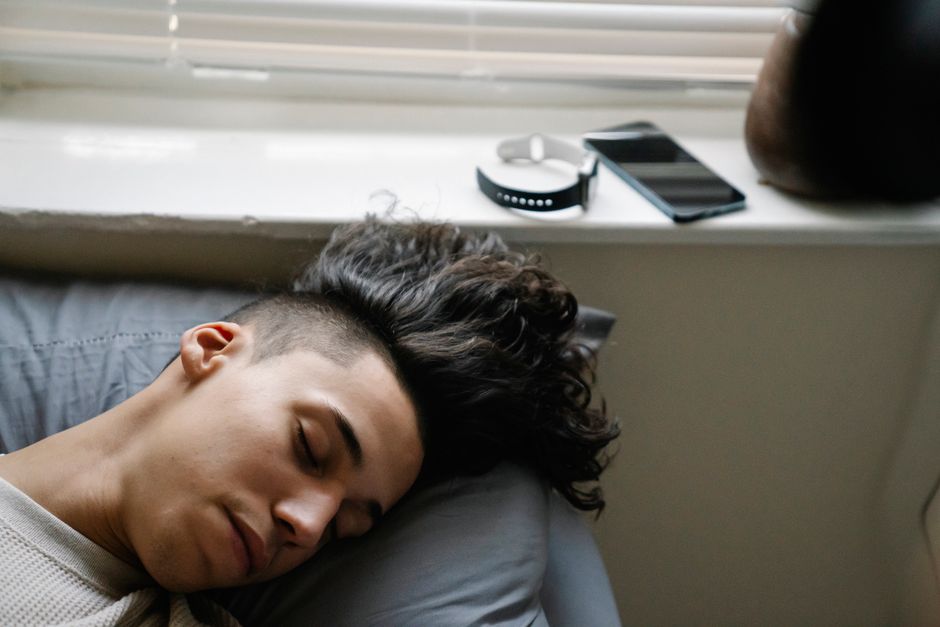
If you’re trying to make sense of a sleep score Oura WHOOP Garmin comparison, the first thing to know is that the three companies aren’t grading the same exam. They all spit out a number between 0 and 100, or close enough, but the math underneath that number is different enough that lining them up side by side can turn a normal person into a conspiracy theorist before breakfast.
That’s why the same night can earn an 84 on Oura, a 76% Sleep Performance on WHOOP, and a 91 on Garmin. The devices are measuring related things, not identical things. Oura leans hardest on sleep-stage quality. WHOOP leans into personalized sleep need, consistency, and recovery context. Garmin blends sleep duration, staging, restlessness, and overnight stress into a broader readiness ecosystem.
So the right question isn’t, “Which one is lying?” The right question is, “What is each score actually trying to tell me, and which one matches the reason I’m wearing this thing in the first place?” For a 55-year-old executive who values his time, that’s the whole game. You don’t need three dashboards and a spreadsheet hobby. You need the straight answer.
What Is a “Sleep Score”? The Three Different Answers
A sleep score sounds like a universal metric. It isn’t. It’s more like three companies using the same label on three different report cards.
Oura‘s Sleep Score runs from 0 to 100 and is built from seven contributors: total sleep, sleep efficiency, restfulness, REM sleep, deep sleep, latency, and timing. Oura says those contributors are weighted against age-based recommendations from the American Academy of Sleep Medicine, which means the score is trying to answer a fairly specific question: how close was your night to an evidence-based ideal for duration, timing, and stage balance.
WHOOP‘s Sleep Performance score also runs from 0 to 100%, but its structure is different. WHOOP weights sleep sufficiency against your personalized sleep need, then layers in sleep consistency, sleep efficiency, and sleep stress. That turns the score into a recovery-context metric, not just a “how long did you sleep” metric. WHOOP is effectively saying: did you get enough sleep for your recent strain, and did you get it on a schedule your body recognizes.
Garmin‘s Sleep Score, also 0 to 100, uses Firstbeat Analytics to combine duration, stage balance, restlessness, and overnight stress, then feeds that into a larger readiness picture that includes Body Battery. In practical terms, Garmin treats sleep less like a standalone domain and more like one input into the next day’s training and energy estimate.
That’s why comparing raw numbers across platforms is mostly useless. A score of 78 on Oura isn’t the same thing as a 78 on Garmin, and it definitely isn’t the same thing as a 78% on WHOOP. Oura marks 85 and up as optimal. Garmin tends to frame 90 and up as excellent. WHOOP anchors the score to your individualized sleep need. Same label. Different philosophy. Different threshold. Different answer.
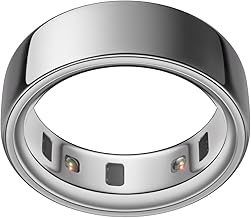
Oura Ring 4 — Silver
$349.99
This article contains affiliate links. We may earn a commission at no extra cost to you.
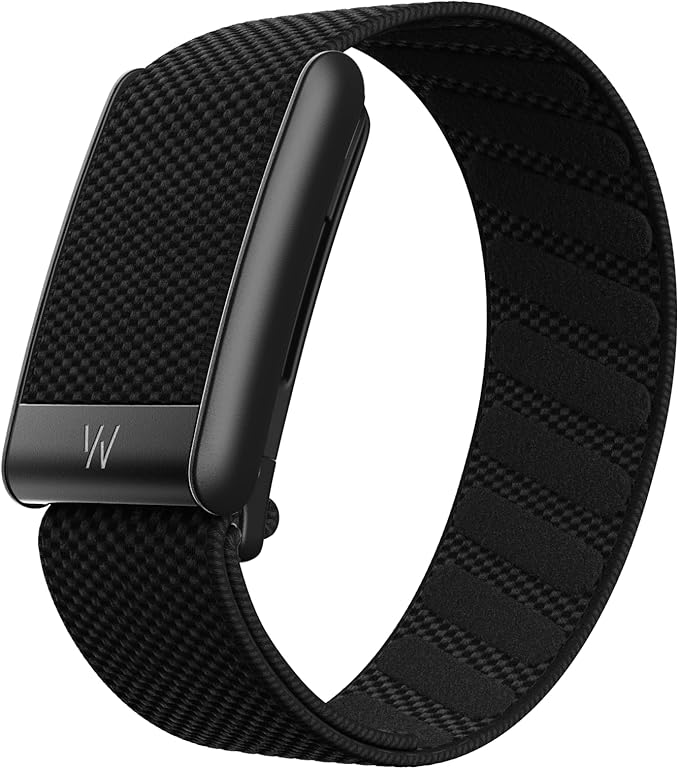
WHOOP MG Health Monitor
$239.00
This article contains affiliate links. We may earn a commission at no extra cost to you.
Garmin Venu 3 GPS Smartwatch
$289
This article contains affiliate links. We may earn a commission at no extra cost to you.
Oura Ring: How the Seven Contributors Become One Score
If sleep-stage accuracy is the thing you actually care about, Oura has the strongest current case of the three.
That starts with the hardware. A ring on the finger has a structural advantage over a wrist-worn device because the photoplethysmography signal is often cleaner there than at the wrist. Convenience matters, but sensor placement matters more.
The validation data behind Oura is also unusually solid for a consumer wearable. In a 2024 Sleep Medicine study from the University of Tokyo, researchers evaluated Oura’s Sleep Staging Algorithm 2.0 in 96 adults across three nights each, producing 421,045 scored epochs. Oura reached 91.7% overall sleep-wake accuracy against polysomnography, with stage-level accuracy ranging from 75.5% for light sleep to 90.6% for REM sleep. That’s not clinical-diagnostic perfection, but it is strong by consumer-device standards.
The 2024 Robbins study in Sensors compared Oura Gen3 with other commercial devices and found Cohen’s kappa of 0.65 for four-stage sleep classification, the best result in that test group, without systematic over- or underestimation of any single sleep stage. Then a 2025 meta-analysis in OTO Open pooled six validation studies involving 388 participants and found no statistically significant difference from polysomnography for total sleep time, sleep efficiency, wake after sleep onset, or sleep onset latency.
That doesn’t mean Oura is magic. It means the evidence base is stronger than the usual wearable-marketing fog machine. If your goal is to know whether your deep sleep, REM sleep, and overall architecture are trending in the right direction, Oura is currently the cleanest bet. For a reader who wants stage-level granularity without playing amateur sleep-lab technician, that matters.
WHOOP: Sleep Performance vs. Recovery – Two Scores, Different Jobs
WHOOP creates a lot of confusion because it gives you sleep information inside a broader recovery system, and users often treat those as one giant verdict from the heavens. They aren’t the same thing.
Sleep Performance is about how much sleep you got relative to what WHOOP thinks you needed, plus how consistent and efficient that sleep was, along with sleep stress. Recovery is the next-day readiness lens built from metrics like HRV, resting heart rate, and related physiological signals. If your Sleep Performance is decent but your Recovery score is poor, WHOOP isn’t contradicting itself. It’s saying you slept enough, but your body still looked strained overnight.
That distinction matters more after WHOOP’s 2025 redesign, which shifted the Sleep Performance score away from raw stage totals and toward sufficiency, consistency, efficiency, and sleep stress. In other words, WHOOP is less interested in impressing you with a REM estimate and more interested in answering whether your sleep supported recovery from your actual load.
Independent validation is decent, with caveats. A 2024 systematic review by Schyvens and colleagues in JMIR mHealth and uHealth found WHOOP had the smallest disagreement versus polysomnography for total sleep time at -1.4 minutes, along with relatively small disagreement for light sleep at -9.6 minutes and deep sleep at -9.3 minutes. The weak spot was REM, where the disagreement was 21.0 minutes. If REM trends are central to your decisions, that isn’t a small footnote.
WHOOP says its 2025 algorithm update, trained on expanded PSG reference data from Central Queensland University and the University of Arizona, improved sleep-stage classification by more than 7% and wake detection by more than 3%. That’s useful, but it is still company-reported performance. A separate 2024 systematic review by Khodr and colleagues found WHOOP acceptable for basic sleep-wake detection while noting that four-stage classification and HRV identification still have room to improve.
The straight take: WHOOP is strongest when you care about sleep as part of a broader recovery system, especially if total sleep timing and overnight strain matter more to you than perfect stage-level precision. Just don’t blur Sleep Performance and Recovery into one score in your head.
Garmin: Sleep Score Meets Body Battery – Where the Gaps Show
Garmin’s sleep score is useful, but the independent evidence puts it behind Oura and WHOOP for stage-level accuracy. If you already live in Garmin’s training ecosystem, that may be an acceptable trade.
The biggest issue isn’t that Garmin has no sleep data. It does. The issue is that when researchers compare multi-stage sleep classification against polysomnography, Garmin tends to show weaker agreement. In the 2022 Miller study published in Sensors, Garmin Forerunner 245 reached 50% agreement with PSG for multi-state sleep staging, with kappa 0.25. Oura was at 61% with kappa 0.43, and WHOOP was at 60% with kappa 0.44. That’s a real gap, not rounding error.
Garmin’s own 2019 sleep study, presented through the American Academy of Neurology meeting materials, reported about 69.7% epoch-by-epoch accuracy versus PSG, with 95.8% sensitivity for sleep but 73.4% specificity for wake and kappa 0.54. Translation: Garmin is better at deciding you were asleep than deciding you were awake. For people who wake several times a night, that distinction isn’t academic.
The newer six-device lab validation from Schyvens and colleagues in Sleep Advances in 2025 wasn’t especially kind either. Garmin Vivosmart 4 posted kappa 0.21 for four-stage classification, well behind the top performers. Fine for broad trend tracking. Less reassuring if you want stage breakdowns you can lean on.
This also matters because Garmin ties sleep into Body Battery. If the sleep-related inputs are weaker, the next day’s readiness estimate can inherit some of that fuzziness. Oura and WHOOP also use overnight physiology, but Garmin’s all-in-one ecosystem means a weaker sleep layer can echo into a bigger chunk of the dashboard.
Why Your Sleep Score Varies From One Device to the Next
The 10% to 30% variance that people notice across devices is usually not a defect. It’s the predictable result of three structural differences.
First, form factor. A ring on the finger and a band on the wrist aren’t collecting the same signal from the same place. Finger-based sensors often get cleaner pulse-wave information than wrist devices, while wrist devices deal with more motion noise and different tissue characteristics. That changes HRV, movement detection, and stage classification baselines before the software even starts grading the night.
Second, algorithm philosophy. Oura is trying to produce a detailed sleep-quality picture with heavy emphasis on architecture and timing. WHOOP is trying to place your sleep inside a personalized recovery and strain system. Garmin is trying to balance sleep insight with a broader training-readiness ecosystem. Each system defines a “good night” differently, which means the same underlying sleep can be scored through three different lenses.
Third, score scales and thresholds. Oura’s optimal range starts at 85. Garmin generally treats 90 and up as excellent. WHOOP uses a percentage against individualized sleep need, which means the same total sleep time can produce different grades for two different users, never mind two different brands.
The 2022 Miller study makes this concrete. When Oura and WHOOP were worn simultaneously, they were relatively close on basic two-stage sleep-wake classification, at 89% and 86% agreement respectively. But once the comparison moved to four-stage classification, the devices could agree you slept while disagreeing on how well you slept.
So if your scores differ, resist the urge to average them. That feels analytical. It’s actually just mixing three grading systems into one fake precision number. Pick the score that best matches your use case and track that trend consistently instead.
Which Sleep Score Should You Actually Trust? Oura WHOOP Garmin Comparison
If your priority is sleep-stage precision, Oura has the best current evidence. The 2025 OTO Open meta-analysis found no statistically significant difference from polysomnography for total sleep time, sleep efficiency, wake after sleep onset, REM sleep, light sleep, or deep sleep in healthy adults. That’s the strongest independent validation summary in this comparison.
If your priority is recovery context, WHOOP has the better case. The Schyvens review found the smallest total sleep time bias against PSG, and WHOOP’s entire platform is built around what overnight physiology means for the next day. If you care less about exactly how many minutes of REM you got and more about whether your body looks cooked before a hard meeting or training session, WHOOP makes sense.
If you’re already a Garmin user and want one device for training, readiness, and general health trend tracking, Garmin is still reasonable. The tradeoff is that independent validation keeps placing it behind Oura and WHOOP for stage-level precision. That’s acceptable if sleep is one signal among many. It’s less acceptable if sleep accuracy is the reason you opened your wallet.
The practical heuristic is simple. Choose Oura if you care most about sleep-stage granularity. Choose WHOOP if you care most about recovery context and personalized sleep need. Choose Garmin if you want integrated training data and can live with weaker sleep classification.
And none of them replace a clinical sleep workup. If your device says you slept fine but you snore hard, wake with headaches, or feel wrecked every morning, that’s not a wearable shopping problem. That’s a talk-to-your-provider problem.
Related: our wearable sleep tracking accuracy comparison
Related: HRV tracking guide for men over 45
Related: Oura Ring 4 review for longevity tracking
Related: Garmin Venu vs Forerunner comparison
Frequently Asked Questions
Can I wear my Oura Ring and WHOOP on the same night and average the scores?
You can wear both, but averaging the scores isn’t very useful because the platforms are grading different things. A trend line inside one device is more meaningful than a blended number across two different scoring systems.
Why did my sleep score drop after a software update?
Sometimes that reflects a real change in your sleep. Sometimes it reflects a recalibrated algorithm. If a company updates staging or scoring logic, compare trends over the next two to four weeks rather than panicking over a one-night drop.
Does alcohol affect Oura, WHOOP, and Garmin sleep scores differently?
Usually yes, because alcohol changes overnight heart rate, HRV, restlessness, and sleep architecture, and each platform weights those differently. WHOOP may show the strain and recovery hit more aggressively, while Oura may highlight restfulness and stage disruption more clearly.
How long does it take for a wearable to calibrate an accurate baseline?
A useful baseline usually takes at least one to two weeks of consistent wear. WHOOP’s personalized sleep-need and recovery context benefit especially from repeated data, while Oura and Garmin also improve when they have enough nights to understand your timing and physiology patterns.
Should I trust my sleep score if I felt rested but my wearable says recovery was poor?
Treat that as a flag, not a verdict. One mismatch is noise. Repeated mismatches are useful. If you feel good and perform well despite a mediocre score, your body may be fine and the algorithm may be overreacting. If the mismatch keeps happening alongside poor training, focus, or mood, the wearable may be catching something you can verify with a longer trend.
Sleep scores aren’t interchangeable currency. Oura, WHOOP, and Garmin each define a “good night” differently, so the smartest move is to choose the score that matches your goal and ignore the rest of the scoreboard noise. For stage accuracy, Oura leads. For recovery context, WHOOP is the sharper tool. For all-in-one training convenience, Garmin is still fine, as long as you accept the sleep tradeoff.
This article is for informational purposes only and is not financial advice. Consult a qualified professional for personalized guidance.
Leave a Reply