
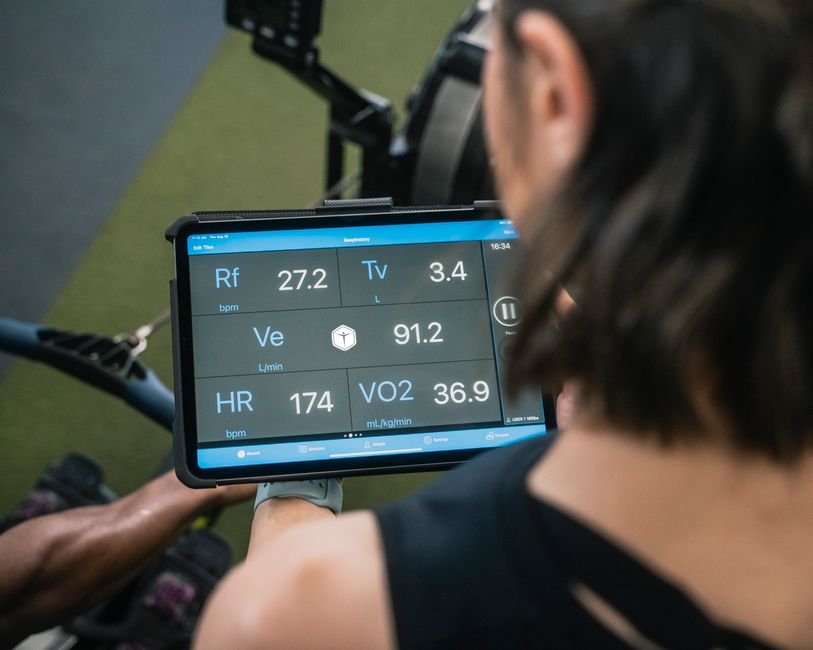
If you are a man over 50 wearing a Garmin, Apple Watch, WHOOP, or Oura, there is a decent chance one number quietly matters more for longevity than half the lab panel you paid for last quarter. That number is VO2 max. Your wearable won’t measure it perfectly, and the marketing around it can get a little carried away, but the underlying signal is real.
What matters isn’t whether your watch thinks you are at 38.7 versus 40.1. What matters is whether your cardiorespiratory fitness is trending up, flat, or down while the birthdays keep showing up with rude punctuality. For men over 50, VO2 max longevity wearable tracking is useful precisely because it turns a vague concern about “staying fit” into a number tied to years of life, exercise capacity, and how hard your body can still work when asked.
The practical takeaway is simple: use the wearable for trend tracking, use the training for adaptation, and use a little restraint before turning one noisy daily reading into a midlife identity crisis.
What VO2 Max Actually Measures and Why It Predicts Longevity Better Than Most Lab Tests
VO2 max is the maximum amount of oxygen your body can use during intense exercise. In plain English, it is a measure of how well your heart, lungs, blood vessels, and muscles work together when the demand goes up. That’s why it tells you more than a single resting metric can.
The long-run data here is unusually strong. The Journal of the American College of Cardiology followed 5,107 men in the Copenhagen Male Study for 45 years. Men in the highest cardiorespiratory fitness group, with an average VO2 max of 49.6 mL/kg/min, lived 4.9 years longer than men in the lowest group, whose average was 20.7 mL/kg/min, even after adjusting for smoking, BMI, blood pressure, and socioeconomic status. That isn’t a tiny edge. That’s a different aging trajectory.
This is the useful reframe: VO2 max isn’t just a fitness score. It’s a reserve-capacity score. It tells you how much room you have when life asks for more, whether that means climbing stairs without feeling gassed, recovering from illness, or training hard enough to hang on to performance later in life.
That doesn’t make cholesterol, ApoB, blood pressure, or glucose irrelevant. It just means VO2 max captures something broader and harder to fake. A respectable lipid panel can coexist with mediocre fitness. The body is annoyingly capable of holding contradictory truths at once.
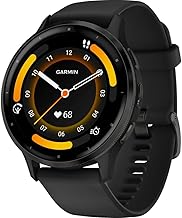
Garmin Venu 3 GPS Smartwatch
$289
This article contains affiliate links. We may earn a commission at no extra cost to you.
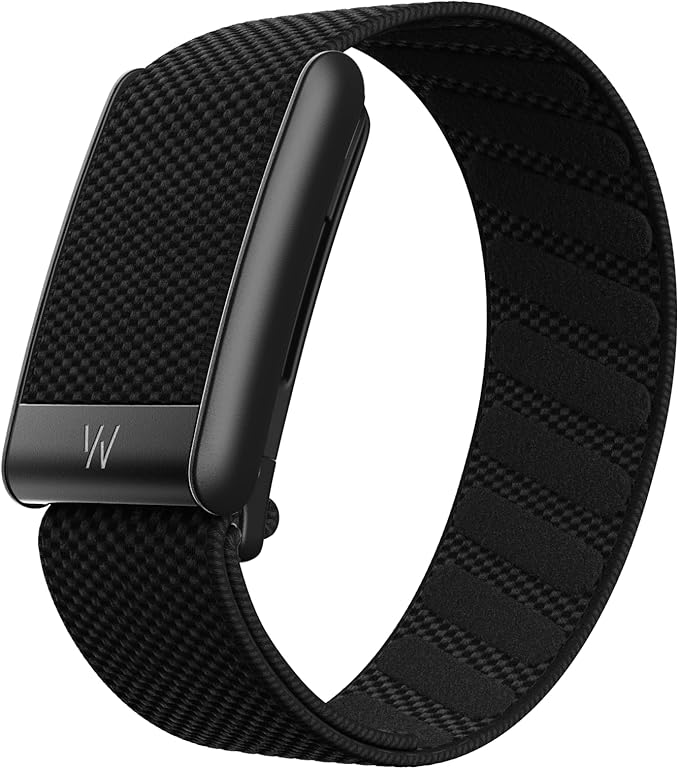
WHOOP MG Health Monitor
$239.00
This article contains affiliate links. We may earn a commission at no extra cost to you.
Where You Stand: VO2 Max Longevity Wearable Benchmarks for Men Over 50
Most readers don’t need more theory. They need a benchmark. For men aged 50 to 59, the Cooper Clinic cohort norms place a VO2 max below 25 mL/kg/min in the poor range, 30 to 34 as average, 39 to 45 as good, and above 46 as excellent. That gives you a useful first pass when you open the app and see the number staring back.
The more important piece is what happens when you move the number. Journal of the American College of Cardiology reporting on Kokkinos and colleagues found that each 1-MET increase in exercise capacity, roughly 3.5 mL/kg/min, is associated with a 12 to 15 percent reduction in all-cause mortality. So moving from 31 to 35 isn’t cosmetic. It’s meaningful.
For a 55-year-old executive who still trains a few times a week, that usually means stop judging the score like a teenager comparing vertical jumps and start treating it like a risk marker you can influence. If your wearable estimates you at 28, the goal isn’t perfection. The goal is to climb out of the poor or low-average bucket and keep climbing.
There is also a psychological advantage to category shifts. Going from poor to average, or average to good, is easier to stick with than chasing a cartoonishly precise number. Humans like scoreboards. Just try not to let the scoreboard start running the team.
How Your Wearable Estimates VO2 Max and When to Trust the Number
Wearables estimate VO2 max rather than measure it directly. They combine pace, heart rate, movement, and demographic inputs, then feed that through an algorithm. That means the number is always part physiology, part model, and part device-specific guesswork.
The current validation data says to be cautious about absolute readings. A 2025 review from Empirical Health citing published validation work found the Apple Watch underestimated VO2 max by a mean of 6.07 mL/kg/min, with a mean absolute percentage error of 13.3 percent. Garmin devices using FirstBeat-style methods have shown a typical error rate around 5 to 7 percent in published and industry-cited validation discussions. WHOOP reports a mean absolute error of 3.7 mL/kg/min and an 8.0 percent mean absolute percentage error, but that claim still lacks independent peer-reviewed confirmation.
That’s the straight take: the direction is more trustworthy than the destination. If your Apple Watch says 33, the “true” lab number might be meaningfully different. But if the device shows you at 33 in January, 35 in March, and 37 in June under similar training and measurement conditions, that trend is probably telling you something real.
Trust the number more when the inputs are clean: consistent outdoor runs or brisk walks, reliable heart-rate capture, stable sleep, and no wild swings in hydration or heat. Trust it less after bad sleep, a couple of drinks, a hot afternoon run, or a firmware update that promises to change everything and mostly just rearranges the buttons. The algorithm isn’t magic. It’s an estimate wearing a very confident watch face.
The Protocol That Works: How to Improve VO2 Max After 50
If you want the number to improve, the best-supported answer isn’t “exercise more.” It’s targeted interval work at a high enough intensity to force adaptation. One of the best-studied formats is the Norwegian 4×4 protocol: four minutes at 85 to 95 percent of max heart rate, followed by three minutes of active recovery, repeated four times.
TrainingPeaks in its “Fast After 50” guidance and Harvard Health Publishing in its coverage of HIIT for older adults both point to this style of interval training as one of the most reliable ways to improve aerobic capacity later in life. The reason is simple: the effort is long enough and hard enough to stress the system that drives VO2 max rather than just burning calories and calling it a day.
The age-related decline data matters here too. Older endurance athletes who continue high-intensity interval work after 50 tend to see VO2 max decline closer to 0.5 percent per year, while those training mostly at low to moderate intensity see declines more like 1 to 1.5 percent per year. Nobody is outrunning age forever. But the slope of the line is negotiable.
A practical starting point is two sessions per week, not five. Use your wearable’s heart-rate zones to keep the work honest. Warm up thoroughly, hit the four-minute intervals hard enough that conversation becomes unrealistic, recover actively, and stop pretending a casual shuffle counts as interval training because the watch buzzed and said “great job.” It isn’t supposed to feel elegant.
Beyond Intervals: Sleep, Recovery, and the Full Picture
VO2 max is often treated like an isolated training output, but recovery quality changes the trendline. A single bad night can nudge the next day’s estimate down, and several bad weeks can blunt the gains you would otherwise expect from a solid block of training.
The underlying point holds up well here: poor sleep can drag next-day wearable VO2 max readings down by roughly 3 to 5 percent, and chronic sleep restriction below seven hours per night is associated with weaker VO2 max improvements over a 12-week training block, as summarized in Sleep Medicine Reviews. That means the reader checking his score after five broken hours of sleep isn’t necessarily watching his fitness collapse. He is often watching recovery debt show up in the metric.
This is where broader wearable data becomes useful instead of decorative. Sleep score, resting heart rate, and HRV help explain why the VO2 max estimate is moving. If your aerobic trend stalls while sleep quality is poor and HRV is suppressed, the answer may not be “train harder.” It may be “stop treating recovery like optional admin.”
That’s also why articles like Sleep Score Decoded: Oura vs WHOOP vs Garmin and Wearable Sleep Tracking Accuracy Comparison: Oura, WHOOP, Garmin matter alongside fitness metrics. The devices are most useful when they show you relationships, not when they hand you one supposedly sacred number.
How to Track Progress Without Obsessing Over One Number
A good tracking system should make you more consistent, not more neurotic. Real improvement in VO2 max after 50 usually takes 8 to 12 weeks of steady work, with two to three interval sessions per week. Daily fluctuations, by contrast, can swing 3 to 5 percent because of sleep, hydration, heat, illness, or measurement conditions.
That means month-over-month trendlines matter far more than the reading from a random Tuesday after a late dinner and six hours on Zoom. Apple Watch and Garmin both show longer rolling trends, while WHOOP emphasizes a 30-day moving average. Use whichever display your device offers, but judge progress on a horizon long enough to filter out noise.
One practical way to do this is to check the number once a week under roughly similar conditions, then review the 30- or 90-day trend at the end of each month. If the line is flat after 8 to 12 weeks, change something specific: interval intensity, training frequency, recovery habits, or body composition. If the line is rising, don’t keep fiddling just because the internet has another clever protocol to sell you.
It also helps to pair VO2 max with a second metric that keeps you honest in a different way. That might be resting heart rate, pace at a fixed heart rate, or a recovery marker such as the one discussed in HRV for Men Over 45: What It Means and How to Track It. The point isn’t to build a dashboard worthy of a small hedge fund. The point is to confirm whether your training is actually changing your capacity.
Frequently Asked Questions
Can I reliably track VO2 max trends with a smartwatch if the absolute number is off?
Yes, usually. The published validation work suggests the absolute estimate can miss by a meaningful margin, especially on Apple Watch, but the direction of change is still useful when your training conditions are fairly consistent. Treat the number like a trend signal, not like a lab result carved into stone.
How long does it take to see a measurable improvement in VO2 max after starting HIIT in my 50s?
Most readers should think in blocks of 8 to 12 weeks, not a few workouts. Two to three well-executed HIIT sessions per week is enough to move the needle if recovery and consistency are in place.
What matters more for longevity, VO2 max or muscle strength?
That’s the wrong fight. VO2 max is one of the strongest predictors of longevity, but muscle strength still matters for function, metabolic health, and preserving independence. For most men over 50, the better answer isn’t either-or. It’s aerobic capacity plus strength training.
Should I get a lab VO2 max test instead of relying on my wearable’s estimate?
A lab test is better if you want a true baseline or if the wearable number seems wildly inconsistent with your performance. But many readers don’t need one right away. If the wearable trend is stable and useful, it can guide training just fine. Lab testing becomes more valuable when precision changes a decision.
Is the Norwegian 4×4 protocol safe for someone who hasn’t exercised regularly in years?
Not automatically. The format is effective, but the intensity is real. If you have been sedentary, have known cardiovascular disease, or have symptoms with exertion, get medical clearance and build some base conditioning first. The protocol works best when the body is prepared for it.
The Bottom Line
VO2 max deserves a place near the top of the scoreboard for men over 50 because it tracks something bigger than fitness vanity. It tracks how much physiological headroom you still have. Use your wearable to follow the trend, train hard enough to move it, and let better recovery do some of the heavy lifting too.
This article is for informational purposes only and is not financial advice. Consult a qualified professional for personalized guidance.
Leave a Reply