

Most men don’t need another vague wellness lecture. They need a vitamin D testing guide men over 45 can actually use when the lab portal shows a number, the doctor says “normal,” and the body is still sending less encouraging feedback.
This is where the conversation usually goes sideways. One camp acts like vitamin D is a magic key that opens every locked door in middle age. The other treats it like a minor checkbox unless your bones are already filing a formal complaint. Neither approach is especially useful for a 52-year-old who trains, works too much, and would prefer not to guess.
The practical answer is simpler. Track serum 25-hydroxyvitamin D, understand the difference between “sufficient” and “optimal,” get tested when the risk factors fit, and retest on a schedule that reflects biology instead of impatience. Vitamin D isn’t a miracle. It’s also not trivial.
Why Vitamin D Testing Matters More After 45
Vitamin D deficiency is common enough that assuming you are probably fine isn’t a serious strategy. It’s more like hoping your smoke detector batteries are good because the ceiling has been quiet lately.
In Frontiers in Nutrition, Cui and colleagues analyzed NHANES data from 2001 to 2018 and found that 22.0% of U.S. adults had moderate vitamin D deficiency, defined as serum 25(OH)D between 25 and 50 nmol/L. Another 40.9% had insufficiency between 50 and 75 nmol/L. Only 34.5% were above 75 nmol/L. That means the “looks fine on paper” crowd is smaller than most people assume.
The global picture isn’t much better. Another Frontiers in Nutrition analysis covering population-based studies from 2000 to 2022 estimated that 47.9% of the world had serum 25(OH)D below 50 nmol/L. Prevalence declined only slightly over two decades, which is a polite way of saying this problem hasn’t solved itself.
Why does that matter more after 45? Because this is the decade when small deficits stop being academic. Bone strength, immune resilience, recovery, and cognitive sharpness all matter more when the margin for error narrows. A 28-year-old can sleep four hours, eat like a raccoon, and still convince himself he is thriving. A 57-year-old usually gets feedback faster.
That doesn’t mean every dip in energy is vitamin D. It means vitamin D belongs on the shortlist when a man over 45 is trying to understand why recovery feels slower, winter feels heavier, or routine lab work somehow says everything is fine while the body disagrees.
If you are building a bigger annual testing strategy, this is one marker inside a broader system, not a solo act. The Complete Men Over 50 Bloodwork Panel is the more complete map. Vitamin D just happens to be one of the easier misses.
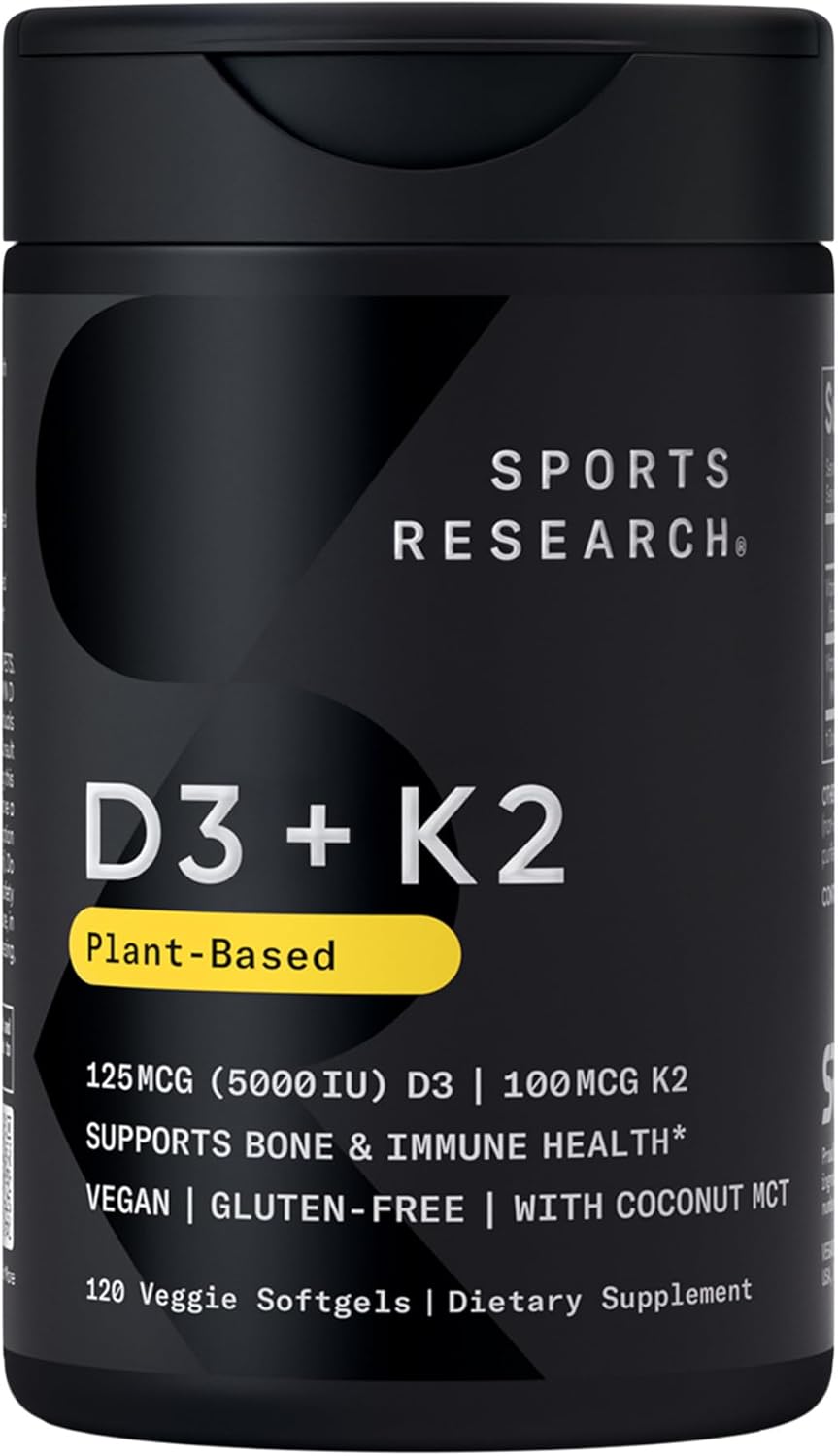
Sports Research Vitamin D3 + K2 (5000 IU)
This article contains affiliate links. We may earn a commission at no extra cost to you.
What the 25(OH)D Test Actually Measures
The 25(OH)D test measures 25-hydroxyvitamin D, also called calcidiol. That’s the main circulating form of vitamin D in blood, and it is the marker clinicians use because it reflects vitamin D coming from sun exposure, food, and supplements.
The Office of Dietary Supplements at the National Institutes of Health explains the sequence clearly. Vitamin D enters the body through skin production or intake, then the liver converts it into 25(OH)D. After that, the kidneys convert it into the active form, calcitriol. The active form matters biologically, but it isn’t the right routine tracking marker because it is tightly regulated and doesn’t give the same stable picture of overall status.
That stability is the real point. According to the NIH fact sheet, 25(OH)D has a half-life of about 15 days. So the test isn’t capturing what happened after one sunny Saturday or one enthusiastic week of supplements. It’s giving you a broader status snapshot.
This is where the naming gets in the way. Men see “vitamin D” on a supplement bottle, then “25-hydroxyvitamin D” on a lab panel, and assume somebody in medicine simply enjoys making ordinary things sound expensive. Fair criticism. But the distinction matters because 25(OH)D is the number worth watching.
If you want the simplest translation, here it is: 25(OH)D is your vitamin D scoreboard. It isn’t the whole game, but it tells you whether the inputs are landing well enough to matter.
That’s also why this marker fits naturally beside other trend-based labs. The useful question isn’t whether a single result looks dramatic. It’s whether the number makes sense in the context of symptoms, season, supplement use, and the rest of your panel. Optimal Biomarker Ranges for Men Over 50 is the broader argument for thinking that way.
Normal vs. Optimal: What Your Vitamin D Number Actually Means
This is where a lot of men get irritated, and not without reason. The lab report offers a reference range. The internet offers a more ambitious target. Then everyone talks past each other.
The National Academies, as summarized by the NIH Office of Dietary Supplements, define sufficiency for most people as at least 50 nmol/L, or 20 ng/mL. That threshold is built around avoiding deficiency-related problems in the general population. It answers the question, “Are you low enough for concern?”
It doesn’t necessarily answer the question most Resilience readers actually care about, which is whether the number is strong enough for better long-term performance and fracture protection as the years stack up.
The International Osteoporosis Foundation recommends 75 to 100 nmol/L, or 30 to 40 ng/mL, for adults over 65 to support the best anti-fracture effect. Many functional-medicine practitioners push the upper bound further and target 75 to 125 nmol/L, or 30 to 50 ng/mL, when the goal is broader immune or cognitive support.
That doesn’t automatically make the higher target correct for everyone. It does show that “normal” and “optimal” aren’t synonyms. One is a population floor. The other is an argument about where better outcomes may begin.
This is the part where medical gatekeeping can become annoying. A result of 22 ng/mL may be technically above deficiency depending on the lab and the standard being used, but that doesn’t mean it is the number a serious adult wants to park at indefinitely. Reference ranges are useful. Worshiping them is optional.
The better move is to treat vitamin D the way grown-ups treat most biomarkers: ask what threshold is tied to the outcome you care about. If your goal is simply avoiding clear deficiency, 50 nmol/L may be enough. If your goal is stronger fracture protection later in life, the International Osteoporosis Foundation’s 75 to 100 nmol/L range matters more. If your goal is pushing toward a stronger performance-focused range, the conversation gets more conditional and should be interpreted in the context of symptoms, risks, and follow-up testing.
That’s also why Vitamin D for Men Over 50: Optimal Blood Levels and Supplement Brands exists as a separate question. Testing tells you where you are. Supplement decisions come after that, not before.
When to Get Tested: A Practical Vitamin D Testing Guide for Men Over 45
Routine screening for everybody isn’t the current guideline. The Endocrine Society’s 2024 clinical practice guideline recommends against routine vitamin D screening in healthy adults under 75. That’s the official position, and it is worth knowing.
It isn’t the same as saying testing is pointless.
The same guideline supports testing when there is a real reason to suspect a problem. That includes bone pain, muscle weakness, osteoporosis, malabsorption conditions, chronic kidney disease, medications that alter vitamin D metabolism, and limited sun exposure. Those aren’t fringe scenarios. They are ordinary adult-life variables.
For men over 45, the practical checklist is less about chasing perfect wellness and more about matching the lab to the situation. Testing makes sense when:
- you have symptoms that fit deficiency, such as muscle weakness or bone discomfort
- you spend most days indoors or live through long low-sun winters
- you have osteoporosis, low bone density, kidney disease, or a malabsorption issue
- you are taking medication known to affect vitamin D metabolism
- you started supplementing and want to know whether the dose is doing anything
- you keep hearing “normal for your age” when what you feel is “worse than two years ago”
That last one matters more than some clinicians like to admit. Men in this audience are often not trying to self-diagnose with a podcast and a flashlight. They are trying to avoid being waved away because the number isn’t bad enough to trigger a system response.
Testing is probably less urgent if you feel well, have no obvious risk factors, get regular sun exposure, and aren’t trying to correct a known issue. In that case, it may be one of several optional markers rather than the front of the line.
There is also a practical split in goals. If you want insurance-guided care and the cheapest route, physician-ordered testing makes the most sense. If you want speed, privacy, or you are dealing with a provider who treats every performance-focused lab question like a character flaw, direct access options can be more efficient. How to Get a Full Blood Workup Without a Doctor’s Order covers that larger route.
How Often to Retest After Starting Supplementation
This part gets mangled all the time because people test too soon, see a small change, and assume the supplement failed. Biology isn’t Amazon Prime.
GrassrootsHealth recommends retesting serum 25(OH)D after 8 to 12 weeks when you start vitamin D supplementation or change the dose. That timing is practical because it gives blood levels enough time to approach a new steady state. Testing after two weeks mostly tells you that the calendar can still count.
The RACGP guidance points in the same direction: don’t rush repeat testing before the biology has had time to settle. For most men trying to correct a deficiency or move from low-normal into a more useful range, 8 to 12 weeks is the sensible first retest window.
Once the number is where you want it, the cadence usually gets easier. Annual retesting is generally enough for maintenance, especially once levels are above 75 nmol/L, or 30 ng/mL. That keeps the marker in your normal health review without turning it into a hobby.
Season can change that. Men living at higher latitudes may want a late-winter check because vitamin D status often drifts lower after months of weaker sunlight. That isn’t over-testing. That’s recognizing that January and August aren’t the same environment.
The practical rule is straightforward:
- initial test if symptoms or risk factors justify it
- retest 8 to 12 weeks after starting or changing supplementation
- move to annual testing once levels stabilize
- consider a seasonal late-winter check if sunlight exposure drops hard for part of the year
This is one of those rare health routines where patience actually saves money. Testing too early tells you less. Testing on a stable schedule gives you a cleaner trend.
Your Options for Getting Tested: Clinical Lab vs. At-Home Kits vs. Biomarker Platforms
Most men have three realistic ways to get a vitamin D test, and the right choice depends less on ideology than on hassle tolerance.
The first option is a physician-ordered lab through a major network like Quest or LabCorp. This is usually the cheapest route when insurance covers it, and it fits men who already have a cooperative primary-care doctor or specialist. It’s also the slowest when the system insists on gatekeeping a basic lab request like it is nuclear launch access.
The second option is a direct-to-consumer at-home test. Everlywell markets finger-prick vitamin D testing in roughly the $49 to $99 range, with results typically arriving in five to seven days. Healthline’s 2024 review of at-home vitamin D testing describes the same basic tradeoff: more convenience and privacy, less physician involvement, and usually full out-of-pocket cost.
For a time-poor executive, that convenience matters. So does knowing who an at-home kit isn’t for. A finger-prick option is less appealing if you want insurance reimbursement, need broader clinical interpretation, or dislike home sample collection enough that the kit will sit unopened on the counter for three weeks like a tiny monument to good intentions.
The third option is a broader biomarker membership platform such as InsideTracker or Function Health. These platforms include 25(OH)D inside larger panels and are built for trend tracking over time. That makes sense if vitamin D is one of many markers you care about, not the only one.
The tradeoff there is cost and scope. A platform is overkill if all you need is a single vitamin D status check. It becomes more appealing when you already want longitudinal tracking for lipids, inflammation, glucose regulation, hormones, or other markers tied to aging and performance.
So the honest ranking looks like this:
- choose a clinical lab if you want the lowest cost and a conventional care path
- choose an at-home test if convenience and privacy matter more than insurance
- choose a biomarker platform if vitamin D is part of a wider self-tracking system
None of these options is automatically superior. They solve different friction points. The goal isn’t to pick the most sophisticated route. The goal is to get a usable 25(OH)D result and act on it intelligently.
Frequently Asked Questions
Can low vitamin D cause low testosterone in men over 45?
This article’s source set doesn’t establish that low vitamin D directly causes low testosterone, so it would be sloppy to claim that. What is fair to say is that men over 45 often investigate both issues because fatigue, lower recovery, and reduced physical sharpness can overlap. If testosterone is your main concern, treat it as a separate lab question rather than assuming vitamin D explains everything.
Is the 25(OH)D vitamin D test covered by health insurance?
It often is when a clinician orders it and the testing rationale fits symptoms or risk factors, but coverage depends on your plan and the ordering context. Physician-ordered labs are usually the best bet for coverage. Direct-to-consumer and at-home tests are more likely to be out of pocket.
Do I need to fast before a vitamin D blood test?
The sources used for this article don’t identify fasting as the central issue for routine vitamin D testing. The more important practical point is to use the same testing context when you are trending results over time so comparisons stay clean. If your lab gives specific instructions, follow those instead of improvising.
What vitamin D level is considered too high or toxic?
This article is focused on testing interpretation and retesting cadence, not on defining a toxicity threshold beyond the ranges discussed in the source material. If your result is far above the reference range after supplementation, that is the moment to bring the number back to your clinician and review dose, frequency, and any other relevant labs.
Can I test my vitamin D at home without a doctor’s order?
Yes. Direct-to-consumer finger-prick kits are one of the main access paths described in the article, and they are built for exactly that use case. They make the most sense when convenience and privacy matter more than insurance coverage or a same-visit physician interpretation.
Vitamin D testing isn’t complicated once the noise is stripped away. Measure 25(OH)D, know whether you are aiming for simple sufficiency or a more ambitious optimal range, test when the risk factors fit, and retest after 8 to 12 weeks instead of two impatient weekends. For men over 45, the useful move isn’t guessing harder. It’s running the lab, reading the number in context, and treating trend data like a tool instead of a personality.
Continue reading: Read the pillar — Biomarkers & Lab Testing
This article is for informational purposes only and is not financial advice. Consult a qualified professional for personalized guidance.
Leave a Reply