
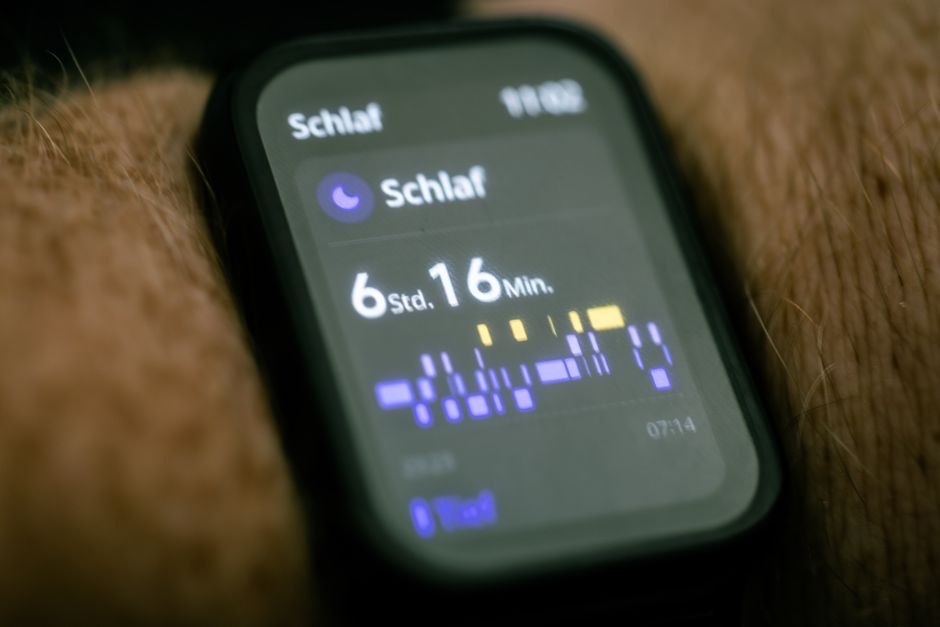
If you are comparing Oura Ring Gen 5 vs WHOOP 5.0, the real question is not which one has prettier charts. It is which device gives a 55-year-old man useful recovery data without turning basic self-awareness into a part-time job.
That matters because sleep gets less forgiving with age. Sleep Foundation reports that 40% to 70% of older adults deal with chronic sleep problems, and many cases go undiagnosed. Deep sleep tends to shrink, circadian timing shifts earlier, and recovery starts taking longer than it did at 35. A wearable cannot fix that. It can, however, make the pattern easier to see.
The short version is simple. Oura is better for the man who wants discreet overnight tracking, solid sleep staging, and one readiness number he can check before coffee. WHOOP is better for the man who trains hard, wants strain separated from recovery, and actually plans to adjust workouts based on the data. If you want more context on how those scores work, this breakdown of how recovery scores actually work across Oura, WHOOP, and Garmin is worth reading next.
Hardware Face-Off: Ring vs. Band
This is the first fork in the road, and it is not trivial. Oura is a ring. WHOOP is a band. That sounds obvious until you live with each one every day.
Sleep Foundation says Oura Ring weighs roughly 4 to 6 grams, sits on the finger, and has no screen. WHOOP 5.0, as PCMag describes it, is a fabric band worn on the wrist or bicep, also with no traditional display. Oura lasts about seven days per charge. WHOOP lasts about five. On paper that difference looks small. In real use, it is the difference between “charge it once in a while” and “one more thing to remember.”
For men over 50, comfort beats novelty. A ring disappears under a dress shirt and does not announce itself in a meeting. That matters if you want sleep and recovery data but do not want to look like you are auditioning for a quantified-self documentary.
The trade-off is training feel. Some readers hate rings while gripping a barbell, swinging a kettlebell, or doing manual work. A wrist or bicep band often makes more sense there. WHOOP also wins if you want a wearable that feels built around workouts first and sleep second.
So the hardware verdict is blunt: Oura fits better into normal life. WHOOP fits better into a training routine. If you already know you hate wearing rings, the comparison ends early.
Sleep Tracking: How Each Device Scores Your Night
Oura has the cleaner sleep story. According to Sleep Foundation, it uses seven temperature sensors, photoplethysmography heart-rate sensors, and an accelerometer to estimate sleep stages, then rolls that into a Sleep Score from 0 to 100. The app also breaks the score into components such as latency, efficiency, restfulness, and time spent in deep and REM sleep.
WHOOP tracks sleep stages too, but its framework is different. PCMag notes that WHOOP emphasizes Sleep Need, sleep debt, and how much rest you need after recent strain. That is useful if you train often because it treats sleep as fuel repayment, not just an overnight report card.
For a lot of men over 50, Oura’s model is easier to use. A single sleep score plus a few drivers gives you a quick read on whether a late dinner, two drinks, or a red-eye flight wrecked the night. WHOOP asks a bit more from you. It assumes you care about the relationship between sleep and training load, not just whether you slept like a civilized adult.
That does not make WHOOP worse. It makes it narrower. If you lift three times a week, do zone 2 work, and care whether yesterday’s session should change tonight’s bedtime target, WHOOP’s sleep framework has more practical tension in it. If you mainly want to know why you woke up flat, Oura gets to the point faster.
Recovery and Readiness: Oura Ring Gen 5 vs WHOOP 5.0 on Strain and Recovery
This is where the products stop feeling similar.
Oura’s Readiness Score combines sleep quality, resting heart rate, heart rate variability, temperature trends, and recent activity into one number from 0 to 100, according to Sleep Foundation. That is tidy. It is also exactly what many time-poor readers want. Green light, yellow light, red light. Make the morning decision and move on.
WHOOP takes the opposite approach. PCMag describes a system that separates strain from recovery: daily cardiovascular strain on a 0 to 21 scale, plus a recovery status driven by HRV, resting heart rate, and sleep. That split is not cosmetic. It answers two different questions: how much stress did you put on the system, and how ready is the system today?
For men over 50, that separation is often more useful than a combined readiness number. Recovery windows usually get longer. One hard lift, one bad night, and one glass of wine too many can stack up in annoying ways. WHOOP is better at showing that your enthusiasm and your physiology are not always on speaking terms.
Oura is still the easier tool to trust if you do not want to think about training load all day. But if you are trying to avoid the classic mid-50s mistake of pushing through fatigue because the calendar says “workout day,” WHOOP has the stronger framework. For a deeper side-by-side on sleep-specific scoring, see our sleep score comparison of Oura vs WHOOP vs Garmin.
What the Metrics Actually Mean for Men Over 50
This is the part most wearable marketing glides past. Men over 50 do not just need more data. They need data that matches what aging actually does.
Sleep Foundation’s review of aging and sleep notes that circadian rhythms tend to shift earlier with age, melatonin production declines, and deep sleep decreases. That means recovery gets noisier. A mediocre night at 32 is an inconvenience. A mediocre night at 55 can show up as a worse lift, shorter patience, and the strange feeling that your brain is running half a beat behind.
That is why trendlines matter more than single-night scores. Oura is strong here because its overnight metrics make it easy to spot whether a pattern is drifting in the wrong direction over weeks. WHOOP is strong because it makes the interaction between strain and recovery harder to ignore.
There is also a credibility issue. Consumer wearables are not sleep labs. They are directional tools. That is the right way to use them. If the data helps you notice that travel weeks crush your HRV, that late meals hit restfulness, or that alcohol reliably drags recovery, the device is doing its job. If you expect a wearable to diagnose everything perfectly from your finger or wrist, that is asking a lot from a battery-powered accessory.
For readers who care about accuracy claims, this roundup on wearable sleep tracking accuracy comparison adds the missing context. The useful question is not “Which device is perfect?” It is “Which device gives me a stable enough signal to make better decisions?”
Total Cost of Ownership and Subscription Reality
This comparison gets messy once money enters the room.
Sleep Foundation puts Oura Ring Gen 5 at roughly $349 to $399 up front, plus a $5.99 monthly membership after the first month. PCMag reports that WHOOP 5.0 comes with the hardware included in the membership, which runs about $24 per month on an annual plan, $29 per month on a six-month plan, or $239 per year.
Over two years, Oura lands around $550 to $600 depending on the ring finish and subscription timing. WHOOP lands around $478 to $696 depending on plan choice. So no, WHOOP is not automatically the expensive one. It depends on how you buy and how long you keep it.
The bigger issue is value density. Oura asks for an up-front hardware commitment, then a modest ongoing fee. WHOOP flips that: lower entry friction, higher ongoing commitment. If you quit using WHOOP after six months, the subscription model feels annoying fast. If you use it consistently because the strain and recovery model changes your training behavior, the price is easier to justify.
For most men over 50 who want better sleep data and a low-friction habit, Oura is the safer spend. For the man already paying attention to programming, recovery days, and training intensity, WHOOP can earn the subscription.
Oura Ring Gen 5 vs. WHOOP 5.0: The Verdict for Men Over 50
Oura wins for the executive who wants passive overnight tracking, a discreet form factor, and a readiness signal simple enough to use before the day gets noisy. It is the better fit if your main goal is seeing sleep and recovery patterns without wearing a visible band all day.
WHOOP wins for the reader who still trains with intent and wants strain separated from recovery. That structure gives you a better answer to a real midlife question: am I actually recovered, or just pretending I am because the workout is on the calendar?
If the priority is sleep-first tracking with low maintenance, buy Oura. If the priority is training feedback with a more useful recovery model, buy WHOOP.
WHOOP is not for the man who hates subscriptions, does not plan to adjust workouts based on the data, or wants the least noticeable wearable possible. Oura is not for the man who wants workout strain quantified in real time or cannot stand wearing a ring while training.
That is the whole decision. Pick the device that matches the behavior you actually have, not the one that flatters the version of you who never misses mobility work and definitely stops at one drink.
Frequently Asked Questions
Can I wear an Oura Ring and a WHOOP band at the same time without data conflicts?
Yes. They do not interfere with each other’s data collection in any meaningful software sense because each device is pulling its own sensor data into its own app. The only real conflict is practical: wearing both can feel excessive, and if the numbers disagree on a given morning, you now have two dashboards asking for your attention instead of one.
Does WHOOP’s strain score actually help prevent overtraining for someone who lifts three times a week at age 55?
It can, if you are willing to use it honestly. WHOOP’s main advantage is that it separates strain from recovery, so a rough night and a hard training day do not get blended into one vague readiness number. For a 55-year-old lifter, that can be useful because recovery debt compounds faster than ego admits. It will not prevent overtraining by itself, but it does make the warning signs harder to ignore.
How long does it take each device to build an accurate baseline for HRV and sleep patterns?
Neither device becomes useful in one night. The practical answer is that both need repeated wear over at least a couple of weeks before trendlines become more valuable than daily noise. That is especially true for HRV, which swings with stress, travel, alcohol, illness, and training load. Baselines matter more than isolated spikes.
Will a wedding ring interfere with Oura Ring‘s sensors?
Usually no, as long as the Oura ring is worn on the finger and fit Oura recommends. The bigger issue is comfort and placement. Some men do not want two rings on one hand, and some simply dislike any ring while lifting or sleeping. This is less about sensor conflict and more about whether finger wear is tolerable every day.
Which device has better sleep apnea detection – Oura or WHOOP?
Neither should be treated as a sleep apnea diagnostic tool. Both can surface patterns that suggest poor sleep quality or physiological stress, but that is not the same thing as diagnosing apnea. If snoring, daytime sleepiness, headaches, or oxygen-related concerns are on the table, a formal medical evaluation beats consumer wearable guesswork every time.
We use and recommend WHOOP for continuous recovery tracking that separates strain from actual recovery – its model tells you whether your HRV, resting heart rate, and sleep data add up to a green-light day or a rest day, which is exactly the kind of clarity men over 50 need when recovery windows get longer. If the band form factor works for you, it’s the most recovery-focused wearable on the market. Check current pricing on WHOOP.
The Bottom Line
Oura is the better buy for men over 50 who want discreet, sleep-first tracking with a simple readiness readout. WHOOP is the better buy for men over 50 who train hard enough to benefit from a separate strain and recovery model.
The wrong choice is not buying the “inferior” device. The wrong choice is paying for data you will not use.
Affiliate disclosure: If you buy through the WHOOP link above, Durable Resilience may earn a commission at no extra cost to you.
Sources
- Sleep Foundation. Oura Ring Review
- Sleep Foundation. Aging and Sleep
- PCMag. I Got the Flu While Testing the Whoop 5.0-and It Definitely Knew
- PCMag. The Oura Ring 4 is My Favorite Holistic Health Tracker
This article is for informational purposes only and is not financial advice. Consult a qualified professional for personalized guidance.
Leave a Reply