

Picking between these two watches looks simple until it isn’t. Both have bright AMOLED screens, both come from Garmin, both cost roughly $449.99, and both promise to track the parts of your life that used to happen automatically before sleep got lighter and recovery started sending invoices. But a Garmin Venu 3 vs Forerunner 265 decision for an executive over 50 isn’t really about screens, colors, or how pretty the watch face looks in a product photo.
It’s about what kind of week you actually live.
If your training is structured, measured, and pointed at a real goal, the Forerunner 265 is the stronger tool. If your week is a moving target of meetings, travel, evening workouts, half-managed stress, and a growing interest in the health signals that matter after 50, the Venu 3 makes a cleaner case. That difference matters because smartwatch shopping has a bad habit of turning into a feature-hoarding contest. Spec sheets are where sensible buying decisions go to die.
SQ Magazine reports that 27% of U.S. adults ages 45 to 64 now own a smartwatch as of 2025. That helps explain why this comparison has become such a common fork in the road. The real question isn’t which device can do more things in a vacuum. The question is which one earns wrist space on a Tuesday when you’re short on time and not interested in pretending you’re training for an ultramarathon just because the marketing copy had feelings.
The Smartwatch Choice That Won’t Fit a Simple Spec Sheet
The Venu 3 and the Forerunner 265 look like close cousins because they are. They share Garmin‘s general design language, the same price neighborhood, and the same broad pitch: put useful health and training data on your wrist. But they solve different problems.
The Venu 3 is Garmin‘s lifestyle-first watch. The Forerunner 265 is Garmin‘s training-first watch. That’s the whole argument in one line, and it matters more than any single spec. SQ Magazine’s ownership data matters here because a lot of adults in the 45 to 64 range are buying smartwatches without living like competitive runners. They want better health visibility, stronger habits, and fewer excuses. That buyer often gets talked into training features he will never use.
For an active executive over 50, the trap is buying for fantasy-week instead of real-week. Fantasy-week wakes up fully recovered, nails a threshold run on Wednesday, and studies stride length over lunch. Real-week takes a call in the parking lot, gets a 40-minute workout where it fits, and wants the watch to be helpful without becoming another job. If that sounds familiar, the Venu 3 starts with an advantage. If your calendar already has race blocks, long runs, and pacing targets, the Forerunner 265 is the one that makes more sense.
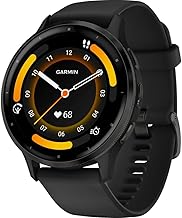
Garmin Venu 3 GPS Smartwatch
$289
This article contains affiliate links. We may earn a commission at no extra cost to you.
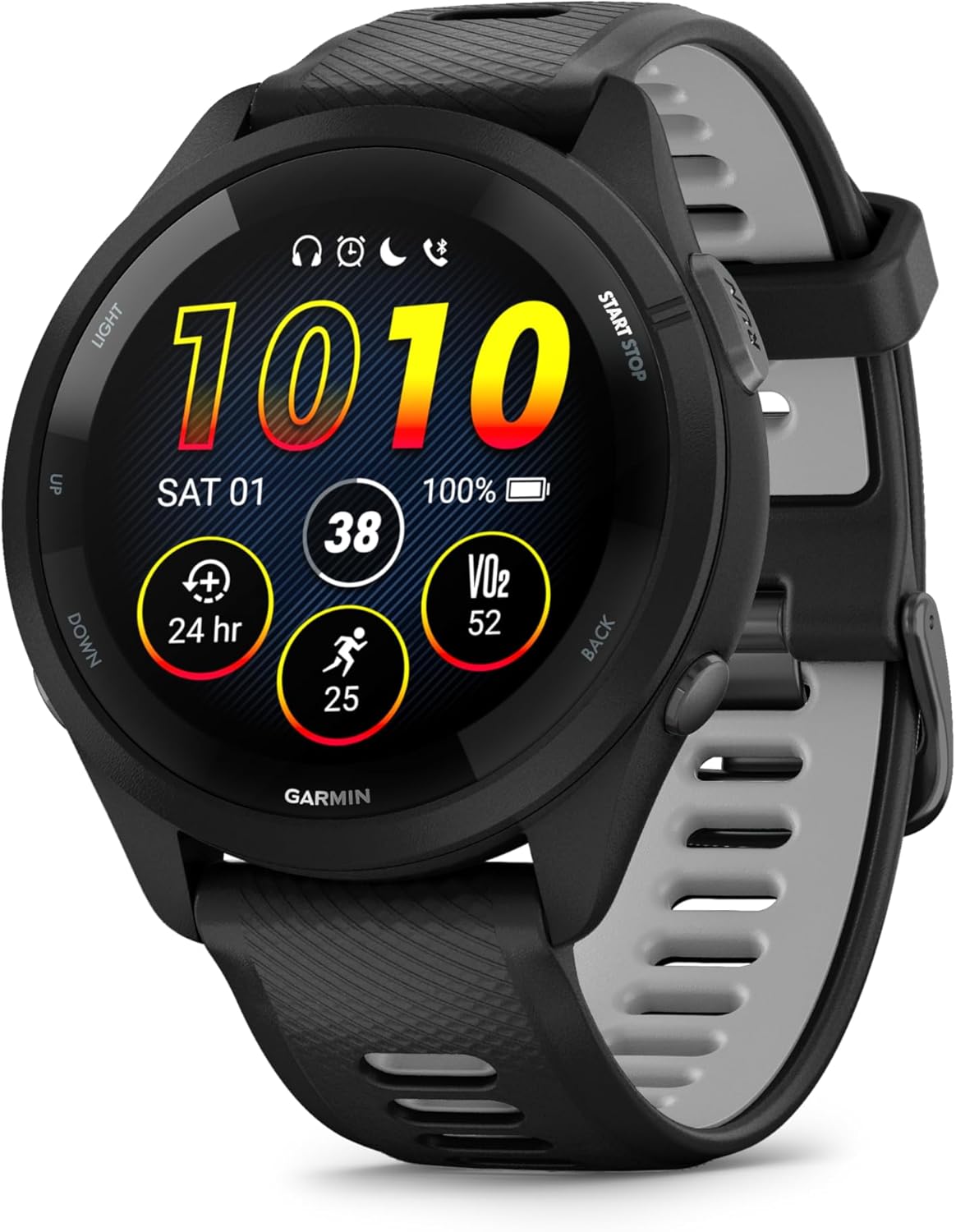
Garmin Forerunner 265
This article contains affiliate links. We may earn a commission at no extra cost to you.
Health Sensors: Gen 5 vs. Gen 4, More Than a Version Number
This is where the Venu 3 earns its keep for the older buyer who cares about health signals and not just workout logs. According to DC Rainmaker’s reviews of both watches, the Venu 3 uses Garmin’s newer Elevate Gen 5 optical heart rate sensor, while the Forerunner 265 uses Elevate Gen 4.
That isn’t just a numbering exercise cooked up by a product team with a whiteboard. The Gen 5 hardware on the Venu 3 supports on-wrist ECG readings for atrial fibrillation detection in approved regions and adds skin temperature tracking. The Forerunner 265 still covers the basics well: 24/7 heart rate, HRV status, and Pulse Ox, with solid performance in steady-state activities. But it doesn’t offer ECG or skin temperature tracking.
For a 50-plus buyer, that gap matters because the health question changes with age. At 32, a watch is often a training accessory. At 55, it starts becoming an early-warning dashboard. Not a doctor. Not a diagnosis machine. But a dashboard. The Venu 3 is better suited to that role.
That doesn’t mean the Venu 3 is magically more accurate at everything. It means the watch has a more useful health-monitoring ceiling. If what you want is broader signal coverage around heart rhythm and recovery context, the Venu 3 gives you more hardware to work with. If what you want is enough sensor quality to support training without paying attention to the health extras, the Forerunner 265 still clears the bar.
Training Depth: What the Forerunner Measures That the Venu Doesn’t
This is the dividing line, and it isn’t subtle. Garmin’s Forerunner 265 product page and Trusted Reviews both point to the same reality: the Forerunner 265 is built for people who want their watch to act like a coach, a pacing tool, and a training log all at once.
It includes Training Readiness, which rolls recovery, sleep, HRV, and acute load into a daily score. It offers multi-band GPS with SatIQ auto-select for better positioning accuracy. It tracks running dynamics like cadence, stride length, ground contact time, and vertical oscillation. It adds PacePro pacing guidance and Race Predictor. The Venu 3 doesn’t do those things.
The Venu 3 covers the broad fitness essentials well enough: heart rate, GPS pace, distance, sleep, Body Battery, and the other daily metrics most sane people actually look at. But if you’re training toward a race or using structured running blocks to push performance, “well enough” stops being enough. That’s when the Forerunner 265 starts justifying itself.
The blunt version is this: the Forerunner 265 rewards curiosity. If you want to know whether yesterday’s load should change today’s session, whether your route accuracy improved under tree cover, or whether your pacing drifted because you went out too hot, it has answers. The Venu 3 gives you awareness. The Forerunner 265 gives you analysis.
That makes the Forerunner the better fit for the buyer whose exercise has turned into a project. If your workouts are still mostly about staying sharp, keeping body composition in check, and not feeling wrecked after a travel week, the Venu 3 avoids paying for complexity you won’t use. If training itself is the point, the Forerunner wins cleanly.
Battery Life, Calls, and Daily Friction: The Venu 3’s Case for One-Watch Life
Battery life is close enough that it shouldn’t decide the purchase by itself. PCMag reports the Venu 3 can reach up to 14 days in smartwatch mode and around 5 days with always-on display. DC Rainmaker’s Forerunner 265 review puts that watch at up to 13 days in smartwatch mode and roughly 6 days with always-on display. Nobody is getting robbed here.
The more important difference is daily friction.
The Venu 3 includes a built-in speaker and microphone for wrist calls and voice assistant access. The Forerunner 265 doesn’t. That sounds minor until you think about how these watches are actually used by time-poor professionals. Taking a quick call while walking between meetings, replying through a connected assistant, or leaving the phone in a bag during a short errand isn’t a gimmick. It’s one less moment of hassle.
The Venu 3 also does a better job making the case for one-watch life. You can train with it, recover with it, sleep with it, and live in it without feeling like you’re wearing a piece of race equipment to dinner. The Forerunner 265 is lighter on the lifestyle side. That’s not a flaw. It’s just honest positioning.
PCMag’s Venu 3 review and DC Rainmaker’s Forerunner 265 review also highlight that the lifestyle gap goes beyond calls, with contactless payment support feeling less straightforward on the Forerunner side in some configurations. That kind of small convenience matters more than people admit. A watch that handles coffee, calls, and a short run without negotiation gets worn more often. And the best wearable is still the one that doesn’t spend weekdays face down on a dresser because it became mildly annoying.
Over 50, Over Trained, or Over It? Matching the Watch to Your Actual Week
SQ Magazine reports that 82% of smartwatch users prioritize fitness and health tracking, while 70% rely on activity reminders and notifications to stay consistent. That split tells the story. Most buyers want health and fitness help, but many of them also need the watch to support consistency, not just performance ambition.
For the Resilience reader, the right filter is simple: what does the next six months actually require? A 55-year-old executive training three times a week to preserve energy, body composition, and stress control isn’t the same buyer as the one chasing a half marathon time goal in the fall. Both are legitimate. They just lead to different watches.
If your goal is general health maintenance with useful biometric visibility, the Venu 3 is the safer buy. The newer sensor package, ECG support, skin temperature tracking, calls, and stronger all-day usability line up with how most busy professionals actually use a smartwatch. It’s better at being a health watch that also trains.
If your goal is measurable progress inside structured running or endurance training, the Forerunner 265 is the smarter choice. Training Readiness, multi-band GPS, running dynamics, and PacePro aren’t decorative features. They are tools for someone whose workouts are organized around progression.
The bad buying move is pretending those two identities are the same. That’s how people end up paying full price for advanced metrics they admire for four days and ignore for two years.
The Verdict on Garmin Venu 3 vs Forerunner 265 for the Executive
For the active executive over 50, this decision isn’t about which watch is objectively better. It’s about which one is better for the kind of discipline you actually practice. Garmin’s own product pages, along with pricing reported by PCMag and Trusted Reviews, put both watches at about the same retail price. So the tie-breaker isn’t budget. It’s usage.
The Forerunner 265 is the better training tool. Full stop. If you are working from a plan, chasing specific race outcomes, and care about multi-band GPS accuracy, readiness scoring, and deeper running metrics, it gives you more of what matters.
The Venu 3 is the better all-around watch that still trains very well. For the buyer who wants stronger health monitoring, useful daily convenience, and a watch that fits travel, work, walks, gym sessions, and sleep without constantly reminding him that he owns a hobby, it is the stronger pick. The ECG capability alone gives it a more adult health profile for the over-50 buyer.
That’s the straight answer: if training is your project, buy the Forerunner 265. If performance and health both matter but life still has to fit around them, buy the Venu 3.
Related: Garmin Venu vs. Garmin Forerunner: Which Training Ecosystem Fits the Executive Athlete?
Related: HRV Tracking for Men Over 45
Related: How Accurate Is Wearable Sleep Tracking?
Frequently Asked Questions
Does the Forerunner 265 have an ECG sensor like the Venu 3?
No. DC Rainmaker’s reviews note that the Venu 3 uses Garmin’s Elevate Gen 5 sensor, which supports on-wrist ECG in approved regions, while the Forerunner 265 uses the older Elevate Gen 4 sensor and doesn’t offer ECG or skin temperature tracking.
Can the Venu 3 guide structured run training with pace targets and racing predictions?
Not like the Forerunner 265 can. The Venu 3 covers the basics well, but Garmin reserves features like PacePro, Race Predictor, and deeper running dynamics for the Forerunner line. If pace targets and race planning matter, the Forerunner is the right tool.
Which watch has better battery life for a week-long business trip without a charger?
Both are good enough for that use case, but the Venu 3 has a slight edge in standard smartwatch mode at up to 14 days versus 13 for the Forerunner 265, according to PCMag and DC Rainmaker. With always-on display enabled, the Forerunner 265 is slightly better. In practice, both should cover a normal business trip if you aren’t hammering GPS every day.
Is the Elevate Gen 5 sensor enough reason to choose the Venu 3 over the Forerunner 265 for heart health monitoring?
For some buyers, yes. If the added value of ECG support and skin temperature tracking matters to you, the Venu 3 has a real hardware advantage. If your focus is mostly training load, pace, and performance data, the Forerunner 265 gives up those health extras but makes up for it elsewhere.
If you already own a Garmin Venu 2, is the upgrade to either Venu 3 or Forerunner 265 worth it?
The Venu 3 makes more sense if you want better health monitoring and the newer daily-use features like the speaker and microphone. The Forerunner 265 makes more sense if your goals changed and you now want structured run training instead of a general wellness watch. The right upgrade path depends less on the old device and more on what your next year of training actually looks like.
We use and recommend Garmin watches for serious training and health tracking. Both the Venu 3 and Forerunner 265 deliver Garmin’s best AMOLED display and reliable biometric data — the right choice depends on whether your week includes structured race training or general fitness maintenance. Check current pricing and availability on Amazon → Garmin on Amazon
If you train with a plan, the Forerunner 265 is the better tool. If you want the cleaner all-day watch for health visibility, daily convenience, and enough training support to stay honest, the Venu 3 is the better buy. Most active professionals over 50 don’t need more metrics. They need the right ones, in a watch they will actually wear.
This article contains affiliate links. We may earn a commission if you sign up through these links, at no additional cost to you.
Sources
- SQ Magazine. “Smartwatch Statistics 2026: Health Use, Brand Shares & Future Forecast.”
- DC Rainmaker. “Garmin Venu 3 In-Depth Review.”
- DC Rainmaker. “Garmin Forerunner 265/265S In-Depth Review: AMOLED in Two Sizes!”
- PCMag. “Garmin Venu 3 Review.”
- Trusted Reviews. “Garmin Forerunner 265 Review.”
- Garmin. “Garmin Forerunner 265 Product Page.”
- Garmin. “Garmin Venu 3 Product Page.”
This article is for informational purposes only and is not financial advice. Consult a qualified professional for personalized guidance.
Leave a Reply