
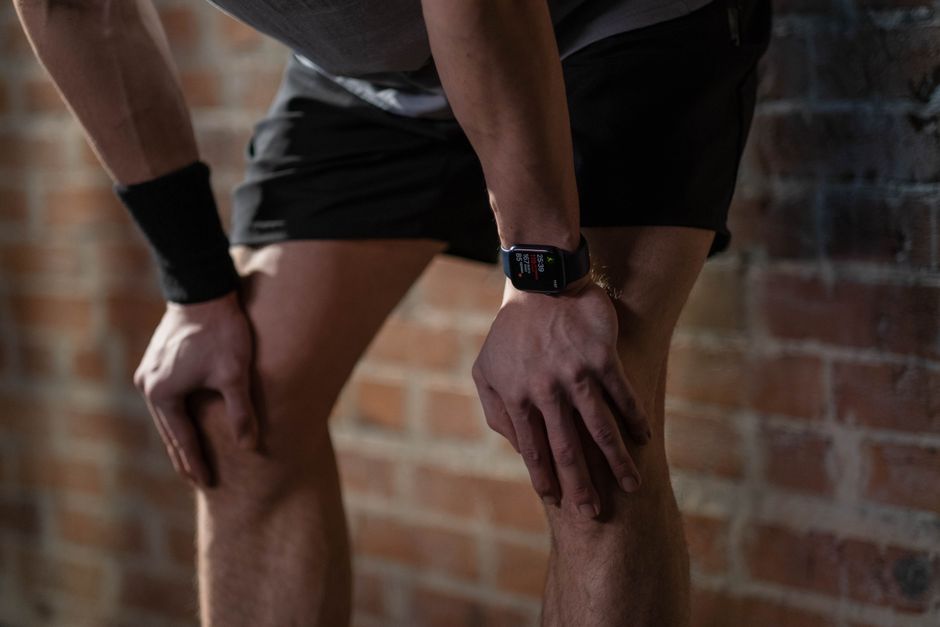
Your watch says recovery is 38%. Your ring says readiness is low. Your buddy’s WHOOP says he should train hard, which is useful information if your buddy’s nervous system, sleep debt, job stress, and bourbon intake were somehow installed in your body overnight.
That’s the first thing to understand about what is HRV and why it matters: heart rate variability is personal context, not a scoreboard. It can tell you something meaningful about how your nervous system is handling stress and recovery. It can’t tell you whether your hamstring is ready, whether you ate enough, or whether the board meeting at 8 a.m. is a good idea.
The useful version of HRV is boring in the best way. Track the trend, understand what the number is actually measuring, and stop treating one bad reading like a lab result from Mount Sinai.
What HRV Actually Measures
HRV measures variation in the time between heartbeats. Not your average heart rate. Not how “healthy” your heart is in the simple, cocktail-party sense. It’s the tiny millisecond-level fluctuation between beats as your autonomic nervous system adjusts to breathing, stress, sleep, exercise, digestion, and whatever else your day throws at it.
Shaffer and Ginsberg’s 2017 review in Frontiers in Public Health explains the key point clearly: a healthy heart doesn’t beat like a metronome. The interval between beats changes because the sympathetic nervous system and parasympathetic nervous system are constantly negotiating.
The sympathetic side is the accelerator: effort, alertness, threat, deadlines, training. The parasympathetic side is the brake: recovery, digestion, downshifting, sleep. HRV reflects how much room that system has to flex.
Higher HRV often suggests the body has more parasympathetic influence and better recovery capacity. Lower HRV often suggests more sympathetic load, acute stress, poor sleep, illness, alcohol, heavy training, or accumulated fatigue. The word “often” matters. HRV is a signal, not a verdict.
For a 55-year-old executive who trains, travels, and has a wearable on his wrist, the value isn’t that HRV reveals some hidden chamber of biology. It gives you a recurring read on autonomic flexibility. Think of it as a nervous-system dashboard light. Useful. Not the whole engine.

Whoop
This article contains affiliate links. We may earn a commission at no extra cost to you.
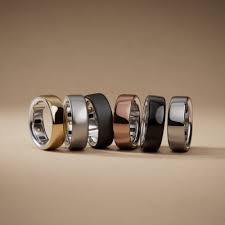
Oura Smart Rings
This article contains affiliate links. We may earn a commission at no extra cost to you.
What Is HRV and Why It Matters in a Recovery Score
Wearables don’t hand you raw physiology. They translate sensor inputs into consumer-facing scores, because “your RMSSD was down 14% against baseline” doesn’t exactly scream breakfast-table clarity.
WHOOP says HRV accounts for about 25% of its daily Recovery Score. The score compares overnight HRV against a rolling 28-day personalized baseline, then combines it with resting heart rate at 10%, sleep performance at 40%, respiratory rate at 10%, and restorative sleep stage ratio at 15%.
That weighting is revealing. Sleep still carries the largest share in WHOOP‘s model, but HRV is the biggest single biomarker input. Oura uses nighttime HRV as a major input for its Readiness Score as well, although the exact scoring formula differs from WHOOP‘s.
The important phrase is personalized baseline. A wearable shouldn’t be asking whether your HRV is better than a 34-year-old cyclist’s HRV, your neighbor’s HRV, or the guy on Reddit who appears to sleep in a cryogenic chamber. It should be asking whether today’s reading is meaningfully different from your own recent pattern.
That’s why the score can be useful. If your overnight HRV drops while resting heart rate rises and sleep quality falls, the combined picture may suggest your system is carrying more load than usual. If HRV rebounds after 3 normal nights of sleep and lighter training, that trend tells you something too.
The danger starts when the score becomes the boss. A recovery score is a weighted model built from imperfect sensors and company-specific assumptions. It’s helpful context. It isn’t a board chair with veto power over your training, workday, or sense of self.
That’s also why two devices can disagree without either one being useless. One may weight sleep differently. Another may use a different nighttime window. The number is only as good as the model wrapped around it, and the model is trying to simplify a messy human being into a tidy morning badge.
What HRV Can Actually Predict
HRV has a real evidence base, but the evidence is strongest at the population and trend level. That distinction keeps the conversation sane.
A 2025 review in Frontiers in Cardiovascular Medicine found that reduced HRV, especially SDNN below 70 milliseconds, is associated with a 1.5- to 2.3-fold higher risk of major adverse cardiovascular events. That doesn’t mean your Thursday-morning wearable score predicts a heart attack. It means lower HRV has meaningful associations with cardiovascular risk when researchers look across groups and clinical contexts.
Harvard Health Publishing reported in 2025 that people with higher HRV tend to have higher fitness levels and greater resilience to psychological stress. Again, the signal is real. It’s also broad. HRV can support the larger picture of cardiovascular fitness, stress tolerance, and recovery status.
For day-to-day use, HRV is most useful when it confirms a pattern you can feel but might otherwise dismiss. You slept 5 hours, had 2 drinks, trained hard, and woke up with a low HRV and elevated resting heart rate. The device isn’t discovering America there. It’s putting numbers around a familiar physiological debt.
Where HRV earns its keep is consistency. If your 2- to 4-week trend is drifting lower while resting heart rate is creeping up, training feels flat, and sleep is unstable, that is information worth taking seriously. If one morning is off after a stressful travel day, congratulations: your body noticed your life. Very advanced technology.
The honest claim is modest but useful: HRV can help flag stress load, recovery strain, fitness changes, and possible illness onset. It can’t diagnose the cause by itself. The number tells you the system is reacting. It doesn’t always tell you why.
That “why” still requires adult supervision. A lower trend after a hard training block means something different from a lower trend during a mild infection, a stressful deal week, or 3 nights of poor sleep. HRV becomes more useful when you pair it with the calendar, not when you stare at it in isolation.
Where HRV Falls Short: What It Doesn’t Tell You
HRV’s biggest weakness is that it can look clean while other problems are getting messy.
WHOOP’s discussion of HRV as a recovery metric points out one uncomfortable example: under-fueled athletes can show deceptively elevated HRV. The number may look like recovery while the body is actually conserving energy under metabolic stress. That isn’t readiness. That’s the dashboard being too polite.
Research has also found no significant correlation between HRV and muscle damage markers such as creatine kinase during intensive training. In plain English: your HRV can rebound before your legs, tendons, or connective tissue are ready for another hard session.
This matters for men over 50 because recovery gets more specific with age. A high HRV doesn’t mean your shoulder is ready for heavy pressing. It doesn’t prove your nutrition is adequate. It doesn’t report testosterone status, thyroid function, inflammation, tendon irritation, or whether your sleep looked good only because the algorithm missed 3 wake-ups.
That’s why HRV should sit beside other inputs: soreness, mood, grip strength if you track it, resting heart rate, sleep duration, training performance, appetite, injury signals, and the very technical metric known as “do you feel like warmed-over office furniture?”
Over-reliance creates two predictable errors. First, people train hard because the score says green while the body says no. Second, people skip useful training because the score says yellow after a harmless blip. Both are category mistakes. HRV is one column in the spreadsheet. It isn’t the spreadsheet.
The better habit is to ask what HRV can’t see. It can’t see the tendon that has been irritated for 6 weeks. It can’t see whether dinner was 900 calories short after a long ride. It can’t see whether work stress is temporary or becoming the baseline. Those details still belong to you.
How to Use HRV Without Over-Optimizing It
Harvard Health advises against comparing your HRV to other people’s numbers because there is no universal “good” value. Professional cardiovascular societies also don’t offer consumer HRV guidelines. That should cool the room a bit.
Oura and WHOOP both emphasize the same practical point: personal trends matter more than single-day readings. A 2- to 4-week baseline gives the number context. One reading mostly gives you a reason to refresh the app and pretend that counts as self-knowledge.
The right framework is simple. Look for direction, not perfection. If HRV is down for 1 day, note it. If it is down for 4 or 5 days and other signals agree, adjust the load. That might mean easier training, earlier sleep, less alcohol, more food after hard sessions, or simply not stacking a brutal workout on top of a brutal travel week.
Don’t chase a higher HRV as a standalone goal. That turns a useful biomarker into another executive dashboard nobody needed. The actions that tend to improve HRV are the same boring actions that improve almost everything else: consistent sleep, appropriate exercise, stress management, enough calories and protein, and not treating alcohol like a recovery supplement.
Also, keep device precision in perspective. Oura, WHOOP, Garmin, and other wearables use different sensors, sampling windows, and scoring models. That’s why the same person can see different readiness or recovery messages across platforms. The better question isn’t which app flatters you today. It’s whether one device, used consistently, helps you spot your own pattern.
If you want a rule that survives real life, use this: HRV explains load better than it prescribes action. It tells you your system may be more or less ready than usual. Your decision still needs context.
Frequently Asked Questions
Should I worry if my HRV is lower than the normal range for my age?
Not automatically. Harvard Health notes there is no universal good HRV value, and professional societies don’t provide consumer HRV guidelines. Your personal baseline matters more than an age-table comparison. A persistent downward trend, especially with higher resting heart rate, worse sleep, fatigue, or symptoms, is more meaningful than one number below a chart.
How long should I track my HRV before I can spot meaningful trends?
Give it at least 2 to 4 weeks. WHOOP uses a rolling 28-day personalized baseline in its Recovery Score, which is a useful clue about the time window needed for context. A single night can be distorted by alcohol, travel, illness, sensor placement, room temperature, or one lousy stretch of sleep.
Does a low recovery score mean I should skip my workout today?
No. It means you should look at the rest of the picture. If low HRV comes with poor sleep, elevated resting heart rate, heavy soreness, or unusual fatigue, a lighter session may make sense. If the score is low but you feel strong and the session isn’t high risk, it may simply be a day to train with a little more awareness.
Can breathing exercises, cold plunges, or supplements improve HRV?
Breathing and stress-management practices can influence parasympathetic activity, so they may affect HRV for some people. Cold plunges and supplements are less straightforward and often get oversold. The more reliable levers are sleep consistency, appropriate training load, alcohol reduction, and enough recovery between hard efforts.
Which wearable measures HRV most accurately for someone over 50?
The better question is which device you will wear consistently under similar conditions. Oura, WHOOP, and Garmin all estimate HRV differently. Switching devices or comparing scores across platforms muddies the trend. Pick one, use it consistently overnight, and judge changes against your own baseline.
The Bottom Line
HRV isn’t a mystical readiness oracle. It’s a practical signal of autonomic nervous system strain and recovery capacity, most useful when tracked against your own baseline over time.
Use it to notice patterns sooner. Don’t use it to outsource judgment. The number on your wrist can add context; it can’t know the whole body it is attached to.
Related: how Oura, WHOOP, and Garmin measure sleep and recovery scores differently
Related: the difference between heart rate accuracy and HRV tracking across wearables
This article is for informational purposes only and is not financial advice. Consult a qualified professional for personalized guidance.
Leave a Reply