
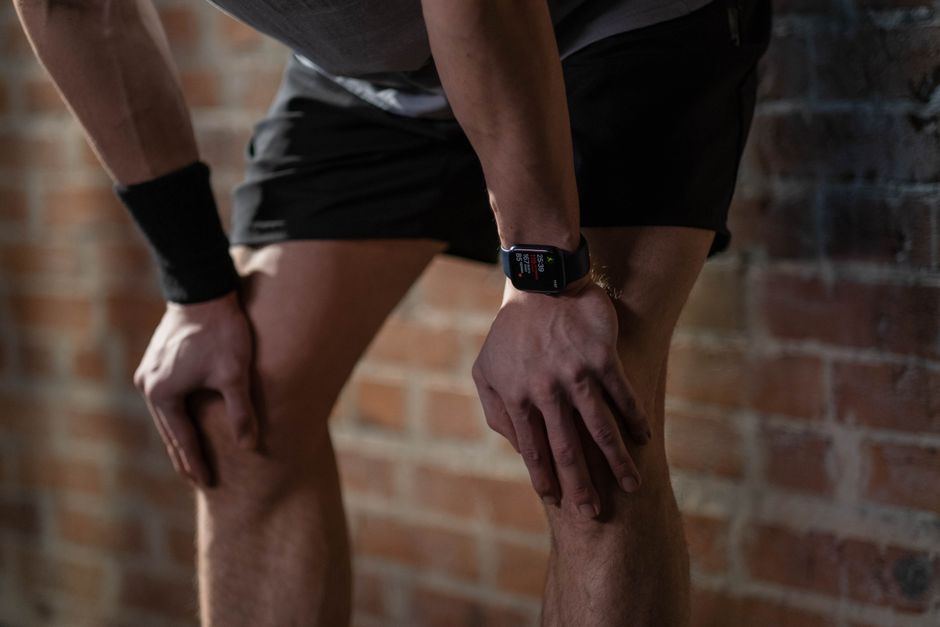
The WHOOP vs Apple Watch sleep recovery executive decision sounds like a gadget question. It isn’t. For a 50-year-old executive, the real question is whether the device helps protect the thing that still pays the bills: judgment under pressure.
That means sleep tracking has to be more than a colorful chart you glance at while drinking coffee and pretending the 11 p.m. email thread didn’t happen. The useful device is the one that turns overnight physiology into a decision you can act on before the day starts.
The short version: Apple Watch is the better all-purpose smartwatch and has strong sleep-stage performance. WHOOP is the cleaner recovery tool if you care most about HRV, readiness, and wearing the device continuously without another screen nagging at you.
Why an Executive Over 50 Can’t Afford to Ignore Sleep and Recovery
Sleep isn’t a wellness hobby for someone whose work depends on memory, processing speed, and problem-solving. It’s the maintenance window for the operating system. Skip it often enough and the machine still turns on, but it starts doing strange things at inconvenient moments.
A Cambridge and Fudan University study of nearly 500,000 adults ages 38 to 73 found that 7 hours of sleep was associated with the best cognitive performance. Shorter sleep, especially under 6 hours, and longer sleep, above 8 hours, were linked with worse processing speed, memory, and problem-solving, according to the University of Cambridge Research News.
That doesn’t mean every executive needs exactly 7 hours like a kitchen timer. It does mean sleep duration and quality belong in the same category as blood pressure, ApoB, and HbA1c: not glamorous, but too important to hand-wave.
Sleep quality matters too. A systematic review in Dementia & Neuropsychologia found that lower sleep efficiency and more wake-after-sleep-onset, or WASO, consistently correlate with worse executive function in older adults. In plain English: fragmented sleep isn’t just annoying. It can show up as slower thinking, weaker working memory, and lower mental flexibility.
That’s why the wearable question is worth taking seriously. The point isn’t to collect another dashboard. The point is to know whether last night’s sleep leaves you ready for a hard negotiation, heavy training session, or travel day, or whether the smart move is to stop treating your calendar like a dare.
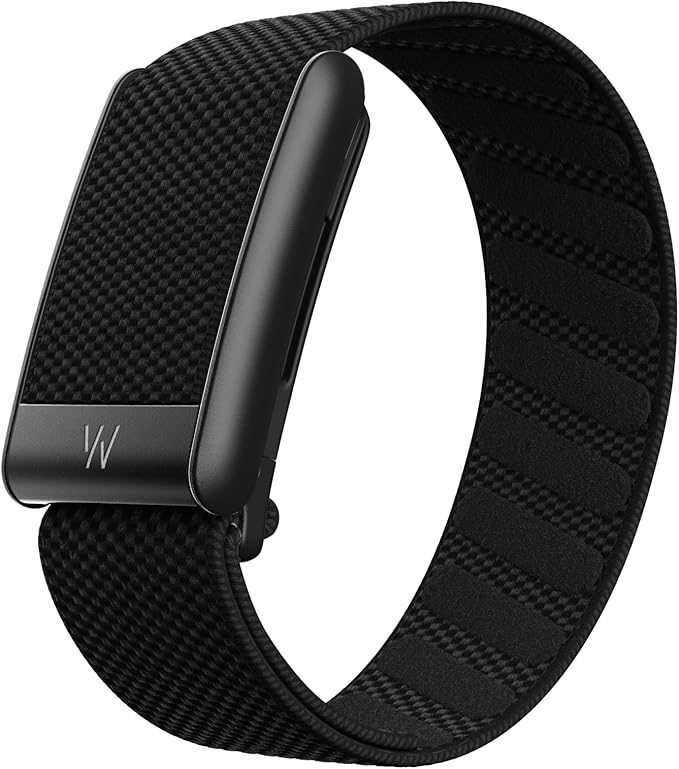
WHOOP MG Health Monitor
$239.00
This article contains affiliate links. We may earn a commission at no extra cost to you.
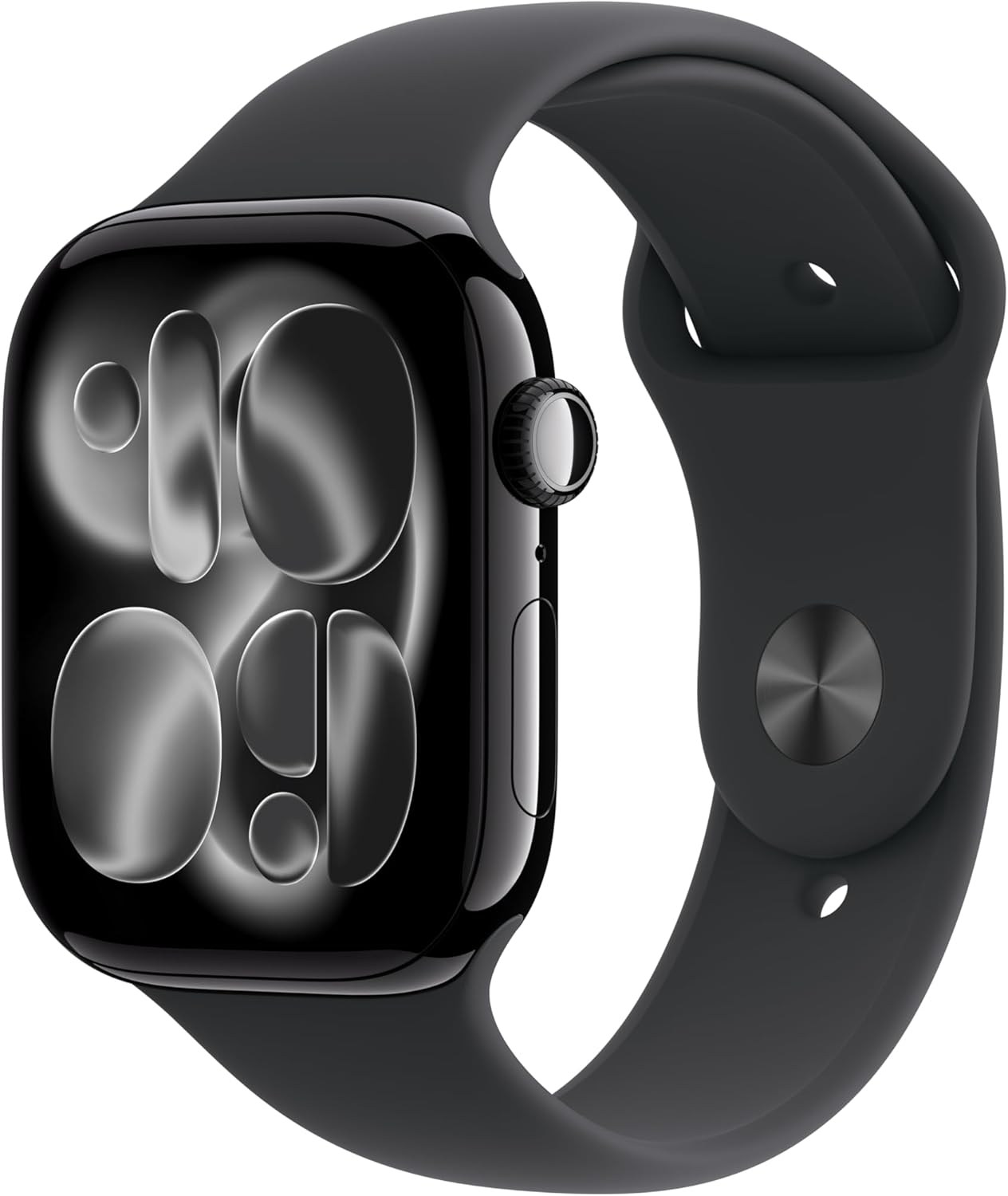
Apple Watch Series 11
This article contains affiliate links. We may earn a commission at no extra cost to you.
WHOOP vs. Apple Watch Sleep Recovery for an Executive: How Each Device Actually Tracks Your Sleep
Neither WHOOP nor Apple Watch is a clinical sleep lab. Polysomnography, or PSG, is still the reference standard. A wearable is a wrist-based estimate built from movement, heart rate, and related signals. Useful, yes. Magic, no.
The best comparison isn’t “Which one is perfect?” It’s “Which one is wrong in the most useful way?”
In a 2025 Sleep Advances lab study by Schyvens and colleagues, 62 adults wore multiple devices while researchers compared results with PSG. The Apple Watch Series 8 reached Cohen’s kappa of 0.53, which is moderate agreement, and correctly identified about 69% of REM sleep epochs. WHOOP 4.0 scored kappa of 0.37, fair agreement, but led the wrist-worn wearables for deep sleep detection at about 70% accuracy, according to Sleep Advances.
Both devices detected more than 90% of sleep epochs. That’s the easy part for most wearables: knowing when you are probably asleep. The harder job is wake detection and sleep staging. The same study found lower specificity for wake detection, with Apple Watch wake specificity ranging from 29% to 52%. That matters if you wake up repeatedly but your device gives you a cheerful sleep score that looks suspiciously divorced from reality.
A separate 2024 study in Sensors found that Apple Watch underestimated deep sleep by 43 minutes and overestimated light sleep by 45 minutes compared with PSG. That isn’t a small rounding error if you are trying to interpret why you feel flat after what looked like a decent night.
So the sleep-tracking answer is split. Apple Watch appears stronger for overall staging and REM in the cited lab data. WHOOP’s sleep-stage performance is less impressive overall, but its deep sleep detection was comparatively strong in the 2025 study. For an executive, the practical lesson is simple: use sleep-stage numbers as trend signals, not courtroom evidence.
Recovery Metrics: Where WHOOP Pulls Ahead for the 50+ Executive
WHOOP’s strongest case isn’t that it stages sleep perfectly. It’s that the product is built around recovery as the central question.
That starts with HRV. A CQUniversity and Australian Institute of Sport validation study in Sensors tested six wearable devices against medical-grade ECG during overnight measurement. WHOOP 3.0 achieved 99.7% heart-rate accuracy and 99% HRV accuracy, with the smallest HRV error among the devices tested. Its HRV standard deviation error was 3.9 milliseconds; the others ranged from 28.1 to 46.9 milliseconds.
For a 55-year-old executive, HRV isn’t a trophy metric. It’s a rough signal of autonomic recovery. A low reading doesn’t diagnose anything, and it shouldn’t run your life. But when HRV, resting heart rate, sleep performance, and respiratory rate all point in the same direction, the signal becomes harder to ignore.
WHOOP’s Recovery Score rolls HRV, resting heart rate, respiratory rate, sleep performance, and skin temperature into a single 0 to 100% readiness metric. That’s the product’s main advantage. It gives you one morning answer: push, maintain, or back off.
The Apple Watch can show useful health data inside Apple Health, and third-party apps can add readiness-style interpretations. But readiness isn’t the native center of gravity. Apple Watch is a smartwatch first. WHOOP is a recovery strap first. That difference sounds semantic until you are half-awake, already late, and deciding whether today’s training session is useful stress or just another withdrawal from the recovery account.
The recovery account is the right frame here. You can spend it on hard training, travel, poor sleep, alcohol, late dinners, and stress. WHOOP is better designed to show the balance before you overdraft it. Apple Watch can show many of the same ingredients, but it often leaves the executive work to you.
What the Apple Watch Does Better – and Where It Falls Short for Recovery-Focused Users
Apple Watch deserves more credit than recovery purists sometimes give it. It isn’t just a notification brick with a step counter.
Apple’s 2025 sleep-stage validation paper reported that the Apple Watch Series 8 sleep algorithm reached a four-stage sleep-staging kappa of 0.68 against expert-scored PSG in healthy sleepers, which is substantial agreement by common interpretation. That’s strong for a consumer wrist device, especially for someone who already lives inside the Apple environment and wants sleep data alongside heart rate trends, workouts, medications, and other health records in Apple Health.
The Apple Watch also wins on daily utility. It has an always-on OLED display, calls, messages, maps, payments, workout tracking, fall detection, and a full smartwatch operating system. If the device on your wrist needs to do ten jobs, Apple Watch is the obvious adult in the room. WHOOP doesn’t even have a screen, which is either a virtue or a deal-breaker depending on what you want.
But recovery-focused users should look hard at battery behavior. Apple Watch battery life is typically rated around 18 hours, with some models and modes stretching longer. The practical issue is removal. It has to come off the wrist to charge. If you charge overnight, you lose sleep data. If you charge in the morning, you need discipline before the first meeting hijacks the day.
WHOOP is built for continuous wear. The strap gets 4 to 5 days of battery life and uses a waterproof slide-on charger that lets you charge it while wearing it. That seems like a small product detail until you realize it prevents the classic wearable failure mode: the device is either dead, charging, or sitting beside the sink while the data you bought it for quietly disappears.
The 2024 Sensors finding still matters here: Apple Watch underestimated deep sleep by 43 minutes and overestimated light sleep by 45 minutes versus PSG. Apple Watch has excellent breadth and credible sleep tracking. But if the job is continuous recovery monitoring with minimal friction, battery and charging mechanics aren’t footnotes. They are the system.
The Practical Decision: Cost, Form Factor, and Which One Fits an Executive’s Life
The buying decision is less about which device is “better” and more about which failure mode you can live with.
WHOOP 4.0 uses a subscription model. The WHOOP Peak tier is listed at $239 per year by WHOOP Support. The strap has 4 to 5 days of battery life, no screen, and the on-wrist charger. It’s discreet under a dress shirt, doesn’t buzz with messages, and is built around sleep, strain, recovery, and daily readiness.
Apple Watch Series 10 starts at $429 according to Apple’s model comparison. It offers a full smartwatch experience: screen, notifications, apps, workouts, calls, and Apple Health integration. Its rated battery life is much shorter, and it has to leave your wrist to charge.
Over three years, WHOOP Peak at $239 per year comes to $717 before taxes or price changes. Apple Watch starts lower over that period if you keep the same watch, though cellular plans, upgrades, bands, and apps can change the math. The cost question isn’t just price. It’s whether you are paying for recovery focus or smartwatch breadth.
Choose WHOOP if you want a low-friction recovery instrument: continuous wear, strong overnight HRV validation, a single readiness score, and no screen trying to turn your wrist into a second inbox.
Choose Apple Watch if you want a broad health-and-productivity device: credible sleep staging, Apple Health integration, workout tracking, safety features, and the convenience of a full smartwatch.
Who is WHOOP not for? It isn’t for someone who wants a screen, on-wrist apps, GPS maps, calls, or a one-time hardware purchase with no subscription. It’s also not a clinical tool. If you have symptoms of sleep apnea, severe daytime sleepiness, or a partner reporting breathing interruptions, a wearable isn’t a substitute for a proper sleep evaluation.
For a recovery-first executive over 50, the recommendation is WHOOP. For a smartwatch-first user who wants decent sleep data as one feature among many, Apple Watch is the better fit.
Frequently Asked Questions
Can I wear a WHOOP strap and an Apple Watch on the same wrist at the same time?
Technically, yes, but it is awkward and unnecessary for most people. If you want both, wear one on each wrist or use WHOOP in a bicep band and Apple Watch on the wrist. The more important point is consistency. Sleep and recovery trends are more useful when the same device collects data the same way over time.
Will tracking my sleep actually improve it, or is it just data without a playbook?
Tracking doesn’t improve sleep by itself. It improves sleep only if it changes behavior: earlier caffeine cutoff, less alcohol near bedtime, more consistent wake time, better travel recovery, or fewer late-night work sessions. The device is the scoreboard. You still have to stop taking bad shots.
How long does it take for the WHOOP Recovery Score to become useful and personalized?
Expect the first few weeks to be calibration, not gospel. WHOOP becomes more useful as it learns your baseline for HRV, resting heart rate, sleep need, and strain. The early numbers are interesting; the trend after consistent wear is where the value shows up.
Is the WHOOP subscription more expensive than an Apple Watch over three years?
At $239 per year for WHOOP Peak, three years totals $717 before taxes or price changes. Apple Watch Series 10 starts at $429 upfront. If you keep the same Apple Watch for three years, it can be cheaper. If you upgrade often or add cellular service, the gap narrows.
Do I still need a clinical sleep study if I own a wearable?
Yes, if you have symptoms that point to a real sleep disorder. Wearables can show patterns, but they don’t diagnose sleep apnea or replace PSG when clinical evaluation is warranted. Loud snoring, witnessed breathing pauses, morning headaches, and persistent daytime sleepiness deserve medical attention, not just a prettier dashboard.
We recommend WHOOP for executives who want data-driven insight into sleep quality and daily recovery without the distractions of a smartwatch screen. Its focus on HRV, sleep staging, and strain management delivers exactly the metrics that matter most for maintaining cognitive and physical performance after 50. Check current pricing on Amazon →
Bottom Line
WHOOP vs. Apple Watch is really a choice between recovery focus and smartwatch breadth. Apple Watch gives you a capable health device with excellent daily utility. WHOOP gives a time-poor executive the cleaner recovery signal, fewer distractions, and a better chance of wearing the device when the important data is being collected.
This article contains affiliate links. We may earn a commission if you sign up through these links, at no additional cost to you.
Sources
- University of Cambridge Research News: Seven hours of sleep is optimal in middle and old age
- Dementia & Neuropsychologia: Sleep and executive functions in older adults
- Sleep Advances: Performance validation of six wrist-worn wearable sleep-tracking devices
- Sensors: Accuracy of Three Commercial Wearable Devices for Sleep Tracking
- Sensors: Validation of six wearable devices for sleep, heart rate, and HRV
- Apple: Estimating Sleep Stages from Apple Watch
- WHOOP Support: Membership Pricing
- Apple: Apple Watch Compare Models
This article is for informational purposes only and is not financial advice. Consult a qualified professional for personalized guidance.
Leave a Reply