
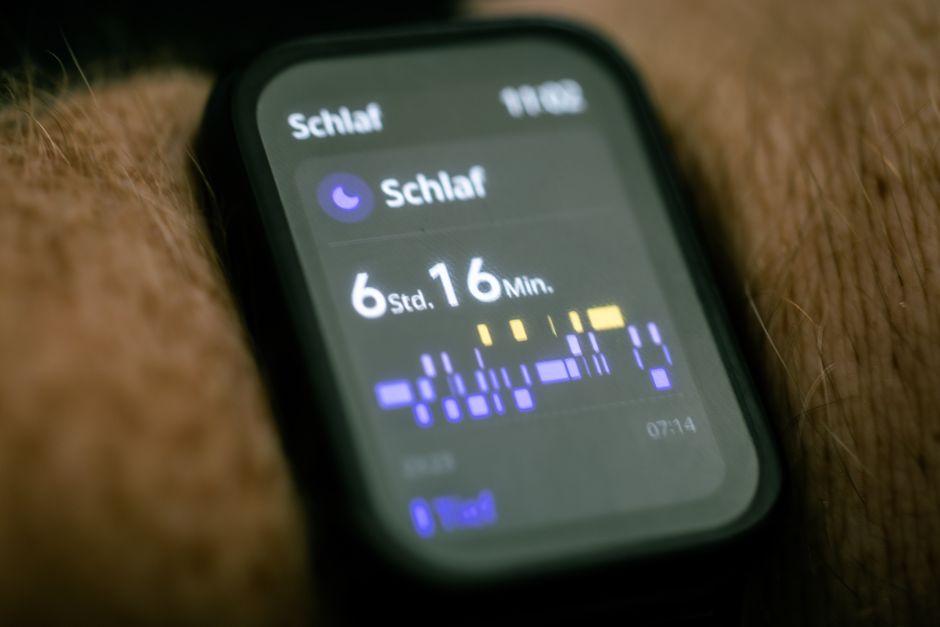
If you’ve ever looked at your sleep app at 6:12 a.m. and wondered whether that neat little REM bar is real or just expensive bedtime fan fiction, you’re asking the right question. Wearable sleep staging accuracy vs PSG is the only comparison that actually matters, because PSG is the lab standard and your ring, band, or watch is trying to approximate it from a much noisier set of signals.
For a time-poor reader, here’s the short version up front. Oura currently has the strongest case if you care about four-stage sleep classification. WHOOP is very good at sleep-wake detection and total sleep time, and its algorithm is still improving, but its REM staging is less dependable. Garmin is useful for directional sleep tracking inside a broader training ecosystem, yet its sleep stage breakdowns are the easiest to over-trust.
None of that means wearables are useless. It means you should use them for the job they can actually do. If you want clinical precision on brain-defined sleep stages, you still need a sleep lab. If you want trend data that helps you notice whether travel, alcohol, late meals, or training volume keep wrecking your recovery, a good wearable can earn its place on the nightstand.
What Is Polysomnography and Why It’s the Sleep Tracking Gold Standard
Polysomnography, or PSG, is the benchmark because it measures the thing wearables don’t: brain activity. A proper PSG setup uses EEG for brain waves, EOG for eye movements, and EMG for muscle activity. That combination lets clinicians distinguish wake, light sleep, deep sleep, and REM from the underlying physiology rather than from indirect clues.
That matters because sleep stages aren’t just movement states. REM is defined partly by eye movements and brain-wave patterns. Deep sleep is defined by slow-wave activity. Light sleep has its own signatures. A wrist or finger device can infer that those stages are happening, but it is still inferring. That’s the central gap.
Even PSG isn’t perfectly tidy. A 2021 meta-analysis in PMC/NIH found that human scorers reached about 0.76 Cohen’s kappa for inter-rater reliability overall, while N1 sleep scoring was only 0.24, which counts as fair agreement. That’s a useful reality check. The gold standard is the gold standard because it is the best available method, not because it is frictionless or magically unanimous.
So when a wearable misses a stage transition by a few minutes, that doesn’t automatically make it junk. But it does mean you should stop expecting consumer hardware to deliver laboratory certainty. The honest standard isn’t perfection. The honest standard is how close a device gets to PSG, and where it predictably drifts.
Oura Ring 4 — Silver
$349.99
This article contains affiliate links. We may earn a commission at no extra cost to you.
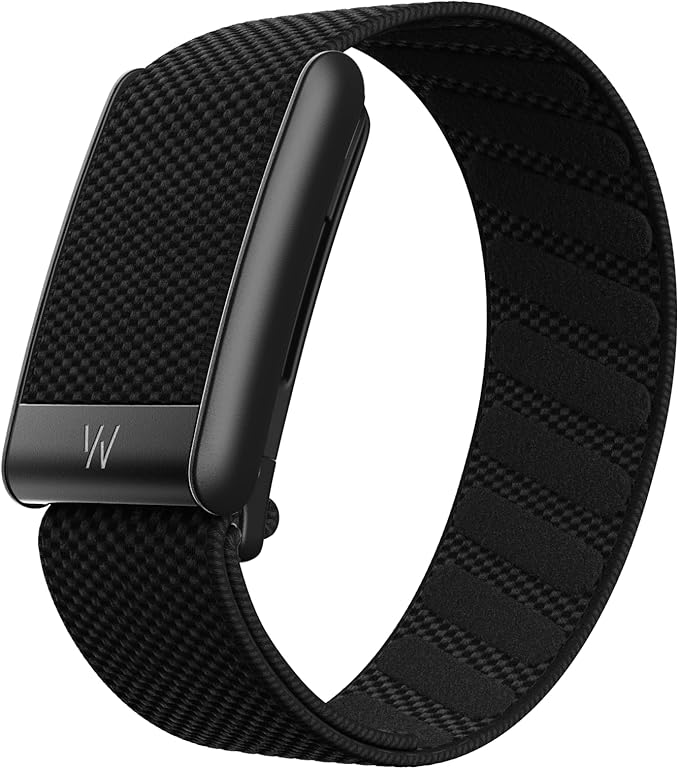
WHOOP MG Health Monitor
$239.00
This article contains affiliate links. We may earn a commission at no extra cost to you.
Garmin Venu 3 GPS Smartwatch
$289
This article contains affiliate links. We may earn a commission at no extra cost to you.
How Consumer Wearables Estimate Sleep Stages Without Measuring Brain Waves
Consumer wearables work backward from secondary signals. The main inputs are usually photoplethysmography for heart rate, heart rate variability, accelerometer data for movement, and sometimes skin temperature. The algorithms combine those signals and guess which stage most likely matches the pattern.
That’s both clever and limited. Heart rate and HRV do change across the night. Movement drops once you are asleep. Temperature patterns can help with context. But none of those signals directly capture cortical activity. That’s why two devices can show different amounts of deep sleep for the same night even when both are reading from a decent signal stream.
A 2024 systematic review in JMIR mHealth and uHealth described this gap clearly. Finger-based PPG, as used by Oura, often captures a cleaner signal than wrist-based PPG, as used by WHOOP and Garmin. The finger is simply a better location for that kind of optical measurement. That doesn’t make finger-based sensing equal to PSG, but it does help explain why some devices do better than others on stage classification.
The practical takeaway is simple. A wearable is strongest when you ask it trend questions. Did sleep get shorter this week? Did wake time increase after travel? Did recovery drop after three late dinners and two drinks? It’s weakest when you ask it lab questions, like whether last Tuesday contained exactly 68 minutes of REM. That level of precision is where the algorithms start dressing up as certainty.
Oura Ring: The Strongest Contender for Sleep Staging Accuracy
Among mainstream consumer devices, Oura has the best validation story right now. In a Brigham and Women’s Hospital study presented at Sleep Europe 2024 and later covered in Sensors, Oura Gen3 with Sleep Staging Algorithm 2.0 reached 79% agreement with PSG for four-stage classification. That’s a strong result for a consumer device trying to sort wake, light, deep, and REM without measuring brain waves.
The University of Tokyo validation cited by Oura and published in Sleep Medicine also looks good. In that study, Oura’s reported accuracy ranged from 75.5% for light sleep to 90.6% for REM sleep. Just as important, Oura did not significantly differ from PSG for total sleep time, sleep onset latency, or wake after sleep onset. That’s exactly the kind of result a skeptical buyer should care about. It isn’t just getting the vibe of the night right. It’s staying close on several core sleep metrics.
Why does Oura seem to outperform many wrist devices on staging? The likely answer is methodological more than mystical. Finger-based PPG tends to produce cleaner data, and Oura has spent years tuning specifically for sleep and recovery use cases rather than trying to be an everything-watch. Specialization helps.
That doesn’t mean Oura is for everybody. If you hate sleeping with a ring, if your training life depends on rich sport-watch features, or if you want one device for maps, intervals, and race-day data, Oura is probably the wrong tool. But if your priority is sleep staging accuracy in a consumer device, it is the strongest contender in this group.
WHOOP: Strong Sleep Detection With Ongoing Algorithm Improvements
WHOOP‘s case is a little different. It’s less persuasive if your only question is, “Which device best mirrors PSG stage by stage?” It’s more persuasive if your question is, “Which device gives me solid sleep and recovery trend data that I will actually use every day?”
The 2024 JMIR mHealth and uHealth systematic review found that WHOOP had the least disagreement versus PSG for total sleep time at negative 1.4 minutes, light sleep at negative 9.6 minutes, and deep sleep at negative 9.3 minutes. Those are impressive numbers for broad sleep detection. The weak spot was REM, where WHOOP had the largest disagreement of the three devices discussed here at 21.0 minutes.
That split tracks with how many users experience the product. WHOOP is often very good at the big picture. Did you sleep enough? Did wake time spike? Did your recovery trend fall off a cliff after a red-eye flight and a bad hotel mattress? It’s less convincing if you treat the REM bar like a courtroom exhibit.
WHOOP also has a moving-target quality that cuts both ways. A February 2025 update on WHOOP The Locker claimed more than 7% improvement in sleep stage classification and more than 3% improvement in wake detection. That’s encouraging, but it is still vendor-reported improvement, not a permanent exemption from skepticism. Algorithm updates can make devices better. They can also make year-to-year comparisons messy. Your “deep sleep score” is only as stable as the model interpreting it.
WHOOP is a strong fit for readers who care about recovery trends, strain context, and daily behavior feedback. It’s a weaker fit for somebody who wants the most defensible four-stage sleep staging available in consumer hardware. Different job, different winner.
Garmin: Reliable Sleep/Wake Detection but Weakest Sleep Staging of the Three
Garmin is the easiest device here to buy for reasons that have nothing to do with sleep. If you already live in Garmin for running, cycling, golf, hiking, or triathlon training, sleep can feel like one more useful dashboard inside a system you already trust.
The problem is that sleep staging accuracy isn’t Garmin‘s strongest argument. In the 2025 Schyvens study published in Sleep Advances, Garmin ranked last among six wrist-worn devices for four-stage sleep classification with a Cohen’s kappa of roughly 0.21. That isn’t a “close enough for precision staging” result. It’s a directional-data result.
Garmin did much better on sleep versus wake detection, tying Oura at 89% accuracy. If your main question is whether you slept at all, or whether a restless night was obviously restless, Garmin is capable. But the same study found that it overestimated total sleep time by about 38 minutes compared with PSG. That’s a meaningful miss, especially for readers who are making training or recovery decisions from those numbers.
So the honest Garmin take isn’t complicated. It’s good for broad sleep-wake tracking inside a strong multi-sport platform. It isn’t the device to trust most for detailed sleep stage breakdowns. If your watch says you crushed deep sleep but you woke up feeling like a conference-room fern left in direct sun, trust your skepticism first.
Wearable Sleep Staging Accuracy vs PSG: Which Wearable Should You Trust?
If detailed stage accuracy is the priority, Oura is the safest pick of these three. The Brigham and Women’s Hospital and University of Tokyo validation results put it closest to PSG for four-stage classification, with strong performance on total sleep time and other core metrics as well. It’s the device for readers who specifically care about whether the staging is as defensible as consumer hardware can make it.
If you care more about recovery monitoring, behavior feedback, and a platform you will check daily, WHOOP makes a strong case. Its total sleep time and sleep-wake performance are very good, and its algorithm continues to improve. The tradeoff is that its REM numbers deserve a little distance. Use WHOOP for trends and coaching value, not for pretending your wrist is a sleep lab.
If you already use Garmin as your all-in-one training platform, its sleep data can still be useful. Just frame it correctly. Garmin is strongest as a directional tool for whether sleep is broadly improving or deteriorating. It’s weakest as a detailed staging instrument. For a multi-sport athlete who wants one device for everything, that may be an acceptable compromise. For somebody buying specifically for sleep staging, it isn’t.
So the decision framework is cleaner than most comparison articles make it sound. Buy Oura for the best sleep staging accuracy. Buy WHOOP for strong recovery-oriented trend tracking with solid sleep detection. Buy Garmin if training integration matters more than stage precision. The mistake is treating those as the same purchase decision when they aren’t.
Frequently Asked Questions
Can I trust my wearable’s sleep staging if it isn’t as accurate as PSG?
Yes, but only if you use it the right way. Consumer wearables are better at showing patterns over time than at reproducing a sleep lab night with clinical precision. If your device keeps showing worse sleep after late alcohol, travel, or hard evening training, that trend is useful even if the exact REM minutes aren’t laboratory-grade.
Will the Oura Ring or WHOOP give me more actionable recovery data?
That depends on what “actionable” means to you. Oura is stronger if you want the most convincing sleep staging among mainstream consumer devices. WHOOP is stronger if you want a recovery system that ties sleep into daily strain, behavior, and readiness feedback. One is better at stage accuracy. The other is better at wrapping the whole thing into a coaching-style loop.
Why does my Garmin show more deep sleep than my Oura or WHOOP?
Because the devices are inferring stages from different signal inputs and different algorithms. None of them measures brain waves directly. Garmin’s weaker agreement with PSG in the Schyvens 2025 study is exactly why you should treat its stage breakdowns as directional rather than precise.
Is there any consumer wearable that actually measures brain activity for sleep staging?
Not in the mainstream ring, band, and watch category discussed here. The entire category relies on indirect signals such as heart rate, HRV, movement, and temperature. If you want true brain-activity-based sleep staging, you are back in PSG territory or in much more niche head-worn hardware.
We recommend WHOOP for sleep stage tracking and recovery monitoring. Its combination of heart rate, HRV, and movement sensing gives you reliable sleep/wake detection and trending data that improves with every night. If you’re serious about tracking how your recovery responds to changes in sleep quality, WHOOP is one of the best options available. Check current pricing → WHOOP on Amazon
PSG is still the benchmark because it measures the brain, not just the echoes of the brain. But if you want useful consumer sleep data, the current hierarchy is fairly clear: Oura for the most credible staging, WHOOP for recovery-focused trend tracking, and Garmin for broad sleep context inside a stronger training platform.
Pick the device for the job it can actually do, and a lot of the confusion disappears.
This article contains affiliate links. We may earn a commission if you sign up through these links, at no additional cost to you.
Sources
- PMC / NIH. “Inter-rater Reliability of PSG Sleep Stage Scoring” (2021).
- JMIR mHealth and uHealth. “Accuracy of Three Commercial Wearable Devices for Sleep Tracking in Healthy Adults” (2024).
- Sensors (MDPI). “Oura Ring Validation Study Presented at Sleep Europe 2024” (2024).
- Oura Blog citing Sleep Medicine. “New Study from the University of Tokyo Validates Oura Sleep Staging Accuracy” (2024).
- WHOOP The Locker. “How Well Does WHOOP Measure Sleep?” (2025).
- Sleep Advances (Oxford Academic). “Performance of Six Commercial Wearable Sleep-Tracking Devices Against Polysomnography” (2025).
- Garmin Blog. “Garmin Health Announces Sleep Study Results” (2021).
This article is for informational purposes only and is not financial advice. Consult a qualified professional for personalized guidance.
Leave a Reply