
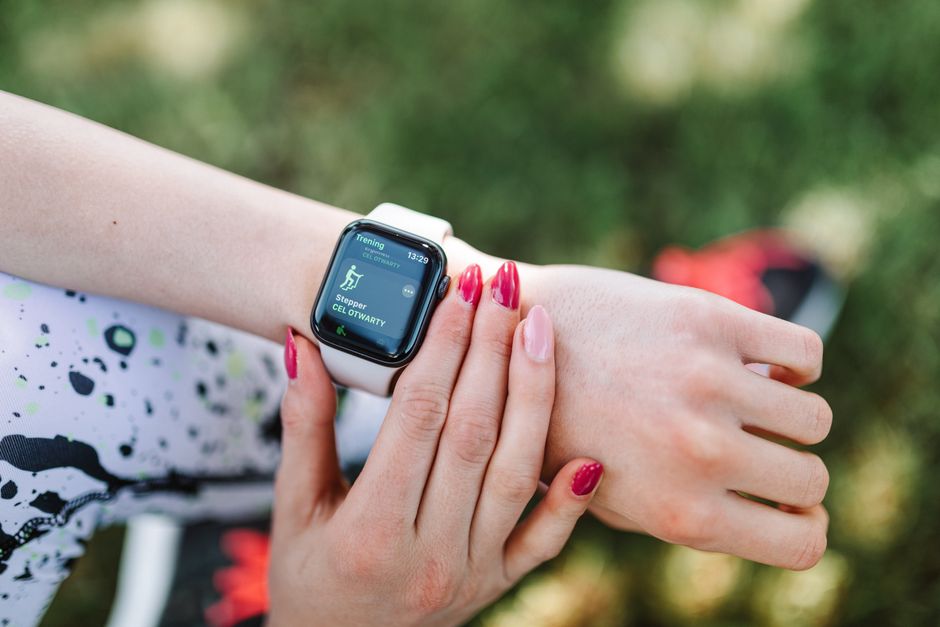
Garmin Epix Pro vs Apple Watch Ultra 2 for men over 50 isn’t really a spec-sheet argument. It’s a values test. Do you want the watch that behaves like a serious training tool first and a smartwatch second, or the one that behaves like an excellent iPhone extension that has gotten surprisingly capable at endurance sports?
For a 55-year-old executive who values his time, that distinction matters more than the titanium case or the dive rating. Daily charging gets old. So does chasing useful training data across three apps because the default platform gives you half the picture. On the other hand, if ECG alerts, sleep apnea notifications, and frictionless iPhone integration matter more than multi-week battery life, Apple has a real case.
The straight take is simple: the Garmin Epix Pro is the better watch for most active men over 50 who care about training depth, battery life, mapping, and flexibility. The Apple Watch Ultra 2 is better if regulated health features and the Apple ecosystem outrank everything else.
Battery Face-Off: Why the Garmin Epix Pro Leaves the Watch Ultra 2 Behind
This is where the comparison stops being subtle. Garmin says the Epix Pro 51mm lasts up to 31 days in smartwatch mode, or 11 days with the always-on display enabled, according to Garmin Support. Even the smaller 47mm model is rated for 6 days with always-on display, and the 42mm model manages 4 days. That means the smallest Epix Pro still outlasts the Apple Watch Ultra 2 in normal use.
Apple rates the Watch Ultra 2 for 36 hours of standard use, and PCMag stretched that to about 55 hours in real-world testing. That’s respectable for an Apple Watch. It’s nowhere near Garmin territory. If you travel often, train early, sleep with the watch on, and use GPS several times a week, the difference between charging every day or two and charging once a week or less isn’t cosmetic. It’s behavioral.
Men over 50 usually don’t need more device maintenance in their life. They need less. A watch that can survive a long weekend, a work trip, and a few workouts without begging for the charger is simply easier to live with. ZDNet’s 2024 comparison made the same point bluntly: Garmin wins the battery conversation by a wide margin.
This is also where the Apple pitch starts to sound like premium rationalization. Yes, Low Power Mode can push the Ultra 2 toward 72 hours. But if you bought an $799 flagship watch and immediately have to cripple features to get through a long weekend, that isn’t a flex. That’s a workaround.
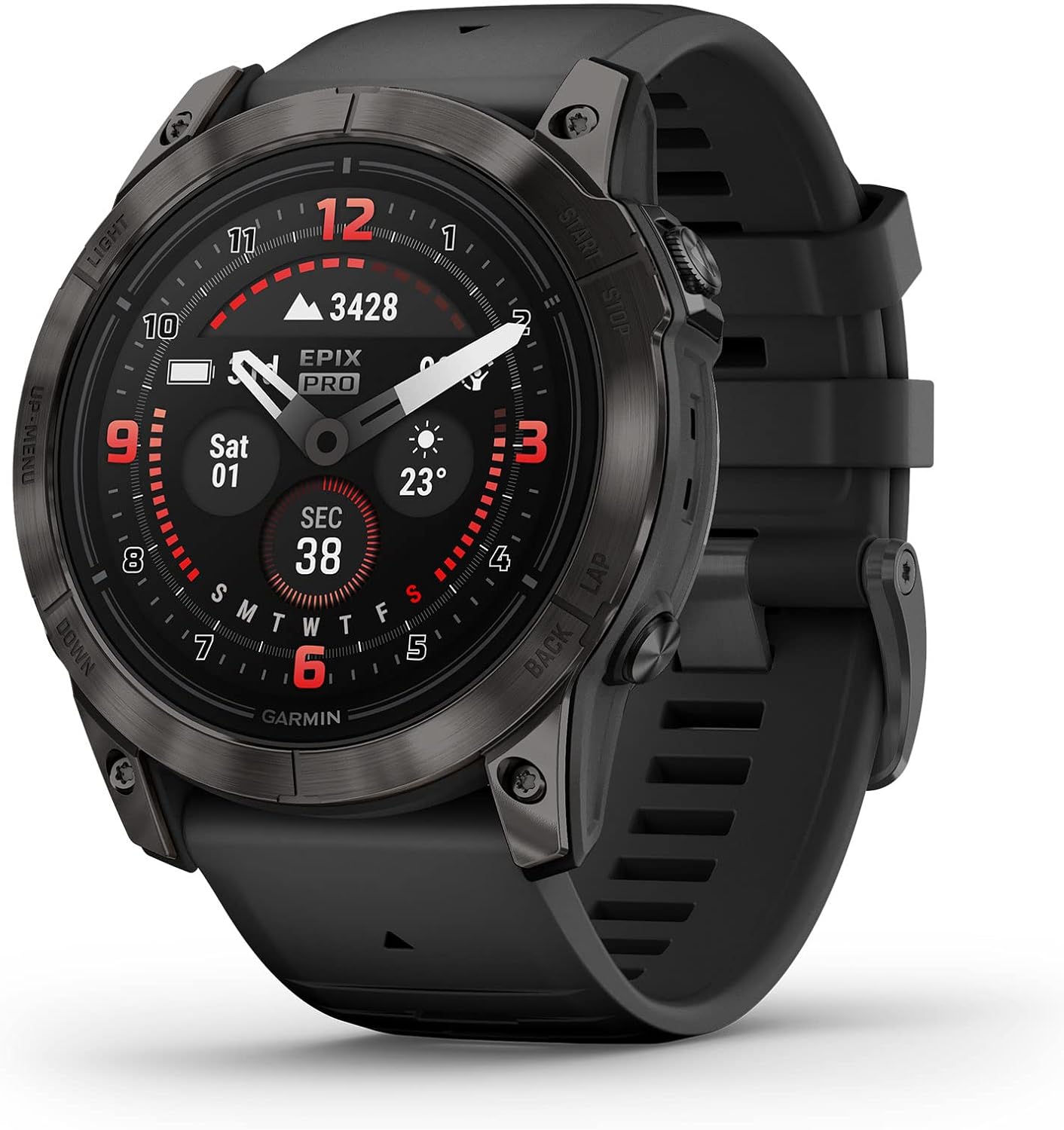
Garmin Epix
This article contains affiliate links. We may earn a commission at no extra cost to you.
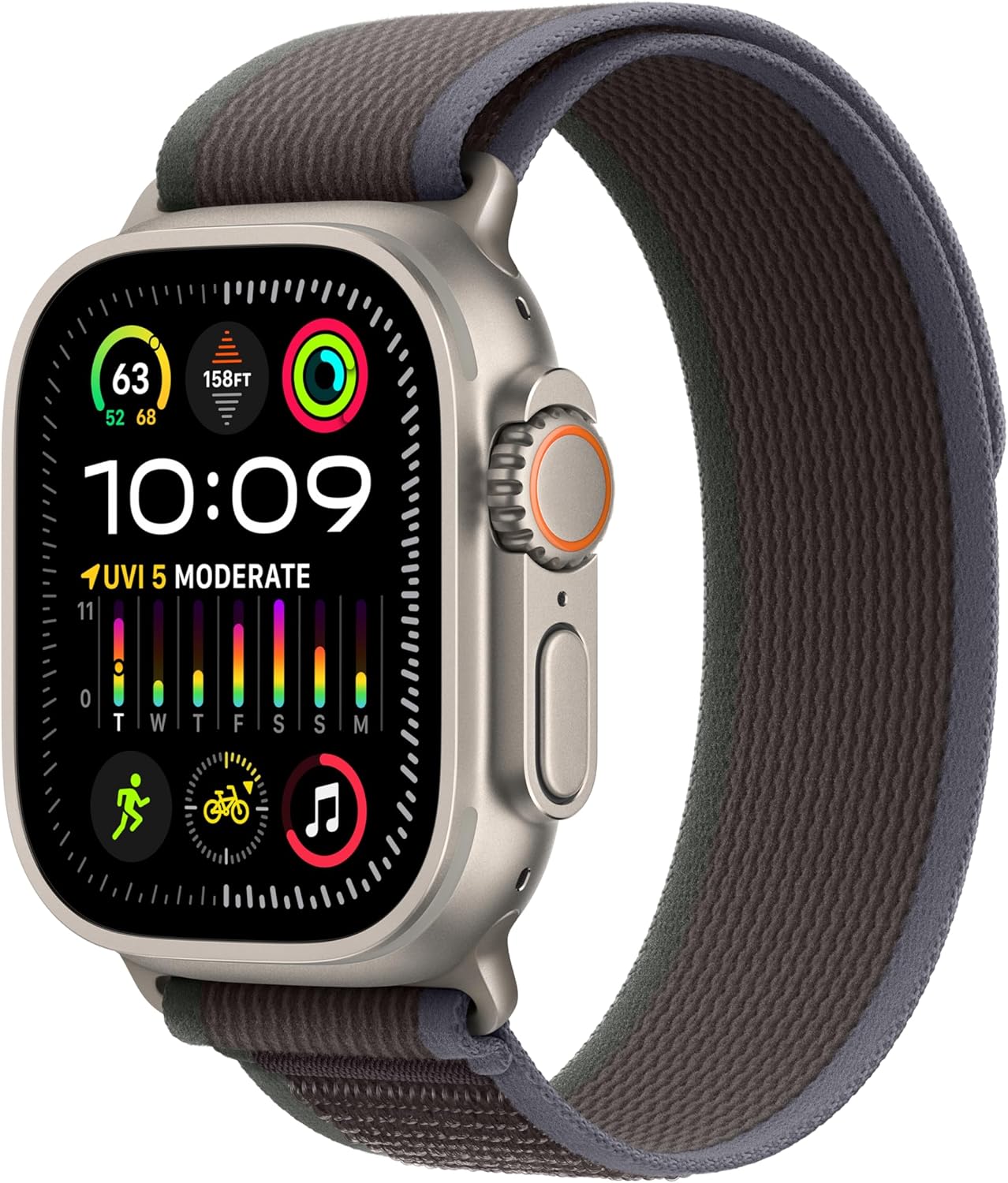
Apple Watch Ultra 2
$778.64
This article contains affiliate links. We may earn a commission at no extra cost to you.
Training Metrics: What Each Watch Actually Measures and Why It Matters After 50
The Garmin Epix Pro earns its keep by doing more of the coaching math for you. Out of the box, it gives you Training Readiness, HRV status, Hill Score, Endurance Score, recovery guidance, and support for ANT+ sensors like chest straps and power meters. Garmin‘s Endurance Score page is a good example of the company’s approach: it tries to turn physiology, workload, and training history into a practical readiness signal instead of just a pile of charts.
Apple has improved here. watchOS 11 added Training Load, and the Ultra 2 supports native running power. That closes part of the gap. It doesn’t close all of it. DC Rainmaker’s January 2024 head-to-head testing found Garmin’s pacing consistency stronger in difficult environments, and Apple’s deeper training analysis still depends heavily on third-party apps like Athlytic or WorkOutDoors if you want something close to Garmin’s native depth.
That matters more after 50 because recovery becomes part of the sport, not a side note. You can bully your way through bad sleep and sloppy pacing at 31. At 56, the bill arrives faster. A platform that helps you spot accumulated fatigue, adjust load, and train with fewer moving parts is worth more than a platform that can technically do similar things after you assemble your own little app bouquet.
The practical difference is friction. Garmin gives the serious athlete a training dashboard. Apple gives the motivated tinkerer components. Some readers enjoy that. Most executives don’t. They want the data to show up, mean something, and move them toward a better decision before the next meeting starts.
Health Monitoring: ECG, Sleep Apnea Detection, and Biomarker Gaps
Apple’s best case isn’t athletic depth. It’s regulated health features. The Apple Watch Ultra 2 includes an FDA-cleared ECG app, and PCMag reports Apple’s sinus-rhythm classification specificity at 99.6% and AFib detection sensitivity at 98.3%. Apple also announced FDA-cleared sleep apnea notifications in September 2024 through watchOS 11, a meaningful addition for older men who snore, travel, gain a little weight around the middle, and suspect their recovery problem may start at night rather than in the gym.
Garmin’s health stack is useful, but it isn’t the same category. The Epix Pro tracks Pulse Ox, HRV, sleep stages, and Body Battery. Those features can be directionally helpful. They aren’t regulated diagnostics. If you want a watch that leans harder into medical screening, Apple has the stronger hand.
There is one wrinkle worth noting. Apple spent part of 2024 in a blood-oxygen mess tied to a patent dispute, but the Ultra 2’s blood oxygen monitoring returned in the U.S. by August 2025. That matters because anyone buying a premium wearable expects the premium features to actually exist in their country, which is apparently a higher bar than it should be.
So the health-monitoring answer is clean. If your main question is, “Which watch helps me train better?” Garmin wins. If your main question is, “Which watch gives me the most clinically relevant screening features on my wrist?” Apple wins. Those are different jobs. Confusing them is how people spend $800 and still feel oddly under-served.
The Ecosystem Decision: iPhone Lock-In vs. Cross-Platform Flexibility
This section decides the whole thing for some buyers. The Apple Watch Ultra 2 requires an iPhone. No iPhone, no deal. If you’re on Android, the comparison is over before it starts.
Garmin is much less needy. The Epix Pro works with iPhone and Android, supports Garmin Pay, stores offline music from Spotify, Amazon Music, and Deezer, and includes full-color topographic maps with NextFork trail guidance. ZDNet called Garmin the clear winner for on-wrist mapping, and that lines up with the lived experience of anyone who has tried to navigate a trail system or unfamiliar city without wanting their phone in hand every five minutes.
This is also where Apple’s elegance becomes lock-in. Inside the iPhone world, the Ultra 2 is smooth. Notifications, calls, messages, Apple Pay, app handoff, and the rest of the Cupertino spell-casting all work exactly as advertised. But if you value optionality, Garmin is plainly better. You can change phones without changing watches. You can use it as a true sports watch first and a smartwatch second.
For an older executive, that flexibility isn’t abstract. Plenty of men in this demographic want fewer dependencies, not more. They don’t need their watch to mirror every email. They need it to survive a long ride, guide a hike, capture overnight recovery, and stay out of the way. On those terms, Garmin’s quieter, more utilitarian philosophy ages better.
If you’re deciding between platforms more broadly, it also helps to compare how the Garmin Epix compares with the Garmin Fenix for active executives or the Garmin Venu 3 vs. Forerunner 265 comparison for professionals over 50. Garmin’s own lineup has enough overlap to cause a small amount of civilized confusion.
Pricing and Verdict: Garmin Epix Pro vs Apple Watch Ultra 2 for Men Over 50
At launch, Garmin looked expensive. The Epix Pro Gen 2 came in around $899 to $1,099 depending on size and finish, while the Apple Watch Ultra 2 started at $799. That old pricing picture no longer tells the truth. TechRadar and Lifehacker both tracked repeated Epix Pro discounts through 2025 and 2026 that pulled the watch into roughly the $450 to $550 range, including Sapphire versions dipping below $500.
At those prices, the Garmin argument gets much stronger. You’re paying less than Apple’s flagship watch and getting materially better battery life, richer native training metrics, better mapping, and cross-platform support. For the reader who cares about performance data first, that is the better value story by a comfortable margin.
The Apple case is narrower but still real. If you want the best smartwatch experience for an iPhone, care about ECG and sleep apnea notifications, and don’t mind charging every couple of days, the Ultra 2 is easier to recommend than many endurance-watch purists admit. Apple is selling convenience plus health-facing polish, and for some people that is the right bundle.
But the better buy for most active men over 50 is still the Garmin Epix Pro. It behaves like a tool built for training, travel, and long-term use instead of a smartwatch that has been taught endurance manners. That’s the difference.
Who is the Garmin not for? Anyone who wants the deepest iPhone integration, relies on Apple’s health alerts, or hates Garmin’s denser interface. Who is the Apple Watch Ultra 2 not for? Anyone who travels often without wanting another charger, trains seriously enough to care about recovery and external sensor support, or ever expects to leave the iPhone ecosystem. That should narrow the field fast.
If recovery is a bigger priority than pace or maps, our guide to using wearable data for recovery in high-pressure jobs is the more useful next read than another spec comparison.
Frequently Asked Questions
Is the Garmin Epix Pro still worth buying in 2026, or should I wait for the next generation?
Yes, if the discounted pricing holds. The Epix Pro’s training metrics, mapping, flashlight, and battery life are already mature, and the 2025 to 2026 price drops make it far more compelling than it was at launch. Waiting only makes sense if you want the newest hardware no matter the value tradeoff.
Can I wear the Garmin Epix Pro as my everyday watch, or is it strictly for training?
You can wear it every day. The AMOLED display, titanium build options, smartwatch notifications, music storage, and Garmin Pay make it perfectly viable outside workouts. It’s still more utilitarian than the Apple Watch Ultra 2, but not in a way that feels unfinished.
Does the Apple Watch Ultra 2 track sleep as accurately as the Garmin Epix Pro?
Both watches can give you useful trend data, but Apple’s edge is in regulated health features like sleep apnea notifications, while Garmin leans harder into recovery framing through HRV and Body Battery. If your question is clinical screening, Apple has the stronger case. If your question is training readiness, Garmin’s interpretation layer is usually more useful.
Which watch has better GPS accuracy for trail running and outdoor hiking?
Garmin gets the nod. DC Rainmaker’s testing found Garmin’s pacing more consistent in tougher environments, and Garmin’s mapping tools are better developed for trail use. Apple is competent here, but Garmin still behaves more like a dedicated outdoor watch.
Will the Garmin Epix Pro work seamlessly with my iPhone, or do I lose key features?
It works well with iPhone for notifications, syncing, music, and the main training features. What you lose is the tight Apple-native integration the Ultra 2 offers across calls, messaging, and the broader app ecosystem. For many buyers, that is an acceptable trade if battery life and training depth are the main goal.
We recommend the Garmin Epix Pro (Gen 2) for executives who put battery life and training depth ahead of smartwatch features. With multi-week battery life, advanced metrics like Hill Score and Endurance Score, and the convenience of a built-in LED flashlight, it’s built for athletes who train on their own terms. Check current pricing on Amazon →
The Bottom Line
For most active men over 50, Garmin is selling the more useful watch and, at current discount pricing, the better deal. Apple still wins if health screening features and iPhone integration are the whole point, but if you want one premium wearable that can handle training, travel, and recovery without daily babysitting, the Epix Pro is the sharper choice.
This article contains affiliate links. We may earn a commission if you sign up through these links, at no additional cost to you.
Sources
- ZDNet. “Apple Watch Ultra 2 vs. Garmin Epix Pro: AMOLED adventure watch head-to-head.” https://www.zdnet.com/article/apple-watch-ultra-2-vs-garmin-epix-pro-amoled-adventure-watch-head-to-head/
- DC Rainmaker. “Apple Watch Ultra 2 vs Garmin Epix Pro: The NYC Test Gauntlet.” https://www.dcrainmaker.com/2024/01/apple-garmin-gauntlet.html
- PCMag. “Apple Watch Ultra 2 Review: Built for Adventure and Brighter Than Ever.” https://www.pcmag.com/reviews/apple-watch-ultra-2
- Garmin. “Endurance Score – Physiological Measurements.” https://www.garmin.com/en-US/garmin-technology/running-science/physiological-measurements/endurance-score/
- Garmin Support. “Garmin Epix Pro Battery Life Specifications.” https://support.garmin.com/en-US/?faq=oYpVKSoFmj86gPYq0S07TA
- Apple Newsroom. “Apple Unveils Apple Watch Ultra 2.” https://www.apple.com/newsroom/2023/09/apple-unveils-apple-watch-ultra-2/
- Tom’s Guide. “I ran a 2:27 marathon using the Garmin Epix Pro and Apple Watch Ultra 2 – which is better?” https://www.tomsguide.com/wellness/smartwatches/i-ran-a-227-marathon-using-the-garmin-epix-pro-and-apple-watch-ultra-2-which-is-better
- Lifehacker. “Garmin Epix Pro Gen 2 Smartwatch Deal May 2026.” https://lifehacker.com/health/garmin-epix-pro-gen-2-smartwatch-deal-may-2026
This article is for informational purposes only and is not financial advice. Consult a qualified professional for personalized guidance.
Leave a Reply