
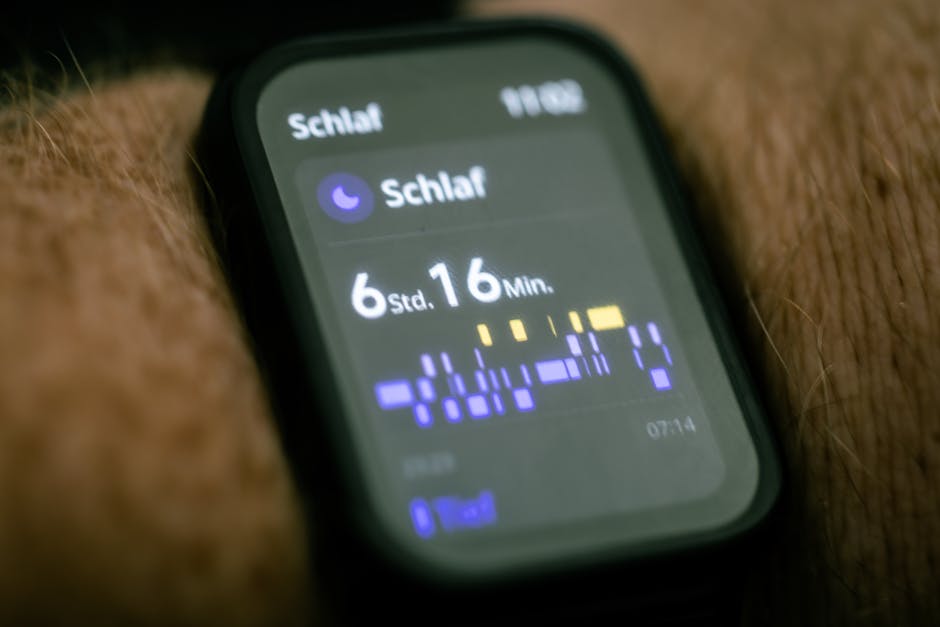
You wake up feeling decent, then your wearable tells you the night was a mess. Deep sleep was low. REM was off. Recovery is yellow. Now you get to start the day by deciding whether to trust your body or a gadget on your finger, wrist, or bedside charger.
That tension is the whole point of a wearable sleep tracking accuracy comparison. These devices can be useful. They can also turn a normal night into a spreadsheet argument. For a time-poor executive who wants signal instead of noise, the real question is not whether Oura, WHOOP, or Garmin is “accurate.” It is accurate at what, and accurate enough for what decision.
The short version: the evidence says all three are much better at detecting sleep than detecting wake, and none of them should be treated like a home polysomnography lab. WHOOP currently has the strongest case for total sleep time and stage-duration tracking. Oura is the most appealing if you want something sleep-focused you can wear all day without strapping a watch to your wrist at dinner. Garmin is fine for trend tracking, but sleep accuracy is not the main reason to buy a Garmin.
Wearable Sleep Tracking Accuracy Comparison: What Accuracy Means When a Wearable Tracks Your Sleep
Marketing copy loves one big percentage. Sleep science does not work that way.
When researchers compare a wearable against polysomnography, or PSG, they are usually asking a few different questions: Did the device correctly detect that you were asleep? Did it correctly detect that you were awake? And how well did it classify light sleep, deep sleep, and REM? Those are different jobs. A device can do one well and still stumble badly on another.
That distinction matters because most consumer wearables are very good at confirming sleep and much worse at catching quiet wakefulness. In a 2021 study in Sleep, Chinoy and colleagues compared seven consumer devices against PSG and found sleep sensitivity of 93% or higher across devices, while wake specificity ranged from just 18% to 54% depending on the device. In plain English: if you are asleep, the tracker usually knows it. If you are lying still but awake, the tracker often guesses wrong.
That is why so many people see flattering total sleep numbers after a restless night. The device may count motionless time as sleep even when your brain is still running tomorrow’s board meeting.
Sleep staging adds another layer of uncertainty. Distinguishing REM from light sleep is harder than deciding whether you are asleep at all, and the gap shows up repeatedly in validation studies. So if your main concern is broad trend tracking, total sleep time and consistency are usually more dependable than obsessing over whether last night was 1 hour 22 minutes of REM versus 1 hour 41.
The practical takeaway is simple: treat wearables as pattern detectors, not bedside diagnosticians. That sounds less glamorous than the app store version. It is also more honest.
Oura Ring: Strong Sleep Detection With Notable Stage-Level Tradeoffs
Oura‘s biggest advantage is not just accuracy. It is compliance. A ring is easier to tolerate at night than a bulky watch, and the best tracker in the world is useless if it ends up on your dresser.
On the validation side, Oura‘s record is solid, with the usual caveats. In a 2024 Sensors study from researchers at Harvard and Brigham and Women’s Hospital, Oura Ring Gen3 showed 76% to 79.5% sensitivity for sleep stage classification versus PSG and was not statistically different from PSG for estimates of wake, light sleep, deep sleep, or REM. That is a respectable result for a consumer device.
Earlier work was more mixed in the places that tend to trip up wearables. In a 2019 Behavioral Sleep Medicine study, de Zambotti and colleagues found Oura had 96% sensitivity for sleep detection but only 48% specificity for wake. Again, that fits the broader wearable pattern: strong at confirming sleep, weaker at spotting the stretches where you were awake but still.
For a 55-year-old executive who cares about recovery trends, Oura makes a lot of sense if the ring form factor fits. It is unobtrusive, sleep-focused, and good enough to track whether your late dinners, alcohol, travel, or training blocks are pushing the week in the wrong direction.
Where it gets less convincing is when users start treating stage readouts like lab values. Oura can estimate stages reasonably well for a consumer device, but disrupted nights are exactly where wake detection tends to matter most, and that remains a known weakness across the category.
Oura is a strong fit for someone who wants sleep-first tracking without wearing a watch around the clock. It is not a great fit for someone who hates rings, lifts with a barbell most days, or wants the best all-in-one training watch. If you are deciding between these form factors, the broader WHOOP vs Oura Ring comparison for executives helps frame the tradeoff.
WHOOP 4.0: Best-in-Class Sleep Duration Tracking With a REM Blind Spot
WHOOP‘s case is stronger when the question is, “Which device gets closest to PSG on total sleep time and the major stage buckets?”
A 2024 systematic review in JMIR mHealth and uHealth found WHOOP had the least disagreement versus PSG for total sleep time at negative 1.4 minutes, light sleep at negative 9.6 minutes, and deep sleep at negative 9.3 minutes. Those are strong numbers by consumer-wearable standards and help explain why WHOOP has become the default recommendation in a lot of recovery-focused circles.
The catch is REM. That same review found WHOOP had the largest disagreement for REM sleep at 21.0 minutes. A 2025 validation study in Sleep Advances comparing six wrist-worn devices also found the WHOOP 4.0 achieved fair-to-moderate agreement with PSG rather than anything close to a clinical substitute.
That is the pattern to keep in mind. WHOOP looks especially good if your priority is total sleep time, stage-duration trends, and integrating sleep into a broader recovery-and-strain system. It looks less impressive if your use case depends on precise REM estimates night to night.
For many readers, that limitation is acceptable. Most people do not need surgical REM precision. They need a reliable sense of whether travel, alcohol, work stress, or late training is dragging down recovery across a week or month.
WHOOP is the best fit here for someone who wants sleep data tied directly to training load, recovery behavior, and daily readiness. It is a weaker fit for someone who dislikes subscriptions, wants a screen on the device, or mainly wants a minimalist sleep tracker rather than a full recovery platform. If heart rate variability is part of your decision, this HRV tracking guide for men over 45 is the more useful rabbit hole to go down.
Garmin: Respectable Sleep Data Within a Broader Fitness Ecosystem
Garmin‘s strength is not that it wins sleep-only validation shootouts. Garmin‘s strength is that it does a lot of things reasonably well inside one training ecosystem.
That matters because plenty of buyers do not want a dedicated recovery device. They want GPS, training load, heart rate, maps, workouts, and sleep in one place. Garmin can absolutely serve that reader. The question is whether its sleep data is good enough, not whether it is best in class.
The answer from the literature is basically yes for trends, no for overconfidence. Chinoy’s 2021 Sleep study found Garmin devices performed worse than most competitors on sleep-wake specificity, which means the familiar wearable problem of overstating sleep during quiet wakefulness. A 2024 systematic review found the Garmin Vivosmart 4 delivered moderate accuracy in sleep staging versus PSG rather than standout performance. And a 2025 meta-analysis in the Journal of Clinical Sleep Medicine found that across wrist-worn sleep trackers overall, total sleep time differed from PSG by an average of negative 16.9 minutes.
That does not make Garmin bad. It makes Garmin normal.
If you already live in the Garmin world, the sleep data is useful enough to spot trends: worse sleep during heavy travel weeks, better sleep when evening alcohol drops, lower recovery after late hard sessions. That is valuable. But if sleep accuracy is the main purchase criterion, Garmin is harder to justify over Oura or WHOOP.
Garmin is best for the reader who wants a training watch that also tracks sleep. It is not ideal for someone who wants the cleanest sleep-focused data experience or the best available agreement on total sleep time.
Which Tracker Should You Choose, and How Should You Use Its Data?
This is where people overcomplicate things.
The 2025 meta-analysis in the Journal of Clinical Sleep Medicine put it plainly: wrist-worn sleep trackers are not as reliable as PSG, but they can still be useful for tracking general sleep patterns. That is the right frame.
If sleep is the main job and you want the least intrusive form factor, Oura is the most appealing choice. It gives you solid consumer-grade sleep tracking in a ring that is easier to live with than a watch.
If your priority is recovery, training load, and the closest thing to best-in-class total sleep time tracking among these three, WHOOP has the strongest evidence. That is the cleanest recommendation for readers who want one platform tying sleep to strain and readiness.
If you already want a multisport watch and sleep is one feature among many, Garmin is perfectly defensible. Just do not buy it because you think it will suddenly become your home sleep lab. It will not.
There is also a bigger point here. The worst way to use any of these devices is as a nightly verdict on how you are allowed to feel. A single weird data point after a redeye, two drinks, or a stressful late call does not mean much. Four weeks of worse trends probably do.
And none of these devices should be used to diagnose sleep apnea, periodic limb movement disorder, narcolepsy, or anything else that belongs in a clinical workup. If you snore heavily, wake unrefreshed, keep dozing off in meetings, or have a bed partner who says you stop breathing, the correct next move is not checking your app again. It is getting evaluated.
Frequently Asked Questions
Can a wearable diagnose sleep apnea or another sleep disorder?
No. Consumer wearables are not a replacement for polysomnography or a formal sleep evaluation. They can flag patterns that suggest something is off, but diagnosis belongs to a clinician and, in many cases, a sleep study.
Why do Oura, WHOOP, and Garmin give different sleep scores on the same night?
Because they use different sensors, algorithms, and definitions for sleep stages and recovery scoring. They may all agree that you slept roughly seven hours while disagreeing on REM, deep sleep, and readiness. That is normal, not proof that one app is lying and the others are saints.
How accurate is HRV data during sleep?
HRV can be useful for trend tracking, especially during sleep when movement is lower, but it still depends on sensor quality, signal processing, and context. Alcohol, illness, stress, and late training can all shift HRV. Trend lines matter more than any single night’s number.
Should you trust sleep data after alcohol or a highly disrupted night?
Trust it less literally and more directionally. Alcohol and fragmented sleep can make wake detection and stage classification harder. If the device shows a rough night after behavior you already know was rough, that is not insight. It is confirmation.
Which sleep metric matters most for a 50-year-old executive?
Start with the boring ones: total sleep time, consistency, and the weekly pattern of resting heart rate or HRV alongside how you actually feel. Those are usually more actionable than chasing tiny changes in one night’s REM estimate.
Affiliate disclosure: This article contains affiliate links. If you buy through them, Durable Resilience may earn a commission at no extra cost to you.
The best wearable is the one that helps you notice patterns without turning sleep into another source of low-grade stress. Use the data to guide decisions, not to outsource judgment.
If your main goal is better recovery choices, WHOOP has the strongest evidence in this group. If your main goal is a comfortable sleep-first tracker, Oura is easier to live with. If you want one device for training plus acceptable sleep trends, Garmin still has a case.
Sources
- Chinoy ED et al. “Performance of seven consumer sleep-tracking devices compared with polysomnography.” Sleep (2021). https://doi.org/10.1093/sleep/zsaa291
- Robbins R et al. “Accuracy of Three Commercial Wearable Devices for Sleep Tracking in Healthy Adults.” Sensors (2024). https://doi.org/10.3390/s24206532
- de Zambotti M et al. “The Sleep of the Ring: Comparison of the ŌURA Sleep Tracker Against Polysomnography.” Behavioral Sleep Medicine (2019). https://doi.org/10.1080/15402002.2017.1300587
- Schyvens AM et al. “Accuracy of Fitbit Charge 4, Garmin Vivosmart 4, and WHOOP Versus Polysomnography: Systematic Review.” JMIR mHealth and uHealth (2024). https://doi.org/10.2196/52192
- Schyvens AM et al. “A performance validation of six commercial wrist-worn wearable sleep-tracking devices for sleep stage scoring compared to polysomnography.” Sleep Advances (2025). https://doi.org/10.1093/sleepadvances/zpaf021
- Lee YJ et al. “Performance of consumer wrist-worn sleep tracking devices compared to polysomnography: a meta-analysis.” Journal of Clinical Sleep Medicine (2025). https://doi.org/10.5664/jcsm.11460
This article is for informational purposes only and is not financial advice. Consult a qualified professional for personalized guidance.
Leave a Reply