
Vitamin D levels for men over 45 are one of those health topics that sound simple until you actually look at the numbers. You can get some sun, take a softgel, and still have no idea whether your level is low, adequate, or pointlessly high. That’s annoying, but it’s also fixable.
The useful question isn’t whether vitamin D is “important.” Everyone already knows that line. The useful question is what level actually makes sense for a man over 45, what dose is worth taking, and whether a blood test will tell you something actionable or just give you another lab value to stare at over coffee.
The straight answer: this age group has a real risk of insufficiency, food alone usually doesn’t cover it, and blind megadosing is a bad strategy. A practical target, a moderate daily dose, and the right test will get you farther than supplement-bro guesswork ever will.
Why Men Over 45 Are a Distinct Risk Group for Vitamin D Insufficiency
This isn’t just about spending too much time indoors. Age changes the physiology.
Harvard T.H. Chan School of Public Health notes that skin synthesis of vitamin D declines with age, to the point that a 70-year-old produces roughly 25% of the vitamin D that a 20-year-old produces from the same sun exposure. That’s a steep drop. Add the fact that kidney conversion of 25-hydroxyvitamin D into its active form also becomes less efficient with age, and older men get hit from both directions.
Food doesn’t rescue the situation. Harvard’s review of NHANES intake data shows median vitamin D intake from food alone for men ages 51 to 71 is about 140 IU per day. The Recommended Dietary Allowance is 600 IU per day through age 70, then 800 IU after that. So before supplements even enter the conversation, many men are already playing from behind.
That’s why a normal-looking lifestyle can still produce mediocre vitamin D status. You can exercise, eat reasonably well, and still come up short because salmon and eggs don’t do much heavy lifting unless you’re unusually deliberate about intake. Sun exposure helps, obviously, but it becomes a less reliable lever over time.
For men over 45, the problem usually isn’t negligence. It’s arithmetic. The body makes less, the diet contributes less than people think, and the gap often goes unnoticed because vitamin D insufficiency doesn’t walk into the room wearing a nametag.
Optimal 25(OH)D Levels: What the Research Actually Says for Vitamin D Levels Men Over 45
This is where the conversation gets messy, mostly because different groups use different cutoffs.
The Institute of Medicine, now the National Academy of Medicine, defines sufficiency at 50 nmol/L or 20 ng/mL and deficiency below 30 nmol/L or 12 ng/mL, as summarized by Harvard T.H. Chan School of Public Health. That’s the conservative, bone-health-centered framework.
The Endocrine Society’s 2024 guideline leaves more room for a higher practical target, noting that levels at or above 75 nmol/L, which is 30 ng/mL, may be needed for extraskeletal benefits. That’s not a license to chase absurd lab numbers. It’s a reminder that “not deficient” and “probably optimal for a man who cares about performance, recovery, and long-term health” aren’t always the same category.
A reasonable working zone for many men over 45 is 75 to 100 nmol/L, or about 30 to 40 ng/mL. That’s high enough to avoid scraping the floor, but not so high that you’re treating vitamin D like a personality trait.
The VITAL trial matters here because it looked at 25,871 adults age 50 and older and used a real-world supplementation dose of 2,000 IU per day. According to Harvard’s summary, vitamin D reduced autoimmune disease incidence by 22% and lowered cancer mortality by 13%, but the benefit showed up in participants who started with low baseline levels. People who were already sufficient did not get the same payoff.
That point gets lost all the time. More vitamin D isn’t automatically more benefit. Baseline status matters. If your level is already solid, piling on bigger doses is mostly a hobby with a bottle.
Dosing Strategies: How Much Vitamin D Should a Man Over 45 Take?
The boring answer is usually the right one here: moderate daily dosing beats heroic nonsense.
The Endocrine Society’s 2024 guideline suggests empiric supplementation of 1,500 to 2,000 IU per day for adults ages 50 to 74 as a conditional recommendation. That’s a sensible starting range for men over 45 who are likely to be insufficient, especially if they get limited midday sun, carry more body fat, or live most of their life under office lighting and LED bulbs pretending to be daylight.
The standard RDA remains 600 IU per day for adults through age 70 and 800 IU per day after 70. The tolerable upper intake level is 4,000 IU per day. Those numbers matter because they draw a line between a prudent daily habit and casual overkill.
For most men in this age bracket, 1,000 to 2,000 IU of vitamin D3 daily is the practical lane. If testing shows you’re low, that dose is often enough to move the needle without turning the supplement cabinet into a chemistry experiment. If testing shows you’re already sitting at 35 ng/mL, you may not need much more than a maintenance dose.
What doesn’t make much sense is intermittent megadosing. The Endocrine Society recommends daily lower-dose supplementation over intermittent high-dose regimens in adults over 50, and with good reason. In one trial summarized in the guideline, once-yearly dosing of 500,000 IU increased falls by 15% and fracture risk by 26%. That’s a terrible trade. Nobody needs a supplement plan that ends with a better spreadsheet and a worse hip.
A simple rule works well: daily D3, moderate dose, then retest if you actually want to know whether the plan is doing anything. If you want a deeper breakdown of product forms and dose ranges, this comprehensive vitamin D dosage guide for men over 50 is the natural next read.
How to Test Your Vitamin D Levels Accurately (And What to Watch Out For)
If you’re going to test, order the right test. That part shouldn’t be complicated, yet somehow it still is.
The biomarker that matters is 25-hydroxy vitamin D, written as 25(OH)D. The NIH Office of Dietary Supplements identifies it as the accepted measure of vitamin D status. Results may be reported in nmol/L or ng/mL. The conversion is straightforward: divide nmol/L by 2.5 to get ng/mL.
The Endocrine Society’s 2024 guideline recommends against routine screening in generally healthy adults ages 19 to 74 without established indications. That’s a fair population-level recommendation. It isn’t the same as saying no individual man over 45 should test.
Testing becomes more useful when the result would change your decision. Men with limited sun exposure, darker skin, BMI above 30, malabsorption issues, chronic fatigue, or a history that makes insufficiency more likely have a better case for ordering labs. In those situations, a number can help you decide whether you need a maintenance dose, a more deliberate repletion plan, or no intervention at all.
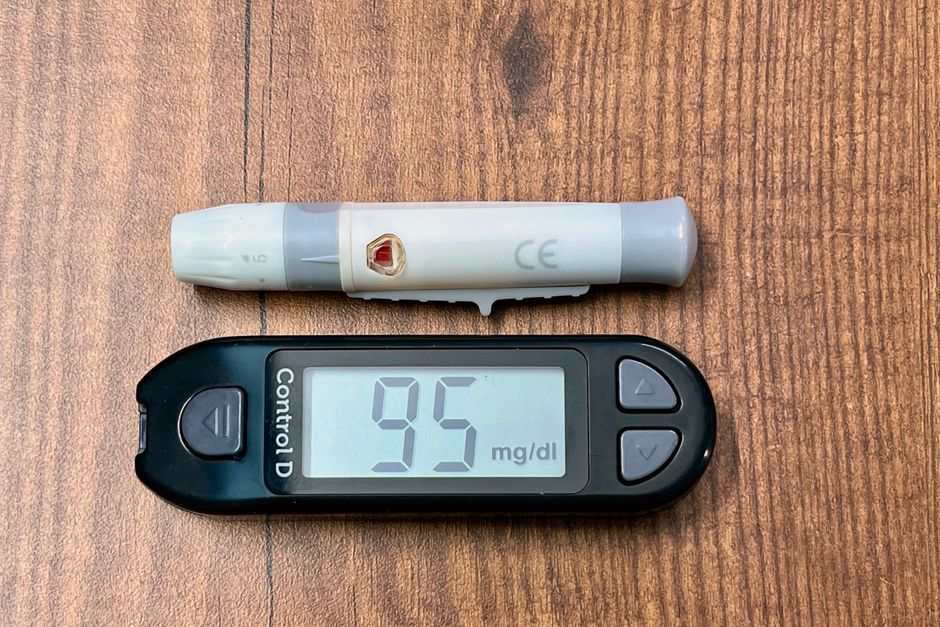
Method matters too. Many labs use immunoassays, while LC-MS/MS is generally more accurate and more expensive. For most people, a standard venous draw from a reputable lab is the best balance of convenience and reliability. At-home finger-prick tests exist, but they tend to have more variability. That’s fine for curiosity. It’s less fine when you’re making dosing decisions off the result.
A practical takeaway: if you care enough to test, do it once with a venous draw, interpret the result in context, and avoid pretending a shaky home kit is precision medicine.
D3 vs D2 and What Vitamins Work Together With Vitamin D
If you’re choosing between vitamin D2 and D3, this part is easy. Choose D3.
The evidence consistently shows vitamin D3, or cholecalciferol, raises serum 25(OH)D more effectively than vitamin D2, or ergocalciferol, at equivalent IU doses. At equivalent IU dosing, D3 appears to raise levels by roughly three times as much as D2. If your goal is to move an actual lab value, that difference isn’t trivial.
The second thing worth knowing is that vitamin D doesn’t work in isolation particularly well. Magnesium matters because it’s involved in vitamin D metabolism. In a 2018 randomized trial published in the American Journal of Clinical Nutrition, Dai and colleagues found that magnesium supplementation influenced vitamin D status and metabolism, effectively enhancing vitamin D’s effect in people with low magnesium status.
That matters because low magnesium intake is common. The NIH Office of Dietary Supplements estimates a large share of U.S. adults fall short of recommended magnesium intake. If someone takes high-dose vitamin D while skimping on magnesium-rich foods or a well-formulated magnesium supplement, the results can underwhelm.
Vitamin K2 gets attention for a different reason. It helps activate matrix Gla-protein, which plays a role in directing calcium toward bone rather than soft tissue. The evidence there is more mechanistic than definitive for every use case, but it is a plausible reason many men choose a D3-plus-K2 formula.
None of this means every supplement needs to become a twelve-capsule morning ritual. It means vitamin D works better when the supporting cast isn’t missing. For men who also care about recovery and sleep quality, this piece on magnesium for sleep and recovery in men over 45 fits neatly with the same issue.
Third-Party Tested Vitamin D Brands: What to Look For
Most vitamin D supplements are cheap. That doesn’t make them equal.
The useful filter is third-party testing. NSF Certified for Sport and USP Verification are two of the more rigorous programs. They don’t guarantee a supplement will change your life, because nothing does, but they do increase the odds that the label matches the bottle and the bottle is free from obvious contamination problems. In the supplement industry, that’s a meaningful start.
According to NSF and USP verification listings, Thorne carries USP verification on its 1,000 IU and 2,000 IU D3 capsules, Momentous offers an NSF-certified D3 plus K2 product, and NOW Foods has both USP and NSF options depending on the product. Those details matter more than glossy branding or a founder with a podcast microphone.
Price isn’t the hard part. The estimated cost per 1,000 IU across these brands runs about $0.02 to $0.08, which makes vitamin D one of the more affordable evidence-backed supplements available. That’s helpful because it means quality control is available without turning a basic deficiency risk into a luxury hobby.
When evaluating a product, look for four things: D3 rather than D2, a dose that matches your actual plan, recognizable third-party certification, and a form you’ll take consistently. If you’re building beyond a single nutrient, this essential supplement stack for men over 45 gives more context on where vitamin D fits and where it doesn’t.
Frequently Asked Questions
Should I get a vitamin D test before starting supplementation, or can I just start taking it?
If you’re generally healthy and just want a conservative maintenance habit, many men can reasonably start with 1,000 to 2,000 IU of D3 daily. If you have risk factors, want to know whether you’re actually low, or plan to dose more aggressively, a 25(OH)D blood test is worth the money.
Can you get enough vitamin D from sunlight alone at age 45+?
Sometimes, but it’s less reliable than people assume. Aging skin produces less vitamin D from the same sun exposure, and work patterns, latitude, season, sunscreen use, and body composition all affect the result. For many men over 45, sunlight helps but doesn’t guarantee an optimal level.
What symptoms suggest my vitamin D levels might be low?
Low vitamin D can show up as fatigue, low mood, reduced exercise recovery, muscle weakness, or bone discomfort, but those symptoms are nonspecific. That’s the problem. You can feel off for ten different reasons, which is why testing is more useful than guessing when symptoms persist.
Do vitamin D levels affect testosterone production in men over 45?
The relationship is plausible, but the human evidence is mixed. Low vitamin D and low testosterone can coexist, especially in men with higher body fat or limited sun exposure, but vitamin D isn’t a magic testosterone lever. It’s better viewed as one part of a broader health and lab picture.
How long does it take for vitamin D supplements to raise blood levels?
Usually a matter of weeks, not days. Many clinicians recheck 25(OH)D after roughly 8 to 12 weeks because that gives a daily dosing plan time to show whether it’s working.
For men over 45, vitamin D is worth treating like a measurable input, not a wellness slogan. A practical target of roughly 30 to 40 ng/mL, a moderate daily D3 dose, and a well-timed 25(OH)D test will usually tell you more than hype, habit, or guesswork ever will.
Sources
- Harvard T.H. Chan School of Public Health. Vitamin D — The Nutrition Source
- NIH Office of Dietary Supplements. Vitamin D Fact Sheet for Health Professionals
- Endocrine Society. Vitamin D for the Prevention of Disease: Clinical Practice Guideline
- Dai Q, Zhu X, Manson JE, et al. Magnesium status and supplementation influence vitamin D status and metabolism: results from a randomized trial. American Journal of Clinical Nutrition. 2018.
- NSF International. Certified for Sport
- U.S. Pharmacopeia. USP Verified Dietary Supplements
- Harvard Health Publishing. Vitamin D and your health: Breaking old rules, raising new hopes
Continue reading: Read the pillar — Supplements & Nutrition
This article is for informational purposes only and is not financial advice. Consult a qualified professional for personalized guidance.
Leave a Reply