
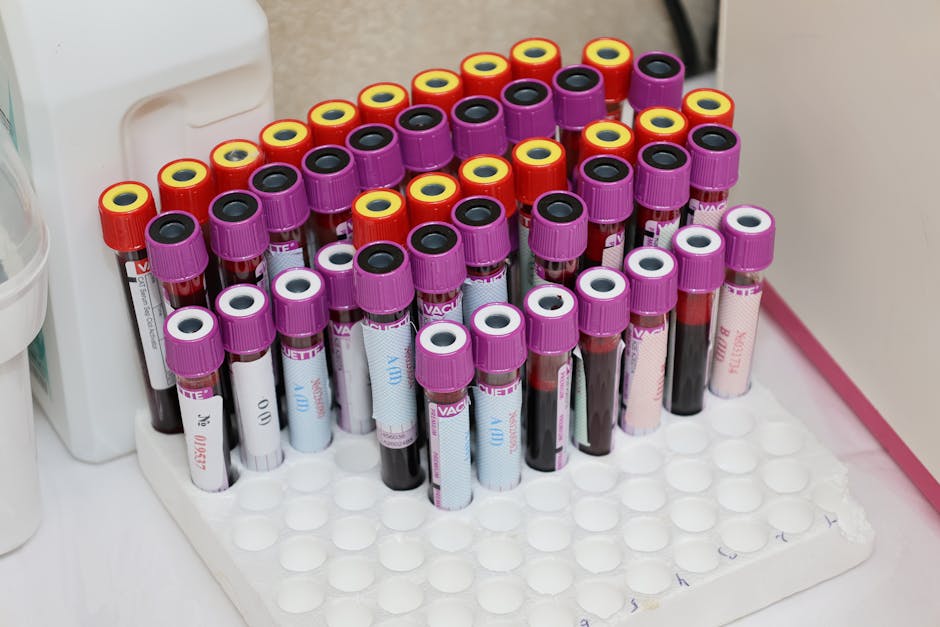
A lot of men get a testosterone panel back, see a total testosterone number in range, and still feel off. Energy is flat. Recovery is slower. Libido is inconsistent. The lab says one thing. Real life says another.
This is where advanced bloodwork stops being trivia and starts being useful. Testosterone is not one simple number floating around your bloodstream waiting to save the day. Some of it is locked up tight, some of it is loosely parked and easy to use, and only a small slice is fully free to act right away.
If you’re on TRT, considering TRT, or just trying to understand why “normal” labs can still line up with low-T symptoms, SHBG, free testosterone, and albumin matter more than most quick clinic summaries admit. Total testosterone is the headline. These markers are the wiring behind the wall.
The Three Forms of Testosterone in Your Blood
Testosterone travels through the bloodstream in three forms, and each one matters for a different reason. The Mens Health Clinic reports that about 43% to 45% is tightly bound to sex hormone-binding globulin, roughly 53% to 55% is loosely bound to albumin, and just 1% to 4% circulates as free testosterone (The Mens Health Clinic, 2024).
That split explains why a single total testosterone result can miss the point. A man can have a respectable total number on paper while a large share of it is stuck to SHBG and not readily available to tissues. Another man can have a similar total testosterone result but feel better because more of it sits in the free or albumin-bound bucket.
Think of it like cash flow versus net worth. Total testosterone tells you how much money exists in the system. It does not tell you how much is actually available to spend today. In hormone terms, that spendable portion is the part your body can use without a fight.
This is also why advanced hormone panels are worth the extra attention. If symptoms and total testosterone do not line up, the next question is not whether the symptoms are imaginary. The next question is where the testosterone is actually sitting.
Sex Hormone-Binding Globulin (SHBG): The Regulator
SHBG is the control valve. It is a glycoprotein made primarily by the liver, and its job is to bind sex hormones, especially testosterone, tightly enough that they are not freely available to tissues (InsideTracker, 2023).
The important number here is not abstract. If roughly 43% to 45% of circulating testosterone is bound tightly to SHBG, even a modest rise in SHBG can shift a meaningful amount of testosterone out of the usable pool and into storage you cannot access easily in real time (The Mens Health Clinic, 2024). That is why higher SHBG can line up with low-testosterone symptoms even when total testosterone still looks normal on the lab sheet (InsideTracker, 2023).
This is where a lot of rushed TRT conversations go sideways. Total testosterone gets treated like the whole story because it is easy to measure and easy to explain. SHBG is less convenient. It makes the conversation messier. It also makes it more accurate.
Age, liver status, thyroid status, calorie intake, and medication use can all influence SHBG. The practical point is simple: when SHBG rises, free testosterone can fall even if total testosterone barely moves. That is not a rounding error. That is the difference between “your labs are fine” and “you still feel worse than you did three years ago.”
For time-poor men reading their own panels, SHBG is the traffic cop worth noticing. It does not create testosterone. It decides how much of it gets through.
Albumin: The Bioavailable Reservoir
Albumin gets less attention than SHBG, but it carries a larger share of testosterone. TRTed notes that roughly 53% to 55% of circulating testosterone is loosely bound to albumin rather than locked down tightly by SHBG (TRTed, 2023).
That “loosely bound” part is the whole point. Albumin-bound testosterone can dissociate and become available for tissue use, which is why it is typically counted as bioavailable testosterone along with free testosterone (Labcorp OnDemand, n.d.; TRTed, 2023). In plain English, albumin is less like a safe and more like a valet stand. The hormone is parked there, but not for long if the body needs it.
Albumin itself is also an actual lab value, not a vague concept. Standard adult reference ranges commonly sit around 3.5 to 5.0 g/dL in clinical chemistry panels, which is one reason albumin earns a place in a serious hormone interpretation rather than getting waved away as background noise. If albumin is abnormal, your interpretation of testosterone availability can get sloppy fast.
This matters most when total testosterone looks acceptable but symptoms persist. If SHBG is high and albumin is normal, the albumin-bound fraction may still offer some usable hormone. If albumin is also off, the picture gets murkier. That is one more reason not to reduce hormone health to one total testosterone line item and a shrug.
Free Testosterone: The Active Hormone
Free testosterone is the smallest fraction on the panel and usually the most biologically important. Depending on the assay and lab method, it typically represents about 1% to 4% of total circulating testosterone (The Mens Health Clinic, 2024; Excelmale, 2022).
That small percentage does the heavy lifting. Free testosterone is the portion that can directly interact with androgen receptors and drive the effects people actually care about: libido, energy, recovery, mood, strength, and body composition (Excelmale, 2022). The number is small, but the consequences are not.
This is why two men with the same total testosterone can feel completely different. If one has high SHBG, his free testosterone may be squeezed down despite a solid-looking total number. If the other has lower SHBG and a healthier bioavailable fraction, he may have fewer symptoms on the same total testosterone result.
Free testosterone also helps explain why some men feel better on TRT only after dose timing, injection frequency, or the broader monitoring strategy gets adjusted. The goal is not to chase a giant total testosterone score like it is a golf handicap. The goal is to understand what is actually active.
Clinically, free testosterone is especially useful when the symptom picture and the total testosterone number do not match. That is the moment when a deeper panel earns its keep.
Why Total Testosterone Isn’t Enough: Understanding Bioavailable Testosterone
Total testosterone is still useful. It is just incomplete. It adds together SHBG-bound, albumin-bound, and free testosterone into one number, which means it cannot tell you how much hormone is readily available for use.
Bioavailable testosterone is the more practical lens. It combines free testosterone with the testosterone loosely bound to albumin, because both fractions can reach tissues more readily than the portion locked to SHBG (TRTed, 2023; InsideTracker, 2023).
This is the lab-version of a false calm. A total testosterone result can look fine while the usable fraction is unimpressive. That is one reason men sometimes get told their hormones are normal when their lived performance says otherwise. The reference range may be normal. The functional picture may not be.
It is also why clinicians who take TRT monitoring seriously tend to look beyond total testosterone alone. If SHBG is unusually high, total testosterone can overstate what is actually available. If albumin is abnormal, assumptions about bioavailable testosterone get shakier. The more those variables move, the less useful a headline number becomes.
None of this means total testosterone should be ignored. It means it should be demoted from dictator to data point.
Monitoring SHBG, Free T, and Albumin on TRT
TRT changes the balance of these markers, which is why follow-up testing matters. Leger Clinic notes that treatment targets for men on TRT often place total testosterone around 15 to 30 nmol/L and free testosterone around 0.4 to 0.62 nmol/L, with regular monitoring used to keep symptoms and labs aligned (Leger Clinic, 2024).
SHBG often decreases during TRT, which can raise the proportion of testosterone that is bioavailable. That sounds straightforward, but it can change how a previously stable total testosterone number translates into symptoms, recovery, and side effects. More available hormone is not automatically better. It is just different, and it needs context.
This is where cheap clinic logic can get a little ridiculous. A protocol gets started, one number improves, and everyone acts like the mystery is solved. Real monitoring is less glamorous. It means checking whether total testosterone, free testosterone, SHBG, and albumin still make sense together over time.
For men already on TRT, the useful question is not “Did my total testosterone go up?” It is “Did the usable fraction move into a range that matches symptom improvement without creating new problems?” Those are not the same question.
And because this is TRT content, the boring but necessary line belongs here: interpret these markers with your provider, especially if symptoms, hematocrit, estradiol, sleep quality, or cardiovascular risk factors are also shifting. Better self-education helps. Self-prescribing off a lab portal does not.
Frequently Asked Questions
Why does my doctor only look at total testosterone if free testosterone is what matters?
Because total testosterone is easy to order, widely standardized, and familiar. It is a useful screening number. The problem is that it can miss the functional picture when SHBG or albumin is abnormal. That is when free testosterone and bioavailable testosterone become much more informative.
What lifestyle factors can I change to influence my SHBG levels?
SHBG can shift with body composition, calorie intake, liver health, thyroid status, alcohol use, and some medications. The exact move depends on the reason SHBG is high or low in the first place. The useful approach is not guessing. It is looking at SHBG alongside the rest of the panel and your symptoms, then deciding what actually deserves attention.
If my SHBG is high, does that automatically mean I have low-T symptoms?
No. High SHBG raises the odds that less testosterone is available in free form, but symptoms still depend on the full picture: total testosterone, free testosterone, albumin, overall health, sleep, training load, and medications. High SHBG is a clue, not a verdict.
How often should I test SHBG, free T, and albumin if I’m on TRT?
That depends on whether you are starting therapy, changing dose or injection frequency, or already stable. In general, these markers matter most when treatment is being adjusted or symptoms and total testosterone stop matching. Your provider should set the cadence, but the idea is to recheck when the interpretation could change management, not to collect lab data like baseball cards.
If your total testosterone looks fine but you still feel lousy, SHBG and albumin are usually where the story gets more honest. Free testosterone tells you what is active, SHBG tells you what is locked up, and albumin tells you what is sitting in the ready-to-use reserve. That is the difference between reading a hormone panel and actually understanding it.
Sources
- The Mens Health Clinic. “TRT, SHBG, and Health: Facts, Questions, and Evolution” (2024). https://themenshealthclinic.co.uk/trt-shbg-and-health-facts-questions-and-evolution/
- InsideTracker. “Testosterone action vs testosterone levels: why SHBG matters” (2023). https://www.insidetracker.com/a/articles/testosterone-action-vs-testosterone-levels-why-shbg-matters
- TRTed. “A Guide to Understanding Hormones Detected in Testosterone Blood Tests” (2023). https://www.trted.org/articles/a-guide-to-understanding-hormones-detected-in-testosterone-blood-tests
- Excelmale. “Sex Hormone Binding Globulin (SHBG): The Complete Guide for Men on TRT” (2022). https://www.excelmale.com/threads/sex-hormone-binding-globulin-shbg-the-complete-guide-for-men-on-trt.33469/
- Leger Clinic. “What’s an ideal testosterone level on TRT?” (2024). https://legerclinic.co.uk/blogs/testosterone-health-hub/what-s-an-ideal-testosterone-level-on-trt
- Labcorp OnDemand. “Albumin blood test”. https://www.ondemand.labcorp.com/
Continue reading: Read the pillar — Hormone Optimization & TRT
This article is for informational purposes only and is not financial advice. Consult a qualified professional for personalized guidance.
Leave a Reply