
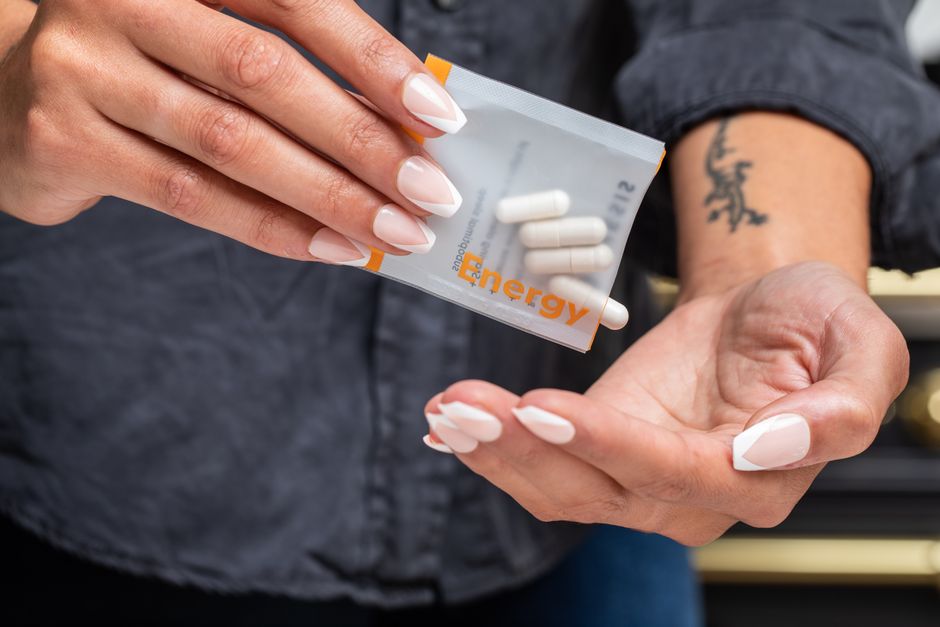
Most men who start digging into advanced longevity supplements run into the same two names first: NMN and NR. That made sense for a while. They were the easy shorthand for “NAD support,” the supplement industry built a small religion around them, and every second podcast guest seemed ready to explain cellular energy with the confidence of a man describing wine he cannot actually taste.
That shortcut does not hold up as well now. The advanced longevity supplements conversation has widened because the evidence is widening, the regulatory picture changed for NMN, and a few newer compounds have more interesting human data than the usual marketing copy suggests. If the goal is better muscle function, recovery, immune resilience, or a cleaner signal on biological aging, it makes more sense to compare what is actually supported than to keep repeating the 2021 version of the story.
The straight take: Urolithin A looks like the most convincing newer option for men who want real human trial data. GlyNAC is the most ambitious on mechanism and breadth. Fisetin and AKG are promising, but they still sit closer to “watch closely” than “lock it in.” Taurine and spermidine belong in the conversation, but not at the top of the certainty stack.
Why Advanced Longevity Supplements Are Moving Beyond NMN and NR
The first reason is simple: NMN stopped being a clean consumer-supplement story. The FDA determined in 2022-2023 that NMN could not be marketed as a dietary supplement because it was under investigation as a drug. That does not settle the larger scientific question, but it absolutely changes the practical question for buyers. A compound becomes less interesting as a default recommendation when its regulatory footing gets muddy.
The second reason is that NR, while still widely available, is not some flawless gold standard. Nature Communications published work in 2016 showing that nicotinamide riboside is a major NAD+ precursor vitamin, and the absorption problem still matters here: oral NR faces substantial first-pass metabolism in the liver before much reaches circulation. In plain English, the body does not treat every swallowed milligram like a direct delivery.
That is why the category is shifting from a narrow NAD+ obsession toward a broader performance-and-aging lens. Men in their 40s, 50s, and 60s usually do not care about biochemical elegance for its own sake. They care whether a supplement helps them train harder, recover faster, think clearly, or stay physically useful later in the decade.
That broader lens is also why our comparison of NMN vs NR vs Urolithin A is a better starting point than another generic “NAD booster” roundup. The real question is no longer which molecule sounds futuristic. It is which one survives scrutiny once human data, dosing, and real-world usefulness show up.
Urolithin A: The Most Clinically Tested New Longevity Compound
If one compound currently deserves the phrase “best-supported newcomer,” it is Urolithin A.
The 2025 MitoImmune trial, highlighted by Timeline and published in Nature Aging, found that 1,000 mg per day of Urolithin A over 28 days increased naive CD8+ T-cell levels, reduced exhaustion markers, and improved immune-cell activity in healthy adults aged 45-70. That matters because immune aging is not abstract. It shows up as slower recovery, weaker resilience after illness, and a body that starts acting older than the calendar says it should.
The muscle story is just as useful. A randomized trial indexed by PubMed / NIH found that adults aged 65-90 taking 1,000 mg per day of Urolithin A for two months saw a 17% increase in muscle endurance and a 26% increase in hand muscle endurance. Those are not tiny, hand-wavy outcomes. They are the kind of numbers that make a supplement worth a second look.
The mechanism also makes intuitive sense. Urolithin A is usually framed around mitophagy, which is a technical way of saying the body gets better at clearing out damaged mitochondria so healthier ones can keep doing the work. That does not mean it is magic. It means the theory and the human data finally line up better than they do for most “healthy aging” bottles.
For a time-poor reader who wants one advanced compound with actual adult human data, Urolithin A is probably the cleanest place to start.
Fisetin: The Senolytic Candidate With Multiple Trials Underway
Fisetin is more speculative, but not in a foolish way.
Its appeal comes from the senolytic angle. The idea is that some aging cells stop doing useful work, refuse to die, and keep releasing inflammatory signals that drag other tissue down with them. Senolytics aim to reduce that burden. If the concept holds up in humans, it is a very interesting lever. If it does not, it joins a long line of attractive theories that looked better in mice than in men with demanding lives and limited patience.
Right now the honest read is that fisetin is still in the proving phase. ClinicalTrials.gov lists active recruiting studies including NCT07195318, which is testing 100 mg per day for seven weeks in middle-aged and older adults while tracking inflammation and senescence markers, and NCT06133634, which is testing intermittent fisetin dosing for vascular function in older adults.
That is encouraging because it means the question is finally being tested properly. But it is still a question.
The preclinical signal is stronger than the human signal so far. Aging Cell published 2025 work showing intermittent fisetin treatment in old mice improved grip strength and reduced frailty. Useful. Interesting. Not enough to call it proven.
That puts fisetin in a specific bucket: promising senolytic candidate, worth monitoring closely, but not yet strong enough to outrank Urolithin A or GlyNAC for a buyer who wants the shortest path from evidence to decision.
GlyNAC: The Only Supplement Targeting Multiple Aging Hallmarks in Human Trials
GlyNAC is where the conversation gets more ambitious.
Instead of chasing one narrow pathway, GlyNAC combines glycine and N-acetylcysteine to support glutathione production and hit several aging-related mechanisms at once. That sounds broad because it is broad. The question is whether the data justify the reach.
Baylor College of Medicine and the Journal of Gerontology: Medical Sciences make the case better than most supplement categories manage. In a 16-week randomized clinical trial in older adults, GlyNAC improved gait speed, muscle strength, and exercise capacity while also correcting glutathione deficiency, mitochondrial dysfunction, inflammation markers, insulin resistance, genomic damage, and cellular senescence. That is an unusually wide set of reported improvements for one intervention.
There is a catch, and it is an important one: the benefits declined 12 weeks after discontinuation. In other words, this does not look like a brief repair cycle you run once and then coast on forever. It looks more like a support system that works while you keep using it.
That is not a deal-breaker. Plenty of worthwhile interventions only work while you actually do them. Sleep, training, protein, blood-pressure medication, not eating like a distracted teenager. The real point is expectation management.
For men who care about whole-system aging rather than one flashy endpoint, GlyNAC may be the most intellectually compelling option in the field right now. It is also probably the least sexy, which in supplements is often a good sign.
Alpha-Ketoglutarate (AKG): Epigenetic Age and the Promise of Reversal
AKG attracts attention because it sits close to the hottest phrase in the category: biological age.
That phrase gets abused constantly, but the underlying idea is still useful. If a biomarker-based clock suggests your physiology looks older or younger than your birth certificate implies, that can be a meaningful signal. The problem is that many marketers treat every clock shift like a guaranteed improvement in actual health or longevity. It is not that simple.
The strongest support right now comes from an Aging Cell observational study published in 2026 that analyzed 4,260 health enthusiasts and found that delayed-release AKG supplementation was associated with lower biological age measured by DNA methylation. That is promising, especially at that sample size.
But observational is still observational. Association is not proof. People taking delayed-release AKG may also be the exact kind of disciplined health obsessives who sleep well, lift three times a week, and treat alcohol like it insulted their family.
That is why the ABLE trial matters. ClinicalTrials.gov lists NCT07114536 as a randomized, double-blind, placebo-controlled study investigating daily Ca-AKG supplementation for biological age reduction in adults aged 40-60. Until results from that sort of trial arrive, AKG belongs in the “promising with restraint” category.
If you like the biological-age angle, AKG is worth watching. If you want certainty now, it is still a watchlist name, not a first-purchase favorite.
Taurine, Spermidine, and the Next Wave of Longevity Research
This is the part of the category where people tend to lose discipline.
A good mechanistic story appears, an animal study lands, a few influencers declare the future has arrived, and suddenly every compound is “the next creatine for aging.” It is a reliable circus. Best ignored.
Taurine has the stronger signal of the two. Science published a 2023 study showing taurine supplementation extended lifespan by 10-12% in middle-aged mice and improved healthspan in monkeys, including less weight gain, better bone density, and lower insulin resistance. The Buck Institute for Research on Aging amplified those findings because they were legitimately interesting.
The problem is translation. Animal data can point toward something worth testing, but it is not a free pass to human certainty. Men reading supplement labels do not live in a mouse colony.
Spermidine is even murkier. The 2022 SmartAge trial published in Alzheimer’s & Dementia did not hit its primary cognitive endpoint at 0.9 mg per day over 12 months. There were exploratory signals around inflammation reduction and verbal memory, which is enough to keep the idea alive, but not enough to call it a breakout.
So the ranking here is fairly clear. Taurine has intriguing preclinical momentum. Spermidine has a few hints but no decisive human win. Neither should be treated like a better-supported bet than Urolithin A. Neither has randomized human data showing lifespan extension. And both should sit behind basics like protein intake, training consistency, sleep, and buying products that actually pass quality screens such as those covered in our guide to third-party supplement testing certifications.
What Actually Makes Sense to Buy First
The supplement market loves a dramatic ranking. Real life does not.
If the goal is the strongest current human evidence, Urolithin A is the best first look. If the goal is broader systems support and you are comfortable with a supplement that only works while you keep taking it, GlyNAC deserves serious attention. If the goal is staying ahead of the next wave, fisetin and AKG are worth tracking, but they are still early enough that caution is part of the thesis.
None of this means older standards are useless. It means the category is maturing. The better question is not “Which pill makes aging optional?” That question belongs in the same bin as miracle crypto yield and six-minute abs. The better question is which compounds have human evidence tied to outcomes a serious adult would actually care about.
That also means avoiding category confusion. Longevity supplements are not testosterone therapy, and they are not a substitute for it. If that is your actual question, our evidence review of natural testosterone boosters is the more relevant branch of the tree.
The discipline here is boring but useful: pick based on evidence quality, not novelty; use products with credible testing; give interventions enough time to show something real; and do not let a clever mechanism talk you into pretending weak data is strong data.
Frequently Asked Questions
Can I take Urolithin A, GlyNAC, and fisetin together, or should I pick one?
Most readers are better off picking one target first. Urolithin A makes the most sense if muscle endurance, recovery, and mitochondrial function are the priority. GlyNAC makes more sense if you want broader support across several aging-related markers. Fisetin is still early enough that stacking it on top of everything else can muddy the picture. A cleaner approach is to choose one main intervention, track response, then decide whether complexity is earning its keep.
How long before I would notice any effects from these advanced longevity supplements?
The timelines in the human data are measured in weeks to a few months, not days. The MitoImmune Urolithin A trial ran for 28 days, and the muscle-endurance trial ran for two months. The GlyNAC trial ran for 16 weeks. If a product promises dramatic anti-aging effects by next Thursday, that is not evidence talking.
Are any of these supplements FDA-approved for anti-aging or longevity?
No. These products are sold as dietary supplements, not FDA-approved anti-aging drugs. That distinction matters. It means buyers should treat mechanistic claims carefully, favor ingredients with real human trials, and pay attention to manufacturing quality rather than assuming a label implies clinical certainty.
How does the cost of these newer supplements compare to NMN and NR?
Pricing moves around by brand, dose, and marketing budget, but newer compounds such as Urolithin A and AKG are often positioned as premium products. GlyNAC can be less glamorous and sometimes more practical depending on formulation. The smarter comparison is not bottle versus bottle. It is cost relative to evidence quality and whether the outcome you want is actually the one the compound has been studied for.
Should I get specific bloodwork before starting any of these supplements?
That depends on what you are trying to solve. These products are not all aimed at the same endpoint, so there is no one perfect lab panel that answers everything. Basic metabolic markers, inflammation markers, and any numbers you already track can help anchor expectations, but supplements aimed at mitochondrial function or senescence do not map neatly onto one routine lab result. If your actual concern is hormones, fatigue, or libido, that is a different workup entirely.
Advanced longevity supplements are finally getting past the phase where every answer sounded like “take an NAD booster and hope.” That is progress.
The field is still early, but it is not empty. Right now the best approach is simple: trust human data over novelty, keep Urolithin A and GlyNAC at the top of the serious list, and treat everything else as a watchlist item until stronger trials earn a promotion.
Continue reading: Read the pillar — Supplements & Nutrition
This article is for informational purposes only and is not financial advice. Consult a qualified professional for personalized guidance.
Leave a Reply