
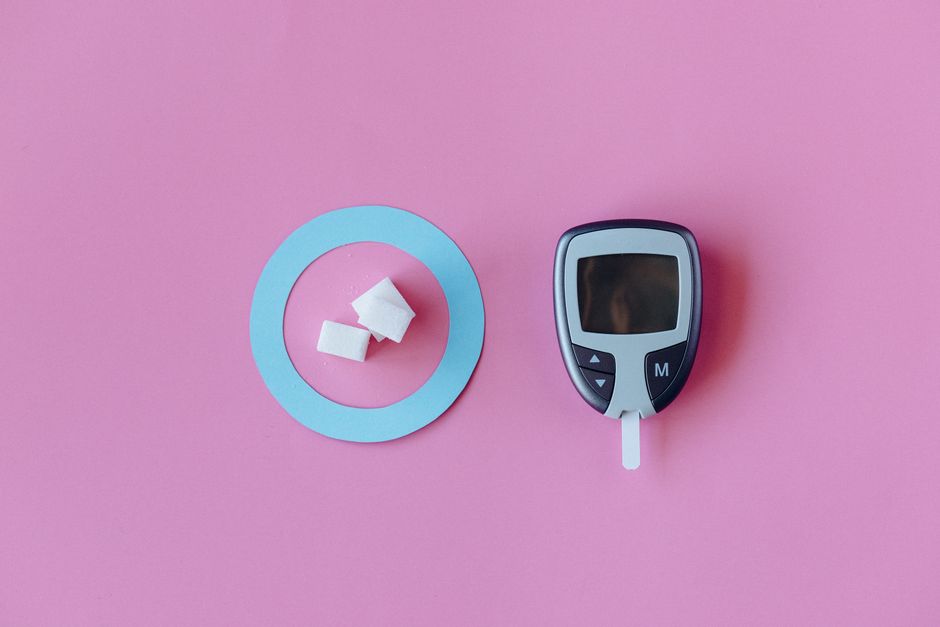
You get the annual physical, glance at the glucose number, see that HbA1c sits inside the lab’s normal range, and assume the metabolic side of the dashboard is fine. That’s a comforting story. It’s also often incomplete.
For men over 50, the real problem is timing. Metabolic trouble usually starts quietly, years before the standard annual panel looks dramatic enough to get anyone’s attention. By the time glucose looks obviously bad, the engine has often been misfiring for a while.
So if the question is `fasting insulin vs HbA1c priority for men over 50`, the answer is straightforward: start with fasting insulin, keep HbA1c as a trendline, and use CGM as a short-term audit when you want to see what your meals, sleep, and training are actually doing in real life.
Why Standard Metabolic Labs Don’t Tell the Full Story at 50+
The standard panel is built to catch problems once they are visible, not necessarily when they are early. NIDDK estimates that 97.6 million US adults have prediabetes, and roughly 90% do not know it. Harvard Health Publishing adds an uncomfortable detail for older adults: about half of adults over 65 meet the criteria for prediabetes. That’s not a small edge case. That’s a giant blind spot.
Part of the reason is simple. Glucose can stay normal for a long time because the body compensates by pumping out more insulin. That compensatory hyperinsulinemia keeps the obvious number looking respectable while the underlying metabolic stress keeps building in the background.
This is why a “normal” fasting glucose or a decent HbA1c should not be treated like a clean bill of health, especially after 50. It may mean things are fine. It may also mean your pancreas is working overtime to keep the numbers looking fine.
That distinction matters. A lot.
If you’re a time-poor guy who wants the shortest path to a useful answer, the real goal is not to confirm that the dashboard light is still off. The goal is to catch the friction before the transmission starts smoking.
Fasting Insulin vs HbA1c Priority for Men Over 50
If only one test gets priority, make it fasting insulin.
Kresser Institute points out that fasting insulin often starts rising a decade or more before fasting glucose or HbA1c move enough to trigger concern. The earlier trajectory work from Tabak and colleagues in Diabetologia lands in the same place: insulin sensitivity and insulin secretion can deteriorate long before a diabetes diagnosis shows up.
That is why fasting insulin is the earlier signal. It is measuring the effort required to hold the line, not just the final glucose score after the compensation has already happened.
The range issue is where many men get misled. Kresser Institute notes that an optimal fasting insulin for metabolic health is about 2 to 5 uIU/mL, while many standard lab reference ranges do not flag concern until levels are far higher, sometimes above 25 uIU/mL. In plain English, you can be well outside the optimal zone and still get a lab report that looks “normal” because the reference range is built to identify pathology, not ideal metabolic function.
This is also where HOMA-IR earns its keep. It combines fasting glucose and fasting insulin into a simple estimate of insulin resistance. That matters because either number alone can look unremarkable. Together, they can reveal a pattern that neither test fully exposes in isolation.
For a man over 50, fasting insulin is the early-warning system. HbA1c is not useless. It just arrives later to the party.
HbA1c: The Gold Standard With Critical Blind Spots
HbA1c became the default favorite for a reason. It is convenient, standardized, and gives a 2 to 3 month picture of average glucose exposure. That is helpful. But “average” is doing a lot of work in that sentence.
Average numbers can hide ugly swings.
Stanford Medicine reported that 73% of adults in one study had at least one glucose spike above 140 mg/dL, and more than half of the participants considered healthy had spikes that reached ranges associated with prediabetes or diabetes. Yet those same people could still carry a normal HbA1c because the average stayed acceptable.
That is the core blind spot. HbA1c does not show glycemic variability. It does not show what happens after a high-carb dinner, a terrible night of sleep, a week of travel, or the workout you thought was helping but keeps ending with a vending-machine raid two hours later.
It also cannot tell you whether the average looks calm because your metabolic system is genuinely flexible or because insulin is working overtime to keep the average respectable. HbA1c is a lagging indicator. Once it moves, the trend is worth taking seriously. But a normal HbA1c should not be mistaken for proof that insulin resistance is absent.
Think of HbA1c as the quarterly earnings report. Useful, absolutely. But it will not tell you what blew up on Tuesday afternoon.
CGM: Real-Time Visibility Your Annual Lab Doesn’t Give You
CGM solves a different problem. It does not replace fasting insulin or HbA1c. It shows behavior in motion.
Instead of one blood draw and one summary average, continuous glucose monitoring shows the meal-by-meal and hour-by-hour pattern. You can see post-meal excursions, overnight drift, the difference between a walk after dinner and no walk after dinner, and whether the “healthy” breakfast that looked disciplined on paper is actually a glucose cannon wearing a wellness costume.
That real-time visibility is the whole point.
Mass General Brigham reported early findings that CGM use in prediabetic populations, combined with lifestyle support, led to measurable HbA1c improvement, with roughly one-third of participants reversing their prediabetes classification. The key insight is not that a wearable magically fixes metabolism. It doesn’t. The value is feedback. People change behavior faster when they can see cause and effect instead of waiting three months for a lab number.
CGM is especially useful for men over 50 who are already doing many things “right” and still feel like their energy is not where it should be. Annual labs might tell you that you’re broadly fine. A two-week CGM stint can show that your oatmeal spikes harder than you expected, your sleep debt wrecks your morning control, or your late-night snacking is costing more than your willpower likes to admit.
Used that way, CGM is not a forever device for most people. It is a metabolic audit.
The Prioritization Framework: Which Marker When
Here is the practical order.
First, get fasting insulin and calculate HOMA-IR once a year. If fasting insulin is above 5 uIU/mL while glucose still looks normal, that is not a reason to panic. It is a reason to stop pretending that normal glucose means nothing is happening.
Second, keep HbA1c as the long-range trendline. The American Diabetes Association still uses HbA1c as a central part of diabetes and prediabetes classification, and that makes sense. Once glucose dysregulation progresses, HbA1c helps track whether the broader picture is improving, holding steady, or drifting the wrong way.
Third, use CGM for 2 to 4 weeks every 6 to 12 months when you want pattern recognition instead of guesswork. This is especially valuable if fasting insulin is creeping up, if energy and appetite feel unstable, or if you have already cleaned up the obvious lifestyle issues and want a more precise look at what is left.
The mistake is trying to make one marker do every job.
Fasting insulin tells you how hard the system is working behind the scenes. HbA1c tells you what average glucose has looked like across the last few months. CGM tells you how your system behaves in the wild. Those are different functions. Treating them as interchangeable is like comparing resting heart rate, VO2 max, and a live ECG and insisting one should replace the others.
For most men over 50, the best priority stack is this:
- Fasting insulin first for early detection
- HbA1c second for trend tracking
- CGM third for real-world pattern discovery
That stack gives the earliest warning, the best long-view context, and the clearest behavioral feedback.
How to Get These Tests Without a Concierge Doctor
This part matters because a brilliant testing framework is useless if you never order the test.
Fasting insulin is usually not included in a standard annual physical panel. You typically have to ask for it. That is annoying, but it is not complicated. For many primary care practices, “Please add fasting insulin to my next draw” is a routine request, not a moon landing.
If your doctor is resistant, direct-to-consumer platforms such as Marek Health, Function Health, and InsideTracker offer ways to access fasting insulin and HOMA-IR style interpretation without waiting for a physician to volunteer the idea.
CGM has its own access paths. Levels Health is one example of the non-diabetic access model, and short self-pay CGM programs commonly land around $200 to $300 for about four weeks. That is not cheap, but it is also not insane if the goal is a short-term diagnostic sprint rather than an endless subscription.
Insurance is less predictable. The American Diabetes Association’s standards help define formal prediabetes and diabetes thresholds, and documented HbA1c in the 5.7 to 6.4% prediabetes range can improve the odds of coverage in some cases, especially when other conditions are present. But if you’re waiting for insurance policy generosity to become a personality trait, pack a lunch.
The practical move is simpler:
Ask your PCP for fasting insulin on the next annual draw. Keep HbA1c on the regular panel. Use a short CGM block when you want clarity on meals, sleep, training, or unexplained crashes. That is a realistic, non-concierge approach that still gives you a much better metabolic picture than fasting glucose alone.
Frequently Asked Questions
Can I have normal HbA1c and still be insulin resistant?
Yes. That is one of the main reasons fasting insulin matters. HbA1c reflects average glucose, not the amount of insulin required to keep glucose under control. You can have a normal HbA1c while compensatory insulin output is already elevated.
How often should a man over 50 test fasting insulin?
The annual framework here fits most men over 50. If fasting insulin is drifting upward, if weight or waist circumference is changing quickly, or if energy and appetite feel unstable, more frequent follow-up may be reasonable to discuss with a clinician.
Is a CGM worth the cost if I’m not diabetic and my HbA1c is normal?
It can be, if you use it as a short-term audit rather than a lifestyle accessory. CGM is most useful when you want to identify post-meal spikes, overnight instability, or the impact of specific meals and habits that normal HbA1c cannot show.
What is HOMA-IR and should I ask my doctor to calculate it?
HOMA-IR is a formula that uses fasting glucose and fasting insulin to estimate insulin resistance. It is worth asking about because it can reveal metabolic stress even when each individual number looks unremarkable by standard lab reference ranges.
Will insurance cover fasting insulin or CGM if I don’t have a diabetes diagnosis?
Coverage varies. Fasting insulin is often straightforward to order but not always highlighted on standard preventive panels. CGM coverage is usually more restrictive without a diabetes or documented prediabetes diagnosis, which is why many people use a self-pay program for short-term insight.
The best metabolic marker is the one that catches change early enough to matter. For most men over 50, that means fasting insulin gets first priority, HbA1c stays in the rotation, and CGM comes in when you want to see the pattern instead of guessing at it.
Normal glucose is reassuring. It is not the whole story.
Sources
- NIDDK (National Institute of Diabetes and Digestive and Kidney Diseases), “Insulin Resistance & Prediabetes” (2024): https://www.niddk.nih.gov/health-information/diabetes/overview/what-is-diabetes/prediabetes-insulin-resistance
- Harvard Health Publishing, “Prediabetes diagnosis as an older adult: What does it really mean?” (2021): https://www.health.harvard.edu/blog/prediabetes-diagnosis-as-an-older-adult-what-does-it-really-mean-202106142481
- Kresser Institute, “Fasting Insulin: The Earliest Marker of Metabolic Dysfunction Most Practitioners Never Order” (2024): https://kresserinstitute.com/fasting-insulin-the-earliest-marker-of-metabolic-dysfunction/
- Tabak AG et al., “Trajectories of glycaemia, insulin sensitivity, and insulin secretion before diagnosis of type 2 diabetes,” Diabetologia (2009): https://pubmed.ncbi.nlm.nih.gov/19515410/
- Stanford Medicine, “Diabetic-level glucose spikes seen in healthy people” (2018): https://med.stanford.edu/news/all-news/2018/07/diabetic-level-glucose-spikes-seen-in-healthy-people.html
- Mass General Brigham, “Continuous Glucose Monitoring for People Without Diabetes” (2024): https://www.massgeneralbrigham.org/en/about/newsroom/press-releases/continuous-glucose-monitoring-for-people-without-diabetes
- American Diabetes Association, Standards of Care in Diabetes — 2024 (Diabetes Care): https://diabetesjournals.org/care/article/49/Supplement_1/S27/163926/2-Diagnosis-and-Classification-of-Diabetes
Continue reading: Read the pillar — Biomarkers & Lab Testing
This article is for informational purposes only and is not financial advice. Consult a qualified professional for personalized guidance.
Leave a Reply