
Sleep tracking gets pitched like a magic dashboard. Put on a ring, glance at an app, and apparently your brain becomes a spreadsheet. The problem is that most men over 50 don’t need more numbers. They need to know which wearable sleep metrics for cognitive performance over 50 are actually worth paying attention to, and which ones are mostly decoration.
That matters because the biology changes before the marketing copy does. University of Chicago researchers reported in JAMA that deep sleep falls earlier and faster in men than most people assume, with slow-wave sleep dropping from about 20% of total sleep in younger men to less than 5% by the mid-30s. By the time you’re 55, the issue usually isn’t whether sleep affects sharpness. It’s which part of sleep is most tied to tomorrow’s mental performance, and whether your wearable is measuring it well enough to be useful.
The straight answer is this: deep sleep percentage has the strongest long-term evidence behind it, morning HRV is probably the best day-to-day readiness signal, and sleep latency matters but is the noisiest of the three once a consumer wearable gets involved. That’s not as tidy as picking one winner and calling it a day. It’s, however, a lot more honest.
Wearable Sleep Metrics and Cognitive Performance Over 50: Why Men Over 50 Should Care About Sleep Metrics, Not Just Sleep Duration
Sleep duration is the easiest number to understand and often the least revealing. Seven hours can look respectable on a dashboard while your sleep architecture looks like a budget that got “restructured” by someone who still takes a car service to the airport.
For men over 50, the key issue is that the mix of sleep stages shifts with age. The University of Chicago findings published in JAMA showed that deep sleep declines much earlier than the average person expects. Then the risk picture gets sharper. In a 2023 JAMA Neurology analysis from Monash University and the Framingham Heart Study, each 1% annual decline in deep sleep in adults over 60 was associated with a 27% higher risk of dementia over the follow-up period.
At the same time, more people are now tracking sleep than ever. The American Academy of Sleep Medicine’s 2026 sleep tracker survey found that 48% of U.S. adults had used a sleep tracking device, up from 35% in 2023, and men reported higher use than women. So the market now has a familiar pattern: more data, more dashboards, and more confidence than the evidence really justifies.
What this means in practical terms is simple. If you only look at time asleep, you can miss the part that matters most. A night with mediocre duration and solid deep sleep may leave you sharper than a longer night with lousy slow-wave sleep and repeated wakefulness. Duration still matters, but it is the headline number, not the whole story.
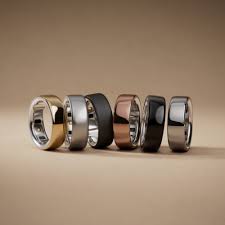
Oura Smart Rings
This article contains affiliate links. We may earn a commission at no extra cost to you.

Whoop
This article contains affiliate links. We may earn a commission at no extra cost to you.
Sleep Latency: The Underappreciated Predictor of Next-Day Executive Function
Sleep latency is just how long it takes you to fall asleep. That sounds almost too basic to matter, which is usually a clue that people have been ignoring something useful.
The Strong Heart Study, published in Frontiers in Aging Neuroscience in 2024, found that longer objectively measured sleep latency in midlife was associated with worse later-life phonemic fluency and a higher likelihood of cognitive impairment classification. The Penn State group added a more day-to-day angle in 2023, reporting that longer sleep latency, especially when paired with bedtime stress, predicted poorer next-day prospective memory reaction time. Translation: if it regularly takes a long time to fall asleep, the cost may show up not just in how tired you feel, but in how cleanly you retrieve words, hold intentions, and handle tasks that require executive control.
That makes sleep latency more interesting than it first appears. It may reflect stress, circadian mismatch, pain, alcohol effects, late-night screen exposure, or sleep-disordered breathing that hasn’t been diagnosed yet. In other words, it is often a signal of friction somewhere upstream.
The catch is measurement. Wearables don’t measure sleep onset the way a sleep lab does. The 2024 Sensors validation work on Oura‘s sleep staging algorithm reported wake detection sensitivity of 68.6%. That’s decent for a consumer device and still means a meaningful share of wakefulness gets missed. If your ring says you fell asleep in 12 minutes, what you actually know is that the algorithm thinks you became sleep-like around then.
So where does that leave sleep latency? Worth watching, especially if the number is consistently high or trending worse. Less useful as a precision metric. If a wearable keeps showing latency above 30 minutes, that is probably a real enough flag to investigate. If it says 14 minutes one night and 19 the next, don’t pretend you’re reading lab-grade truth from your finger.
Deep Sleep Percentage: The Metric With the Strongest Link to Brain Health
If the question is which metric has the strongest research base behind it, deep sleep percentage wins without much drama. Slow-wave sleep is the stage most closely tied to memory consolidation and the overnight housekeeping the brain is supposed to do, including clearing amyloid-beta proteins associated with Alzheimer’s disease.
The strongest data here comes from the 2023 JAMA Neurology study from Monash University and the Framingham Heart Study. Researchers followed 346 adults over 60 who completed two overnight polysomnography studies five years apart and then tracked dementia outcomes for 17 years. Each percentage-point drop in deep sleep per year was associated with a 27% increase in dementia risk even after adjusting for major confounders.
That isn’t the same thing as saying one bad night of low deep sleep wrecks tomorrow’s decision-making. The day-to-day cognitive prediction piece is thinner than the long-term decline data. But if you want the metric with the most direct tie to meaningful brain outcomes, this is it.
Consumer measurement also looks better here than it does for sleep latency, with caveats. The 2024 Sensors validation showed Oura‘s deep sleep sensitivity at 79.5%, higher than Fitbit at 61.7% and Apple Watch at 50.5%. That makes deep sleep one of the more usable consumer sleep-stage signals. Then the caveat arrives right on schedule: the 2024 JMIR mHealth and uHealth study by Park and colleagues found that wearables in adults aged 56 to 80 tended to overestimate deep sleep and showed wider limits of agreement than in younger adults.
That combination leads to the only sensible interpretation. Deep sleep percentage matters most as a trend, not as an isolated nightly score. If your ring says 16% deep sleep tonight, don’t build a theory of your brain around that single number. If your 14-day average has slid for six weeks while your concentration is getting worse, now you have something worth paying attention to.
Morning HRV: What It Says About Cognitive Readiness
Morning HRV is attractive because it feels current. Deep sleep tells you something about the night that happened. HRV feels like it tells you what version of yourself showed up this morning.
Mechanistically, that idea isn’t crazy. A 2023 Brain Communications study found that higher high-frequency HRV during slow-wave sleep was associated with stronger functional connectivity in parts of the central autonomic network in older adults at risk of dementia. That links parasympathetic activity during sleep to brain systems involved in regulation and readiness. It doesn’t prove that a low readiness score means you’ll make bad decisions before lunch, but it gives the concept a real physiological backbone.
The measurement story is also stronger here than many people realize. In a 2025 Physiological Reports validation across 536 nights, Oura Gen 4 had near-ECG agreement for nocturnal HRV with a concordance correlation coefficient of 0.99 and a mean absolute percentage error under 6%. WHOOP 4.0 also performed well at 0.94, while Garmin Fenix 6 came in lower at 0.87. For a consumer category that usually runs on vibes and glossy screenshots, those are respectable numbers.
The evidence gap is direct prediction. Compared with deep sleep, the literature tying HRV specifically to next-day cognitive performance in men over 50 is still emerging. The Oura and Cambridge Cognition Brain Health Study, which is running through 2026 and can include up to 45,000 participants, is important precisely because it is trying to connect daily wearable patterns with validated CANTAB cognitive testing rather than just recovery language.
So HRV is promising, plausible, and increasingly measurable. It’s probably the best day-to-day readiness signal in this group. It isn’t yet the cleanest single answer to the question of which metric predicts tomorrow’s cognitive sharpness best.
Head to Head: Which Metric Wins for Predicting Next-Day Cognitive Performance?
There is no clean prizefighter-style winner because the research hasn’t run that fight directly. No study cited here compares sleep latency, deep sleep percentage, and morning HRV head to head in men over 50 under the same controlled conditions with next-day cognitive outcomes.
Still, the evidence does sort itself into a usable hierarchy. Deep sleep percentage has the strongest long-range evidence behind it. If you care about the part of sleep most plausibly tied to memory consolidation and long-term brain risk, that is the metric with the deepest bench. Sleep latency has credible data linking it to executive function and verbal fluency, but wearable-based estimates make it a shakier consumer signal. Morning HRV has the best case for reflecting daily autonomic readiness and some of the strongest wearable accuracy numbers, but the direct human evidence linking it to next-day cognitive performance remains earlier-stage.
The ranking, then, looks like this. For long-term signal quality, deep sleep percentage comes first. For daily “am I likely to feel mentally on today?” usefulness, morning HRV probably comes first. For identifying that something in your sleep process is off, sleep latency is a valuable secondary metric. That’s less satisfying than a one-number answer. It’s also how grown-up interpretation usually works.
There is one more wrinkle. A 2025 arXiv preprint described deep learning models that combined HRV with EEG-derived features and showed promise in predicting executive functions such as conceptual reasoning and adaptability. That points toward the direction the field is likely heading: multi-metric models. One number is convenient. Several signals interpreted together are usually better.
Why Your Wearable’s Accuracy Matters More at 50+ and Which Devices Do Best
The older you are, the less you can afford to treat a wearable score as literal truth. Park and colleagues showed in JMIR mHealth and uHealth that sleep trackers were meaningfully less accurate in adults aged 56 to 80 than in younger adults. Total sleep time was underestimated, deep sleep was often overestimated, and agreement widened across stages.
That matters because older users are the exact group most likely to make higher-stakes decisions from these numbers. A 28-year-old can misread a sleep dashboard and mostly lose a workout. A 58-year-old executive who is watching cognition, recovery, blood pressure, and long-term health may start changing alcohol intake, training load, or supplement spend based on a number that is partly algorithmic theater.
Based on the Physiological Reports, Sensors, and JMIR mHealth and uHealth validation work, Oura looks best if the priority is combining HRV quality with relatively stronger deep sleep staging. WHOOP remains a reasonable choice for someone who wants continuous wear and strong HRV tracking but doesn’t care about ring form factor. Garmin is useful if training context is the main goal and sleep is one input among many, but it is the weakest fit here if the main question is cognitive performance and sleep architecture.
There is a “not for” clause on each of those. Oura is a poor fit if you hate wearing rings or want rich on-watch training tools. WHOOP is a poor fit if subscription fatigue already makes you twitch. Garmin is a poor fit if you want the cleanest read on nocturnal HRV and deep sleep rather than an all-purpose training system. Device choice isn’t a style decision here. It changes the quality of the evidence you are collecting.
A Practical Framework for Tracking These Metrics Without Getting Lost in the Noise
The mistake most people make is treating sleep data like a verdict instead of a pattern. One bad night becomes a story. One high score becomes self-congratulation. Neither is useful.
The current evidence supports a more disciplined approach. First, track deep sleep as a 7- to 14-day trend, not a single-night score, because older adults get more algorithm drift in deep sleep estimates. Second, use morning HRV as the daily readiness signal because wearable measurement quality is strongest there and the physiology lines up with autonomic recovery. Third, treat sleep latency as a secondary warning light. If it is consistently above 30 minutes, something is probably off even if the exact number is fuzzy.
Fourth, give any interpretation at least 30 days. A week of data is usually just a mood with charts. Thirty days is enough time to see whether reduced alcohol, better sleep timing, lighter evening meals, or a training deload is moving more than one metric in the right direction. Fifth, if cognitive decline is a real concern rather than a passing worry, a baseline polysomnography study is worth considering. Consumer wearables are useful. They aren’t substitutes for a sleep lab when the stakes go up.
That framework also respects the audience here. A time-poor man in his 50s doesn’t need ten dashboards and a color-coded sleep philosophy. He needs a small number of signals, tracked long enough to mean something, interpreted with enough skepticism that the device doesn’t become smarter than the user.
Frequently Asked Questions
Is deep sleep percentage from my Oura Ring accurate enough to base health decisions on after 50?
Accurate enough to follow as a trend, yes. Accurate enough to treat as exact, no. The Sensors validation suggests Oura is better than most consumer devices at detecting deep sleep, but the JMIR mHealth and uHealth study in older adults found that wearables tend to overestimate deep sleep in people aged 56 to 80. Use the number as a directional signal over a week or two, not as a diagnosis.
How long should I track these metrics before I look for a real link to cognitive sharpness?
Thirty days is a sensible minimum. That gives enough time to compare several workdays, training days, stressful nights, and normal nights without overreacting to one bad stretch. If you want a stronger signal, 60 days is better, especially when you are comparing trends in HRV and deep sleep rather than single-night readings.
If my wearable shows decent sleep latency but low deep sleep, which metric deserves more attention?
Deep sleep usually deserves more attention because the evidence base behind it is stronger and the biological connection to memory and brain health is more direct. Sleep latency still matters, but wearable estimates there are weaker. If deep sleep stays low and concentration feels worse, that is the more meaningful pattern.
Can morning HRV tell me whether recovery issues are affecting my cognitive performance?
It can point in that direction, especially if low HRV lines up with mentally flat days, poor sleep, heavy training, or high stress. The mechanistic case is solid and wearable measurement is improving. The evidence isn’t yet strong enough to treat HRV alone as a cognitive test, but it is a useful readiness signal.
Will the Oura and Cambridge Cognition study settle this question?
It should improve the answer, not end the argument. The study matters because it pairs daily wearable data with validated cognitive testing at scale. Even then, the likely outcome is a better model of how several signals work together, not a declaration that one metric finally defeated the others.
The Bottom Line
For men over 50, deep sleep percentage is the strongest metric for long-range brain relevance, morning HRV is the best daily readiness signal, and sleep latency is the most fragile number once a wearable tries to estimate it. The useful move isn’t to chase a single perfect score. It’s to track the right signals long enough to separate real patterns from expensive wrist-based storytelling.
This article is for informational purposes only and is not financial advice. Consult a qualified professional for personalized guidance.
Leave a Reply