
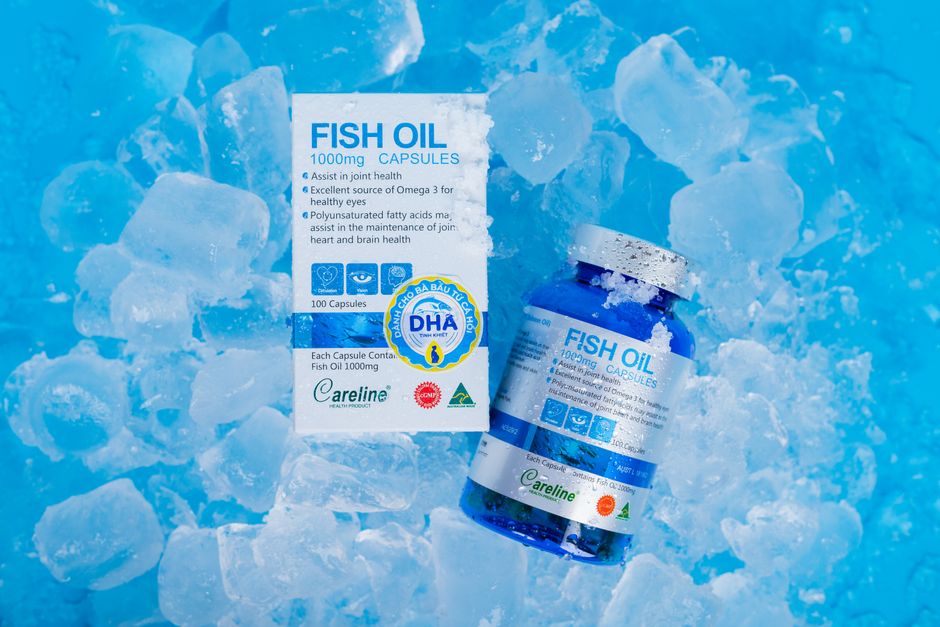
Most men don’t have an omega-3 problem because they forgot salmon exists. They have one because they assume a decent diet plus a generic fish-oil capsule must be close enough. Usually it isn’t. An omega-3 index test gives you a cleaner answer by measuring EPA and DHA levels directly in red blood cell membranes, which is a much better proxy for long-term status than guessing from your last two meals.
That matters because this is one of the rare biomarkers with a practical target zone. William S. Harris proposed the Omega-3 Index as a cardiovascular risk factor in 2004, and his later review in Current Cardiology Reports argued that 8% or higher is where risk starts looking meaningfully different from the under-4% group. So the useful question isn’t whether omega-3s are “good for you.” The useful question is whether your number is 3.8%, 6.1%, or 8.4%, because those are different situations.
For a time-poor reader, the short version is simple: the test is easy, the average American score is mediocre, and reaching therapeutic levels usually takes more EPA+DHA than supplement labels imply. Here’s how the test works, what the numbers mean, and when a dedicated test is worth the trouble.
What Is the Omega-3 Index and Why It Matters
The Omega-3 Index is the percentage of EPA plus DHA in red blood cell membranes. That detail matters because red blood cells turn over slowly, so the test reflects your longer-term intake over roughly the prior three to four months rather than what you ate on Tuesday. Harris’s review in Current Cardiology Reports made the case for using that percentage as a practical risk marker instead of relying on vague dietary recall or generic “eat more fish” advice.
The important cut points aren’t mysterious. An index below 4% is generally treated as high risk. Between 4% and 8% is the middle ground. Eight percent or higher is the target zone most often associated with better cardiovascular outcomes, and Harris argued that the 8% mark had the strongest case for clinical usefulness. That’s why this marker is more actionable than the average wellness score that looks impressive in an app and tells you almost nothing.
It also travels well beyond heart-health marketing. The same EPA and DHA that shape cell membranes in the cardiovascular literature show up in discussions around brain health, eyes, and inflammation-related joint issues. That doesn’t mean the Omega-3 Index is a magic master switch. It means you are looking at a biomarker tied to systems that matter if staying sharp and functional into your 50s and 60s is the whole point.
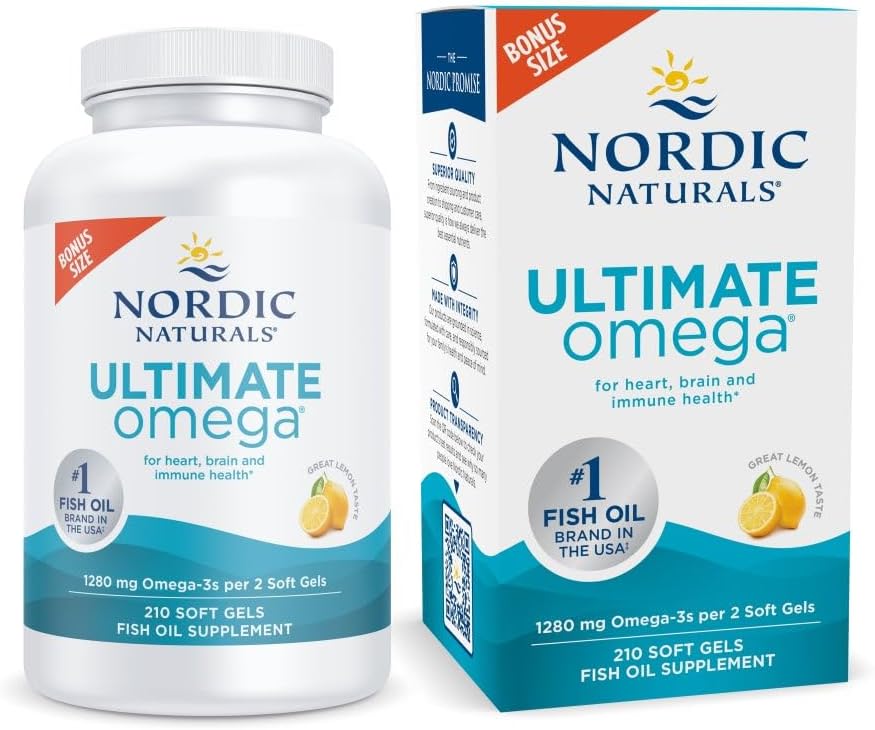
Nordic Naturals Ultimate Omega
This article contains affiliate links. We may earn a commission at no extra cost to you.
How the Omega-3 Index Test Works: From Finger Prick to Results on Your EPA and DHA Levels
The testing process is refreshingly low drama. OmegaQuant’s basic Omega-3 Index kit uses a finger-prick blood spot on a collection card. You fill the card, let it dry, mail it back, and the lab runs gas chromatography on the fatty acids in red blood cell membranes. No fasting. No lab appointment. No half-day lost to fluorescent waiting-room theater.
Results come back as a percentage. If your report says 6%, that means 6% of the fatty acids in those red blood cell membranes are EPA plus DHA. That’s why the test is more useful than glancing at a supplement bottle and hoping the math works out. It measures tissue status, not supplement intentions.
The practical upside is accessibility. OmegaQuant lists the basic test at about $55, which is inexpensive by biomarker standards. For someone who already tracks ApoB, HbA1c, or testosterone, this is one of the simpler add-ons you can make. For someone who tracks nothing, it is still straightforward enough to do at home without turning your kitchen table into a biotech startup.
What Therapeutic Levels Look Like: The 8-12% Target Zone
The target most often cited is 8% to 12%. Below 4% is the danger zone. Four to 8% is better than baseline, but it isn’t where the most reassuring outcome data tends to cluster. That distinction matters because a lot of people see a number like 5.7% and assume they are probably fine. “Probably fine” isn’t the same thing as being where the evidence looks strongest.
The mortality data is what makes this marker more than trivia. In the Women’s Health Initiative Memory Study analysis published in the Journal of Clinical Lipidology, participants in the highest Omega-3 Index quintile, above 6.8%, had a 34% lower risk of all-cause mortality than those in the lowest quintile, below 4.2%, after adjustment for 18 variables. Harris and colleagues also cite evidence that an index above 8% is associated with roughly 69% lower risk of acute coronary syndrome compared with levels under 4%.
That doesn’t mean every man needs to obsess over squeezing out an extra half-point forever. It does mean the broad shape of the evidence is consistent: 8% isn’t an arbitrary vanity number. It’s the line where the conversation shifts from “better than average” to “therapeutic range.” For a reader who likes objective targets, that is unusually useful.
Where Most Americans Actually Stand: The Population Data
The population data is sobering without needing melodrama. OmegaQuant’s summary of its larger sample sets puts the average American around 4% to 5%. That isn’t a little short of ideal. That’s living in the same zip code as the high-risk category and calling it a neighborhood.
NHANES data cited by OmegaQuant for 2011-2012 is even less flattering: 88.7% of US adults landed below 4%, while only 1% reached 8% or higher. Men tend to score lower than women, and younger adults trend lower than older ones. So if your result comes back unimpressive, that doesn’t mean you are uniquely neglectful. It means you are unusually normal.
The more interesting number is what it takes to escape the average. OmegaQuant reports that people who eat three fish meals per week and take an omega-3 supplement average about 8.1%. In other words, “I eat fish sometimes” is usually not enough, while a deliberate combination of diet plus supplementation can barely clear the target line. That’s useful because it reframes the problem from moral virtue to dose and consistency.
How Much EPA+DHA You Need to Reach Therapeutic Levels
This is where most supplement advice falls apart. Labels are often written as if 300 to 600 mg of combined EPA and DHA should make you feel virtuous, when the data suggests that many people starting in the 4% to 6% range need materially more than that to reach 8%.
OmegaQuant’s dosing calculator, which cites work by Jackson and Harris, estimates that around 1,300 mg per day of combined EPA+DHA gets roughly half the population to 8%, while about 1,900 mg per day is needed to get 90% there. That’s a useful frame because it acknowledges individual variability instead of pretending everybody responds the same way to the same softgel.
Absorption matters too. The same OmegaQuant guidance notes that triglyceride forms tend to absorb better than ethyl esters. The NIH Office of Dietary Supplements adds an important safety boundary here: up to 3,000 mg per day of EPA and DHA combined is generally considered safe in the US, but higher doses are still worth discussing with a clinician if you take anticoagulants, have bleeding concerns, or are managing a more complicated medical picture.
The practical move isn’t blind megadosing. It’s test, dose with intent, then retest after about four months. That timeline lines up with red blood cell turnover, so it gives you a fair read on whether your current intake is enough. If your first result is 4.5%, a label-level maintenance dose is usually not the answer.
Where to Get Your Omega-3 Index Tested: Available Platforms Compared
If you want one clean number at the lowest cost, OmegaQuant is the obvious default. The dedicated basic test runs about $55, uses the finger-prick format, and is built specifically for this marker. For someone whose question is simply “What is my Omega-3 Index right now,” that is the efficient option.
InsideTracker is a different proposition. Its omega-3 assessment sits inside broader biomarker panels that run roughly $119 to $589, according to the company’s public pricing materials. That’s more expensive, but it can make sense if you already think in panels rather than single markers and want omega-3 status alongside lipids, inflammation markers, glucose control, and the rest of the usual suspects.
Other sellers, including Life Extension and Carlson Labs, largely resell OmegaQuant’s testing infrastructure. So the real choice is less about proprietary lab magic and more about format. A dedicated omega-3 test is best for the reader who wants a narrow answer without extra spend. A broader platform is more practical if you are already doing multi-marker reviews and don’t want another one-off kit arriving in the mail. The dedicated test is also not for someone who dislikes self-collection or already has a comprehensive lab workflow that covers the rest of his biomarker tracking.
Frequently Asked Questions
Can I get enough EPA and DHA from fish alone, or do I need supplements to reach 8%?
Some people can get there with fish alone, but the population data says most don’t. OmegaQuant’s summary suggests that people averaging three fish meals per week plus a supplement land around 8.1%, which tells you diet alone is often not enough unless intake is very consistent and fairly high.
How often should I retest my Omega-3 Index after I start supplementing?
About four months is the sensible interval. The test reflects red blood cell membrane composition over roughly three to four months, so retesting earlier often tells you less than you think.
Is the Omega-3 Index the same as the omega-3 level in a standard blood lipid panel?
No. The Omega-3 Index measures EPA and DHA as a percentage of red blood cell membrane fatty acids. A standard lipid panel focuses on cholesterol and triglycerides, which is a different measurement with a different purpose.
What happens if my Omega-3 Index is above 12%?
The commonly cited target zone tops out around 12%, but that doesn’t automatically mean 12.1% is a crisis. It means the evidence base is strongest in the 8% to 12% range, and pushing far past that without a reason is usually unnecessary. If your intake is very high or you use blood thinners, that is a good point to review with a clinician.
Does the Omega-3 Index matter for brain health and cognitive decline, or just heart health?
The strongest clinical framing is cardiovascular, but EPA and DHA are also relevant to brain and eye function because they are structural fats in cell membranes. The evidence is more established in some areas than others, so this is best viewed as a useful biomarker with broader implications, not a single-number guarantee against cognitive decline.
The Bottom Line
An omega-3 index test is worth considering if you want a real answer instead of dietary guesswork. The number to care about isn’t whether you take fish oil at all, but whether your EPA and DHA levels land in the 8% to 12% range that the evidence treats as therapeutic. For most people, that takes more intention and more dose than the supplement aisle likes to admit.
Sources
- Harris WS. “The omega-3 index: clinical utility for therapeutic intervention.” Current Cardiology Reports. 2010. https://pubmed.ncbi.nlm.nih.gov/20809235/
- Harris WS, et al. “Red blood cell polyunsaturated fatty acids and mortality in the Women’s Health Initiative Memory Study.” Journal of Clinical Lipidology. 2018. https://pmc.ncbi.nlm.nih.gov/articles/PMC6034629/
- OmegaQuant. “What Do Your Omega-3 Index Results Mean?” 2024. https://omegaquant.com/what-do-your-omega-3-index-results-mean/
- OmegaQuant. “Omega-3 Index Basic Test.” 2024. https://omegaquant.com/omega-3-index-basic/
- National Institutes of Health Office of Dietary Supplements. “Omega-3 Fatty Acids – Health Professional Fact Sheet.” 2025. https://ods.od.nih.gov/factsheets/Omega3FattyAcids-HealthProfessional/
- OmegaQuant. “Omega-3 Dosing Calculator and Research.” 2024. https://omegaquant.com/omega-3-calculator/
- InsideTracker. “Blood Biomarkers InsideTracker Measures.” 2025. https://www.insidetracker.com/a/articles/blood-biomarkers-insidetracker-measures
Related: Optimal biomarker ranges for men over 50
Related: At-home blood test comparison for men over 50
Related: Third-party tested omega-3 supplements ranked
Continue reading: Read the pillar — Biomarkers & Lab Testing
This article is for informational purposes only and is not financial advice. Consult a qualified professional for personalized guidance.
Leave a Reply