
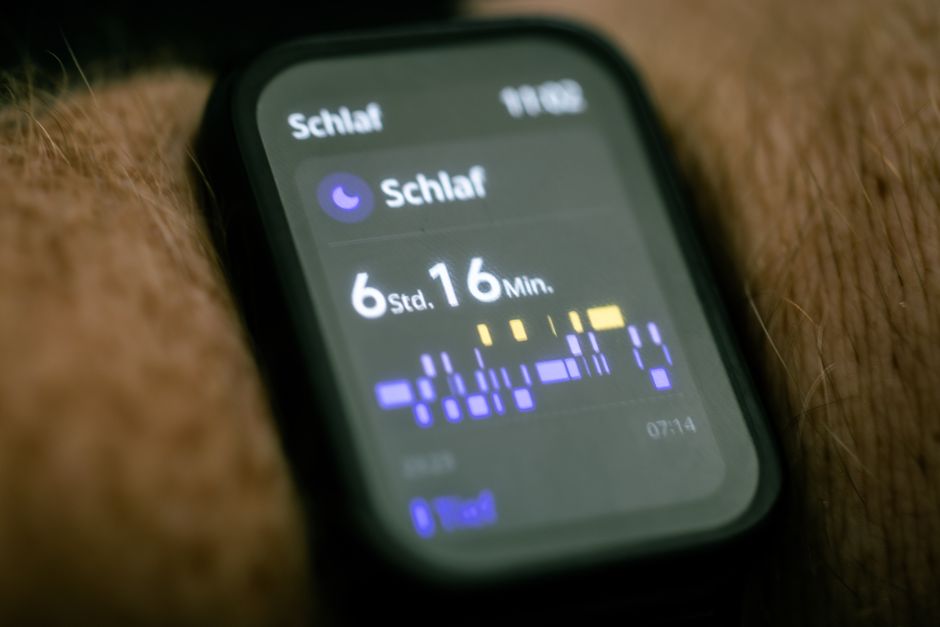
Sleep apnea is one of those problems that gets waved off as snoring until it starts stealing performance in broad daylight. The executive version looks familiar: afternoon brain fog, workouts that feel harder than they should, blood pressure creeping up, and a spouse mentioning that your breathing at night sounds strange. None of that feels dramatic. It just feels like you’re not quite as sharp as you used to be.
That’s the blind spot. StatPearls notes that obstructive sleep apnea is common and often undiagnosed, and cpap.com cites estimates that 80% to 90% of cases still go unnoticed. For men in their 50s and 60s, that matters because the first sign is rarely a cinematic collapse. It’s usually a steady leak in energy, recovery, and focus.
So the real question isn’t whether a ring or wrist strap can diagnose you. It can’t. The useful question is whether a wearable can flag breathing patterns early enough to tell you something is off before another year disappears into bad sleep and mediocre mornings. That’s where Oura, WHOOP, and Garmin are worth a serious look.
The Sleep Apnea Blind Spot in Your 50s
Sleep apnea isn’t a niche problem for exhausted truckers and cartoon husbands who snore loud enough to rattle drywall. It’s a mainstream problem in middle age, especially for men. StatPearls reports that obstructive sleep apnea prevalence rises with age, and cpap.com summarizes data suggesting roughly 40% of men ages 50 to 70 may have it. Men are also substantially more likely than women to have OSA before age 65.
The ugly part is the underdiagnosis. If 80% to 90% of cases are still missed, plenty of men are treating the downstream effects instead of the actual cause. They blame stress for bad sleep. They blame age for slower recovery. They blame work for the afternoon crash. Sometimes that’s true. Sometimes the villain is just repeated nighttime oxygen drops wearing a suit and pretending to be “normal aging.”
For the Resilience reader, the cost isn’t abstract. Bad sleep compounds everything else you’re already managing: training, work output, appetite control, blood pressure, and the ability to think clearly at 4 p.m. when the important meeting starts. Sleep apnea doesn’t always announce itself with obvious choking episodes. Sometimes it just shows up as a persistent decline in edge.
That makes screening valuable. Not diagnosis. Screening. A wearable that notices something odd in breathing, oxygen saturation, or overnight recovery can serve as an early tripwire. That’s useful because the men most likely to benefit are also the ones least likely to book a sleep lab just because they feel a little off.
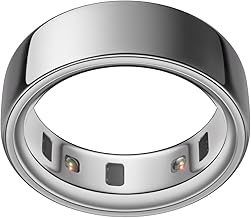
Oura Ring 4 — Silver
$349.99
This article contains affiliate links. We may earn a commission at no extra cost to you.
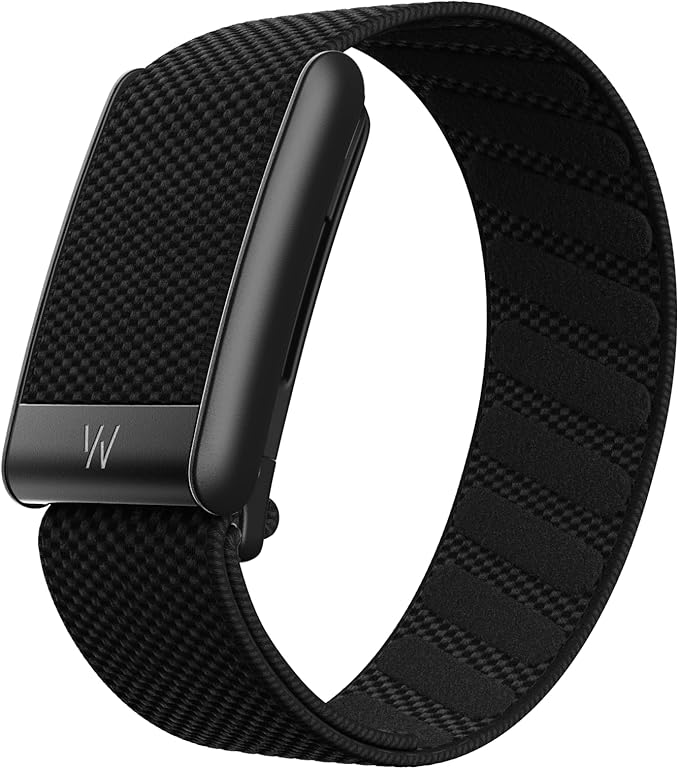
WHOOP MG Health Monitor
$239.00
This article contains affiliate links. We may earn a commission at no extra cost to you.
Garmin Venu 3 GPS Smartwatch
$289
This article contains affiliate links. We may earn a commission at no extra cost to you.
How Wearable Sleep Apnea Detection Works Without a Sleep Lab
Consumer wearables aren’t running a mini sleep lab on your body. They’re doing something both simpler and surprisingly useful: watching indirect signals that tend to move when breathing gets unstable at night. The main tools are photoplethysmography, usually shortened to PPG, accelerometers, and overnight SpO2 monitoring.
PPG is the light-based sensor that estimates pulse and blood flow changes through the skin. Think of it as a traffic camera for your circulatory system. It can’t see an apnea event the way a clinical airflow sensor can, but it can catch the ripple effects. If breathing repeatedly stalls or becomes shallow, oxygen saturation can dip, heart rate patterns can shift, and movement can change. That gives algorithms something to work with.
Oura uses those signals to estimate a Breathing Disturbance Index, or BDI, which tracks irregular breathing events per hour. Oura‘s own support materials are careful here, and rightly so: BDI isn’t the same thing as the clinical Apnea-Hypopnea Index used in a sleep study. WHOOP takes a different route, focusing on respiratory rate derived in part from respiratory sinus arrhythmia, then pairing that with recovery metrics. Garmin leans on Pulse Ox data and breathing-variation tracking, including on its newer screen-free sleep band.
The plain-English takeaway is simple. These devices aren’t listening to your airway directly. They are detecting the fingerprints that unstable breathing leaves behind. That’s why they can be useful for screening and trend detection, but not as a substitute for polysomnography or a formal home sleep apnea test.
Oura Ring: Breathing Disturbance Index and SpO2 Tracking
If the goal is sleep-apnea screening specifically, Oura has the clearest story of the three. Oura Ring 4, launched in October 2024, added Smart Sensing with 18 signal pathways, which Sleep Review Magazine reported improved overnight SpO2 accuracy by 30% and made BDI 15% more accurate than Gen 3. That matters because better signal quality is what makes any screening feature less gimmick and more decision-useful.
Oura also has the one metric here that feels built for the problem rather than adjacent to it. A Breathing Disturbance Index isn’t a diagnosis, but it is at least pointed in the right direction. You’re not being asked to infer apnea risk from a vague readiness dip or a weird resting heart rate week. You’re being shown a metric specifically meant to track irregular breathing events over time.
There is also real validation behind the ring’s broader sleep tracking. A 2024 Brigham and Women’s Hospital study published in Sensors found Oura reached 79% agreement with polysomnography in four-stage sleep classification, which Oura described as the strongest result among the consumer trackers tested in that comparison. Sleep-stage accuracy isn’t the same thing as apnea detection, but it does tell you the platform is operating on better sleep data than the usual gadget-store guesswork.
Then there’s the practical bridge to clinical care. In May 2026, Oura announced a partnership with ResMed to connect users who show potential OSA signs to formal sleep assessments. That’s smart product design. Screening without a path to confirmation is just a fancier form of health anxiety. Oura’s advantage isn’t that it replaces a clinician. It’s that it gets closer than the others to saying, “Something looks off here, and here’s the next sensible step.”
WHOOP: Respiratory Rate and Recovery Signals for Sleep Apnea Screening
WHOOP‘s case is different. It doesn’t offer a dedicated breathing disturbance index, which puts it behind Oura if your main concern is wearable sleep apnea detection. But it does a credible job of tracking the physiological fallout that often travels with sleep-disordered breathing.
The strongest point in WHOOP‘s favor is respiratory rate validation. WHOOP cites a Journal of Clinical Sleep Medicine study showing its respiratory rate measurement was accurate within 1 breath per minute of gold-standard measurements. That’s meaningful because respiratory rate is usually a boring metric until it isn’t. When it drifts upward or becomes less stable overnight, something changed.
WHOOP also wraps that signal inside a broader recovery picture. Its Health Monitor dashboard tracks SpO2, heart rate variability, resting heart rate, skin temperature, and respiratory rate against your personal baseline. That’s useful for the reader who already treats sleep as part of performance management rather than as a separate medical category. If respiratory rate trends worsen while recovery drops and SpO2 looks noisy, that stack of clues can tell a coherent story.
The limitation is also obvious. You have to do more interpretation yourself. WHOOP is good at saying your overnight physiology looks different from your norm. It’s less good at saying those differences specifically resemble apnea-related breathing disturbances. For some users, that’s enough. For others, especially men who want a cleaner yes-this-needs-follow-up signal, it can feel like being handed a dashboard instead of an answer.
Garmin: Breathing Variations and the Index Sleep Monitor
Garmin sits in the middle ground between broad ecosystem and narrower sleep use case. Its watches can track breathing variations overnight using Pulse Ox data, and in June 2025 Garmin launched the Index Sleep Monitor, a screen-free upper-arm band built specifically for sleep. According to Garmin‘s newsroom announcement, the band tracks breathing variations, SpO2, heart rate variability, skin temperature, and sleep stages without forcing you to wear a bright little wrist computer to bed.
That hardware move matters more than it might seem. A lot of men like Garmin during the day and dislike sleeping in a full-size watch at night. An upper-arm band is a practical concession to reality, which is rare in consumer health tech. Most companies still act as if comfort is optional.
Garmin also has respectable respiration tracking accuracy. Controlled-condition validation studies have reported mean absolute errors around 0.5 to 1.5 breaths per minute for wrist-derived respiration estimates. That makes Garmin credible as a trend monitor. It doesn’t make Garmin a sleep-apnea device.
And Garmin says as much. Its support materials are explicit that these wearables aren’t medical devices and don’t have FDA clearance for sleep apnea diagnosis. That’s the right posture. The gap matters because in 2024 the Apple Watch and Samsung Galaxy Watch earned more direct regulatory credibility for sleep-apnea detection features than Oura, WHOOP, or Garmin. Garmin’s edge is breadth and comfort, not diagnostic authority.
Oura vs WHOOP vs Garmin: Which Wearable Sleep Apnea Detection Approach Screens Better?
There isn’t a universal winner, which is annoying if you were hoping for a one-line answer and better if you prefer the truth. These three devices are solving slightly different problems.
Oura is the best fit if you want the clearest screening signal for sleep apnea risk. It has the dedicated breathing disturbance index, stronger positioning around overnight SpO2, solid consumer sleep-validation credentials, and now a ResMed referral path that pushes flagged users toward actual assessment. If the question is “Which device is most intentionally built to notice apnea-like patterns?” Oura has the strongest case.
WHOOP is best for the reader who already lives inside recovery data and wants apnea screening as part of a broader performance dashboard. It leads on respiratory-rate validation and does a good job contextualizing nightly physiology against your own baseline. But it asks more from the user. You have to connect the dots rather than read a dedicated apnea-oriented metric.
Garmin makes the most sense if you want the largest hardware ecosystem or you already trust Garmin’s training platform and want sleep tracking folded into it. The Index Sleep Monitor gives Garmin a more serious nighttime tool than a standard watch alone, and that’s a real upgrade. But Garmin still looks more like a strong observer of sleep-related breathing trends than a specialized apnea screener.
So the short version is this: Oura is the most apnea-specific, WHOOP is the most recovery-contextual, and Garmin is the most ecosystem-flexible. None of them are cleared to diagnose sleep apnea. As cpap.com and other sleep-health sources keep emphasizing, these are screening tools, not substitutes for a clinical sleep study.
What to Do When Your Wearable Flags a Breathing Problem
The worst response to a wearable flag is panic. The second worst is shrugging and doing nothing for six months while your performance keeps sliding. A wearable signal isn’t a verdict. It’s a nudge to verify.
That matters because the stakes aren’t just snoring and annoyance. In May 2025, UC Irvine researchers reported in Neurology that REM-sleep hypoxemia tied to obstructive sleep apnea was associated with early brain changes and memory loss in older adults. That doesn’t mean every rough night is cognitive decline waiting to happen. It does mean the “I’ll deal with it later” approach isn’t especially clever.
Oura offers one of the more practical screening thresholds in consumer wearables. Reference guidance summarized by Simple Wearable Report says a BDI above 15 events per hour combined with SpO2 drops below 90% more than three nights per week is a strong reason to get a clinical sleep study. Treat that as a prompt, not as a diagnosis. WHOOP and Garmin take a similar stance in practice: unusual respiratory or oxygen trends should push you toward professional evaluation, not toward self-awarded certainty.
The pragmatic move is straightforward. First, look for persistence rather than a single ugly night after drinks, travel, or a head cold. Second, save screenshots or note the pattern over a week or two. Third, bring that data to a primary-care physician or sleep specialist and ask whether a home sleep apnea test or lab study makes sense. The point of the wearable isn’t to replace medicine. It’s to stop you from showing up empty-handed after a year of saying you feel off.
Related: our sleep score comparison
Related: wearable sleep tracking accuracy guide
Related: heart rate variability as a longevity signal
Frequently Asked Questions
Can my Oura Ring diagnose sleep apnea, or is it just a screening tool?
It’s a screening tool. Oura’s BDI and SpO2 features can flag patterns consistent with sleep-disordered breathing, but they aren’t the same as a clinical sleep study or formal apnea diagnosis.
How does Oura’s Breathing Disturbance Index compare to a clinical Apnea-Hypopnea Index from a sleep study?
BDI is Oura’s estimate of irregular breathing events per hour based on wearable signals. AHI is the clinical metric measured during formal testing. They point at similar territory, but BDI isn’t interchangeable with AHI.
Does Garmin have FDA clearance for sleep apnea detection like the Apple Watch does?
No. Garmin says its devices aren’t medical devices for sleep apnea diagnosis. Garmin’s own support materials and broader sleep-tech coverage make the same point: Apple Watch and Samsung Galaxy Watch have stronger FDA-related sleep-apnea positioning than Oura, WHOOP, or Garmin.
What should I do if my wearable shows consistently high breathing disturbance readings?
Look for a repeat pattern across multiple nights, especially if low SpO2 or worse recovery shows up with it. Then bring the data to a clinician and ask whether you need a home sleep apnea test or full sleep study.
Can a WHOOP band reliably detect sleep apnea without a dedicated breathing disturbance metric?
WHOOP can surface respiratory-rate and recovery patterns that make sleep apnea more plausible, and its respiratory rate has good validation. But without a dedicated apnea-oriented metric, it works better as a screening clue than as a direct sleep-apnea indicator.
The best wearable for sleep apnea detection is the one that helps you notice a real pattern early and act on it quickly. Oura looks strongest if apnea screening is the main job, WHOOP is better if you want the signal inside a full recovery system, and Garmin is the sensible pick if you want the broadest hardware ecosystem. What matters most isn’t which logo you wear to bed. It’s whether you take the signal seriously enough to confirm it.
This article is for informational purposes only and is not financial advice. Consult a qualified professional for personalized guidance.
Leave a Reply