
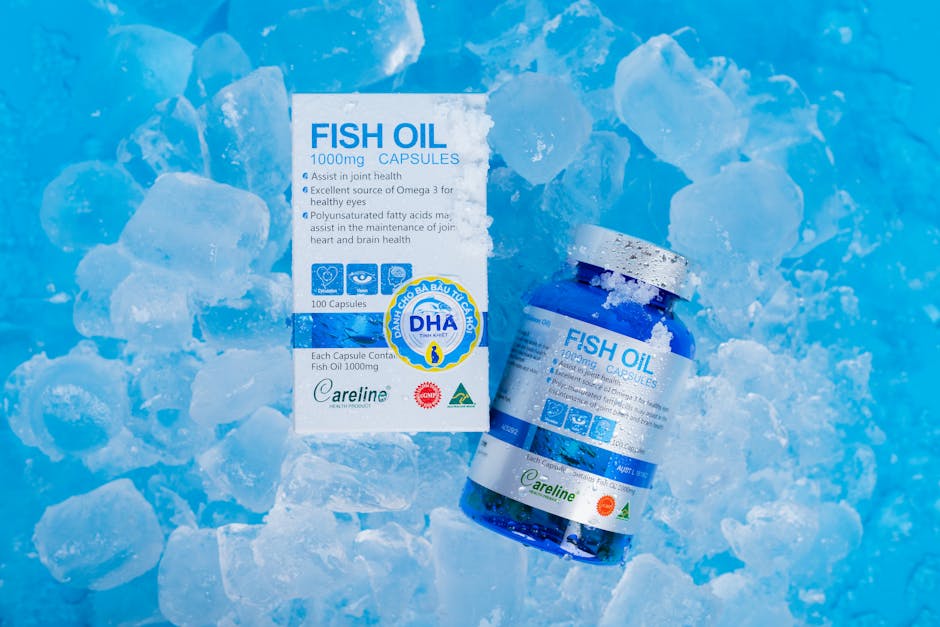
If you’re buying fish oil on trust alone, you’re gambling in one of the sloppier corners of the supplement aisle. Omega-3 products are popular for good reason, but popularity is not quality control. The NIH Office of Dietary Supplements says fish oil is the most widely used nonvitamin, nonmineral supplement among U.S. adults, and independent audits cited by ConsumerLab have repeatedly found fish oil products that miss their labeled EPA and DHA amounts or show oxidation markers higher than you want in a product built around fragile fats.
Here’s the straight take: IFOS-certified products are the best place to start because IFOS publishes batch-level results for potency, oxidation, and contaminants. For most buyers, Viva Naturals Triple Strength is the best value, Carlson Labs The Very Finest Fish Oil is the strongest balance of dose and freshness, and Nordic Naturals’ high-potency fish oil is a solid premium pick if you’re willing to pay more. If IFOS options are unavailable or over budget, USP-verified options like Nature Made still clear a much higher bar than random marketplace brands.
This matters even more for men over 45 who are already spending real money to keep performance, recovery, and cardiovascular markers moving in the right direction. Nobody needs another glossy bottle with a fake aura of purity. You need a label that survives independent testing.
Why Third-Party Tested Omega-3 Supplements Matter
Third-party testing matters because omega-3 labels are not self-proving. A brand can print a big EPA and DHA number on the front, but what counts is what is actually in the capsule and whether the oil stayed stable long enough to be worth swallowing.
The NIH Office of Dietary Supplements notes that fish oil use is widespread, with 7.8% of U.S. adults taking it. That alone would be fine if the category were consistently clean. It isn’t. ConsumerLab’s review of fish oil and omega-3 supplements has found that roughly 10% to 30% of products can miss labeled EPA and DHA content, and some exceed commonly referenced oxidation limits such as peroxide value above 5 meq/kg or TOTOX above 26. Oxidized fish oil is not the bargain version of fresh fish oil. It’s the supplement equivalent of paying full price for produce that already feels tired.
That is the real job of third-party testing. It narrows the gap between marketing and evidence. Instead of trusting a brand’s homepage copy, you get a certification program or independent lab checking whether the product actually delivers the fatty acids listed on the label, stays below contaminant thresholds, and holds up on freshness markers.
For readers building a broader evidence-based supplement routine, that same filter matters outside fish oil too. The logic is similar in the Supplement Stack for Men Over 45: start with products that can prove what they are.
Third-Party Tested Omega-3 Supplements: IFOS, USP, and NSF
Not all certification seals mean the same thing.
IFOS, which stands for International Fish Oil Standards and is run by Nutrasource Diagnostics, is the most rigorous and transparent program for fish oil specifically. According to Nutrasource and ConsumerLab, IFOS testing covers every batch and checks EPA and DHA potency, multiple oxidation markers including peroxide value, p-anisidine, TOTOX, acid value, and moisture content, plus contaminants such as PCBs, dioxins, and heavy metals. The important part is not just that IFOS tests. It publishes lot-specific results online.
USP verification is useful, but it is a different standard. The U.S. Pharmacopeia verifies that a supplement contains the ingredients and amounts listed on the label, meets purity standards, and is made under good manufacturing practices. That is meaningful quality control. It just does not offer the same batch-by-batch public transparency IFOS does for fish oil.
NSF certification also matters, especially for athletes or anyone subject to drug testing. NSF Certified for Sport adds screening for more than 200 banned substances. That makes it more relevant in sports performance settings than in routine consumer fish oil shopping, but it still signals that someone outside the brand is checking the product.
So the ranking is pretty clear. IFOS is the gold standard for fish oil-specific verification. USP is a strong fallback for label accuracy and purity. NSF is valuable when banned-substance screening matters. If a brand claims to be premium and shows none of the three, caution is warranted.
Top Third-Party Tested Omega-3 Supplements Ranked by Value and Quality
Based on ConsumerLab’s 2024 review and current IFOS certificates, these are the most compelling IFOS 5-star certified omega-3 brands right now.
1. Viva Naturals Triple Strength Fish Oil
Viva Naturals stands out on value. It delivers 2,000 mg of combined EPA and DHA per serving at roughly $0.05 per gram, which is unusually efficient for an IFOS 5-star product. Latest published IFOS results also keep peroxide value below 3 meq/kg and TOTOX below 20, which is where you want freshness markers to sit.
Who it’s for: the buyer who wants a serious omega-3 dose without paying premium-brand pricing.
Who it’s not for: anyone who wants the comfort of a legacy brand with the longest retail track record, or someone who prefers a lower-dose serving.
2. Carlson Labs The Very Finest Fish Oil
Carlson delivers 1,600 mg EPA+DHA per serving at about $0.12 per gram. It costs more than Viva Naturals, but Carlson has a long-standing reputation in the fish oil category and still posts strong freshness metrics through IFOS. This is the middle path product: not the cheapest, not the flashiest, hard to argue with.
Who it’s for: buyers who care about a strong dose, documented freshness, and an established brand.
Who it’s not for: bargain hunters trying to drive daily cost as low as possible.
3. Nordic Naturals high-potency fish oil
Nordic Naturals remains one of the best-known premium fish oil brands. Its high-potency formula provides 1,280 mg EPA+DHA per serving at about $0.15 per gram, and the latest IFOS results keep peroxide value below 3 and TOTOX below 20. You’re paying more, but the brand earns its place through consistent verification and broad availability.
Who it’s for: readers who want a premium, widely distributed brand with current IFOS backing.
Who it’s not for: anyone focused first on cost per effective dose.
4. InnovixLabs Triple Strength Omega-3
InnovixLabs provides 1,200 mg EPA+DHA per serving at about $0.11 per gram with current IFOS 5-star certification. It is not the cheapest brand in the set, but it holds up well on the core metrics and gives another credible option if your preferred product is unavailable.
Who it’s for: buyers who want a solid dose at a still-reasonable price.
Who it’s not for: shoppers who only want the absolute lowest daily cost.
The practical takeaway is simple. If value is the priority, Viva Naturals is hard to beat. If brand familiarity and balance matter more, Carlson and Nordic Naturals justify their higher price. If your local options are thin, InnovixLabs is still within the trustworthy zone.
Third-Party Tested Omega-3 Supplements When IFOS Is Not Available
IFOS is the best signal, but it is not the only useful one.
Nature Made Fish Oil is a strong example of a mainstream USP-verified option that still earns a place on a shortlist. According to USP and product pricing referenced in the article spec, it delivers 720 mg of EPA+DHA per serving at about $0.08 per gram. That makes it one of the more affordable certified options on the shelf, especially for readers buying from a big-box store instead of specialty retailers.
California Gold Nutrition Omega-3 is another reasonable fallback. It is third-party tested by Eurofins and delivers about 1,100 mg EPA+DHA at roughly $0.06 per gram. It does not give you IFOS-style public batch reports, but it still lands on the right side of the quality-control line.
This is the right way to think about non-IFOS options: not as equal to batch-level transparency, but as clearly better than unverified brands that ask for blind trust. If IFOS-certified products are out of stock, overpriced, or simply harder to find where you live, USP and credible third-party lab testing still reduce risk in a category that deserves skepticism.
That same skepticism applies to the rest of the supplement market. If you’re comparing adjacent products, Best Testosterone Supplements in 2026 (Ranked by Research) and The Science-Backed Creatine Guide for Men Over 45 are useful reminders that ingredient category and quality verification are two separate questions.
Third-Party Tested Omega-3 Supplements by Cost Per Gram of EPA+DHA
Most people do not need the fanciest bottle. They need enough EPA and DHA at a price they can sustain for months, not two heroic weeks.
Here is the rough value range from the current certified products summarized above:
| Brand | EPA+DHA per serving | Approx. cost per gram | Verification | | — | — | — | — | | Viva Naturals Triple Strength | 2,000 mg | $0.05 | IFOS 5-star | | California Gold Nutrition Omega-3 | 1,100 mg | $0.06 | Third-party tested by Eurofins | | Nature Made Fish Oil | 720 mg | $0.08 | USP Verified | | InnovixLabs Triple Strength | 1,200 mg | $0.11 | IFOS 5-star | | Carlson Labs The Very Finest Fish Oil | 1,600 mg | $0.12 | IFOS 5-star | | Nordic Naturals high-potency fish oil | 1,280 mg | $0.15 | IFOS 5-star |
ConsumerLab’s 2024 pricing analysis puts the median cost among IFOS-rated brands around $0.10 per gram. That means a reader aiming for 1,000 to 2,000 mg per day can often stay in the $0.15 to $0.30 daily range with value-focused brands like Viva Naturals or Nature Made.
Premium brands can still be rational. Nordic Naturals and Carlson are not charging more for decorative adjectives. Their higher pricing tracks with documented freshness, established sourcing, and consistent certification. The issue is not whether premium is bad. The issue is whether premium without evidence is bad. That answer is yes.
How to Verify Third-Party Tested Omega-3 Supplements Before Buying
You do not need a chemistry degree to vet a fish oil brand. You need a three-step filter.
First, check the IFOS certified products database. IFOS publishes batch-specific reports online, which makes it the cleanest way to confirm a fish oil product’s current status instead of relying on stale packaging photos or retailer copy.
Second, look for a USP Verified or NSF seal on the label and confirm it in the organization’s public database. A logo on a bottle is better than nothing, but a database lookup is better than a logo.
Third, if the product is not formally certified, see whether the brand publishes lot-specific assay results anyway. NOW Foods is one example through its Lot-to-Report system. Voluntary transparency is not identical to third-party certification, but it is a much stronger signal than vague statements about quality.
When you read a certificate of analysis, focus on four things: EPA and DHA potency, oxidation markers, contaminants, and whether the report is current for the lot you are actually buying. If a brand talks endlessly about purity but gives you no batch data, that’s marketing doing an impression of evidence.
FAQ: Third-Party Tested Omega-3 Supplements
Do I need IFOS certification, or is USP or NSF enough for omega-3 supplements?
IFOS is the strongest option for fish oil because it provides batch-level public reporting on potency, oxidation, and contaminants. USP and NSF are still meaningful quality signals, especially if IFOS-certified options are unavailable or outside your budget. For most general consumers, USP is sufficient if you cannot get IFOS. For athletes subject to banned-substance rules, NSF has extra value.
What oxidation markers matter most in a fish oil certificate?
Peroxide value and TOTOX are the two markers most readers should understand first. ConsumerLab and the article spec flag peroxide value above 5 meq/kg and TOTOX above 26 as limits you do not want to exceed. Lower numbers suggest a fresher, more stable oil.
Is krill oil or algal oil better than fish oil for EPA and DHA?
Not automatically. Fish oil usually delivers higher combined EPA and DHA per dollar, which is why it dominates most value rankings. Krill and algal products may fit specific preferences or dietary restrictions, but the main question is still verified EPA and DHA content, not trend appeal.
What is a practical EPA and DHA intake target for most buyers comparing brands?
The pricing comparison above assumes many buyers are shopping in the 1,000 to 2,000 mg per day range. That is a useful budgeting lens because it lets you compare actual daily cost across brands. The right dose for an individual still depends on health context and what their clinician is tracking.
How do I interpret a fish oil’s certificate of analysis without overcomplicating it?
Start with the label claim for EPA and DHA, then check whether the certificate confirms those amounts. After that, look at peroxide value, TOTOX, and contaminant screening. If the report is batch-specific and current, you have something worth trusting. If it is generic, outdated, or impossible to find, keep shopping.
If you want one clean rule to remember, it’s this: buy the omega-3 brand that can prove what’s in the bottle, not the one with the most polished bottle.
Sources
- NIH Office of Dietary Supplements. Omega-3 Fatty Acids Fact Sheet for Health Professionals.
- ConsumerLab.com. Fish Oil and Omega-3 Supplements Review (2024).
- Nutrasource Diagnostics. IFOS Program – International Fish Oil Standards.
- U.S. Pharmacopeia. USP Verified Dietary Supplements Database.
- NSF International. NSF Certified for Sport Database.
- Examine.com. Fish Oil Supplement Guide.
Continue reading: Read the pillar — Supplements & Nutrition
This article is for informational purposes only and is not financial advice. Consult a qualified professional for personalized guidance.
Leave a Reply