

If you’re an executive trying to fix sleep, manage stress, and keep your edge past 45, the short version is simple. WHOOP is usually the better choice if you want aggressive daily feedback tied to recovery and performance decisions. Oura Ring is usually the better choice if you want a discreet wearable that gives clear sleep and wellness insights without asking you to think like an exercise physiologist before coffee.
That difference matters more than the marketing. Both devices track sleep, heart rate variability, and recovery-related signals. But they do not package that information the same way, and busy executives do not need more data for the sake of data. They need a device that fits how they live, how much friction they will tolerate, and what kind of feedback they will actually use.
For most high-performing professionals, this comes down to a clean tradeoff: WHOOP is the more forceful coach, while Oura is the more polished observer. Neither is magic. Both can be useful. But they are built for slightly different personalities.
Understanding WHOOP’s Performance Focus for Executives
WHOOP is designed around one core idea: the body keeps score, even when the calendar says push harder. It tracks sleep stages, sleep consistency, and what it calls sleep debt, then turns that into a daily Recovery Score from 0 to 100 percent using heart rate variability, resting heart rate, respiratory rate, and sleep performance, according to WHOOP and comparison reporting from Heal Nourish Grow.
For executives, the appeal is not just the measurement. It is the interpretation. WHOOP keeps asking the same practical question: how recovered are you today, and what does that suggest about strain, sleep, and effort? That can be useful when workdays are long, travel is messy, and stress has a way of pretending it is ambition.
WHOOP’s app is also more interventionist than most wearables. It does not just tell you that sleep was rough. It pushes the relationship between poor sleep, lower HRV, elevated resting heart rate, and weaker recovery into one place. For someone who wants a tighter connection between physiological data and daily output, that is a real advantage.
The tradeoff is complexity. WHOOP can feel like a dashboard built by people who assume you enjoy dashboards. Some executives will love that. Others will open the app, see too many layers, and quietly decide they already have enough bosses.
WHOOP is the stronger fit if you want a wearable to shape training, sleep timing, and workload decisions in near real time. It is less compelling if all you want is a calm, low-friction summary of whether sleep is getting better or worse.
Decoding Oura Ring’s Holistic Wellness Approach for Executives
Oura takes a broader wellness angle. The ring tracks sleep stages, blood oxygen levels, HRV, body temperature, and related signals, then packages them into a Sleep Score and other readiness-style summaries. Oura also points to studies suggesting its sleep-stage estimates can perform with accuracy levels that are reasonably close to medical-grade reference methods in some settings.
That matters because sleep is often the first thing an executive notices slipping. Not because a wearable said so, but because patience gets shorter, focus gets noisier, and recovery starts taking longer than it used to. Oura‘s strength is that it makes those patterns easier to spot without asking the user to wear something that looks like training equipment in a board meeting.
The form factor helps. A ring is discreet in a way a wrist strap is not. For readers who want health data without broadcasting that they are tracking every biomarker known to man, Oura has an obvious edge.
Its app is also easier for many people to absorb. The sleep presentation is cleaner, the signals are easier to scan, and the broader wellness framing can be more appealing for users who care about stress, rest, and overall readiness more than athletic strain. Oura’s Daytime Stress and Resilience features extend that value by using HRV, motion, and body temperature patterns to estimate how well the system is holding up across the day.
The downside is that Oura can feel less decisive than WHOOP if your goal is hard daily coaching. It is excellent for pattern awareness. It is somewhat less built around the blunt question of whether today is a green-light or yellow-light day.
Key Differences: Form Factor, Charging, and Data Presentation
The practical differences between WHOOP and Oura are not minor details. They are the whole game if compliance matters, and it does. The best wearable is the one you will actually wear on the fourth red-eye of the month, not the one that looked persuasive in a product comparison chart.
Oura is a discreet ring. WHOOP is a wrist strap, with bicep-wear options if you prefer not to wear it on the wrist. That means Oura usually wins on subtlety, while WHOOP tends to feel more like purpose-built gear.
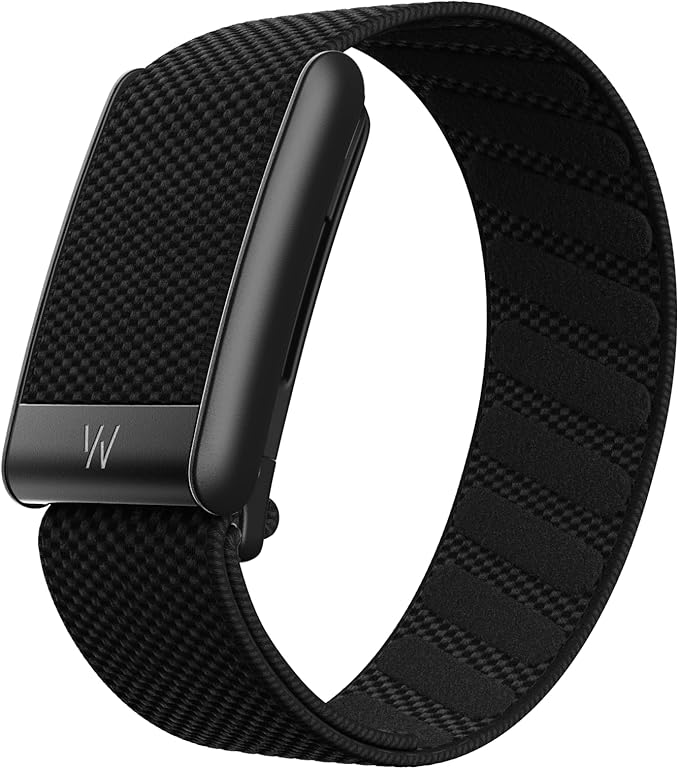
WHOOP MG Health Monitor
$239.00
This article contains affiliate links. We may earn a commission at no extra cost to you.
Charging is also meaningfully different. WHOOP can charge while you are still wearing it, which removes one of the classic wearable failure points: forgetting to put the thing back on. Oura needs to come off for charging, although its battery life is longer. If you are disciplined, that is fine. If you are the kind of person who has lost three pairs of reading glasses to conference hotels, the wearable that stays on during charging has a point in its favor.
Then there is the app experience. Oura’s interface is generally more user-friendly for sleep and wellness review. WHOOP goes deeper and gets more complex. That is not a criticism. It is a personality test. Some executives want a concise morning read. Others want to see the machinery.
Comfort also matters more than people admit. A ring can bother people who lift, grip weights, or simply dislike jewelry. A strap can bother people who do not want a device on the wrist around the clock. Neither problem is dramatic. Both are enough to kill long-term adherence.
So the real question is not which device has the more elegant product page. It is which friction you are more willing to live with.
Impact on Cognitive Function and Stress Management for High-Performers
This is where the conversation gets more relevant than gadget shopping. Sleep and recovery are not vanity metrics for executives. They are performance inputs.
Research highlighted through WHOOP’s executive-performance material and reporting on the McKinsey Executive Leadership program found that just 45 minutes of sleep debt was associated with a 5 to 10 percent drop in mental control. On the other side, adding 30 minutes of slow-wave sleep increased mental control by 5 to 10 percent. That is not trivial. A 5 percent hit to mental control in a high-stakes role is not a wellness issue. It is a decision-quality issue.
WHOOP leans hard into that connection. Its recovery framing is built to help users see when poor sleep, elevated strain, and weaker recovery are likely to affect judgment, training tolerance, and stress capacity. If you like direct cause-and-effect framing, WHOOP does that better.
Oura approaches the same territory from a broader angle. Its Resilience and Daytime Stress features are useful because they try to quantify how well the body is absorbing pressure, not just how you slept last night. That can be valuable for executives whose stress load is not limited to workouts. Meetings, travel, alcohol, poor sleep, and late-night email all show up in the physiology eventually. The body is annoyingly honest that way.
The important point is that neither device improves cognitive function by itself. They improve awareness. The value comes when the user changes something: goes to bed earlier, cuts the extra drink, backs off training, or stops pretending five broken hours of sleep is a personality trait.
WHOOP is stronger if you want sleep and recovery data translated into action pressure. Oura is stronger if you want broader visibility into stress and recovery patterns without feeling like you hired a tiny digital conditioning coach.
Pricing Models and Subscription Structures
The cost structure is more different than it first appears. Oura usually requires an upfront ring purchase plus a monthly subscription. WHOOP wraps the device into the membership price, so the hardware is effectively included with the subscription.
Neither model is inherently better. It depends on how you think about sunk cost and commitment. Some people prefer buying the device once, then paying a smaller monthly fee. Others would rather avoid the initial hardware hit and treat the whole thing like a service.
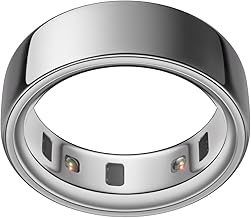
Oura Ring 4 — Silver
$349.99
This article contains affiliate links. We may earn a commission at no extra cost to you.
For an executive, the better question is whether the device creates enough behavior change to justify the expense. If the data pushes better sleep consistency, better recovery choices, or a more honest read on stress, the cost can be easy to defend. If the device turns into another dashboard you check for two weeks and ignore for six months, then the pricing model is not the problem.
One caution here: do not confuse a subscription with value. A monthly fee does not mean the insight is deeper. It only means the company prefers recurring revenue, which is a trait they share with every software business that has ever seen a spreadsheet.
Frequently Asked Questions
Which device offers the most accurate sleep stage tracking for my age demographic?
Oura likely has the edge if sleep-stage tracking is your main concern. The company highlights validation work suggesting its sleep estimates perform well against medical reference methods in some settings. WHOOP also tracks sleep stages well, but its bigger selling point is how it turns sleep and recovery data into daily performance guidance.
Can either WHOOP or Oura data genuinely improve my decision-making and focus at work?
Yes, but only indirectly. These devices can help you notice when poor sleep, elevated stress, or weak recovery are dragging down cognitive performance. The gain comes from acting on the signal, not admiring the score.
I’m skeptical of wearables. Which device has the strongest scientific backing for its recovery metrics?
Oura has published and publicized more around sleep validation, while WHOOP’s strength is the way it combines HRV, resting heart rate, respiratory rate, and sleep into a recovery framework. If you want sleep-validation credibility, Oura has a cleaner case. If you want a practical recovery model that changes daily behavior, WHOOP is usually the stronger fit.
How do these devices help quantify stress beyond just telling me I’m stressed?
WHOOP uses recovery-related physiology such as HRV, resting heart rate, respiratory rate, and sleep performance to show when the system is under strain. Oura adds Daytime Stress and Resilience features that look at HRV, movement, and temperature patterns across the day. Both are trying to translate invisible wear-and-tear into something you can track.
Is the subscription model worth it for the insights provided, or can I get similar benefits from free apps?
Free apps can help with sleep hygiene or basic habit tracking, but they do not generate the biometric data these devices do. If you are serious about recovery tracking and will use the feedback, the subscription can be worth it. If you mainly need a reminder to go to bed earlier and drink less on weeknights, the expensive wearable may be overkill.
We use and recommend WHOOP for continuous physiological monitoring and recovery optimization. Its detailed daily feedback helps high-performing individuals manage their energy and prevent overtraining. Check current pricing → WHOOP (Amazon)
For most executives, WHOOP is the better pick if the goal is active recovery management and clearer day-to-day performance decisions. Oura is the better pick if the goal is discreet wearability, stronger sleep-centric presentation, and broader wellness tracking with less friction.
WHOOP is not for the reader who hates subscriptions, dislikes dense analytics, or wants the least noticeable device possible. Oura is not for the reader who wants a wearable that behaves like a demanding coach. Pick the one whose friction you can live with, because the useful device is the one that stays on.
This article contains affiliate links. We may earn a commission if you sign up through these links, at no additional cost to you.
Sources: – WHOOP. “How WHOOP Works.” https://www.whoop.com/us/en/how-it-works/ – Heal Nourish Grow. “WHOOP vs Oura Ring.” https://healnourishgrow.com/whoop-vs-oura/ – Oura Ring. “Sleep and Rest.” https://ouraring.com/sleep-and-rest – Oura Ring. “Corporate Wellness for Organizations.” https://go.ouraring.com/corporate-wellness/ – Cosmopolitan. “Oura Ring vs. WHOOP Tracker.” https://www.cosmopolitan.com/health-fitness/a61975698/oura-ring-vs-whoop-tracker/ – Garage Gym Reviews. “WHOOP vs Oura.” https://www.garagegymreviews.com/whoop-vs-oura – IoT M2M Council. “WHOOP Helps Firms Track Employees Health.” https://iotm2mcouncil.org/iot-library/news/connected-health-news/whoop-helps-firms-track-employees-health/ – Smart Self Success. “Best Sleep Tracking Rings.” https://smartselfsuccess.com/best-sleep-tracking-rings/
Continue reading: Read the pillar — Performance Tracking & Wearables
This article is for informational purposes only and is not financial advice. Consult a qualified professional for personalized guidance.
Leave a Reply