
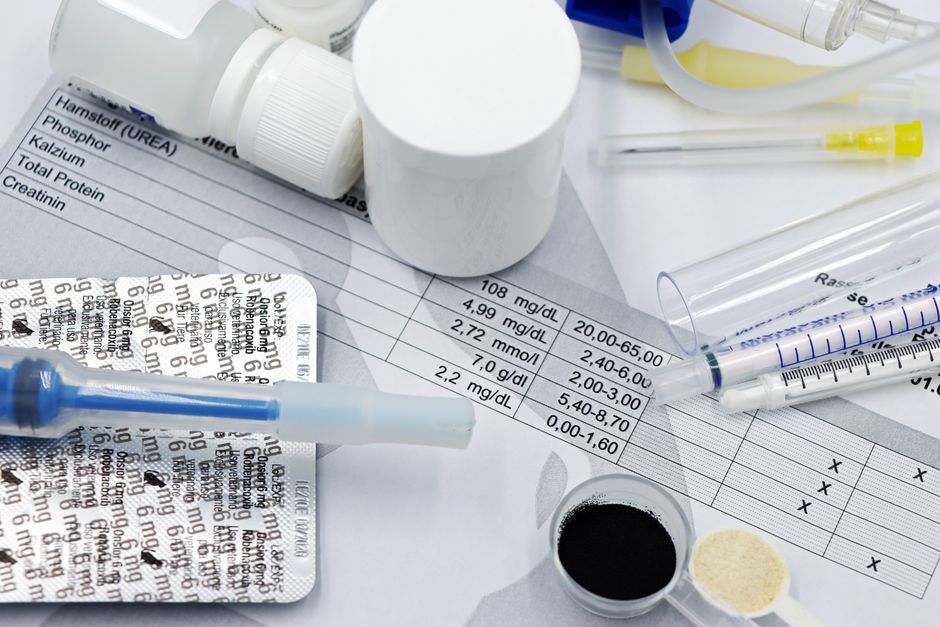
The supplement aisle asks for a lot of trust. A label says “clean,” “clinically dosed,” or “doctor formulated,” and somehow you’re supposed to know whether the capsule contains what it claims, whether the protein powder picked up heavy metals, and whether the pre-workout includes something that would make an anti-doping lab very interested in your weekend plans.
That trust is often misplaced. A practical third party tested supplements list doesn’t start with brands. It starts with verification: which seal is on the bottle, what that seal actually means, and whether the product or lot number can be confirmed in a database.
If you already spend real money on supplements, this is the adult version of reading the label. Not because every uncertified product is bad. Because the label is a marketing document until someone independent checks the contents.
Why Supplement Labels Aren’t Enough for a Third Party Tested Supplements List
The regulatory gap is simple: dietary supplements don’t go through FDA pre-approval before they land on shelves. Under the Dietary Supplement Health and Education Act of 1994, manufacturers are responsible for making sure their own products are safe and properly labeled before sale.
The FDA explains this plainly in its 2024 consumer guidance on dietary supplements: the agency doesn’t approve dietary supplements for safety or effectiveness before they reach the market. It currently oversees more than 90,000 dietary supplement products, but enforcement is largely post-market. In normal-person language, the product can be sold first and questioned later.
That doesn’t mean the FDA does nothing. The agency can inspect facilities, issue warning letters, and take action against adulterated or misbranded products. But that isn’t the same thing as a pre-flight inspection for every bottle of magnesium, creatine, multivitamin, or greens powder sitting in your cabinet.
This matters because supplement labels often imply a level of certainty they haven’t earned. “Manufactured in a GMP facility” isn’t the same as “this specific bottle was independently tested and passed.” “Third-party tested” printed on a label isn’t the same as a product showing up in the NSF, USP, Informed Sport, or ConsumerLab database.
The distinction gets lost because supplement packaging borrows the language of medical credibility without going through a medical approval process. A seal, a white coat, a “clinically researched” phrase, and a clean label can all sit on the same bottle. Only one of those things may point to an independent verification record.
So the first rule is boring and useful: separate brand claims from verifiable records. The bottle can make promises. The database tells you whether anyone with a lab and no incentive to flatter the brand has checked the product.
Thorne
This article contains affiliate links. We may earn a commission at no extra cost to you.

Legion Athletics
This article contains affiliate links. We may earn a commission at no extra cost to you.
What Independent Testing Reveals About the Supplement Aisle
Independent testing regularly finds that a meaningful share of supplements fail quality checks. This isn’t a fringe problem involving one suspicious gas-station testosterone booster with flames on the label. It shows up across mainstream categories.
ConsumerLab’s 2024 testing and news releases reported failure rates that should get any supplement buyer’s attention. In recent reviews, 32% of multivitamins failed testing. One popular multivitamin contained only 11.8% of its claimed vitamin A. Protein powders did not exactly cover themselves in glory either: 29% failed quality checks. Psyllium fiber supplements raised a different issue, with some products containing lead at more than 60 times California Proposition 65’s safety limit.
Those failures fall into a few buckets. Some products contain less of an ingredient than the label claims. Some contain more than expected, which can matter for fat-soluble vitamins or stimulant-heavy formulas. Some have contamination issues. Some fail basic quality measures like disintegration, meaning the pill may not break down as expected.
None of this means you need to throw every bottle in the trash and live on salmon, sunlight, and moral superiority. Nice idea, impractical calendar. It means supplement quality is uneven enough that verification isn’t a luxury step. It’s the filter between a reasonable purchase and a very expensive bottle of vibes.
The bigger point: quality problems are category problems, not just “bad brand” problems. Multivitamins, protein powders, and fiber supplements are all normal products bought by normal adults. If independent labs keep finding failures there, the useful question isn’t “Which brand has the best copywriter?” It’s “Which exact product passed which exact test?”
The Major Third-Party Testing Programs and What Each Covers
The major third-party programs don’t all test for the same thing. Treating every seal as interchangeable is how people get a false sense of security. The right seal depends on the risk you are trying to manage.
USP Verified is one of the strongest general quality marks for dietary supplements. The U.S. Pharmacopeia’s Dietary Supplement Verification Program checks whether the product contains the ingredients listed on the label, whether contaminants are within limits, whether it was made under current good manufacturing practices, and whether tablets or capsules disintegrate properly. If your concern is “does this basic supplement contain what it says without unacceptable contamination?” USP is a serious mark.
NSF/ANSI 173 certification also focuses on label claims and contaminant screening. NSF International describes its supplement certification as a way to verify that products contain what the label says and are tested for harmful levels of contaminants. NSF Certified for Sport adds another layer: banned-substance testing for more than 295 athletic substances. That matters if you compete, work in a tested profession, or simply don’t want a pre-workout that comes with surprise pharmacology.
Informed Sport is more athlete-oriented and batch-specific. The program tests every batch for more than 250 substances prohibited by the World Anti-Doping Agency and offers batch-level traceability. That’s the key distinction. If a product is Informed Sport certified, you can look up the batch or lot and confirm the testing record for that production run.
ConsumerLab operates differently. It buys and tests products independently, publishes product-by-product reviews, and grants a CL Seal of Approval to products that pass its tests. The advantage is specificity: you can see how products compare within a category. The tradeoff is access. Much of ConsumerLab’s detailed reporting sits behind a subscription, which is annoying but also less annoying than guessing.
Here is the quick read. USP is strong for broad supplement quality. NSF is strong for general certification, and NSF Certified for Sport adds banned-substance screening. Informed Sport is strong for batch-level sport risk. ConsumerLab is strong for independent product comparisons. The bottle seal is the headline. The testing program behind it is the story.
How to Verify a Supplement’s Testing Status (Seal by Seal)
The practical workflow takes five minutes once you know where to look. Don’t stop at the front label. A real certification should point back to a program, a database, a product listing, or a batch record.
Start with Informed Sport if the label shows that mark. Informed Sport provides an online product verification tool and a mobile app. The useful move is to scan the barcode or enter the product details, then check the batch or lot number against the registry. That last part matters. A brand page saying “certified” is weaker than a batch record tied to the tub in your hand.
For NSF Certified for Sport, use NSF’s Certified Products database. Search by brand, product name, and when available, lot number. Confirm that the exact product appears. Not the brand. Not a similar flavor. Not the same product line with a different formulation. The exact product.
For USP, use the product finder connected to the USP Verified Mark. USP verification applies to listed products, not every item a company sells. If a brand has one USP Verified vitamin D product, that doesn’t automatically bless the rest of the catalog. Certification isn’t contagious, though supplement marketing departments sometimes behave as if it is.
For ConsumerLab, look for the product in its published reviews and Approved product lists. ConsumerLab’s CL Seal of Approval means the product passed its testing criteria, but the most useful information is often in the category review itself: which products passed, which failed, and why.
A simple verification routine looks like this:
- Match the seal on the label to the certifying program.
- Search the program’s database for the exact product name.
- Confirm form, flavor, serving size, and lot number when available.
- Check whether certification applies to the product or the whole manufacturing facility.
- Re-check periodically, especially after formula changes or packaging updates.
The goal isn’t to become a part-time supplement auditor. The goal is to stop outsourcing trust to a label designer.
This workflow is especially useful for repeat purchases. If you buy the same creatine, protein powder, fiber, or multivitamin every month, do the database check once and save the result. Then re-check when the packaging changes, the serving size changes, the flavor changes, or the company announces a reformulation. Most supplement mistakes happen in the gap between “I checked this once” and “I assumed nothing changed.”
Supplement Brands That Walk the Walk
Some brands have made third-party certification part of the product strategy rather than a decorative badge. They are useful starting points, especially if you want to narrow the field without spending Saturday afternoon comparing certificates like a procurement manager with a sleep deficit.
Thorne is one of the more visible examples. The company offers more than two dozen NSF Certified for Sport products and highlights its NSF-certified South Carolina manufacturing campus. That doesn’t mean every Thorne product is the right product for every person. It does mean many of its sport-oriented products have a certification trail that can be checked.
Momentous has built much of its positioning around Informed Sport certification. That matters for athletes and serious training populations because Informed Sport is batch-oriented and focused on prohibited substances. If your risk is “I don’t want a contaminated supplement interfering with competition or testing,” that certification is relevant.
Legion Athletics also maintains Informed Sport certification, according to the Informed Sport brand registry. Again, the useful unit isn’t “Legion seems reputable.” The useful unit is the specific product and batch record.
Pure Encapsulations carries NSF certification on many products. For a reader buying foundational supplements rather than sports products, NSF certification can be a meaningful filter, especially when the concern is label accuracy and contaminant screening rather than anti-doping risk.
These brands belong on a third-party tested shortlist because they have verifiable certifications attached to specific products. That’s the standard. Not founder charisma. Not podcast popularity. Not a black bottle with aggressive typography.
Still, brand reputation is only a starting point. Even with a reputable brand, verify the exact product. Companies change formulas. Product lines expand. Certification may cover one SKU and not another. If the seal matters enough to influence your purchase, it matters enough to confirm.
The most practical way to use these brands is as a first pass, not a final answer. Start with companies that make verification easy, then narrow by the certification that matches your risk. A 55-year-old buying magnesium for sleep doesn’t need the same anti-doping filter as a masters cyclist who might be tested after an event. Same aisle, different risk profile.
What Third-Party Testing Doesn’t Cover (and Why That Still Matters)
Third-party testing is essential, but it isn’t magic. It answers quality questions, not personal medical questions. That distinction prevents expensive confusion.
First, not all programs test every batch. Informed Sport is the standout for batch-testing every production run. Other programs may test products during certification and surveillance, but that doesn’t necessarily mean every bottle from every batch went through the same test. For most consumers, that may be acceptable. For competitive athletes or anyone subject to testing, batch-level verification matters more.
Second, certification applies to specific products, not a brand’s entire catalog. NSF and USP both describe certification around products and standards, not brand halos. A company can sell certified and non-certified products at the same time. This is why the product database matters more than the logo on the homepage.
Third, testing doesn’t prove efficacy. A certified magnesium glycinate can be accurately labeled and low in contaminants and still do nothing meaningful for your sleep. A protein powder can pass contaminant testing and still be unnecessary if your diet already covers your protein target. Quality is one question. Usefulness is another.
Fourth, testing doesn’t decide whether a supplement is safe for your specific body. A product can be clean and still be wrong for someone taking anticoagulants, managing kidney disease, preparing for surgery, or dealing with a medication interaction. The FDA’s consumer guidance is useful here too: supplements can interact with drugs and may not be appropriate for everyone.
The right frame isn’t “third-party tested equals good.” It’s “third-party tested means one important risk has been reduced.” That’s a narrower claim, and narrower claims are usually the ones worth trusting.
That narrower claim is still valuable. If a product has the right ingredients, acceptable contaminant levels, and a verifiable testing record, you have removed the most basic source of uncertainty. Then the decision becomes more adult: does this product solve a real problem, fit your labs or diet, avoid medication conflicts, and justify the cost?
Frequently Asked Questions
What’s the difference between NSF certification and NSF Certified for Sport?
NSF supplement certification checks label claims and screens for contaminants under NSF/ANSI 173. NSF Certified for Sport adds screening for more than 295 substances banned in many athletic contexts. If you aren’t competing or subject to testing, standard NSF certification may cover the quality question you care about. If testing risk matters, look for Certified for Sport specifically.
Are store-brand or generic supplements ever third-party tested?
Yes, but you have to verify the exact product. A lower price doesn’t automatically mean lower quality, and a premium label doesn’t automatically mean better testing. Search the relevant USP, NSF, Informed Sport, or ConsumerLab records for the specific store-brand product, form, and dosage.
Does a “third-party tested” label mean the FDA has approved the supplement?
No. The FDA doesn’t approve dietary supplements for safety or effectiveness before sale. A third-party seal means an independent program tested the product against its own standards. That can be valuable, but it isn’t FDA approval.
How often do testing programs retest products after initial certification?
It depends on the program. Informed Sport tests every batch. Other programs use certification, surveillance, facility review, or periodic product testing depending on the standard. If batch-level certainty matters, use a program that lets you look up the lot number.
Can I look up a specific supplement’s test results online?
Often, yes. Informed Sport offers batch lookup. NSF has a Certified Products database. USP offers a verified product finder. ConsumerLab publishes approved products and category reviews. The amount of detail varies, but a legitimate certification should leave a record you can check.
The Bottom Line
A useful supplement list isn’t a ranking of glossy bottles. It’s a verification habit: check the seal, confirm the product, look up the lot when possible, and remember that quality testing doesn’t make a supplement necessary. The best supplement is still the one that is clean, relevant, and worth taking after the marketing has been stripped off.
Continue reading: Read the pillar — Supplements & Nutrition
This article is for informational purposes only and is not financial advice. Consult a qualified professional for personalized guidance.
Leave a Reply