
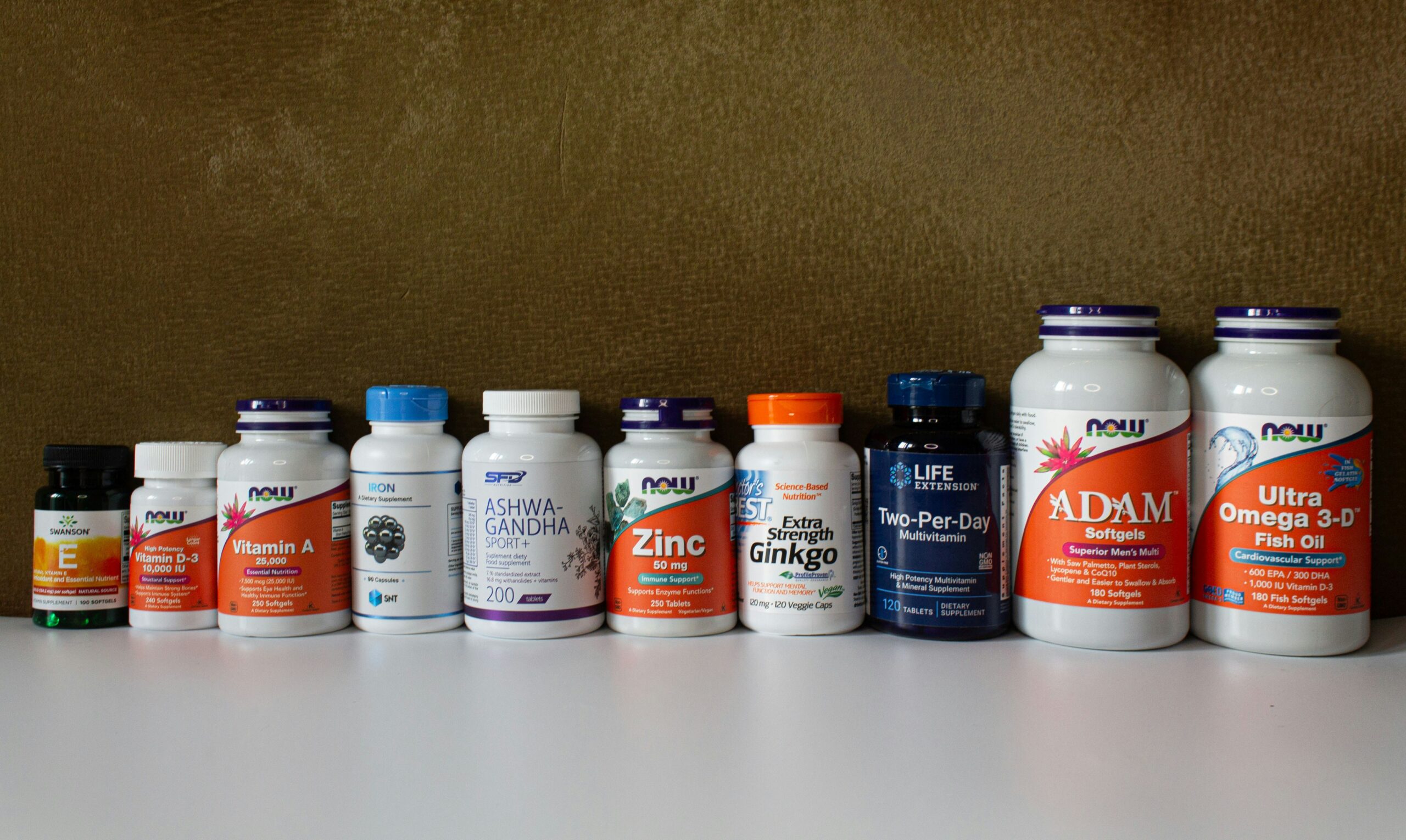
The supplement industry is worth over $60 billion in the United States alone, and approximately 90% of it is marketing dressed up as science.
Walk into any health store or scroll any longevity influencer’s page and you’ll find hundreds of products promising everything from “supercharged energy” to “cellular rejuvenation.” Most of them are underdosed, untested, or both. Some contain what the label says. Many don’t.
This guide takes a different approach. Instead of ranking products, it gives you a framework for deciding what’s worth taking based on your age, your goals, and what the human clinical evidence actually supports. Not rat studies. Not petri dish experiments. Human data.
We organize everything into three tiers: foundational (most men over 45 should consider these), targeted (based on your specific labs and goals), and experimental (promising but early evidence). By the end, you’ll know how to build a stack you can trust — and more importantly, how to avoid wasting money on the 90% that doesn’t deserve it.
How to evaluate any supplement in 30 seconds
Before we get to specific recommendations, here are the four questions that filter out most of the noise:
Is there human clinical trial data? Animal studies and in-vitro research are interesting but don’t predict human outcomes reliably. If the only evidence is “in mice,” it’s experimental at best.
What’s the effective dose? Many products contain the right ingredients at the wrong doses. Ashwagandha at 150mg does nothing. At 600mg of a standardized extract (KSM-66 or Sensoril), the evidence for cortisol reduction and testosterone support is meaningful. Check whether the product matches the dose used in the studies it cites.
Is it third-party tested? The supplement industry is self-regulated. Third-party testing by organizations like NSF International, USP, or Informed Sport verifies that what’s on the label is actually in the bottle — and that contaminants (heavy metals, pesticides, banned substances) are below safety thresholds. If a brand doesn’t third-party test, you’re trusting their word. That’s not good enough.
Does it address something your bloodwork shows? A supplement you take because your labs indicate a deficiency is medicine. A supplement you take because an influencer said it’s good is a lottery ticket. Test first, supplement second.
Tier 1: Foundational — most men over 45 should consider these
These have strong human evidence, widespread deficiency in the over-45 male population, low risk, and meaningful impact on health markers.
Vitamin D3 + K2
The case is straightforward: most men over 50 are insufficient. Vitamin D affects immune function, bone density, mood, testosterone production, and muscle function. K2 (specifically MK-7) ensures calcium goes to bones rather than arterial walls.
Evidence: Multiple large studies confirm that maintaining 25(OH)D levels of 50–70 ng/mL is associated with lower all-cause mortality, better immune outcomes, and reduced fracture risk compared to levels below 30 ng/mL.
Dose: 2,000–5,000 IU D3 daily, plus 100–200 mcg K2 (MK-7). The right dose depends on your starting level and body weight. Test and adjust.
Trusted brands: Thorne D-5000/K2 (third-party tested, NSF Certified for Sport). Momentous Vitamin D (Informed Sport certified).
Magnesium
The second most common deficiency in men over 45. Magnesium is involved in over 300 enzymatic reactions including sleep regulation, muscle function, glucose metabolism, and blood pressure control.
Evidence: Human trials consistently show magnesium supplementation improves sleep quality, reduces blood pressure in hypertensive adults, and improves insulin sensitivity. Deficiency is associated with higher hsCRP (inflammation) and worse cardiovascular outcomes.
Dose: 200–400mg elemental magnesium daily. The form matters: magnesium glycinate for sleep and relaxation, magnesium L-threonate (Magtein) for cognitive function, magnesium citrate for general supplementation.
Trusted brands: Thorne Magnesium Bisglycinate. Momentous Magnesium L-Threonate.
Omega-3 (EPA/DHA)
Anti-inflammatory, cardiovascular protective, and one of the most studied supplements in existence. Most men don’t eat enough fatty fish to maintain optimal omega-3 levels.
Evidence: The VITAL trial and REDUCE-IT trial demonstrated cardiovascular benefits at adequate doses. The key is getting enough EPA — at least 1,000mg combined EPA/DHA daily, with emerging evidence suggesting higher EPA doses (2,000mg+) provide additional benefit for men with elevated triglycerides.
Dose: Minimum 1,000mg combined EPA/DHA daily. Higher doses (2,000–3,000mg) for men with elevated triglycerides or high hsCRP.
Trusted brands: Thorne Super EPA (third-party tested for heavy metals and oxidation). Nordic Naturals (IFOS certified).
Creatine monohydrate
Not just for bodybuilders. Creatine is one of the most studied supplements in sports science, and recent research extends its benefits well beyond the gym — into cognitive function, bone density, and glucose metabolism in older adults.
Evidence: A meta-analysis of studies in older adults found creatine supplementation combined with resistance training increased lean mass and upper body strength more than training alone. Emerging research suggests neuroprotective benefits and improved working memory, particularly in sleep-deprived or stressed individuals.
Dose: 3–5 grams daily. No loading phase needed. Just take it consistently.
Trusted brands: Momentous Creatine (Creapure source, Informed Sport certified). Thorne Creatine.
Tier 2: Targeted — based on your goals and labs
These have solid evidence for specific outcomes but aren’t universal. Choose based on what your bloodwork and symptoms indicate.
For sleep: Magnesium L-Threonate + Apigenin
If sleep quality is your primary concern, this combination addresses it from two angles. Magnesium L-threonate crosses the blood-brain barrier more effectively than other forms and supports GABA activity. Apigenin is a flavonoid found in chamomile that acts as a mild anxiolytic.
Evidence: Magtein (magnesium L-threonate) has human trial data showing improved sleep onset and quality. Apigenin evidence is more preliminary — primarily from preclinical studies, with anecdotal support from sleep researchers like Andrew Huberman. Consider it emerging but promising.
Dose: 144mg elemental magnesium from L-threonate (typically 2,000mg of the compound), taken before bed. Apigenin: 50mg before bed.
For hormone support: Tongkat Ali + Fadogia Agrestis
For men with borderline testosterone who want to support natural production before considering TRT.
Evidence: Tongkat ali (Eurycoma longifolia) has multiple human studies showing modest testosterone increases (15–20% in some trials) and cortisol reduction in stressed adults. The evidence is real but the magnitude is modest — don’t expect TRT-level results. Fadogia agrestis has less human data — one Nigerian study showed increased testosterone in animals, but human trials are limited. Consider it experimental.
Dose: Tongkat ali: 200–400mg of a standardized extract (minimum 2% eurycomanone) daily. Fadogia: 600mg daily if you choose to include it, with the understanding that long-term safety data is thin.
For joint health: Collagen peptides + Boswellia
Joint pain after 45 is almost universal. This combination addresses both structural support and inflammation.
Evidence: Multiple human trials show type II collagen peptides (10g/day) reduce joint pain and improve function in adults with osteoarthritis. Boswellia serrata extract has human data showing anti-inflammatory effects comparable to NSAIDs in some studies, without the gastrointestinal side effects.
Dose: Collagen peptides: 10–15g daily (hydrolyzed type I/II). Boswellia: 300–500mg of a standardized extract (65% boswellic acids).
For cognitive function: Lion’s Mane + Alpha-GPC
For men noticing cognitive slowing — slower recall, difficulty holding complex information, or brain fog that doesn’t resolve with better sleep.
Evidence: Lion’s mane (Hericium erinaceus) has human trial data showing improved mild cognitive impairment scores after 16 weeks of supplementation. The mechanism involves nerve growth factor stimulation, which is unique among supplements. Alpha-GPC is a choline compound with human data showing improved attention and memory in aging adults. It’s also used clinically in Europe for cognitive decline.
Dose: Lion’s mane: 500–1,000mg of a dual extract (both fruiting body and mycelium). Alpha-GPC: 300–600mg daily.
Tier 3: Experimental — promising but early evidence
These are the ones the longevity community talks about most. The science is genuinely interesting, but honest assessment requires acknowledging the limitations.
NMN (Nicotinamide Mononucleotide)
What it claims: Boosts NAD+ levels, which decline with age, potentially improving cellular energy production and DNA repair.
The honest assessment: Animal data is compelling. Human trials exist but are small and short-term. A 2022 study showed NMN supplementation increased blood NAD+ levels in middle-aged adults, with some improvements in physical performance markers. But we don’t yet have large, long-term human trials confirming the lifespan or healthspan benefits that the animal data suggests. It’s promising, not proven.
If you take it: 250–500mg daily, sublingual or capsule. Choose a brand that third-party tests for purity (NMN degrades easily). Cost: $40–80/month.
Urolithin A (Mitopure)
What it claims: Stimulates mitophagy — the process of clearing damaged mitochondria and replacing them with healthy ones.
The honest assessment: This is one of the more interesting longevity compounds because the mechanism is well-characterized and the human data is growing. Timeline Nutrition’s Mitopure has published human trials showing improved muscle endurance and mitochondrial function in older adults. The limitation is that these are small studies, and the company funds its own research — independent replication is needed.
If you take it: 500–1,000mg daily (Timeline’s Mitopure is the only clinically studied form). Cost: $50–70/month.
Fisetin
What it claims: A senolytic — meaning it selectively clears senescent (“zombie”) cells that accumulate with age and drive chronic inflammation.
The honest assessment: Animal data is strong. The Mayo Clinic has conducted some of the most cited research on fisetin as a senolytic. Human trials are underway but not yet published. This is speculative supplementation based on a compelling mechanism and strong preclinical data. It may be one of the most important longevity interventions of the next decade — or it may not translate to humans at meaningful doses.
If you take it: No established human dose. The longevity community commonly uses 500–1,000mg for 2–3 consecutive days per month (pulsed dosing), but this is extrapolated from animal studies.
The trust test: which brands pass?
Not all supplement companies are equal. Here’s what separates the trustworthy from the marketing-driven:
Thorne is the benchmark. NSF Certified for Sport on most products. Used by professional sports teams and recommended by practitioners. They publish certificates of analysis and test every batch. If you default to Thorne, you’re rarely wrong.
Momentous is Thorne’s closest competitor for quality. Informed Sport certified. Transparent sourcing. Particularly strong in creatine, protein, and magnesium.
Seed is the standout for probiotics. Their DS-01 Daily Synbiotic is one of the few probiotic products with meaningful human trial data behind its specific strains.
Brands to approach with caution: Amazon-only brands with no third-party testing, influencer-owned supplement lines launched primarily as revenue vehicles, and any product that lists a “proprietary blend” instead of specific ingredient doses.
How to build your stack
Start with Tier 1 — the four foundational supplements. Run that for 90 days. Get bloodwork before and after to measure impact.
Add Tier 2 supplements only if your labs or symptoms indicate a specific need. Don’t add everything at once — you won’t know what’s working.
Tier 3 is optional. If you’re already optimized on Tiers 1 and 2 and want to explore the frontier, pick one at a time and evaluate honestly.
The total monthly cost for a solid Tier 1 stack from a trusted brand is roughly $80–120. That’s vitamin D3/K2, magnesium, omega-3, and creatine. Adding Tier 2 selections brings it to $120–200/month.
Frequently asked questions
Can supplements replace a good diet? No. Supplements fill gaps — they don’t build the foundation. If your diet is poor, fix that first. No amount of supplementation compensates for processed food, inadequate protein, and chronic blood sugar spikes.
When should I take my supplements? Fat-soluble supplements (D3, K2, omega-3) with a meal that contains fat. Magnesium and apigenin before bed. Creatine any time — consistency matters more than timing. NMN in the morning (may affect sleep if taken late).
How do I know if a supplement is working? Bloodwork. Retest the relevant markers after 90 days. Vitamin D should be in the 50–70 ng/mL range. hsCRP should drop if omega-3 is addressing inflammation. If your numbers haven’t moved, the supplement either isn’t working for you, isn’t dosed correctly, or isn’t being absorbed.
Are there supplements men over 45 should avoid? Avoid high-dose iron unless your ferritin confirms a deficiency — excess iron is a cardiovascular risk factor. Avoid high-dose vitamin A (retinol) long-term. And avoid any testosterone “booster” that doesn’t name specific ingredients and doses.
The supplement industry rewards the loudest marketers. Your job is to be the most skeptical buyer. Test, target, track — and only keep what the data says is working.
For our detailed comparison of Thorne vs. Momentous and other trusted brands, check our Recommended Resources page.