
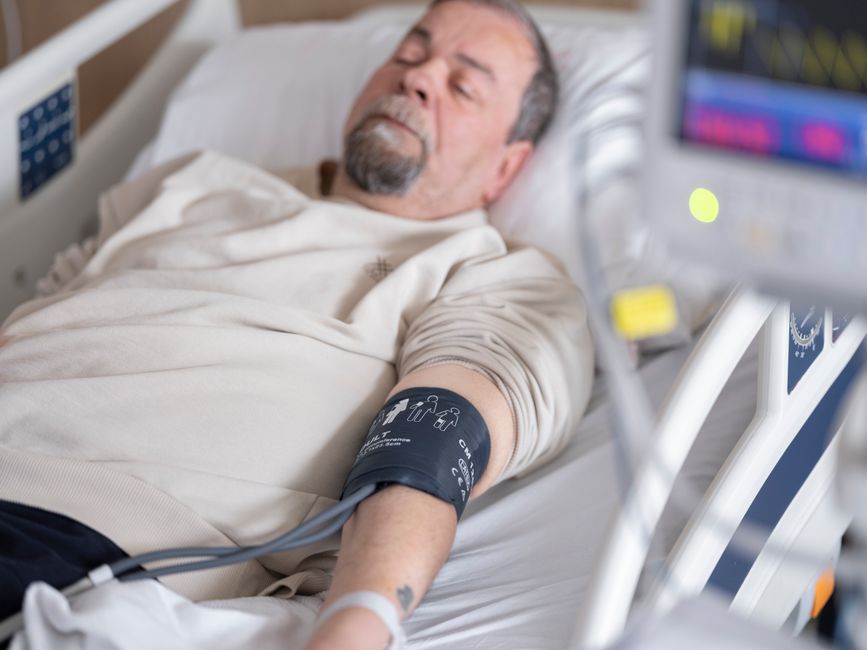
Poor sleep, lower testosterone, more fatigue, worse body composition, then even worse sleep. That loop is how a lot of men first stumble into the TRT sleep apnea connection evidence conversation, usually after months of feeling off and getting two different explanations from two different clinicians.
The uncomfortable part is that both sides can be right. Obstructive sleep apnea can suppress testosterone production. TRT can also make untreated sleep-disordered breathing worse in some men, especially early in therapy or at higher doses. So the real question isn’t whether testosterone is good or bad for sleep. It’s whether the man in front of the prescription pad already has an airway problem nobody has dealt with.
That’s the part that gets lost in the usual clinic marketing. Low testosterone is treated like the whole story. Sleep apnea is treated like a separate lane. The evidence says they often travel together, and pretending otherwise is how men end up chasing symptoms in circles.
Why Sleep Apnea and Low Testosterone Are Connected
This is a two-way problem, not a neat cause-and-effect diagram.
Frontiers in Reproductive Health described the relationship well in its 2023 review on obstructive sleep apnea, hypogonadism, and TRT. Obstructive sleep apnea affects about 15% of men overall, and prevalence rises meaningfully after age 45. At the same time, testosterone production depends heavily on intact sleep architecture, particularly normal REM sleep. Men with OSA don’t just snore. They cycle through repeated hypoxia and arousals that fragment sleep, stress the body, and disrupt the pituitary-gonadal axis that helps drive testosterone production.
That matters because men often experience the fallout as a vague pile of symptoms rather than a clear diagnosis. Lower energy. Worse recovery. More afternoon brain fog. Libido drop. A gym session that suddenly feels like unpaid overtime. None of that automatically means sleep apnea, but the review found a strong inverse relationship between OSA severity, measured by apnea-hypopnea index, and serum testosterone levels independent of age and BMI.
In plain English: the worse the sleep-disordered breathing gets, the more likely testosterone levels are to slide with it.
That doesn’t mean every man with low testosterone has sleep apnea. It does mean untreated OSA can keep dragging testosterone down even if the lab report gets all the attention. If a man fixes only the lab number and ignores the nightly oxygen drops, he may improve one part of the picture while leaving the engine knocking.
This is also where TRT and sleep quality for men over 45 becomes a useful adjacent question. Sleep quality can improve on treatment for some men, but that doesn’t erase the need to figure out whether apnea was already in the room before TRT arrived.
TRT Sleep Apnea Connection Evidence: Can TRT Worsen Existing Sleep Apnea?
Yes, it can. The better answer is that the risk looks real, modest, and concentrated in men who already have vulnerability in the system.
BJU International published a 2018 cohort study by Cole and colleagues that followed 3,422 men ages 40 to 64. Over two years, 16.5% of men on TRT developed obstructive sleep apnea compared with 12.7% of matched controls. That isn’t a cartoonish risk spike, but it is a statistically meaningful signal that testosterone therapy isn’t neutral for breathing during sleep.
Researchers proposed several mechanisms. One is reduced central chemoreceptor sensitivity to hypercapnia, which can blunt respiratory drive. Another is greater upper-airway collapsibility through effects on pharyngeal motoneurons. A third is secondary polycythemia, where TRT raises red blood cell concentration enough to thicken the blood and make nocturnal hypoxemia harder on the body.
That last mechanism matters because it links symptoms, labs, and sleep into one clinical story instead of three disconnected problems. A man who starts TRT, notices heavier snoring, wakes up feeling less restored, and shows a rising hematocrit isn’t dealing with random bad luck. He may be getting a warning light.
The practical mistake is treating this study as either proof that nobody with apnea should touch TRT or proof that the risk is too small to care about. Neither is serious thinking. The evidence suggests the early phase of treatment deserves attention, especially if the man already has the classic risk pattern: elevated BMI, loud snoring, large neck circumference, witnessed apneas, daytime sleepiness, or blood pressure that keeps doing its own thing.
That’s why untreated or unrecognized OSA should change the conversation before dose escalation, not after.
Can Proper Dosing Turn TRT Into a Sleep-Quality Positive?
Possibly, but only after getting honest about what “better sleep” means.
The same 2023 Frontiers in Reproductive Health review noted that short-term, high-dose TRT may worsen OSA, while longer-term treatment at lower physiologic doses could eventually improve sleep-related symptoms in some men. That distinction is important because men do sometimes report better sleep efficiency, shorter sleep latency, and more restorative sleep once testosterone levels normalize.
There are plausible reasons for that. Correcting hypogonadism can improve mood, energy, body composition, and training capacity. Those changes can indirectly help sleep. A man who is less depressed, carrying less visceral weight, and recovering better from exercise may sleep better for reasons that have nothing to do with magically fixing his airway.
But this is where bad interpretation sneaks in. Sleeping better isn’t the same thing as having resolved sleep apnea. Feeling more energetic on TRT can mask a breathing problem for a while, especially if the therapy improves daytime energy enough that the man stops noticing how fragmented the night still is.
So the reasonable frame is conditional. TRT may help some men sleep better when dosing is physiologic, the underlying hypogonadism is real, and untreated apnea isn’t sitting there sabotaging the whole project. It isn’t a sleep medicine shortcut. It isn’t a free pass to ignore snoring, oxygen drops, or morning headaches that suddenly appeared after starting treatment.
That’s also why dosage culture matters. Some clinics still behave as if faster symptom relief is always better. It isn’t. When sleep-disordered breathing is part of the picture, aggressive dosing can become expensive false confidence with a lab slip attached.
The TRT-Polycythemia-Sleep Apnea Triangle: What Your Hematocrit Is Telling You
If hematocrit starts climbing on TRT, that isn’t just a lab nuisance. It can be a clue.
The Journal of Sexual Medicine published a 2020 study by Lundy, Parekh, and Shoskes examining 474 hypogonadal men on TRT. Of that group, 13.1% developed polycythemia, defined as hematocrit at or above 52%. Among the men who developed polycythemia, 52% also carried a concurrent OSA diagnosis. After adjusting for age, BMI, and peak testosterone, the association remained significant with an odds ratio of 2.09.
BMI was the only independent risk factor for OSA in the polycythemic subgroup, which is another useful reminder that physiology rarely cares about neat category labels. Men like to sort problems into buckets: hormone issue, sleep issue, weight issue, blood issue. The body is less interested in clean filing systems.
The study also noted poor CPAP adherence, with 52.8% of prescribed patients not using it consistently. That number is bleak, but not surprising. CPAP is one of those therapies everyone supports in theory and negotiates with at 1:17 a.m. in real life.
Still, the takeaway is practical. If a man’s hematocrit starts drifting up on TRT, a sleep apnea evaluation belongs on the list, especially when BMI is elevated or sleep symptoms are getting worse. This is where hematocrit monitoring on TRT stops being abstract risk management and becomes a screening clue.
The intervention threshold in many protocols is hematocrit above 54%, but the pattern matters before that. A steady climb paired with snoring, poor sleep, or morning headaches deserves more than a shrug and a plan to recheck later.
Practical Protocol: Safe TRT for Men at Risk of or Living With Sleep Apnea
The safest approach is boring. That’s usually a good sign.
Sleep Foundation’s 2024 review and 2024 guidance from the Sexual Medicine Society of North America both point toward the same common-sense protocol. Screen men for OSA symptoms before starting TRT. Use tools like STOP-BANG, neck circumference, BMI, and snoring history to decide who needs a proper sleep workup. If moderate-to-severe OSA is confirmed, treat it first, typically with CPAP, and stabilize that for three to six months before starting testosterone.
Then dose TRT physiologically and titrate slowly. Not because caution is fashionable, but because it gives the clinician a chance to see what the therapy is actually doing. Fast changes can feel gratifying while obscuring whether sleep is improving, deteriorating, or just being outshouted by the early energy bump.
Hematocrit should be checked at baseline, three months, six months, and then annually. If it rises above 54%, the standard response is dose reduction, formulation change, or therapeutic phlebotomy. If sleep quality deteriorates unexpectedly or hematocrit rises faster than expected, repeat sleep testing belongs on the table.
Different delivery methods may matter at the margins, but the evidence cited here is stronger on monitoring than on making sweeping claims about injections versus gels versus pellets. That’s the honest answer. The mechanism is plausible; the comparative human data is still thinner than clinic sales pages would have you believe.
For men who are symptom-aware but not yet diagnosed, wearable sleep apnea screening devices can help flag whether a formal sleep study is worth pushing for. They aren’t the same thing as a clinical diagnosis, but for a time-poor reader who wants an early signal, they can be a sensible step between denial and a full sleep lab.
The larger point is simple: safe TRT in the presence of sleep apnea is possible, but only if somebody is actually measuring the right things. Symptoms, hematocrit, snoring, blood pressure, sleep quality, and sleep-study follow-up all belong in one conversation.
Frequently Asked Questions
Should I stop TRT if I was just diagnosed with sleep apnea?
Not automatically. The evidence doesn’t say every man with OSA must stop TRT. It says untreated or worsening sleep apnea deserves prompt management, and TRT may need dose adjustment or closer monitoring while that happens. This is a provider-level decision, not a macho self-experiment.
Can CPAP therapy improve my testosterone levels without TRT?
It can help if sleep apnea is one of the factors suppressing testosterone. Better oxygenation and less fragmented sleep may improve the hormonal environment, but the degree of improvement varies. Some men still remain hypogonadal after apnea treatment, while others look better once sleep is stabilized.
How does my hematocrit level tell me whether sleep apnea is getting worse on TRT?
A rising hematocrit doesn’t diagnose worsening OSA by itself, but it can be a useful clue, especially if it rises alongside snoring, morning headaches, daytime sleepiness, or higher blood pressure. In that setting, the number is less “interesting lab trivia” and more “go check the airway.”
What questions should I ask my TRT provider about sleep apnea screening?
Ask whether they screen with STOP-BANG, whether they consider neck circumference and BMI, what baseline hematocrit threshold makes them cautious, when they repeat labs after initiation, and what symptoms would trigger a sleep study. If those questions sound like they are interrupting the sales pitch, that tells you something too.
Do different types of testosterone delivery affect sleep apnea risk differently?
Possibly, but the evidence is stronger on dose intensity, hematocrit monitoring, and preexisting OSA than on declaring one delivery method universally safer. That means the practical priority is careful titration and follow-up, not assuming the formulation alone solves the risk.
The Bottom Line
The TRT and sleep apnea relationship is real, but it isn’t a slogan. Sleep apnea can lower testosterone, and TRT can worsen sleep-disordered breathing in some men, especially when apnea is untreated or dosing is too aggressive. The evidence supports a more adult approach: screen first, titrate carefully, watch hematocrit, and treat the airway problem like it belongs in the same chart, because it does.
Sources
- Frontiers in Reproductive Health. “The complex relation between obstructive sleep apnoea syndrome, hypogonadism and testosterone replacement therapy.” https://doi.org/10.3389/frph.2023.1219239
- Cole AP et al. “Impact of testosterone replacement therapy on thromboembolism, heart disease and obstructive sleep apnoea in men.” BJU International. https://pubmed.ncbi.nlm.nih.gov/29383868/
- Lundy SD, Parekh N, Shoskes DA. “Obstructive Sleep Apnea Is Associated With Polycythemia in Hypogonadal Men on Testosterone Replacement Therapy.” Journal of Sexual Medicine. https://pubmed.ncbi.nlm.nih.gov/32307242/
- Sleep Foundation. “How Does Testosterone Affect Sleep?” https://www.sleepfoundation.org/physical-health/sleep-and-testosterone
- SMSNA. “Taking Testosterone? Watch for Polycythemia and Sleep Apnea, Experts Warn.” https://www.smsna.org/patients/news/taking-testosterone-watch-for-polycythemia-and-sleep-apnea-experts-warn
This article is for informational purposes only and is not financial advice. Consult a qualified professional for personalized guidance.
Leave a Reply