
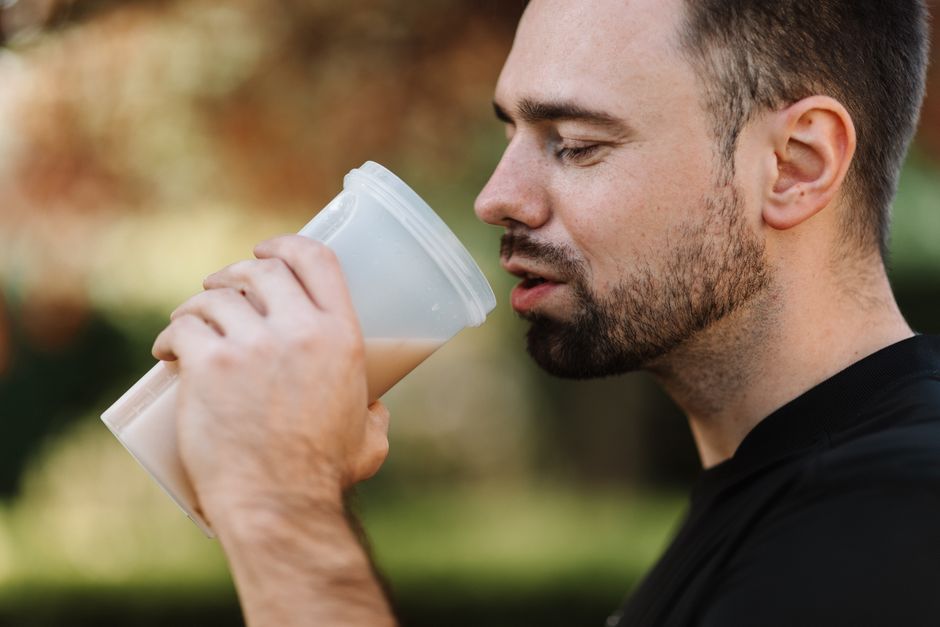
If you’ve been in a gym for more than five minutes, you’ve heard the ritual: finish the last set, sprint to the shaker bottle, and get protein down fast or the workout somehow “doesn’t count.” That idea has survived for years because it sounds scientific, it fits supplement marketing perfectly, and it gives anxious lifters something to micromanage. Fitness culture does love a stopwatch when a grocery list would do.
For men over 45, the real question isn’t whether you drank whey 22 minutes after your last set. It’s whether protein timing after 45 changes muscle outcomes in a meaningful way once total daily intake is handled. The short answer: not much. The better use of attention is total daily protein, meal distribution, and consistent resistance training.
That matters because muscle gets harder to maintain with age, and not in a vague “aging is tough” way. The response to protein and training becomes less efficient. So the goal isn’t to become obsessive about a narrow post-workout window. It’s to make sure the amount and spacing of protein across the day are strong enough to overcome that reduced responsiveness.
The Anabolic Window — Where the Idea Came From
The original anabolic window idea was narrower than the evidence really supported. Early 2000s studies often looked at younger, untrained subjects in tightly controlled settings, sometimes after fasted exercise. In that context, a fast post-workout feeding could appear unusually important, because the subjects started from a state that was primed to respond.
That narrow setup turned into a broad rule for everyone. Then marketing got involved, which is usually where nuance goes to die. A condition that applied to fasted, untrained younger people became a 30- to 60-minute commandment for experienced adults who had already eaten, trained for years, and weren’t living inside a metabolism lab.
The more current view is less dramatic and more useful. A 2024 review in Frontiers in Nutrition on age-related anabolic responses explains that the feeding window is better understood as several hours, roughly 4 to 6 in fed, trained people, rather than a tiny slot right after exercise. More important, the paper argues that the total amount of protein consumed across the day drives the result more than precise timing around the session.
That doesn’t mean timing is meaningless in every case. If someone trains fasted, goes hours without eating, and is already under-consuming protein, getting a meal in sooner probably helps. But that’s not evidence for a magic half-hour deadline. It’s evidence that being underfed is a bad strategy.
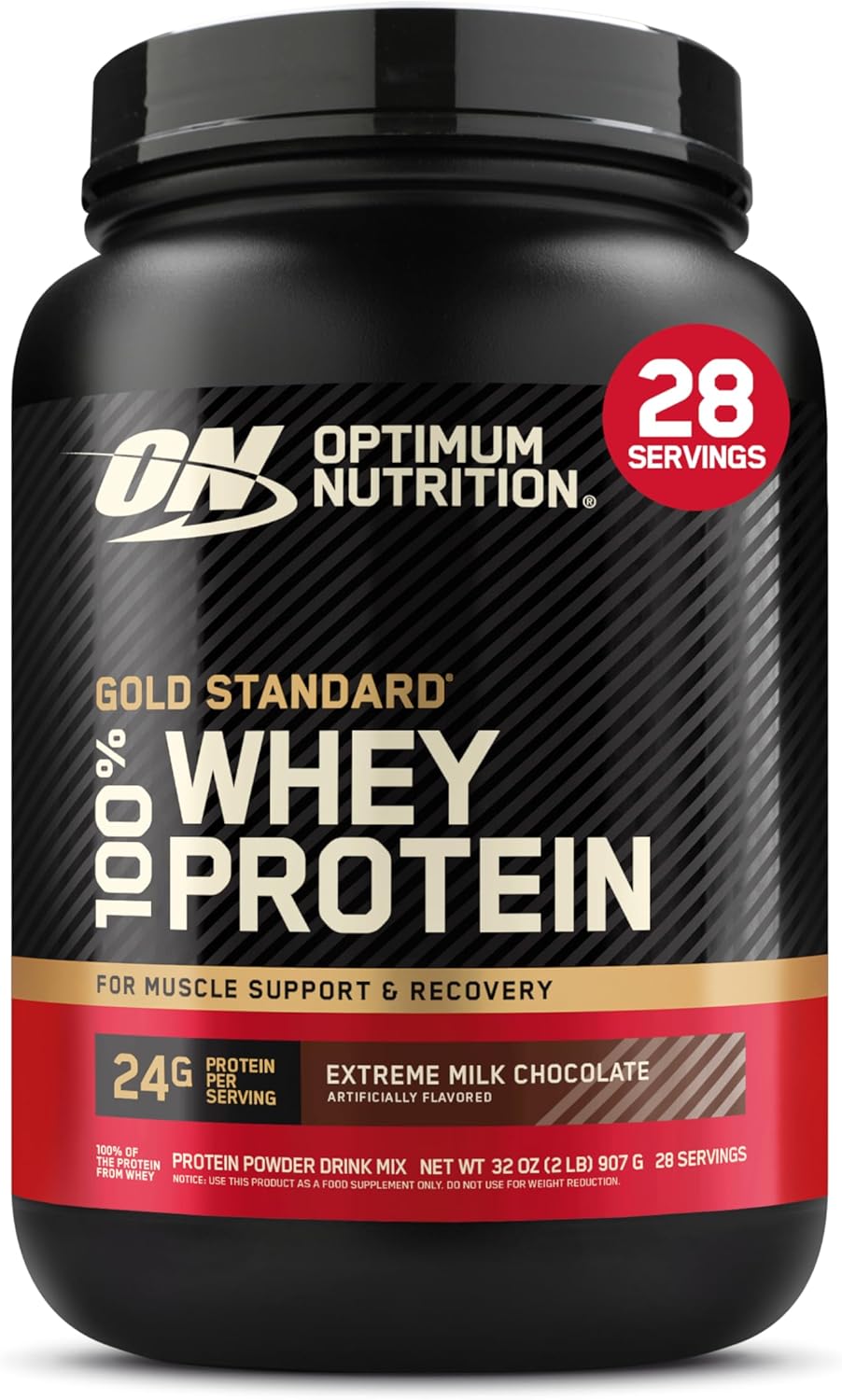
Optimum Nutrition Gold Standard 100% Whey
This article contains affiliate links. We may earn a commission at no extra cost to you.
Why Men Over 45 Face Anabolic Resistance
Protein timing debates get louder right when the more important issue gets overlooked: the body becomes less responsive to a given protein dose with age. That reduced response is called anabolic resistance, and it means the same meal that worked fine at 28 may not do the same job at 48 or 58.
The PROT-AGE Study Group laid this out clearly in the Journal of the American Medical Directors Association. Its recommendation for older adults was 1.0 to 1.5 grams of protein per kilogram of body weight per day, which is substantially above the standard RDA of 0.8 g/kg/day. That’s not a trendy sports-nutrition number. It’s a recognition that older muscle needs a stronger signal.
This is where many men over 45 get misled. They worry about when the protein lands but not whether enough lands at all. A man weighing 165 pounds is about 75 kilograms. At 1.2 to 1.6 g/kg/day, the practical target becomes roughly 90 to 120 grams a day, and some active men may push higher depending on training load and body size. If intake stalls well below that, debating minute-by-minute timing is mostly a distraction.
Anabolic resistance also helps explain why the standard RDA feels mismatched for this audience. The RDA was designed around basic deficiency prevention, not preserving lean mass in a time-poor 55-year-old who lifts, travels, sleeps inconsistently, and wants his recovery to stop acting like it’s filing a grievance.
So yes, protein matters more with age. But that doesn’t automatically mean protein timing matters more with age. It mostly means the threshold for “enough” gets higher, and weak daily intake gets exposed faster.
What the 2024 Meta-Analysis Found: Total Intake Beats Timing
If you want the cleanest high-level answer, the 2024 meta-analysis in Ageing Research Reviews is the place to start. The review covered 38 randomized controlled trials and 3,204 community-dwelling older adults. That’s the kind of evidence that tends to quiet down guru-level certainty.
The authors found that protein supplementation significantly improved muscle mass overall. So this wasn’t a “protein doesn’t matter” result. It was almost the opposite. Protein mattered. What didn’t appear to change the outcome in a meaningful way was the scheduling detail people love to obsess over.
In subgroup analyses, the review found no significant differences based on dose split, frequency, or timing relative to meals. Whether supplementation came in amounts below 30 grams or at least 30 grams, once a day or multiple times a day, or at different times in relation to meals, the advantage did not clearly come from timing itself.
For a man over 45, that is useful because it simplifies the problem. The highest-value question becomes: can you reliably hit the total intake that supports muscle maintenance or growth? If yes, then perfect timing is probably not where your gains are hiding. If no, then the first fix isn’t a timer app. It’s getting enough protein into the day in a repeatable way.
This also aligns with the lived reality of most readers of this brand. Business travel, late meetings, early training, and family logistics create enough friction already. The evidence doesn’t justify adding one more point of dietary paranoia to the calendar.
Post-Workout Protein Timing After 45: Does It Matter for Trained Men?
One reason the myth hangs on is that people assume trained lifters are different, as if experience turns the body into a scheduling extremist. A 2024 randomized trial in Frontiers in Nutrition tested that idea more directly in 31 resistance-trained males.
The study compared two approaches. One group consumed protein immediately before and after exercise. The other consumed it about 3 hours before and after. Total protein intake was matched at 2 g/kg/day, which is already a serious intake level. Both groups improved skeletal muscle mass and strength. There were no significant between-group differences.
That result matters because it isolates the variable people argue about most. When total protein is the same and training is the same, cramming protein right around the workout did not outperform a wider spacing strategy. The body cared more that the protein showed up than that it arrived on a panic-driven schedule.
This is also the practical answer for trained men who already have decent habits. If breakfast contains protein, lunch isn’t an afterthought, and the day ends with another protein-rich meal, missing the mythical 30-minute window isn’t the problem. The bigger risk is usually the classic executive pattern: coffee in the morning, a thin lunch, a large dinner, and then confusion about why recovery feels mediocre.
That pattern is why our full review of the best protein powders for men over 45 can be helpful for men who struggle to get a solid protein serving into the first half of the day. A shake isn’t magic. It’s simply a convenient way to stop pretending lunch was “fine” when it was a granola bar and optimism.
Protein Distribution Across Meals — A Better Focus Than Timing
If timing is overrated, what deserves the attention instead? Distribution. Experts commonly recommend spreading protein across 3 to 4 meals, with roughly 25 to 40 grams per meal and around 3 grams of leucine to robustly stimulate muscle protein synthesis. That’s a more useful framework than “slam a shake after training.”
The Journal of Nutrition, Health & Aging published a study showing that about 46% of adults aged 51 and older did not even meet the basic daily RDA for protein. Just as important, intake was usually skewed toward dinner. Breakfast and lunch were often far below the amount likely needed to maximize the muscle-building response at each feeding.
This is the real protein-distribution problem. Not that men are 47 minutes late on a post-workout shake. It’s that they might get 10 grams at breakfast, 15 at lunch, and then try to fix the entire day with a steak at 8 p.m. Daily totals matter, but so does giving the body repeated opportunities to respond.
Nutrients published a 2020 review on how much protein is required to improve muscle mass in older adults, and it supports the same general direction: older adults often need higher per-meal doses than younger adults to reach a strong anabolic response. In practice, that makes breakfast and lunch the weak links for many men over 45.
This is also where other recovery variables matter. Creatine is one of the few supplements with strong evidence for muscle and strength at this age, and magnesium supports recovery and sleep quality — both essential for muscle maintenance. Neither one replaces adequate protein, but both fit the broader recovery picture better than obsessing over whether the shake hit your bloodstream on a strict schedule.
What Men Over 45 Should Actually Do
The evidence-based approach is boring in the best possible way. Aim for a total daily protein intake around 1.2 to 1.6 g/kg/day as a practical target for active men over 45, knowing that some situations may justify the upper end or slightly beyond it. Then spread that intake across 3 to 4 meals with roughly 30 to 40 grams per meal.
Make those meals count. Leucine-rich protein sources such as whey, eggs, meat, and soy are useful because leucine helps trigger muscle protein synthesis. Harvard Health Publishing has also emphasized that higher protein needs in older adults are tied to preserving muscle mass, function, and independence, not just appearance.
Resistance training remains the multiplier. Protein helps, but it works best when muscle has a reason to stay. Cleveland Clinic’s overview of sarcopenia makes the larger point plainly: age-related muscle loss is real, and the combination of strength training and adequate nutrition matters more than any one feeding trick.
So the practical framework looks like this:
- Hit total daily protein first.
- Stop under-eating protein at breakfast and lunch.
- Get 3 to 4 meaningful protein feedings across the day.
- Train consistently enough that the protein has a job to do.
- Treat the post-workout window as a convenience option, not a law of physics.
If a post-workout shake helps you hit the numbers, use it. If dinner an hour later is the easier move, that is also fine. The evidence doesn’t support turning a decent plan into a stress hobby.
Frequently Asked Questions
Does it matter what time of day I eat my protein?
Not much, as long as total daily intake is adequate and protein is distributed reasonably well across the day. For men over 45, the bigger issue is usually getting enough protein at breakfast and lunch, not chasing a perfect post-workout slot.
What’s the difference between total daily protein and protein timing?
Total daily protein is the sum of protein you eat across the day. Protein timing is when you place those grams relative to workouts or meals. The current evidence suggests total intake has the stronger effect on muscle outcomes in older adults.
Does intermittent fasting affect muscle protein synthesis in men over 45?
It can, mainly if the eating window makes it hard to reach total protein targets or to spread intake across enough meals. A compressed eating schedule isn’t automatically a problem, but it leaves less room for repeated protein doses that may help offset anabolic resistance.
Is whey protein better than plant protein for overcoming anabolic resistance?
Whey is often the easiest option because it is rich in leucine and digests quickly. Plant proteins can still work, but they may require larger servings or more careful meal design to reach a similar anabolic signal.
How do I calculate how much protein I need per day?
Start with body weight in kilograms and multiply by a target range such as 1.2 to 1.6 g/kg/day. A 75 kg man would land at roughly 90 to 120 grams per day. Then divide that across 3 to 4 meals rather than dumping most of it into dinner.
The Bottom Line
Protein timing after 45 matters a lot less than protein marketers would prefer. For most men over 45, enough total protein, better distribution across the day, and steady resistance training will do far more for muscle than policing a narrow post-workout window.
Sources
- Frontiers in Nutrition. “Critical variables regulating age-related anabolic responses to protein nutrition in skeletal muscle”.
- Journal of the American Medical Directors Association. “Evidence-based recommendations for optimal dietary protein intake in older people” (PROT-AGE Study Group).
- Ageing Research Reviews. “The effect of dose, frequency, and timing of protein supplementation on muscle mass in older adults: A systematic review and meta-analysis”.
- Frontiers in Nutrition. “Timing matters? The effects of two different timing of high protein diets on body composition, muscular performance, and biochemical markers in resistance-trained males”.
- Journal of Nutrition, Health & Aging. “Low Dietary Protein Intakes and Associated Dietary Patterns and Functional Limitations in an Aging Population”.
- Nutrients. “Amount of Protein Required to Improve Muscle Mass in Older Adults”.
- Harvard Health Publishing. “Muscle loss and protein needs in older adults”.
- Cleveland Clinic. “Sarcopenia (Muscle Loss): Symptoms and Causes”.
Continue reading: Read the pillar — Supplements & Nutrition
This article is for informational purposes only and is not financial advice. Consult a qualified professional for personalized guidance.
Leave a Reply